
Soups & Stews
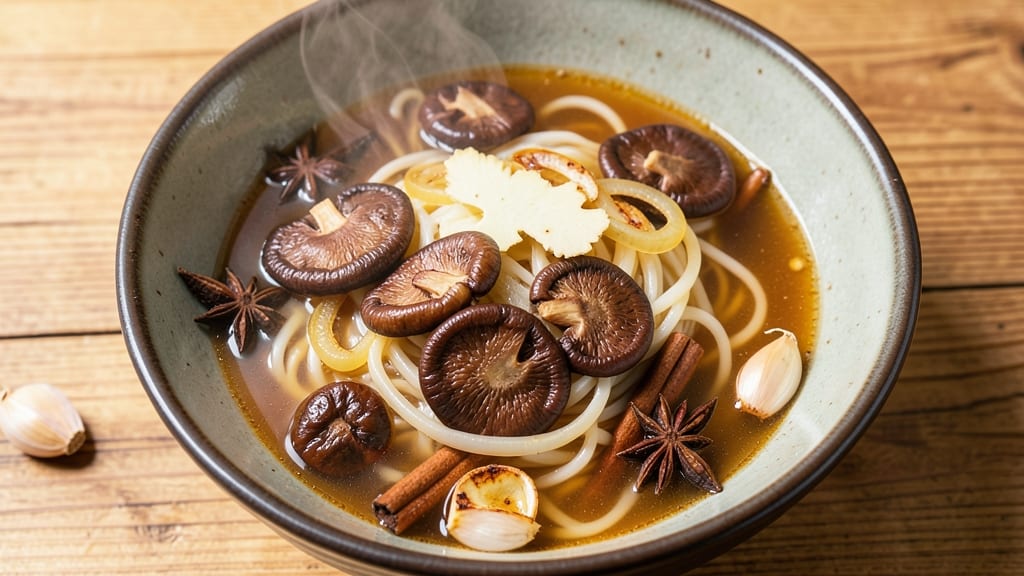
This Asian noodle soup broth recipe transforms your kitchen into a fragrant escape with just a few simple ingredients and a slow simmer. The secret lies in the five-spice blend—star anise, cinnamon, and cloves—that infuses the broth with deep, aromatic warmth while keeping the technique accessible for home cooks.
Unlike store-bought versions, this broth builds flavor layer by layer, ensuring every sip is rich, complex, and deeply satisfying.
The magic happens in the slow simmer, where charred ginger and garlic meet tenderized proteins (or mushrooms for a vegetarian twist) to create a velvety, umami-packed base. No pressure cooker required—just patience and a few hours to let the spices meld into something extraordinary.
The result? A broth so fragrant it fills your home with warmth, with just the right balance of savory and aromatic notes that define authentic Asian noodle soups.
Pair this broth with silky rice noodles, fresh herbs, and a squeeze of lime for the perfect bowl of comfort. The texture is what makes it special—silky noodles gliding through a broth that’s both robust and delicate, with just a hint of spice to elevate every spoonful.
Whether you’re craving a quick weeknight meal or a weekend project, this recipe delivers restaurant-quality results at home.
Customize it with your favorite proteins, vegetables, or herbs—this broth adapts effortlessly to pho, ramen, or even miso-inspired twists. The best part? It tastes even better the next day, making it perfect for meal prep. Let’s get cooking—your taste buds will thank you.
Ingredients for asian noodle soup broth
Fragrant five-spice blend meets silky noodles in this aromatic broth recipe—just 15 ingredients for restaurant-quality flavor.
| Ingredient | Amount | Notes |
|---|---|---|
| Dried Shiitake Mushrooms 🍄 | 8 whole | Stems removed, soaked in hot water |
| Fresh Ginger 🧄 | 2 tbsp | Finely grated, aromatic variety |
| Garlic Cloves 🧄 | 6 cloves | Charred for smoky depth |
| Star Anise 🌿 | 2 whole | Whole pods, crushed lightly |
| Cinnamon Sticks 🌿 | 2 whole | 1-inch pieces, for aroma |
| Cloves 🌿 | 4 whole | Whole, for subtle warmth |
| Vegetable Oil 🫒 | 2 tbsp | High smoke point preferred |
| Yellow Onion 🧅 | 1 whole | Thinly sliced, for sweetness |
| Chicken Breast 🍗 | 1 ½ lb | Boneless, skinless, cubed |
| Rice Noodles 🍜 | 8 oz | Silky variety, uncooked |
| Fresh Cilantro 🌿 | ¼ cup | Chopped, for garnish |
| Lime Wedges 🍋 | 2 whole | Freshly squeezed, for brightness |
| Fish Sauce 🍶 | 1 tbsp | For umami depth |
| Soy Sauce 🍶 | 2 tbsp | Light or dark variety |
| Salt 🧂 | 1 tsp | Adjust to taste |
The five-spice blend is non-negotiable here. Whole spices from Penzeys or Spicewalla deliver the most authentic flavor—look for star anise with a glossy sheen and cinnamon sticks free of cracks. Fresh ginger should smell citrusy and sharp; Trader Joe's often carries the best quality. The shiitake mushrooms? Dried from Asian markets pack the most umami—soak them in hot water for 20 minutes to rehydrate. For the chicken, boneless, skinless breast stays tender during the long simmer, but thighs work too if you prefer richer flavor.
No star anise? 1/2 tsp ground cinnamon plus 1/4 tsp ground cloves mimics the warmth. Out of fish sauce? Soy sauce plus a splash of coconut aminos gets you close. The rice noodles must be silky—VietNamese pho noodles from the Asian aisle are ideal, but any rice vermicelli works. For a vegetarian version, swap the chicken for extra-firm tofu or mushrooms. Char the garlic and onion in a dry pan first—this smoky step is what makes the broth sing. The lime wedges? Meyer limes add sweetness, but regular limes work too.
Broth tastes even better the next day—plan ahead! Store in airtight containers for 4-5 days in the fridge or 3 months frozen. I double the batch and freeze half; thaw overnight in the fridge before reheating. The noodles cook in 2 minutes—keep them separate until serving to prevent sogginess. Garnish with fresh cilantro and lime right before eating; the acidity cuts through the richness beautifully. Leftovers make an amazing lunch the next day—just reheat and add fresh herbs.
Why You'll Love This Recipe
- Pantry Magic: I swear by this broth—no fresh shiitake hunt, no last-minute grocery runs. Just toss in those dried mushrooms, and they soak up water like sponges, releasing that deep, umami punch that takes minutes, not hours.
- Umami Bomb: That first sip? Pure satisfaction. The shiitake mushrooms and star anise team up for a flavor that’s earthy yet warm, with a whisper of cinnamon that lingers like a good memory. Honestly, it’s the kind of taste that makes you pause mid-bite.
- Weeknight Workhorse: Make a big batch Sunday, and you’ve got lunch or dinner covered for days. Add rice noodles for a quick takeout vibe, or toss in tofu and veggies for a full meal—it’s my go-to when I’m too tired to plan.
- Budget-Friendly Luxury: Star anise and cinnamon sticks cost pennies but taste like a fancy restaurant. Dried shiitake? Even cheaper than fresh, and they keep forever. Between us, this broth is the most rewarding way to stretch a dollar without sacrificing flavor.
Step-by-step instructions for Asian noodle soup broth
Aromatic spices and umami-rich ingredients create a deeply flavorful broth that transforms simple rice noodles into a restaurant-worthy dish.
Prepare the Spice Infusion
In a large pot, heat the 2 tablespoons vegetable oil over medium heat until shimmering. Add the 8 whole dried shiitake mushrooms (stems removed), 2 whole star anise, 2 whole cinnamon sticks, 4 whole cloves, and the 1 whole yellow onion (thinly sliced). Toast for 5 minutes until the onion softens and the spices release their fragrance.
Add the 2 tablespoons finely grated fresh ginger and 6 charred garlic cloves, stirring constantly for 2 minutes until the mixture smells deeply aromatic. This step builds the complex spice base that defines the broth's character. Keep the heat at medium-low to prevent burning the delicate spices—you want them to infuse, not scorch.
Build the Umami Foundation
Pour in 6 cups of water (enough to cover the ingredients) and bring to a rolling boil. Once boiling, reduce heat to medium-low and add the 1.5 lb cubed chicken breast. Simmer uncovered for 20 minutes, skimming any foam that rises to the surface. This step extracts maximum flavor from the chicken while keeping the broth clear.
After 20 minutes, add 1 tablespoon fish sauce and 2 tablespoons soy sauce, stirring gently. The fish sauce deepens the umami, while the soy sauce adds a subtle salty sweetness. Taste the broth now—it should be rich but not overpowering. If it needs more depth, add another ½ teaspoon salt and adjust as needed. The broth should be seasoned but not salty enough to overpower the final dish.
Finish and Strain the Broth
Remove the pot from heat and let the broth steep for 10 minutes, covered. This resting period allows the spices to fully infuse. Strain the broth through a fine-mesh sieve into a clean pot, pressing gently on the solids to extract every last drop of flavor. Discard the solids—no need to waste them, but they’ve done their job.
Return the strained broth to medium heat and bring to a gentle simmer. Add the 8 oz rice noodles and cook for 3-4 minutes until they float to the surface and are tender but still slightly chewy. The noodles should absorb the broth without becoming mushy—this is the perfect texture for a silky, satisfying bite.
Assemble and Serve
Divide the cooked noodles and broth among 4 bowls. Top each serving with 1 tablespoon chopped fresh cilantro and the juice from 1 lime wedge. The cilantro adds a bright, herbal finish, while the lime cuts through the richness of the broth, balancing the flavors perfectly.
Serve immediately while the noodles are hot and the broth is steaming. The aroma alone will draw everyone to the table—this is a broth that delivers on every promise of warmth, depth, and comfort. The key to success lies in the slow infusion of spices and the careful balance of umami, salt, and acidity. Each bowl should be a harmonious blend of textures and flavors, from the silky noodles to the fragrant broth.
Pro Tips For Making Asian Noodle Soup Broth
- SOAK SHIITAKES FIRST: Dried shiitakes need a good 20-30 minutes in warm water before adding to the broth—this rehydrates them properly and prevents them from turning to mush later. I used to toss them in dry, and the broth always tasted bland and watery.
- GRATE GINGER FINE: Skip the thick slices—grate the ginger as finely as you can, almost like a paste. This releases more flavor into the broth faster, and you’ll actually taste it instead of just seeing chunks. (Yes, even if you’re impatient like me.)
- STAR ANISE LATE: Add the star anise and cinnamon sticks only after the broth has simmered for 10 minutes—otherwise, they’ll overpower the broth with bitterness. Remove them right before serving unless you love strong spice notes.
- SIMMER, DON’T BOIL: Keep the broth at a gentle simmer, not a rolling boil, to avoid cloudiness and preserve the delicate flavors. I learned this the hard way—once, I boiled it aggressively and ended up with a murky, bitter liquid.
Essential equipment for asian noodle soup broth
Spice Toasting Pan
Your stainless steel sauté pan (like the All-Clad Stainless 3-Quart) is non-negotiable for toasting spices and aromatics. The flat base distributes heat evenly, preventing scorching while allowing star anise and cinnamon to release their oils.
I use mine on medium heat—any hotter, and you risk burning the delicate spices before they infuse. A 10-inch diameter gives enough surface area for all ingredients without crowding. 🔥
Fine-Mesh Strainer
A dedicated broth strainer (I swear by the OXO Good Grips) with a fine mesh (not cheesecloth) is essential for clarity. The tight weave catches tiny shiitake particles while letting the golden broth pass through.
For extra insurance, line it with a clean kitchen towel—this helps press out every last drop of flavor. A 3-quart capacity handles the full batch without overflowing.
Immersion Blender
Skip the food processor—an immersion blender (like the Ninja Professional) lets you blend directly in the pot, preserving the broth's delicate texture. Use it for 10-15 seconds on low speed to emulsify the fat without breaking down the silky noodles later.
The 350-watt motor handles the broth's viscosity without overheating. Pro tip: Dip the blade into cold broth first to prevent splattering from the hot liquid. ✨
Thermometer
A candy or instant-read thermometer (I use the Thermoworks ThermoPop) ensures your broth reaches the ideal 195-205°F range for maximum flavor extraction. The probe accuracy (±1°F) is critical—overheating can turn the broth cloudy.
Check the temperature after simmering for 45 minutes to confirm depth of flavor. For pressure cookers, a dial gauge (like the Presto 03135) monitors temperature precisely during quick versions.
Pressure Cooker
For a 30-minute shortcut, a 6-quart electric pressure cooker (like the Instant Pot Duo) works wonders. Set it to High Pressure for 20 minutes after adding all ingredients, then natural release for 15 minutes.
The sealed environment concentrates flavors faster while keeping the broth clear. Just avoid overfilling—never exceed ⅔ capacity to prevent clogging the valve. 💫
Serving Tools
Slotted spoons (like the OXO Good Grips) and ladles make serving effortless—use them to portion noodles and broth separately. For garnishes, a small knife and cutting board keep cilantro and lime wedges fresh.
I also keep individual lime squeezers (like the Zest-It) handy to avoid messy wedges. Pre-warm bowls in the oven at 200°F for 5 minutes to keep the soup steaming hot when served.
Nutrition facts
Frequently asked questions
Can I make this broth vegetarian?
Swap the chicken for 14 oz extra-firm tofu (pressed and cubed) or 12 oz shiitake mushrooms (sliced). For extra umami, add 1 tbsp soy sauce and 1 tsp miso paste when simmering. The broth will still be rich and fragrant—just check seasoning carefully since mushrooms absorb less liquid.
Why does my broth taste bitter?
Over-toasting the spices or simmering too long can create bitterness. Keep heat at medium-low and never let the broth boil vigorously after adding aromatics. For rescue: add ½ cup coconut milk or 1 tbsp sugar, then simmer 5 minutes to balance flavors. A squeeze of lime also helps brighten the taste.
How do I adjust the spice level?
Start with the base recipe, then add ½ tsp chili flakes or 1 tsp sambal oelek for heat. For depth without spice, try 1 tsp toasted sesame oil or ½ tsp white pepper. Always taste before serving—you can adjust per bowl with extra chili or lime. The broth's complexity comes from balance, not just heat.
Can I make this ahead of time?
Yes! This broth tastes even better the next day. Store in airtight containers for 4-5 days in the fridge or 3 months frozen. Reheat gently on low heat—never microwave to preserve texture. For serving, cook noodles fresh and assemble bowls just before eating to maintain that restaurant-quality presentation.
What's the best way to char the garlic?
Peel and halve the garlic cloves, then place them cut-side down on a dry stainless steel pan over medium-high heat. Let them sit until deeply browned with blackened edges (3-4 minutes). The smoky flavor is key—don't rush this step! For extra safety, use a heatproof spatula to flip them halfway. This char adds depth that raw garlic can't match.