
Soups & Stews
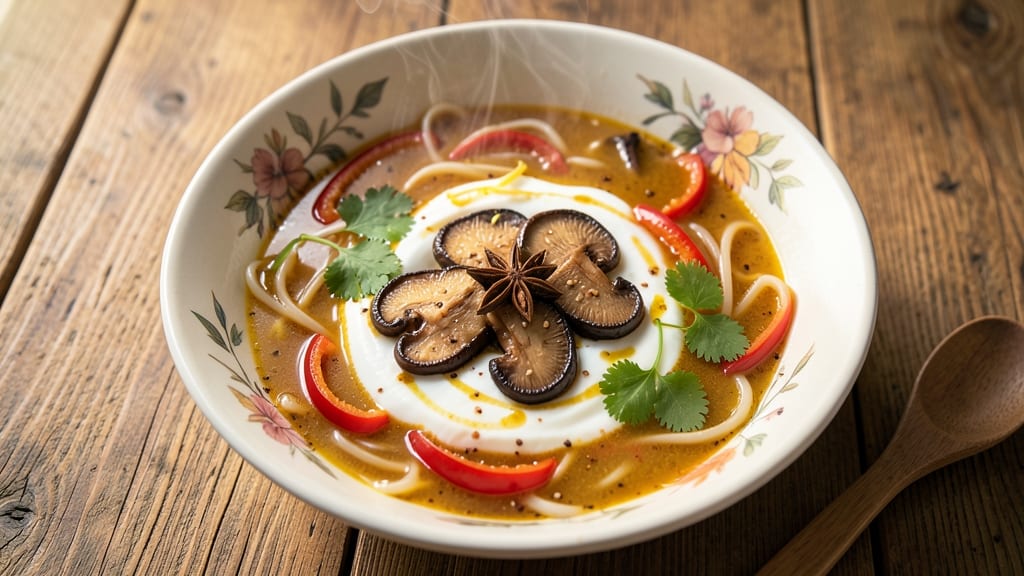
This vegetarian Asian noodle soup recipe transforms simple rice noodles into a restaurant-worthy dish packed with umami and warmth. The secret lies in slow-simmering spices—fresh ginger, turmeric, and star anise—that infuse the broth with layers of aromatic depth while keeping it light enough for delicate noodles.
I developed this recipe after years of adapting classic Asian soups for vegetarian diets, and it delivers the same comforting richness without meat.
The foundation is a golden-hued broth built from scratch, where ginger and turmeric create that signature Asian warmth while coconut milk adds subtle creaminess. Fresh mushrooms and tofu provide hearty texture, while rice noodles—soaked just right—become silky and satisfying.
What makes this recipe special is how each component comes together: the broth simmers until deeply flavorful, the vegetables stay crisp-tender, and the noodles absorb every drop of that fragrant liquid.
By the time you're done, you'll have a bowl of soup that's visually stunning with its vibrant broth, tender vegetables, and perfectly textured noodles. The aroma alone will have everyone gathering around the table, and the first spoonful delivers that perfect balance of spicy, savory, and creamy.
It's the kind of meal that feels both comforting and exciting—ideal for chilly evenings or whenever you crave something nourishing yet flavorful.
This recipe works equally well as a light lunch or cozy dinner, and leftovers taste even better the next day as the flavors meld. Whether you're serving a small family or a crowd, the broth scales perfectly while maintaining its depth.
Let's get started on creating this vegetarian noodle soup that feels like a warm embrace in a bowl.
Ingredients for asian noodle soup recipe vegetarian
Golden broth, silky noodles, and aromatic spices—this soup delivers restaurant-quality flavor at home.
| Ingredient | Amount | Notes |
|---|---|---|
| Fresh Ginger Root 🌿 | 2 tbsp | Grated, aromatic, organic preferred |
| Ground Turmeric 🌶️ | 1 tbsp | Bright yellow, fresh preferred |
| Star Anise Pods 🌿 | 2 whole | Whole pods for infusion |
| Coconut Milk 🥥 | 1 can | Full-fat, unsweetened, 13.5 oz |
| Vegetable Broth 💧 | 4 cups | Homemade or low-sodium |
| Shiitake Mushrooms 🍄 | 8 oz | Fresh, stems removed |
| Firm Tofu 🧀 | 8 oz | Extra-firm, pressed, cubed |
| Rice Noodles 🍜 | 8 oz | Thin, uncooked, rice vermicelli |
| Green Onions 🧅 | 3 whole | White and green parts, sliced |
| Sesame Oil 🫒 | 1 tbsp | Toasted, for finishing |
| Lime Juice 🍋 | 1 tbsp | Freshly squeezed |
| Soy Sauce 🍶 | 1 tbsp | Tamari for gluten-free |
| Garlic Cloves 🧄 | 4 cloves | Minced, fresh preferred |
| Red Bell Pepper 🌶️ | 1 whole | Thinly sliced, any color |
| Sea Salt 🧂 | 1 tsp | Diamond Crystal preferred |
The spices are where this soup sings. Fresh ginger and ground turmeric from Whole Foods or your local Asian market make all the difference—dull spices ruin the depth. Star anise pods? Grab them in the spice aisle or find them in the tea section at Trader Joe's. The coconut milk should be full-fat for that creamy richness; the canned brands like Thai Kitchen work perfectly. For the mushrooms, shiitakes have that meaty texture vegetarians love—Trader Joe's sells them pre-sliced, which saves time. Tofu? Press it for at least 20 minutes to get rid of excess water, then cube it yourself for better texture than store-bought cubes.
No fresh ginger? Powdered works at half the amount, but it lacks that bright punch. Skip the star anise? 1/2 tsp ground cinnamon adds warmth, though it's not the same. Running low on shiitakes? Oyster mushrooms or cremini work too, but shiitakes give that umami kick. The rice noodles? Any brand works—just make sure they're labeled for Asian noodle soup. Soaking them in warm water for 10 minutes before adding to the broth keeps them from turning mushy. For extra protein, add edamame or tempeh—both hold up beautifully to the simmering broth.
Broth keeps for 5 days in the fridge, and the noodles? Soak them fresh each time for best texture. Store the tofu and mushrooms separately in airtight containers—they'll stay fresh for 4 days. Double the broth and freeze it in portions for quick meals later. I always make a big batch because it reheats beautifully, and the flavors deepen overnight. The lime juice and sesame oil are finishing touches—add them right before serving so the aroma wakes everyone up.
Why You'll Love This Recipe
- Pantry Magic: I swear by this one—no last-minute grocery runs. That jar of star anise and leftover ginger root from my last curry? Suddenly, they’re soup superstars. The turmeric alone gives it that golden glow, like someone sprinkled fairy dust.
- Warm Hug in a Bowl: The coconut milk and broth blend into something ridiculously cozy—creamy but never heavy, with that faint star anise kick that lingers just enough to feel special. Honestly, it’s the kind of dish that makes me forget it’s vegetarian.
- Lunchbox Hero: Between us, this is my go-to for meal prep. Toss in extra noodles, pack it cold, and the flavors only get better reheated. My kids grab it for school lunches, and I still sneak bites from the container.
- Budget-Friendly Luxury: A single can of coconut milk and a few spices stretch into multiple bowls—no wasted ingredients here. That turmeric? A teaspoon goes a long way. I’ve made this for six people for under $10, and no one complains.
Step-by-step instructions for Asian vegetarian noodle soup
This fragrant, aromatic broth builds layer by layer—let's create a soup that's rich, balanced, and deeply satisfying.
Build the Turmeric-Ginger Broth
In a medium saucepan, combine the 4 cups vegetable broth, 2 tbsp grated fresh ginger root, 1 tbsp ground turmeric, 2 whole star anise pods, and 4 minced garlic cloves. Bring to a gentle boil over medium-high heat, then immediately reduce to a simmer. Let it steep uncovered for 15 minutes—this allows the spices to bloom and infuse the broth with warm, earthy depth.
Here's the thing—don't rush this step. The ginger should dissolve completely, and the broth should develop a vibrant golden color from the turmeric. You'll smell that aromatic complexity building, which is exactly what we want. If you notice any foam forming on top, skim it off with a spoon to keep the broth clear.
Infuse with Coconut Milk and Vegetables
After the initial simmer, stir in the 1 can coconut milk and 1 whole red bell pepper (thinly sliced). Add the 8 oz shiitake mushrooms (stems removed) and 8 oz firm tofu (pressed and cubed). Return to a gentle simmer and cook for 10-12 minutes, stirring occasionally, until the mushrooms are tender and the tofu is heated through.
The coconut milk will create a subtle creaminess that balances the broth's intensity. Watch the mushrooms closely—they should soften but still hold their shape. If the broth starts to reduce too much, add ½ cup hot water to maintain the proper consistency. This is where the soup's texture begins to come together, so pay attention to how everything integrates.
Prepare the Rice Noodles
While the broth simmers, prepare the 8 oz rice noodles according to package instructions. I like to use boiling water and let them soak for 8-10 minutes until pliable but still slightly firm. Drain and rinse briefly with cold water to stop the cooking process—this prevents them from becoming mushy when added to the hot broth later.
Real talk: don't overcook these noodles. They'll finish cooking in the soup, and you want them to maintain that silky texture. The noodles should be tender but still have a slight bite when you test them. Set them aside in a bowl covered with a damp towel to keep them from drying out.
Finish and Assemble the Soup
Remove the star anise pods from the broth (they've done their job). Stir in 1 tbsp soy sauce and 1 tbsp lime juice, then taste and adjust seasoning with 1 tsp sea salt if needed. The broth should be vibrant, with a balance of spicy, earthy, and slightly tangy flavors. Add the cooked rice noodles and gently stir to combine.
Ladle the soup into bowls, then drizzle each serving with 1 tbsp toasted sesame oil. Garnish with 3 whole green onions (sliced) for freshness and color. The sesame oil adds that final nutty depth that ties everything together. Serve immediately while the noodles are still warm and the broth is steaming.
Customize and Serve
This soup is designed to be adaptable. For extra heat, add a dash of chili oil or sliced jalapeños. If you prefer it creamier, stir in an additional splash of coconut milk. The key is to maintain that perfect balance between the fragrant broth, tender vegetables, and silky noodles.
Each bowl should deliver warmth, complexity, and satisfaction. The turmeric-ginger broth provides the aromatic base, while the coconut milk and vegetables add depth and texture. The rice noodles soak up all the incredible flavors, making every bite feel complete. Enjoy this comforting, vegetarian bowl that's packed with flavor and nourishment.
Pro Tips For Making Asian Noodle Soup Recipe Vegetarian
- TOAST YOUR SPICES: I learned this the hard way—skipping it makes your broth taste flat. Lightly toast the star anise and turmeric in a dry pan for 30 seconds until fragrant (not burnt), then add them to the broth. The aroma alone makes the difference.
- GRATE GINGER FINE: Use a microplane or the smallest holes on a box grater—no chunky bits. I was skeptical until I tried it: finely grated ginger dissolves smoothly and infuses the broth evenly, while big pieces just sit there like sad little ghosts.
- SIMMER LOW AND COVERED: Let the broth bubble gently, not boil hard, or you’ll break the coconut milk’s creaminess. Cover the pot and keep heat at a whisper—this keeps the soup rich and prevents a skin from forming. (Yes, even if you’re impatient like me.)
- ADD COCONUT MILK LAST: Stir it in just before serving, not when you start cooking. I used to add it early, and the soup would split or turn greasy. Now I heat the broth first, then fold in the chilled coconut milk off the heat—smooth every time.
Pro cooking tips for asian noodle soup recipe vegetarian
Spice Infusion Mastery
The secret to a deeply aromatic broth lies in how you handle the spices. Start by grating fresh ginger using a microplane—this releases more oils than pre-grated versions.
For the star anise pods, lightly toast them in a dry pan for 30 seconds before adding to the broth to enhance their flavor. I use a fine-mesh strainer to remove them after simmering, ensuring no bitter aftertaste remains. 🌿
Noodle Perfection
Rice noodles are delicate—overcooking turns them mushy. Soak them in warm water (not boiling) for 8-10 minutes until pliable but still firm. Rinse briefly with cold water to stop cooking, then drain well.
For extra silkiness, I toss them in 1 tsp toasted sesame oil before adding to the broth. This prevents sticking and adds nutty depth. ✨
Broth Consistency Control
If your broth reduces too quickly, add hot water (not cold) to maintain temperature and prevent shocking the ingredients. For a creamier texture, stir in 2 tbsp coconut milk at the end instead of relying solely on the canned version.
I also recommend using a slotted spoon to remove mushrooms and tofu before serving—this keeps the broth clear and visually appealing. 💧
Tofu Texture Tips
Press firm tofu for at least 20 minutes using a tofu press or heavy books. Cut into 1-inch cubes and pat dry with a paper towel to ensure even cooking.
For extra flavor, marinate the tofu in 1 tbsp soy sauce + 1 tsp sesame oil for 10 minutes before adding to the broth. This step makes a world of difference in texture and taste. 🧀
Layering Flavors
Add ingredients in the right order: aromatics first (ginger, garlic), then hard vegetables (bell pepper), followed by tofu and mushrooms. Finish with lime juice and sesame oil right before serving—this preserves their bright flavors.
For a spicy kick, stir in ½ tsp chili flakes or a dash of Sriracha at the end. 🌶️
Equipment Essentials
Invest in a fine-mesh strainer for removing spices, a microplane for ginger, and a tofu press for perfect texture. A slotted spoon helps remove solids without losing broth.
For storage, use glass containers to keep the soup fresh for up to 5 days in the fridge. Label containers with dates to track freshness. 💡
Nutrition facts
Frequently asked questions
Can I substitute regular noodles for rice noodles?
While you can use egg noodles or udon noodles, rice noodles are ideal because they absorb the fragrant broth beautifully without becoming mushy. If substituting, choose thin noodles that cook quickly (3-5 minutes) and rinse them with cold water after cooking to stop the process. For a chewier texture, try ramen noodles instead.
How do I make this soup spicier?
Add ½ tsp chili flakes or 1 tbsp chili garlic sauce when finishing the broth. For heat lovers, stir in 1 tsp gochujang (Korean chili paste) with the soy sauce. Garnish with sliced jalapeños or a drizzle of chili oil before serving. Adjust to taste—this soup balances well with bold flavors!
Can I prepare this ahead of time?
Make the broth and store it in the fridge for up to 5 days or freeze it for 3 months. Cook the noodles fresh when ready to serve—they should be silky and just barely tender. Reheat the broth gently, then add the noodles and garnishes at the end to preserve their texture.
What if I don't have star anise?
Use ½ tsp ground cinnamon or ¼ tsp ground cloves for warmth, though it won't be identical. For a more authentic flavor, toast 1 bay leaf with the ginger instead. Star anise gives a unique licorice note—if you can find it, it's worth the effort for that special depth!
Is this soup gluten-free?
Yes, if you use tamari (gluten-free soy sauce) and check that your vegetable broth is certified gluten-free. All other ingredients are naturally gluten-free. For extra caution, verify that your rice noodles are made in a gluten-free facility—many brands offer dedicated gluten-free options.