
Soups & Stews
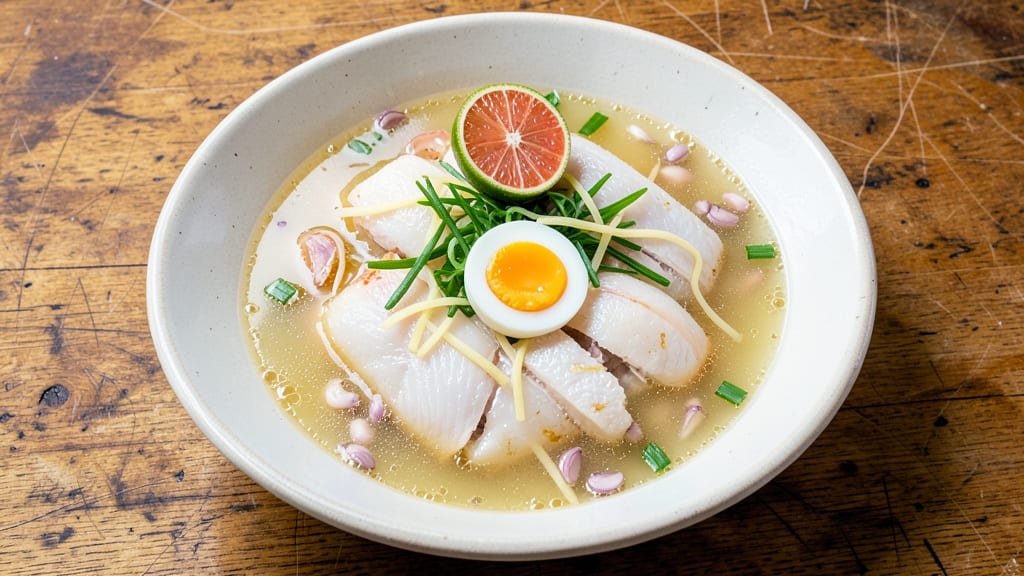
This boiled fish soup recipe transforms simple ingredients into a fragrant, comforting dish that balances silky broth with tender fish and delicate egg ribbons. The secret lies in a ginger-lime broth infused with aromatic herbs, creating layers of flavor that elevate humble ingredients into something restaurant-worthy.
Whether you're preparing a light lunch or a nourishing dinner, this soup delivers warmth and satisfaction in every spoonful.
The beauty of this recipe is its versatility—adapt it to your preferences with spicy chili, creamy coconut milk, or fresh cilantro. The broth simmers gently to extract maximum flavor from ginger, garlic, and lime, while the fish cooks just until tender, ensuring it stays moist and flaky.
Egg ribbons add a luxurious touch without overpowering the delicate balance of flavors, making this soup both elegant and approachable.
Perfect for pescatarian diets, this soup is packed with protein and nutrients while remaining light enough for any meal. The preparation is straightforward, with minimal active time but maximum flavor development as the broth works its magic.
Serve it over steamed rice or with crusty bread to soak up every drop of that fragrant, silky broth.
What sets this recipe apart is its ability to highlight the natural sweetness of the fish while complementing it with bright, citrusy notes. The result is a harmonious blend of textures and flavors that feels both comforting and refined.
Ready in under an hour, it’s the ideal solution for a quick yet impressive meal.
Ingredients for boiled fish soup
Simple ingredients create restaurant-worthy fish soup with bright ginger-lime broth and delicate egg ribbons.
| Ingredient | Amount | Notes |
|---|---|---|
| White Fish Fillets 🐟 | 1 ½ lb | Firm white fish like cod or halibut |
| Fresh Ginger Root 🌿 | 2 tbsp | Finely grated, aromatic quality |
| Garlic Cloves 🧄 | 4 cloves | Minced, fresh preferred |
| Lime Juice 🍋 | ¼ cup | Freshly squeezed, bright flavor |
| Large Eggs 🥚 | 4 whole | Fresh, room temperature |
| Green Onions 🧅 | ¼ cup | Sliced thin, white and green parts |
| Fresh Cilantro 🌿 | ¼ cup | Chopped, for garnish |
| Fish Stock 💧 | 4 cups | Homemade or quality store-bought |
| Vegetable Oil 🫒 | 2 tbsp | For gentle simmering |
| Salt 🧂 | 1 ½ tsp | Kosher or sea salt |
| White Peppercorns 🌶️ | ½ tsp | Ground fresh for subtle flavor |
| Dried Star Anise 🌟 | 1 piece | Optional aromatic touch |
| Jasmine Rice 🍚 | 1 cup | Uncooked, for serving |
| Fresh Chili Peppers 🌶️ | 1 whole | Optional, sliced thin |
The fish is the star—look for firm white varieties like cod or halibut at your local seafood counter. Whole Foods or Trader Joe's often carry pre-cut fillets, but ask for the freshest cut if buying whole. Ginger should be fresh, aromatic, and free of blemishes—skip the jarred version. For stock, homemade is ideal, but quality store-bought like Pacific Foods works in a pinch. The lime juice needs to be freshly squeezed—bottled won't cut it here. If you're feeling adventurous, add a dash of fish sauce for umami depth, but keep it subtle.
No fresh ginger? Powdered works at half the amount, but you'll lose that bright aroma. Running low on fish stock? Vegetable stock with a splash of soy sauce gets you close. Eggs should be fresh and cold—room temperature makes them easier to ribbon. For extra heat, Thai bird's eye chilies add serious kick without overpowering. The star anise is optional but transforms the broth—if you can't find it, a pinch of cinnamon adds warmth. Prefer coconut milk? Add 1/4 cup at the end for creaminess, but don't add it during cooking or it'll curdle.
Store fish stock in the fridge for up to 3 days or freeze for 3 months. Fresh ginger keeps in the fridge for 2 weeks—wrap tightly in a damp towel to preserve freshness. Cooked fish reheats beautifully—keep portions in airtight containers for 2 days. The egg ribbons are best served immediately, but you can prep the broth ahead and finish with fresh eggs. For meal prep, make a double batch of broth and freeze—just thaw and add fresh fish when ready. Serve over steamed jasmine rice to soak up every last drop of that fragrant broth.
Why You'll Love This Recipe
- No-Chop Needed: I swear by this trick—just peel the ginger and smash it with the flat of a knife. No mincing, no fuss. The garlic gets the same treatment, and suddenly you’ve saved 10 minutes while still packing in that punchy, aromatic punch.
- Bright & Simple: That lime juice twist turns this from basic to ridiculously good—sharp, fresh, and cutting through the richness of the fish and eggs. Honestly, it’s the one thing that makes this soup feel like a restaurant dish without trying.
- Leftover Hero: This soup actually tastes better the next day. The flavors meld, the fish gets even more tender, and you’ve got a ready-to-heat meal for lunches. I make a big batch on Sundays and still have bowls by Wednesday.
- Budget Bright Spot: White fish fillets and eggs stretch this recipe far—perfect for feeding a family without breaking the bank. Plus, ginger and garlic are cheap staples that make everything taste like you put in effort. (Between us, they do.)
Step-by-step instructions for boiled fish soup
Here's how to craft a delicate, aromatic fish soup with silky egg ribbons and fragrant ginger-lime broth.
Prepare the Aromatic Base
Heat the 2 tablespoons vegetable oil in a large pot over medium-low heat. Add the 2 tablespoons finely grated fresh ginger root and 4 minced garlic cloves, stirring constantly for 2 minutes until fragrant but not browned. This gentle cooking preserves their delicate flavors rather than burning them.
Add the 1 piece dried star anise and the 1 whole fresh chili peppers (sliced thin if using) to the pot. Stir for 30 seconds to release their aromatic oils. The star anise will infuse subtle sweetness, while the chili adds a gentle heat. If you prefer milder heat, omit the chili entirely—this soup remains delicious either way.
Build the Ginger-Lime Broth
Pour in the 4 cups fish stock and bring to a gentle simmer over medium heat. Once simmering, add the 1.5 teaspoons salt and 0.5 teaspoon ground white peppercorns, stirring to dissolve completely. The broth should smell vibrant and inviting—this is your foundation.
Add the 0.25 cup lime juice and reduce heat to low. Let the broth simmer uncovered for 10 minutes to allow the flavors to meld. The lime brightens the broth while balancing the richness of the fish and eggs. Skim off any foam that rises to the surface for a cleaner broth.
Cook the Jasmine Rice
While the broth simmers, rinse the 1 cup jasmine rice under cold water until the water runs clear. This removes excess starch that would make the rice gummy. Add the rice to a separate pot of boiling water (use 2 cups water for 1 cup rice) and cook until just tender—about 12-14 minutes. Drain any remaining water and set aside.
The rice should be al dente, with a slight bite remaining. Overcooking will turn it mushy, which would overwhelm the delicate soup. Keep it warm while you finish the soup.
Poach the Fish Fillets
Gently place the 1.5 lb white fish fillets into the simmering broth. The heat should be low—you're poaching, not boiling. Simmer for 8-10 minutes, depending on the thickness of your fillets, until they're opaque and flake easily with a fork. The fish should cook just until it's done, as it will continue cooking slightly when removed.
Remove the fish with a slotted spoon and transfer to a plate. Let it rest for 2 minutes before slicing. The broth will now carry the essence of the fish, creating a light yet flavorful base. If the broth seems too thin, simmer it uncovered for another 3-5 minutes to reduce slightly.
Create Silky Egg Ribbons
Return the broth to a gentle simmer. Crack the 4 whole large eggs directly into the broth, one at a time, stirring gently with a wooden spoon in a figure-eight motion. The heat should be low—if it's too high, the eggs will scramble instead of forming delicate ribbons.
Stir for 1-2 minutes until the eggs are just set but still silky. They should resemble delicate ribbons rather than fully cooked curds. Remove the pot from heat immediately to prevent overcooking. The eggs will continue to thicken slightly as they absorb heat from the broth.
Assemble and Garnish
Divide the cooked jasmine rice among 4 bowls. Ladle the broth with fish and egg ribbons over the rice. The fish should be distributed evenly, with each serving containing 2-3 pieces. The egg ribbons will float gracefully on the surface, adding texture and richness.
Garnish each bowl with 1 tablespoon sliced green onions and 1 tablespoon chopped fresh cilantro. The green onions add a fresh crunch, while the cilantro brightens the dish with its citrusy aroma. Serve immediately while the broth is hot and the fish is silky.
Pro Tips For Making Boiled Fish Soup
- Boil the Fish Separately: I learned this the hard way—trying to add fish fillets directly to the simmering broth ruins the texture. Instead, poach them in lightly salted water for 3-4 minutes until just opaque, then gently slide them into the soup at the very end. This keeps them tender and flaky, not rubbery.
- Peel and Mince Ginger Thin: Skip the food processor unless you want a muddy broth. Use a microplane or sharp knife to grate ginger into paper-thin ribbons—this way, it dissolves smoothly without leaving gritty chunks. (Yes, even if you’re impatient like me.)
- Add Eggs Last, Off Heat: Crack eggs directly into the soup only when it’s removed from the stove, then stir gently. The residual heat will poach them perfectly without scrambling—no need for a separate pot or delicate timing. Your future self will thank you.
- Squeeze Lime Over Fish, Not Broth: After the fish is in the soup, squeeze lime juice directly over the fillets. This brightens their flavor without making the broth taste overly acidic. (I used to just toss it in—big mistake.)
Pro cooking tips for great boiled fish soup
Broth Flavor Mastery
Simmer your broth at a gentle, rolling boil—never a hard boil—to prevent the fish from becoming rubbery. I use a thermometer to keep the temperature between 185-195°F—this ensures the fish stays tender while the broth develops depth.
The ginger and lime need low-and-slow cooking to infuse properly, so resist the urge to rush this step. 🌡️
Fish Cooking Precision
Fish cooks in stages: start with medium-low heat to poach gently, then adjust to low once it’s in the broth. Overcooking by even 1-2 minutes turns flaky fish into dry, stringy pieces.
I test doneness by inserting a fork—it should flake easily but still hold its shape slightly. A slotted spoon is essential for removing fish without breaking it.
Egg Ribbon Technique
For perfect egg ribbons, use room-temperature eggs and stir slowly in a figure-eight motion. The broth should be at a barely simmering state—if it’s too hot, the eggs will scramble.
I add a splash of cold water (about 1 tablespoon) to the broth just before stirring in the eggs to lower the temperature slightly. This trick guarantees silky, delicate strands every time. ✨
Layering Flavors
Add lime juice last—its acidity brightens the broth but can break down if simmered too long. For extra depth, toast the star anise in the oil for 30 seconds before adding stock.
This releases its aromatic oils, giving the broth a subtle sweetness. If you love umami, a teaspoon of fish sauce (like Red Boat) in the broth elevates everything without overpowering.
Equipment Essentials
Invest in a heavy-bottomed pot (I love All-Clad) to prevent hot spots that can scorch the broth. A fine-mesh strainer helps remove any foam or impurities, while a wooden spoon prevents scratching your pot.
For garnish, use sharp scissors to slice green onions—this gives cleaner cuts than a knife. Keep a small bowl of ice water nearby to refresh herbs if needed.
Timing Like a Pro
Multitask efficiently: while the broth simmers, prep your rice and slice garnishes. The 10-minute broth simmer is your anchor—work backward from serving time. Fish should cook in 8-10 minutes, and eggs take 1-2 minutes max. I set a timer for each stage to avoid overcooking.
The entire process takes under 45 minutes, making it perfect for a quick yet impressive meal. ⏰
Nutrition facts
Frequently asked questions
What type of fish works best for this boiled fish soup?
Firm white fish like cod, halibut, or snapper are ideal—they stay tender when poached and hold their shape beautifully. Avoid delicate fish like flounder, which can fall apart. For extra flavor, try using a mix of fish fillets and shells (like shrimp or scallops) for added texture.
Can I make this soup ahead of time?
Yes! Prepare the broth and cook the fish up to 2 days ahead, then reheat gently before adding fresh egg ribbons. Store components separately in airtight containers. For meal prep, make a double batch of broth and freeze it—just thaw and add fresh fish when ready. The egg ribbons should always be made fresh for the best texture.
How do I fix rubbery fish in my soup?
Rubbery fish means it was overcooked. To salvage it, gently reheat the fish in the broth for 1-2 minutes max on low heat. For next time, use a thermometer to keep broth at 185-195°F and cook fish for 8-10 minutes only. A slotted spoon helps remove fish without breaking it, and always let it rest 2 minutes before slicing.
Can I substitute the ginger-lime broth with something else?
For a coconut version, add 1/2 cup coconut milk at the end. For a spicier twist, swap lime for lemon juice and a dash of chili paste. A miso broth works beautifully too—just replace fish stock with 2 tablespoons miso paste dissolved in warm water. The key is balancing the broth's depth with the delicate fish.
Why did my egg ribbons turn into scrambled eggs?
This happens when the broth is too hot. Lower the heat to a barely simmer before adding eggs, and use room-temperature eggs. For extra control, add 1 tablespoon cold water to the broth right before stirring in the eggs. Stir gently in a figure-eight motion—never let the broth boil while the eggs cook.