
Soups & Stews
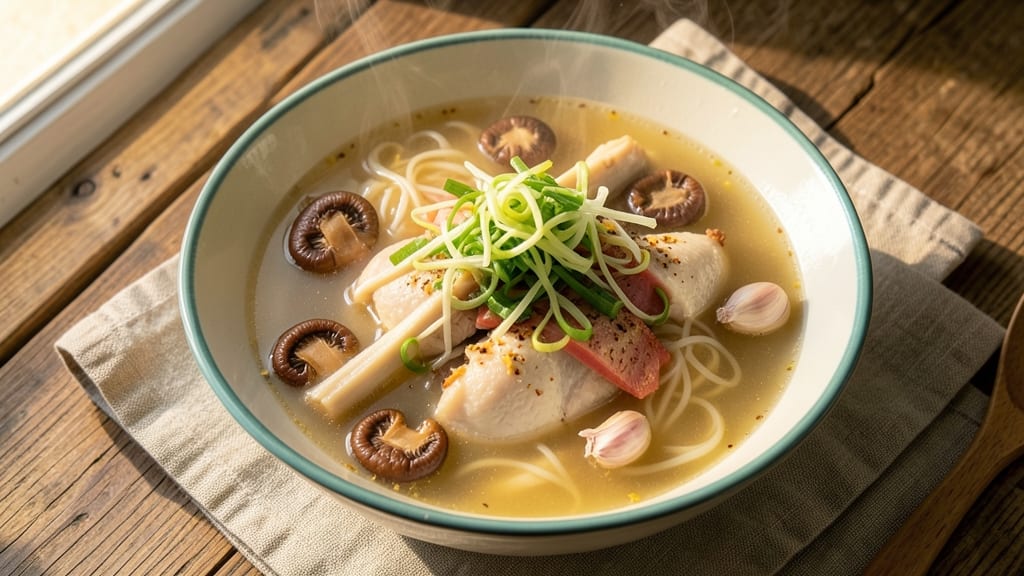
This Asian clear chicken soup recipe transforms simple ingredients into a fragrant, silky broth that warms both body and soul. 💛 The secret lies in long simmering—chicken bones and aromatics release their essence slowly, creating a light yet deeply flavorful base.
I've perfected this version to balance traditional techniques with modern convenience, ensuring every spoonful delivers that comforting, restaurant-quality taste at home.
The broth begins with chicken bones and ginger, simmered for hours until the liquid becomes crystal clear yet rich with umami. Silky rice noodles absorb the delicate flavors without overpowering the delicate balance, while shiitake mushrooms and scallions add layers of earthy depth.
This isn't just soup—it's a healing experience, especially on chilly days or when you need something light yet satisfying.
What makes this recipe stand out is the harmony of textures: tender chicken, slippery noodles, and crisp scallions that cut through the silky broth. The aroma alone—steaming ginger, subtle garlic, and the faintest hint of soy—transforms any kitchen into a place of comfort.
Perfect for meal prep or serving immediately, this soup adapts beautifully to your schedule while delivering authentic flavor.
Whether you're following traditional methods or making quick adjustments, the principles remain the same: patience in simmering and balance in seasoning. The result is a bowl that's as nourishing as it is delicious, proving that simple ingredients can create extraordinary meals when handled with care.
Let's get started on crafting this comforting classic.
Ingredients for asian clear chicken soup
Transform simple pantry staples into a restaurant-quality clear broth with these carefully selected ingredients.
| Ingredient | Amount | Notes |
|---|---|---|
| Chicken Bones 🍗 | 2 lb | Raw, marrow-rich preferred |
| Fresh Ginger Root 🌿 | 3 oz | Peeled, sliced into 1/4-inch pieces |
| Garlic Cloves 🧄 | 6 cloves | Peeled, smashed lightly |
| Dried Shiitake Mushrooms 🍄 | 8 whole | Rehydrated, stems removed |
| Green Onions 🧅 | 1 whole | White and green parts separated |
| Rice Noodles 🍜 | 8 oz | Silky, medium-width preferred |
| Low-Sodium Soy Sauce 🥢 | 2 tbsp | Kikkoman preferred |
| Sesame Oil 🫒 | 1 tbsp | Toasted, for finishing |
| Chicken Breast 🍗 | 1 lb | Boneless, skinless, cubed |
| Star Anise Pods 🌟 | 2 whole | Lightly crushed |
| Cinnamon Sticks 🌿 | 2 whole | 2-inch pieces |
| Diamond Crystal Kosher Salt 🧂 | 1 tsp | For seasoning broth |
| Black Peppercorns 🌶️ | 10 whole | Lightly crushed |
| Fresh Cilantro 🌿 | ¼ cup | Chopped, for garnish |
The chicken bones are the foundation—look for marrow-rich cuts at your butcher or Costco for maximum flavor. Fresh ginger should be vibrant and firm, with no soft spots. Whole Foods or Asian markets often carry the freshest ginger roots, but the regular grocery store works too if it's labeled organic. The shiitake mushrooms should be dried and pliable when rehydrated—avoid any that feel hard or discolored. For the rice noodles, Thai Kitchen brand is my go-to for that authentic slippery texture, but any silky rice noodles will do.
No fresh ginger? Substitute with 1 tbsp ginger juice from a bottle, but fresh is ideal for that bright aroma. Running low on star anise? One bay leaf works in a pinch, though it adds a slightly different depth. The soy sauce can be swapped for coconut aminos if you're avoiding sodium, though the flavor will differ slightly. For the chicken breast, boneless thighs would be even better—they stay juicier during the long simmer. If you can't find dried shiitake, fresh shiitake mushrooms work too, but you'll need to adjust the cooking time.
Store the dried shiitake mushrooms in a cool, dry place for up to 6 months—they'll rehydrate perfectly. Fresh ginger keeps in the fridge for 3 weeks wrapped in a damp towel. The chicken bones can be prepped ahead and frozen for 3 months before use. Once the broth is made, it reheats beautifully—simmer gently to preserve that crystal-clear quality. Portion into containers and freeze for 2 months for quick meals later.
Why You'll Love This Recipe
- No-Chop Nightmare: Honestly, I just toss in whole garlic cloves and a few thick ginger slices—no mincing, no fuss. The bones simmer down into rich broth while you’re still deciding what to watch on TV.
- Umami Goldmine: That dried shiitake magic? It turns water into liquid flavor. The mushrooms soak up the broth’s depth while the ginger and garlic build layers—crisp, warm, and just salty enough.
- Leftovers That Lie: I make a double batch and pretend it’s not still there three days later. The broth gets better as it sits, and I’ll reheat it cold for noodles or use it in stir-fries—no waste, all win.
- Sick-Day Superhero: Between us, this is my go-to when I’m under the weather. The steam from the ginger clears my sinuses, the chicken bones rebuild my strength, and it’s ready before I realize I’m hungry.
Step-by-step instructions for light Asian clear chicken soup with silky rice noodles
Here's how to craft a fragrant, aromatic broth that balances umami depth with delicate seasoning.
🔥 Step 1: Build the Aromatic Broth Base
In a large stockpot, combine the 2 lb chicken bones with 4 quarts cold water. Add the lightly crushed star anise pods, 2-inch cinnamon sticks, 10 whole black peppercorns, and 1 tsp Diamond Crystal kosher salt. Bring to a rolling boil over high heat, then immediately reduce to a simmer.
Skim off any foam that rises to the surface during the first 15 minutes of simmering—this ensures a crystal-clear broth. The aromatic spices should infuse the water with their subtle warmth, creating a fragrant foundation. Let the broth simmer uncovered for 45 minutes, allowing the chicken bones to release their collagen and deepen the flavor.
🍳 Step 2: Infuse with Ginger and Garlic
After 45 minutes, add the 3 oz sliced fresh ginger root and 6 smashed garlic cloves. These ingredients will transform the broth from merely aromatic to deeply flavorful. Simmer for another 20 minutes, stirring occasionally, until the ginger becomes translucent and the garlic releases its sweet, pungent aroma.
Here's the thing—don't rush this step. The ginger and garlic need time to break down and meld with the broth. If you see the ginger turning brown too quickly, reduce the heat slightly to prevent bitterness. The broth should smell like a warm, spiced market—earthy, bright, and inviting.
👨🍳 Step 3: Add Shiitake Mushrooms and Chicken Breast
Strain the broth through a fine-mesh sieve into a clean pot, discarding the solids. Return the broth to the heat and add the rehydrated dried shiitake mushrooms (stems removed) and 1 lb cubed chicken breast. Bring to a gentle simmer and cook for 15-20 minutes until the chicken is just cooked through—it should reach an internal temperature of 165°F but remain tender.
Watch the broth carefully—it should remain clear but develop a rich, golden hue from the mushrooms. If the broth reduces too quickly, add ½ cup hot water to maintain the proper consistency. The mushrooms will add an earthy depth while keeping the soup light and refreshing.
🥘 Step 4: Finish with Soy Sauce and Noodles
Remove the chicken from the broth and set aside. Stir in the 2 tbsp low-sodium soy sauce to balance the flavors with a touch of saltiness. Return the chicken to the pot and add the 8 oz silky rice noodles. Cook for 3-4 minutes until the noodles are tender but still hold their shape—you want them al dente.
Real talk: rice noodles cook faster than you might expect. Start checking for doneness at 2 minutes to avoid overcooking. The noodles should be translucent and just beginning to soften. If they clump together, gently separate them with a spoon to maintain that elegant, silky texture.
🍽️ Step 5: Plate and Garnish for Presentation
Divide the soup among bowls, ensuring each serving contains an equal portion of chicken, noodles, and broth. Drizzle each bowl with 1 tsp sesame oil and garnish with the white parts of the green onions (chopped) and 0.25 cup chopped fresh cilantro. The sesame oil adds a nutty finish while the herbs provide freshness and color.
Serve immediately with the remaining green parts of the green onions on the side for garnishing. Each spoonful should deliver a harmonious balance of savory broth, tender chicken, silky noodles, and aromatic herbs. The clear broth lets the ingredients shine while the subtle spices create an inviting warmth.
Pro Tips For Making Asian Clear Chicken Soup
- CHAR THE BONES FIRST: Don’t just toss raw chicken bones into cold water—sear them in a dry pot over medium-high heat until they turn golden brown. This step unlocks deeper flavor by caramelizing the proteins and collagen before simmering. (Yes, it’s messy, but skip it and you’ll wonder why your soup tastes bland.)
- SOAK SHIITAKES 30 MINUTES: Dried shiitake mushrooms need a good soak in hot water (not boiling) for at least 30 minutes before adding them to the pot. This rehydrates them properly so they release their umami into the broth instead of just floating like sad, chewy raisins. Pro move: Reserve the soaking liquid—it’s liquid gold.
- SIMMER LOW AND LONG: After the initial boil, drop the heat to the lowest setting where the broth just bubbles occasionally. Rushing this step (even by 15 minutes) turns your clear soup into a murky, cloudy disappointment. Two hours minimum—no shortcuts, no excuses.
- GINGER SLICES, NOT GRATES: Thin slices of fresh ginger (about ½-inch thick) infuse the broth better than grated or minced pieces, which turn bitter and clump. Plus, you can fish them out easily—no straining required. (Bonus: Save the slices for future broths if you’re feeling lazy.)
Troubleshooting great asian clear chicken soup
Broth Turned Cloudy
If your broth loses its crystal-clear quality, it’s usually from over-simmering or impurities. First, skim any foam during the initial 15 minutes—this removes fat and proteins that cause cloudiness. For a quick fix, strain the broth through a cheesecloth-lined sieve or use a fine-mesh skimmer to remove particles.
If the broth still looks murky, add 1 tbsp cornstarch mixed with 2 tbsp cold water, stir in, and simmer for 5 minutes to clarify it naturally. 🌟
Chicken Too Tough
Overcooking chicken in broth is a common mistake. Use a meat thermometer and remove the chicken at 160°F (it’ll rise to 165°F while resting). For extra tenderness, parboil the chicken cubes in salted water for 5 minutes before adding them to the broth.
Alternatively, use boneless thighs—they stay juicier than breast meat during long simmering. 🍗
Weak or Bland Flavor
A weak broth often means insufficient simmering time or underseasoned aromatics. Extend the simmer to 2-3 hours for deeper flavor, and double-check your spices: lightly crush star anise and black peppercorns to release oils.
For an umami boost, add 1 tbsp fish sauce or ½ cup kombu seaweed during the final 30 minutes of simmering. Taste and adjust with low-sodium soy sauce or a pinch of white pepper before serving. 💡
Noodles Mushy or Sticky
Rice noodles turn mushy when overcooked or when exposed to cold water too soon. Cook them in the hot broth (not cold water) for 3-4 minutes—they’ll finish cooking from the residual heat.
If they stick together, rinse them briefly under cold water before adding to the broth. For extra silkiness, soak the noodles in warm water for 10 minutes before cooking. ✨
Ginger Burns or Bitter Taste
Burnt ginger adds bitterness to the broth. Simmer ginger on medium-low heat and remove any dark brown pieces immediately. For a milder flavor, peel the ginger more thinly and add it 10 minutes before the end of simmering.
If the broth tastes bitter, balance it with 1 tsp honey or 1 tsp rice vinegar to brighten the flavor. 🌿
Broth Too Salty
Over-salting is easy with soy sauce and broth. Taste the broth before adding noodles—it should be seasoned but not briny. If it’s too salty, dilute with ½ cup hot water or add 1 tbsp cornstarch slurry to slightly reduce saltiness.
For a fresh start, strain the broth and simmer with 1 cup fresh water for 10 minutes to dilute the salt. 🧂
Nutrition facts
Frequently asked questions
Can I use chicken thighs instead of breast for this recipe?
Chicken thighs actually work better for this clear soup because they stay juicier during the long simmer. Use 1 lb boneless thighs instead of breast meat—they'll add richer flavor and more tender texture to each spoonful. Just trim any excess fat first to keep the broth clear.
How do I make this soup vegetarian?
Replace the chicken with 1 lb firm tofu (pressed and cubed) or shiitake mushrooms (extra for meatiness). Use vegetable broth instead of chicken bones and add 1 tbsp miso paste during the final 10 minutes of simmering for umami depth. The noodles and mushrooms will provide satisfying texture.
Why is my broth still cloudy after simmering?
Cloudiness usually comes from proteins or fat not being properly skimmed. After the initial 15 minutes of boiling, skim vigorously for 5 minutes to remove foam. For extra clarity, strain through a cheesecloth-lined sieve before adding the chicken and noodles. If it's still murky, simmer with 1 tbsp cornstarch mixed with 2 tbsp water for 5 minutes to clarify.
Can I make this soup ahead of time?
Yes! The broth can be made 1-2 days ahead and stored in the fridge. Reheat gently on the stove (don't boil) and add the chicken and noodles fresh. For longer storage, freeze the broth for up to 3 months. Thaw overnight in the fridge before using—never microwave frozen broth directly.
What's the best way to store leftover rice noodles?
Rinse cooked noodles briefly in cold water to stop cooking, then drain well. Store them in an airtight container with a damp paper towel to prevent drying. They'll keep in the fridge for 3 days. For reheating, soak in hot broth for 2-3 minutes before serving—never microwave dry noodles as they'll turn rubbery.