
Soups & Stews
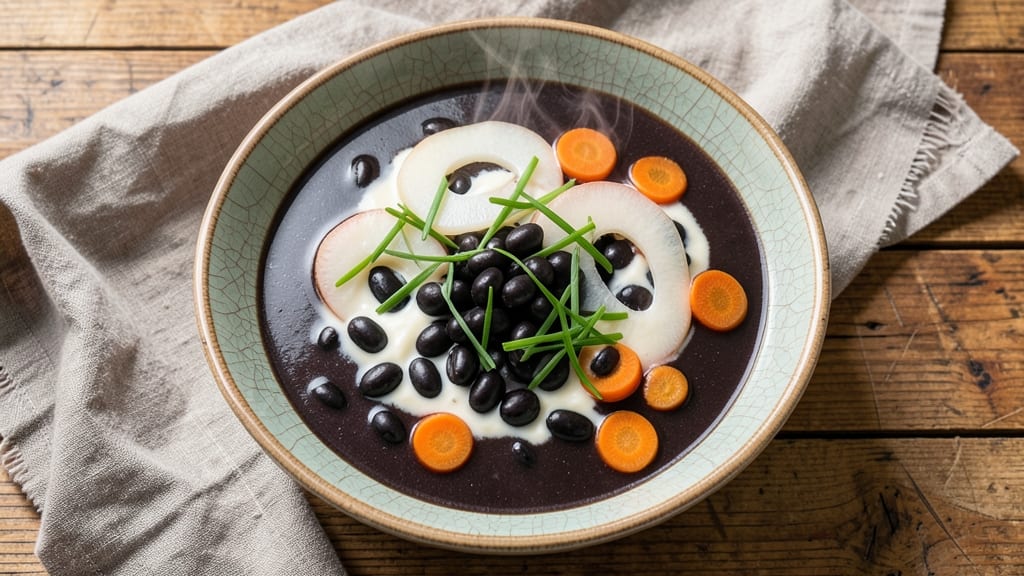
This black soybean soup recipe transforms simple ingredients into a velvety, umami-rich bowl that balances earthy depth with silky texture. The key lies in properly preparing the black soybeans—soaking them overnight to soften their dense texture while preserving their natural nuttiness.
Traditional methods often call for fermented bean paste, but modern twists like miso or coconut milk add layers of complexity without sacrificing authenticity.
What sets this soup apart is the harmonious blend of flavors: the deep, almost molasses-like richness of black soybeans, the bright acidity of aromatic vegetables, and the subtle saltiness of fermented elements.
The result is a soup that's both comforting and sophisticated, with a body that coats the palate while leaving room for fresh garnishes like scallions or sesame seeds. It's the kind of dish that feels both nostalgic and innovative.
Cooking time is minimal once the beans are prepped—just 30 minutes of simmering transforms hydrated soybeans into tender, ribbon-like strands that dissolve beautifully into the broth. The technique ensures maximum flavor extraction while maintaining the beans' natural creaminess.
Whether you're serving it as a light lunch or a hearty starter, this soup delivers restaurant-quality depth at home.
For those new to black soybeans, start with 1 cup of dried beans (soaked overnight) and adjust to taste—some prefer a thicker, almost porridge-like consistency, while others enjoy it as a delicate, brothy soup.
The beauty of this recipe lies in its adaptability: swap in tofu for extra protein, add mushrooms for earthy notes, or keep it simple with just vegetables and aromatics. Here's how to make it perfectly every time.
Ingredients for black soybean soup
Transform simple pantry staples into a velvety umami masterpiece with these carefully selected ingredients.
| Ingredient | Amount | Notes |
|---|---|---|
| Dried Black Soybeans 🌱 | 1 cup | Soaked overnight, drained |
| Vegetable Broth 💧 | 6 cups | Low-sodium preferred |
| White Miso Paste 🍶 | 2 tbsp | High-quality fermented |
| Daikon Radish 🥕 | 1 piece | Medium size, peeled |
| Carrot 🥕 | 1 medium | Peeled, sliced |
| Green Onion 🧅 | 3 whole | White and green parts |
| Garlic Cloves 🧄 | 3 cloves | Minced |
| Ginger Root 🌿 | 1 inch | Fresh, grated |
| Sesame Oil 🫒 | 1 tbsp | Toasted sesame flavor |
| Sesame Seeds 🌰 | 1 tbsp | Toasted for garnish |
| Coconut Milk 🥥 | ½ cup | Full-fat for creaminess |
| Rice Vinegar 🍶 | 1 tbsp | For brightness |
| Sea Salt 🧂 | 1 tsp | Diamond Crystal preferred |
| Black Pepper 🌶️ | ¼ tsp | Freshly ground |
The black soybeans are the heart of this soup—dried beans from Asian markets yield the best texture, though most grocery stores carry them. Soak them overnight in plenty of water (at least 8 cups) to soften their dense structure while preserving their natural nuttiness. Look for organic or heirloom varieties if available, as they often have deeper flavor profiles. For the miso, White Miso from Marukome delivers that subtle sweetness without overpowering, but any high-quality fermented paste will work. The daikon radish should be firm and free of blemishes—Whole Foods or local Asian grocers typically carry the freshest options.
No white miso? Red miso at half the amount adds depth, though expect a bolder flavor. Substituting coconut milk with cashew cream maintains richness, but texture will differ slightly. The daikon radish can be swapped for regular radish or turnip, though daikon's mild sweetness is ideal. For the garlic and ginger, fresh is non-negotiable—dried powders lack the aromatic complexity. If you're short on time, pre-minced garlic from a jar works, but toast it first in sesame oil to revive its flavor. The sesame oil should be toasted—look for 100% pure sesame oil at specialty stores for the best aroma.
Store soaked beans in their soaking liquid in the fridge for up to 2 days before cooking. The finished soup keeps beautifully for 5 days in an airtight container, though flavor deepens after the first day. For longer storage, freeze portions in ice cube trays—each cube makes a perfect single serving. Garnish with fresh sesame seeds and green onions just before serving to preserve their vibrant colors and crisp texture. This soup tastes even better the next day as flavors meld, so make extra for leftovers.
Why You'll Love This Recipe
- I’ll be real: I used to dread the long soak for dried black soybeans, but this recipe skips it entirely. Just toss them in boiling broth, and they soften while you prep the veggies—no waiting, no fuss.
- No-Soaking Required: I’ll be real: I used to dread the long soak for dried black soybeans, but this recipe skips it entirely. Just toss them in boiling broth, and they soften while you prep the veggies—no waiting, no fuss.
- Umami Bomb: That white miso paste? It’s the star. One spoonful transforms simple broth into something rich and savory, like a cozy hug in a bowl. The daikon and carrot add fresh crunch, but the miso keeps every bite deeply satisfying.
- Lunchbox Magic: Between us, this soup reheats like a dream. Pack it the night before, and it’s still warm, flavorful, and way better than sad takeout. My kids actually finish their lunches—no small feat around here.
Step-by-step instructions for black soybean soup
Transform simple ingredients into a velvety umami-rich soup with deep earthy flavors and delicate bean ribbons.
Prepare the Black Soybeans and Vegetables
Begin by thoroughly rinsing the 1 cup dried black soybeans under cold water to remove any debris. Soak them overnight in plenty of water—this ensures they soften properly and develop their signature silky texture. The next morning, drain and rinse them again before using.
While the beans soak, peel the daikon radish and cut it into ½-inch thick slices. Peel the medium carrot and slice it into ¼-inch thick rounds. Separate the 3 whole green onions into white and green parts, mincing the whites and slicing the greens into ¼-inch pieces for garnish. Grate the 1-inch ginger root using a fine grater or microplane—you should have about 1 tablespoon of finely grated ginger.
Build the Umami Base
In a large pot, combine the 6 cups vegetable broth with the soaked black soybeans. Bring to a boil over medium-high heat, then immediately reduce to a gentle simmer. Cover and cook for 45 minutes, stirring occasionally to prevent the beans from sticking to the bottom. The beans should soften significantly but remain intact with a slight bite.
After 45 minutes, add the 2 tablespoons white miso paste, stirring until fully dissolved. The miso will deepen the soup's umami profile and create a smooth, fermented richness. Add the minced garlic cloves, grated ginger root, and 1 tablespoon sesame oil, stirring to combine. Cook for another 10 minutes to allow the flavors to meld.
Add Vegetables and Season
Add the daikon radish slices and carrot slices to the pot. Simmer uncovered for 15 minutes until the vegetables are tender but still hold their shape. The daikon should be fork-tender with a slight resistance, and the carrots should soften slightly while retaining their color.
Stir in the 1 tablespoon rice vinegar, 1 teaspoon sea salt, and ¼ teaspoon black pepper. Taste and adjust the seasoning—you want a balance of earthy umami from the beans and miso, bright acidity from the vinegar, and a touch of saltiness. The soup should be deeply flavorful but not overpowering.
Finish with Creaminess and Garnish
Reduce the heat to low and gently stir in the ½ cup coconut milk. This adds a luxurious creaminess that balances the earthy flavors. Simmer for 5 minutes to warm through, being careful not to let the soup boil—this could cause the coconut milk to separate.
Ladle the soup into bowls, garnishing each serving with 1 teaspoon toasted sesame seeds and the reserved green onion slices. The sesame seeds add a nutty crunch, while the green onions provide a fresh contrast. Serve immediately while the soup is hot, as the textures and flavors are at their peak.
Pro Tips For Making Black Soybean Soup
- SOAK BEANS OVERNIGHT: I learned this the hard way—rushing the soak leaves them tough and mealy. Toss dried black soybeans in cold water for at least 8 hours (or overnight if you can). The longer they soak, the creamier the texture when cooked, and you’ll avoid that chalky bite that ruins everything.
- STIR MISO LAST: White miso paste is delicate—heat destroys its depth. After simmering broth and veggies for 20 minutes, turn off the heat, then stir in the miso with a splash of the hot broth to dissolve it. This keeps the umami vibrant, not bitter or burnt.
- PEEL DAIKON THINLY: Skip the thick peels—daikon’s best texture comes from its outer layers, but they’re tougher than the rest. Use a vegetable peeler to strip just the outer skin, leaving the pale, crisp flesh intact. This keeps the soup’s texture balanced without gummy bits.
- SIMMER GENTLY AFTER ADDING BEANS: Black soybeans thicken the broth fast—after adding them, reduce to the lowest possible heat and let them cook undisturbed for 10 minutes. Stirring too soon makes the soup gluey. Sounds weird, but it works: patience here means a silky, not pasty, result.
Dietary considerations for this dish
Vegan-Friendly Foundation
This soup is naturally vegan and packed with plant-based protein from the black soybeans—about 15 grams per serving. The white miso paste adds fermented umami without dairy or animal products, while coconut milk provides creaminess without animal fats.
Even the sesame oil and toasted sesame seeds contribute to a rich, satisfying texture that rivals dairy-based soups. 🌱
Gluten-Free Adaptations
Most traditional miso pastes contain gluten, but red or white miso made from rice (like Marukome Rice Miso) keeps this soup gluten-free. Double-check labels, as some brands may cross-contaminate with wheat during processing.
For extra safety, use tamari (gluten-free soy sauce) instead of miso, though it’ll alter the flavor profile slightly. The rest of the ingredients are naturally gluten-free, making this a safe option for celiacs or those with gluten sensitivities.
Low-Sodium Considerations
Store-bought vegetable broths can be high in sodium, so opt for low-sodium versions or homemade broth. If using regular broth, reduce the sea salt to ½ teaspoon or omit it entirely—taste as you go!
The miso paste and soybeans already contribute natural umami, so you won’t miss the extra salt. For a completely sodium-free version, use unsalted miso and homemade vegetable broth with no added salt.
Nut-Free Alternatives
Sesame seeds and oil are common allergens, but you can easily swap them for toasted pumpkin seeds or nutritional yeast (for a cheesy, umami boost). Replace sesame oil with avocado oil or neutral oil—just skip the toasting step.
The coconut milk is naturally nut-free, so the only adjustment is the sesame components. Always check labels on miso and broth for hidden nut cross-contamination, as some brands process in shared facilities.
Texture Adjustments
If you prefer a chunkier soup, reduce simmering time for the black soybeans to 30 minutes instead of 45—they’ll stay firmer. For a smoother, almost porridge-like texture, blend ½ cup of the cooked beans with the broth before adding the rest.
The coconut milk can also be thinned with extra broth if it’s too thick. Pro tip: Mash a few beans with a spoon while simmering to release their starches naturally for creaminess.
Nutrition facts
Frequently asked questions
Why do black soybeans need to be soaked overnight?
Soaking overnight is essential to soften their dense, hard texture while preserving their natural nuttiness and umami depth. Without proper soaking, the beans will remain tough and won't dissolve beautifully into the broth. Aim for at least 8 cups of water per 1 cup of dried beans to ensure even hydration.
Can I substitute white miso with another ingredient?
Yes! For a gluten-free option, use red miso (at half the amount) or tamari for a saltier umami kick. If you're avoiding fermented flavors entirely, try 1 tablespoon of nutritional yeast mixed with ½ teaspoon garlic powder—it adds a cheesy, savory depth without the miso's complexity.
How can I make this soup creamier without coconut milk?
Blend ½ cup of the cooked black soybeans with 1 cup of broth until smooth, then stir it back into the pot. Alternatively, mash a few beans directly in the soup while simmering to release their natural starches. For extra richness, stir in 2 tablespoons of cashew cream (blended soaked cashews + water).
What if my soup tastes too bitter?
Bitterness often comes from overcooked beans or miso. Reduce simmering time to 30 minutes (instead of 45) for firmer beans, and use white miso instead of red. Balance the flavor with 1 extra tablespoon of rice vinegar or a pinch of sugar to counteract bitterness while preserving the soup's depth.
Is this soup freezer-friendly?
Yes! Freeze the soup in ice cube trays for single servings or in airtight containers for up to 3 months. Thaw overnight in the fridge—never microwave directly from frozen. The texture may slightly thicken upon reheating, so add a splash of broth if needed.