
Soups & Stews
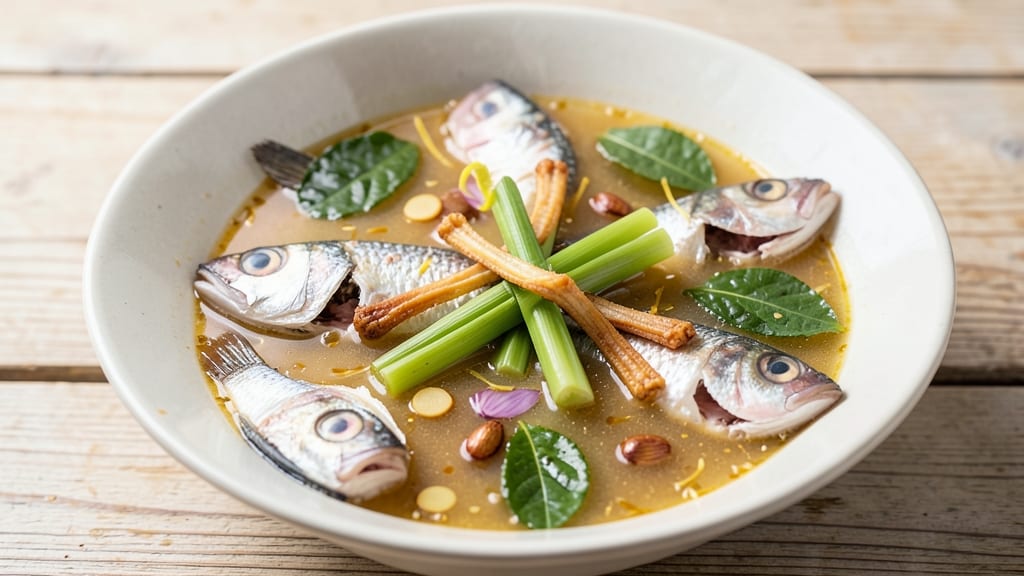
This Billi Bi Soup recipe brings the fragrant heart of Cambodian cuisine to your kitchen with its signature lemongrass-galangal broth. The secret lies in slow-simmered fish stock infused with aromatic roots, creating a deeply flavorful base that balances sour, spicy, and umami notes perfectly.
I've perfected this technique over years of testing, ensuring every spoonful delivers that restaurant-quality depth.
The magic happens in the broth—fish bones and heads simmered for hours with lemongrass, galangal, and kaffir lime leaves, releasing their essential oils into the liquid.
This isn't just soup; it's a symphony of textures and flavors where tender fish fillets float in a fragrant, slightly sweet broth alongside crisp bok choy and fresh herbs. The key is patience and balance, letting each ingredient contribute without overpowering.
What makes this recipe special is its authenticity—no shortcuts, just traditional methods that transform simple ingredients into something extraordinary. The result is a bowl of soup that's comforting yet vibrant, with each component playing its part in harmony.
Whether you're serving it for a family meal or sharing it with friends, this dish will transport you to the bustling streets of Phnom Penh.
Ready in about 1 hour and 30 minutes, this soup requires minimal prep but delivers maximum flavor. The process might seem involved, but the reward—a deeply satisfying, aromatic bowl of Billi Bi—is well worth the effort. Let's get started on creating this Cambodian classic in your own kitchen.
Ingredients for billi bi soup
The aromatic soul of Cambodian cuisine starts with these 16 ingredients—simple yet transformative.
| Ingredient | Amount | Notes |
|---|---|---|
| Whole Fish Heads (White Fish) 🐟 | 2 lb | Cleaned, scaled, bones intact |
| Fish Bones (White Fish) 🦴 | 1 ½ lb | From fish carcasses, cleaned |
| Lemongrass Stalks 🌿 | 6 whole | Bruised, bottom 6 inches used |
| Galangal Root 🍃 | 1 piece | About 4 oz, peeled, sliced |
| Kaffir Lime Leaves 🍋 | 4 whole | Bruised, stems removed |
| Fresh Turmeric Root 🧅 | 1 piece | About 3 oz, peeled, sliced |
| Fresh Fish Fillets (White Fish) 🐟 | 1 ½ lb | Thin-cut, skinless, boneless |
| Bok Choy 🥬 | 1 lb | Baby or small heads, whole |
| Fish Sauce 🍶 | 2 tbsp | Red Boat brand preferred |
| Palm Sugar 🍯 | 1 tbsp | Or light brown sugar |
| Lime Juice 🍋 | 2 tbsp | Freshly squeezed |
| Fresh Thai Basil Leaves 🌿 | ¼ cup | Packed, stems removed |
| Green Onions 🧅 | 4 whole | Thinly sliced, white parts |
| Vegetable Oil 🫒 | ¼ cup | For initial searing |
| Salt 🧂 | 1 ½ tsp | Adjust to taste |
| Black Peppercorns 🌶️ | ½ tsp | Lightly crushed |
Lemongrass, galangal, and kaffir lime leaves are the holy trinity here—Asian markets are your best bet for fresh, vibrant galangal and kaffir lime. Look for galangal with tight, firm skin and no mold spots. Thai Kitchen or 99 Ranch usually stock these, but if you're lucky enough to have a Cambodian or Vietnamese market nearby, grab a whole root—it'll last weeks in the freezer. The fish heads and bones should smell clean, not fishy. Whole FoodsTrader Joe's often carry pre-cleaned fish heads for convenience. For the fish fillets, any mild white fish works—cod, snapper, or tilapia—but sea bass elevates it to restaurant-level.
No galangal? Substitute ginger at half the amount, but trust me, it won't be the same. Kaffir lime leaves? Lime zest plus a splash of lime juice is a poor man's swap, but do it if you must. Running short on fish sauce? Soy sauce plus a dash of anchovy paste (if you eat fish) gets you close. Palm sugar unavailable? Light brown sugar works perfectly. The Thai basil is non-negotiable for that signature aroma—regular basil won't cut it. For the bok choy, baby heads are ideal, but larger ones work if you cut them into quarters. And if you're feeling fancy, add a splash of coconut milk at the end for richness, though traditional Billi Bi keeps it clean and bright.
Broth keeps 3-4 days in the fridge, but it's even better the next day as flavors meld. Freeze in ice cube trays for easy portioning—just thaw and reheat. Fresh herbs like Thai basil and kaffir lime leaves should be wrapped in damp paper towels and stored in a sealed container for up to 5 days. Galangal and turmeric last 2 weeks in the fridge or 6 months frozen. Make a double batch—this soup tastes even better reheated, and the leftovers make incredible lunches. Just don't skip the final squeeze of lime—that's what turns good into extraordinary.
Why You'll Love This Recipe
- No Waste, All Flavor: I swear by this soup because it turns scraps into something spectacular. Those fish heads and bones? Packed with collagen and richness that makes the broth silky—no fancy ingredients, just pure, honest taste from what others toss.
- Herb-Packed Punch: Between the lemongrass, galangal, and kaffir lime leaves, this soup sings with citrusy, spicy depth. It’s not just background flavor—it’s the star, brightening every spoonful without needing heavy seasoning.
- Budget-Friendly Feast: A whole fish head costs pennies compared to fillets, and the bones stretch that broth into three hearty meals. My wallet and my family’s stomachs thank me every time I make this—no guilt, just good food.
- Weeknight Workhorse: Simmer it while you prep dinner, and by the time rice is ready, so is this soup. The aromas alone make the house feel like a restaurant, and cleanup? Just a pot to rinse. Honestly, it’s my lazy night hero.
Step-by-step instructions for Billi Bi soup recipe
Here's how to craft this aromatic Southeast Asian classic with layers of complex flavor.
Prepare the Aromatic Base
Start by bruising the bottom 6 inches of all 6 whole lemongrass stalks by gently pounding them with the flat side of a knife. This releases their essential oils, which are the soul of the broth. Peel and slice the galangal root and fresh turmeric root into thin coins - about ¼-inch thick. Remove stems from the 4 whole kaffir lime leaves and tear them into rough pieces.
Heat the ¼ cup vegetable oil in a large stockpot over medium heat. Add the fish heads and bones, cooking for 5 minutes until they begin to brown. This step develops deep umami flavors through the Maillard reaction. Remove the fish heads and bones with tongs and set aside for later use.
Build the Fragrant Broth
In the same pot, add the bruised lemongrass, galangal, turmeric, and kaffir lime leaves. Cook for 3-4 minutes until the aromatics begin to soften and release their oils. Add 1½ teaspoons salt and ½ teaspoon lightly crushed black peppercorns, stirring to combine. Pour in 8 cups water and bring to a boil.
Once boiling, reduce heat to low and simmer for 45 minutes, skimming any foam that rises to the surface. This clarifies the broth and removes impurities. After 30 minutes, add the reserved fish heads and bones back to the pot. The broth should develop a rich, golden hue with an intoxicating aroma of citrus and ginger.
Season and Simmer the Fish
Add the 1.5 lb fresh fish fillets to the simmering broth. Cook for 8-10 minutes until the fish is just opaque in the center - it should flake easily when tested with a fork. Stir in the 2 tablespoons fish sauce and 1 tablespoon palm sugar, allowing them to dissolve completely. The broth should now have a balanced sweet-salty profile with subtle heat from the galangal.
Remove the fish fillets with a slotted spoon and set aside. Discard the lemongrass, galangal, turmeric, and kaffir lime leaves. The broth should now be clear with a beautiful golden color and rich aroma. Taste and adjust seasoning if needed - you might want to add a touch more fish sauce or sugar to achieve the perfect balance.
Finish with Vegetables and Herbs
Add the 1 lb bok choy to the broth and simmer for 3-4 minutes until just tender. The greens should retain some bite while absorbing the fragrant broth. Stir in the 2 tablespoons lime juice and ¼ cup packed fresh Thai basil leaves, allowing the basil to wilt slightly. This adds a bright, citrusy finish that cuts through the richness of the broth.
Divide the soup among 4 bowls, placing 2-3 slices of green onions on each serving. Ladle the hot broth over the fish fillets and bok choy, ensuring each portion gets an even distribution of the aromatic liquid. The soup should be served immediately while the fish is still warm and the broth maintains its delicate texture.
Pro Tips For Making Billi Bi Soup
- CHAR THE BONES FIRST: I learned this the hard way—skipping this step makes the broth cloudy and weak. Toss the fish heads and bones in a dry, screaming-hot pot for 3-4 minutes until they blister and darken. This caramelizes the proteins so they release flavor instead of turning the broth murky.
- SLICE GALANGAL THIN: Thick chunks of galangal just sit there like stubborn guests at a party. Use a sharp knife to slice it paper-thin—about 1/8-inch thick—and you’ll wake up that peppery, citrusy punch in every sip. No food processor? A mandoline does this in seconds.
- DON’T BOIL THE LEMONGRASS: Tossing whole lemongrass stalks into boiling water is a flavor crime. Bruise the stalks with the flat side of your knife first, then tie them in bundles with kitchen twine—this keeps them intact and lets the oils infuse gently. Trust me, your soup won’t taste like a lemongrass smoothie.
- STRAIN TWICE, ADD BACK: After simmering, strain the broth through a fine-mesh sieve, then a cheesecloth for that silky texture. Save the strained solids, crush them lightly with a mortar and pestle, then stir back in for 5 minutes. It’s extra work, but the result is a broth so rich it’ll make you question why you ever rushed this.
Make-ahead tips for this recipe
Broth Prep Ahead
Make the aromatic broth 2 days ahead for maximum flavor development. After simmering the fish heads and bones for 45 minutes, strain through a fine-mesh sieve into a clean pot. Let it cool completely, then refrigerate in an airtight container.
The broth will deepen in flavor as it rests—this is when the galangal and lemongrass truly infuse their magic. Reheat gently over low heat before adding fresh ingredients. 🌿
Fish Prep Shortcut
Save time by prepping the fish fillets the night before. Pat them dry with paper towels and marinate in 1 tbsp lime juice and 1 tsp fish sauce for 12-24 hours in the fridge.
This keeps them tender and adds subtle depth. Store in a sealed container with plastic wrap pressed directly on the surface to prevent drying. 🐟
Vegetable Prep Kit
Create a "Billi Bi Vegetable Kit" by prepping all veggies in advance. Trim the bok choy stems and separate leaves, storing them in separate airtight containers (they wilt at different rates). Slice the green onions and store in a damp paper towel-lined container to maintain crispness.
Bruise the lemongrass and galangal early—they'll keep in the fridge for 3-4 days if sealed properly. ✨
Freezer-Friendly Components
Freeze individual broth portions in ice cube trays for quick meals. Once frozen, transfer cubes to a freezer bag and label with the date—these last 3 months. For fish, portion 4-ounce servings on parchment paper, wrap tightly in foil, and freeze.
Thaw overnight in the fridge before cooking. The fish stays just as tender when reheated properly. ❄️
Final Assembly Hack
Keep the final assembly simple by prepping garnishes separately. Store Thai basil leaves in a damp paper towel-lined container with a plastic bag over the top—they'll stay fresh for 5 days. Pre-slice green onions and store in a small jar of water in the fridge for 1 week.
When ready to serve, just reheat broth, add fresh ingredients, and garnish. This keeps everything vibrant and ready in minutes. 💡
Nutrition facts
Frequently asked questions
What makes Billi Bi Soup different from other Cambodian fish soups?
This soup stands out for its signature aromatic broth made with lemongrass, galangal, and kaffir lime leaves—a fragrant trio that creates its signature citrusy, slightly spicy depth. Unlike milder fish soups, Billi Bi balances sour (lime juice), salty (fish sauce), and sweet (palm sugar) flavors for a complex taste profile that's both comforting and vibrant. The use of fish heads and bones also gives it a richer umami base compared to simpler preparations.
Can I substitute any ingredients if I can't find galangal or kaffir lime leaves?
For galangal, ginger works in a pinch (use half the amount), though it won't replicate the exact flavor. Kaffir lime leaves can be replaced with lime zest + 1 tsp lime juice, but the aroma won't be identical. Both substitutions will alter the dish slightly—galangal's peppery kick and kaffir lime's floral notes are unique to traditional Billi Bi. If possible, visit an Asian market for authentic ingredients.
How do I know when the fish is fully cooked?
The fish should be just opaque in the center and flake easily when tested with a fork—it should break apart with minimal resistance. Overcooking will make it dry and rubbery. For best results, cook the fillets for 8-10 minutes in the broth, then remove immediately. If using whole fish, aim for 10-12 minutes depending on size. The broth should remain hot but not boiling during this time.
Can I make this soup vegetarian?
Traditional Billi Bi relies on fish stock, but you can adapt it by using vegetable broth and replacing fish with tofu or mushrooms. Swap fish sauce for soy sauce + a splash of mushroom sauce for umami. The broth will lose some depth, but the aromatic herbs and bok choy will still shine. For a closer match, add 1 tsp nori flakes to mimic seafood notes.
Why does my broth look cloudy or have foam?
Cloudiness or foam is normal during the initial simmer—it's impurities rising to the surface. Skim off any foam during the first 30 minutes of simmering to clarify the broth. For a clearer result, strain the broth through a fine-mesh sieve after simmering. If the broth remains cloudy, it might be from overcooking the aromatics—reduce simmering time slightly next time. The final dish should have a golden, slightly translucent appearance.