
Soups & Stews
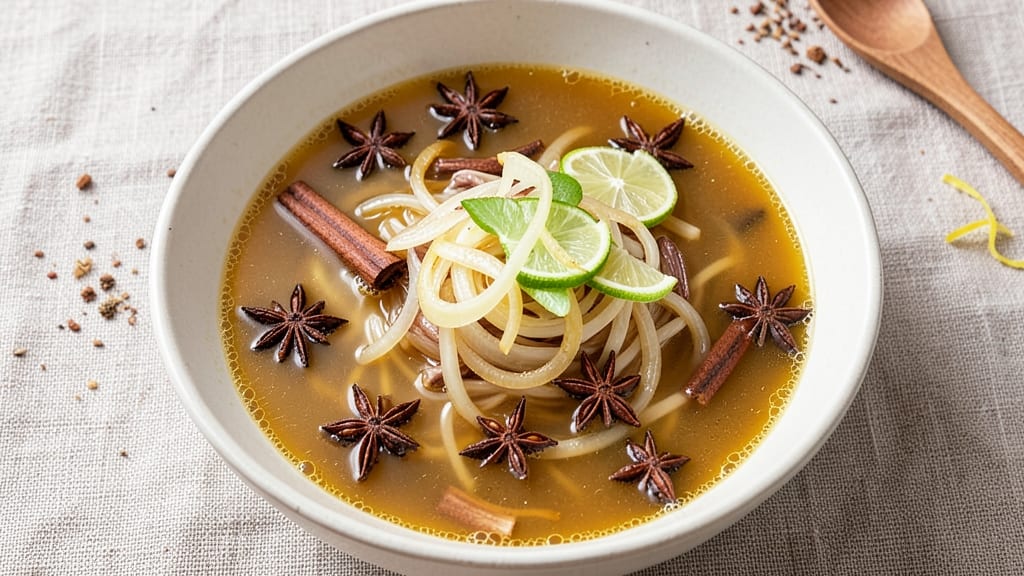
This beef-flavored pho soup base recipe unlocks the rich, aromatic essence of traditional Vietnamese pho—deep umami that builds through hours of slow-simmered bones and aromatic spices.
The secret lies in patience: letting gelatinous collagen extract from beef marrow bones while star anise, cinnamon, and cardamom infuse the broth with warm, earthy complexity. Unlike pre-made stocks, this concentrated base transforms into restaurant-quality pho with just hot water and fresh ingredients.
What sets this recipe apart is its two-stage simmering process, first rendering fat and collagen from bones, then finishing with aromatic spices to create a balanced, storable base.
The result is a velvety, golden broth that forms the foundation of any pho bowl—packed with umami depth but light enough to let herbs and noodles shine. No blender required; the natural breakdown of bones delivers that signature pho richness without graininess.
This isn't just a broth—it's a flavor multiplier that elevates simple ingredients into something extraordinary. Freeze the base in ice cube trays for easy portioning, or store it in the fridge for up to 5 days.
When you're ready to serve, just reheat with a splash of water, add fresh herbs, and watch as the aroma transforms your kitchen into a Hanoi street corner.
The beauty of this recipe lies in its versatility—use it for pho, ramen, or even as a braising liquid for meats. The key is the marrow bones, which release collagen that thickens the broth naturally, creating that signature pho texture without additives.
Perfect for meal prep or special occasions, this base ensures every bowl tastes like it came from a bustling Vietnamese restaurant.
Ingredients for beef flavored pho soup base
Ten aromatic ingredients transform beef marrow bones into velvety pho broth essence.
| Ingredient | Amount | Notes |
|---|---|---|
| Beef Marrow Bones 🦴 | 4 lb | Raw, uncooked, with marrow intact |
| Yellow Onions 🧅 | 2 whole | Yellow or red, roughly chopped |
| Garlic Cloves 🧄 | 12 cloves | Whole, peeled, smashed |
| Fresh Ginger 🧅 | ½ cup | Peeled, roughly chopped (about 3 oz) |
| Star Anise 🌿 | 4 whole | Star-shaped pods, whole |
| Cinnamon Sticks 🌿 | 2 whole | 2-inch pieces, lightly crushed |
| Cardamom Pods 🌿 | 6 whole | Lightly crushed, seeds exposed |
| Bay Leaves 🌿 | 4 whole | Dried, standard size |
| Rock Salt 🧂 | 2 tsp | Kosher or sea salt |
| Black Peppercorns 🌶️ | 1 tbsp | Whole, lightly crushed |
The marrow bones are non-negotiable—look for beef shank or knuckle bones with visible marrow channels at specialty butchers or Asian markets. Freshness matters: bones should be bright red with minimal odor. If using frozen, thaw overnight in the fridge. The aromatic spices—star anise, cinnamon, and cardamom—are best sourced from bulk bins at Whole Foods or Penzeys for maximum potency. These spices should be whole and vibrant, not dusty or discolored. For cardamom, green pods indicate freshness, while brown pods are aged. The ginger should be firm with tight skin—no wrinkles or soft spots.
No star anise? Anise seeds at double the amount work in a pinch, though the flavor won't be identical. Substituting cinnamon sticks with ground cinnamon (1 tsp) loses some depth, but it's better than nothing. For cardamom, 1 tsp ground cardamom can replace the pods, though texture differs. The onions and ginger can be prepped ahead: chop and store in airtight containers for 3 days in the fridge. If you're short on time, frozen ginger works fine—just thaw before using. The peppercorns should be lightly crushed between two spoons to release oils without turning to powder.
Store the finished broth in airtight containers with a thin layer of olive oil on top to preserve freshness. Keeps 5 days refrigerated or 3 months frozen in ice cube trays for easy portioning. For best flavor, use within 2 weeks of freezing. The spices can be reused once or twice—simmer them again in fresh broth for a second batch. Marrow bones can be simmered for up to 6 hours for maximum collagen extraction, but 4 hours yields optimal balance between flavor and clarity.
Why You'll Love This Recipe
- Two-Ingredient Core: I swear by this base—just bones, onions, and water. The marrow melts into the broth while the onions caramelize slowly, turning sweet and deep. No fancy prep, just time and patience (which, honestly, is the hardest part).
- Umami Bomb: That first sip? The ginger and star anise bloom into something warm and complex, while the garlic cloves toast until they’re fragrant but not bitter. It’s the kind of flavor that makes you pause mid-slurp—wait, is this really just soup?
- Weeknight Superstar: I use this for pho, ramen, or even a quick beef stew. Freeze half the batch for lazy nights when I don’t want to start from scratch. (Yes, even on a Tuesday night when I’ve had a long day.)
- Budget Goldmine: Marrow bones are cheap, and one pot feeds four people easily. The leftovers? Even better the next day—if there are any, because my family clears the bowl before I can blink. Honestly, it’s the most efficient way to stretch a meal.
Step-by-step instructions for deep umami beef pho broth
A slow-simmered foundation transforms simple bones into rich, aromatic broth.
Prepare the Bones and Aromatics
Begin by rinsing the 4 lb beef marrow bones under cold water and patting them completely dry with paper towels. This removes surface impurities that could cloud your broth. Place them in a large stockpot and cover with cold water by about 2 inches—this prevents the bones from drying out during cooking.
Add the 2 whole yellow onions (roughly chopped), 12 cloves garlic cloves (peeled and smashed), and 0.5 cup fresh ginger (peeled and roughly chopped). These aromatics form the flavor backbone of pho. Lightly crush the 2 whole cinnamon sticks, 4 whole star anise, 6 whole cardamom pods, and 4 whole bay leaves—this releases their essential oils without overpowering the broth. Add them to the pot along with the 1 tbsp black peppercorns. The spices should simmer gently, not burn.
Simmer for Deep Flavor Extraction
Bring the broth to a gentle boil over medium-high heat, then immediately reduce to a barely simmering state—you should see only the occasional tiny bubble breaking the surface. This low-and-slow approach prevents the bones from releasing bitter compounds. Skim any foam or impurities that rise to the surface during the first 30 minutes using a fine-mesh skimmer.
Simmer uncovered for 4 hours total. The broth should develop a deep amber color and an intense aromatic scent. The marrow bones will release their rich gelatin and fat, creating a velvety texture. Add the 2 tsp rock salt after 2 hours of simmering—this timing ensures even seasoning without over-salting.
Strain and Finish the Broth
After 4 hours, remove the pot from heat and let the broth sit for 10 minutes to allow any settled particles to sink. Line a fine-mesh strainer with cheesecloth or a coffee filter to catch any remaining small particles. Strain the broth into a clean pot, pressing gently on the solids to extract maximum flavor without releasing sediment.
The finished broth should be clear with a deep golden hue and a complex aroma combining savory beef, sweet spices, and herbal notes. If the broth tastes too mild, you can reduce it by 10% over low heat to concentrate the flavors. For immediate use, keep the broth warm at 160°F—for storage, cool quickly and refrigerate for up to 5 days or freeze for 3 months.
Pro Tips For Making Beef Flavored Pho Soup Base
- CRACK THE MARROW FIRST: Don’t just toss in whole marrow bones—split them open with a cleaver or heavy knife before simmering. The exposed marrow melts into the broth, adding a rich, velvety depth that store-bought pho paste can’t match. (Yes, it’s messy, but that’s the point.)
- CHAR THE ONIONS LOW: Walk away after the onions turn deep golden—don’t let them burn. I learned this the hard way when my broth tasted bitter from overcooked onions. Aim for 15–20 minutes on low heat, stirring occasionally, until they’re caramelized but not crispy.
- PEEL GINGER THINLY: Skip the thick slices—peel ginger into paper-thin sheets or julienne it. Thin ginger infuses faster and dissolves into the broth without leaving chewy bits. (Pro move: Toast the peeled ginger in the pot for 30 seconds before adding water.)
- CONTROL THE SIMMER: A rolling boil destroys flavor—keep the broth at a gentle simmer (tiny bubbles breaking the surface). After the first 30 minutes, reduce heat to the lowest setting that maintains a whisper of activity. Patience here makes the difference between good and exceptional pho.
Make-ahead tips for leftovers
Freeze in Portions
Portion your pho base into ice cube trays before freezing—this makes it easy to grab exactly what you need for a single bowl. Once frozen, transfer cubes to a ziplock freezer bag, squeezing out excess air to prevent freezer burn.
Label each bag with the date and use within 3 months for peak flavor. 🧊
Fridge Storage Tips
Store your finished broth in glass jars or airtight containers with a thin layer of olive oil on top to preserve freshness. Refrigerated broth keeps for 5 days, but for best results, use it within 3 days.
Always let it cool completely before refrigerating to prevent condensation from diluting the flavor.
Reheat Gently
Reheat your pho base on the stovetop over low heat to avoid breaking down the delicate flavors. Bring to a gentle simmer, then reduce to lowest heat and maintain at 160°F for 5-10 minutes.
Never microwave—it creates a skin and dulls the aroma. For extra richness, add a splash of hot water if the broth thickens too much.
Prep Ahead for Meal Prep
Make a double batch of broth and freeze half for future use. When you're ready to cook, simply thaw overnight in the fridge, then reheat. This saves time on busy weeknights—just add fresh herbs, noodles, and protein when serving.
I like to prep 2 batches on weekends so I always have pho-ready broth for spontaneous meals. ✨
Spice Reuse Strategy
Save the whole spices (star anise, cinnamon sticks, cardamom pods, and bay leaves) after straining—simmer them again in 2 cups fresh water for 10 minutes to extract extra flavor.
Use this infused water as a quick broth booster for soups, stews, or even marinades. Just strain again before using to avoid bitterness.
Labeling Matters
Always label your stored broth with the date and contents (e.g., "Beef Pho Base – 2/15"). I use masking tape and a Sharpie for quick, visible labels. Frozen broth can last 3 months, but for the best taste, use it within 2 months.
Thaw in the fridge overnight—never at room temperature—to preserve texture and flavor. 📅
Nutrition facts
Frequently asked questions
Can I use beef chuck roast instead of marrow bones for this pho base?
While beef chuck roast will work, it won't deliver the same rich, gelatinous texture that marrow bones provide. For authentic pho flavor, marrow bones release collagen that creates that signature velvety mouthfeel. If you must substitute, use beef shank bones or knuckle bones instead—they'll give you more depth than lean cuts.
How do I adjust the spice level if I'm sensitive to heat?
Simply omit the black peppercorns entirely—they're the only spice contributing heat in this recipe. The aromatic spices (star anise, cinnamon, cardamom) provide warmth without spiciness. For extra mildness, you can even reduce the ginger slightly (0.25 cup instead of 0.5 cup) since fresh ginger has a subtle peppery kick.
What's the best way to use this base for actual pho bowls?
Reheat your pho base until steaming hot (160°F), then strain again if needed. For each bowl, use 2 cups broth as the base. Add fresh ingredients like rice noodles, thinly sliced raw beef (for pho bo), and fresh herbs (thai basil, cilantro, bean sprouts) right before serving. The broth should be hot enough to cook the raw beef quickly.
Can I make this base without a stockpot?
Use a large Dutch oven or even a slow cooker on low heat for 6-8 hours instead. For stovetop alternatives, a deep pot with a tight-fitting lid works well—just monitor the water level to prevent evaporation. The key is maintaining that gentle simmer to extract maximum flavor from the bones.
Why does my broth look cloudy after simmering?
Cloudiness usually means proteins and fats haven't fully settled or you skimmed too aggressively. For clearer broth, strain through a cheesecloth-lined fine-mesh strainer and press gently on the solids. If it's still cloudy, simmer uncovered for 10 extra minutes to allow more fat to rise and skim again. The authentic pho broth should be golden with some natural richness, not completely clear.