
Soups & Stews
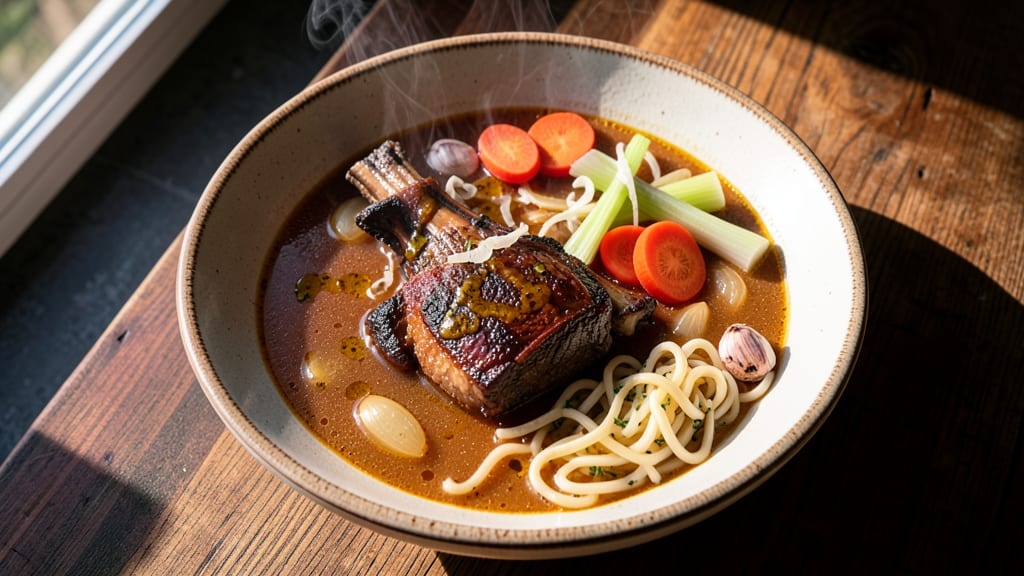
Slow-simmered beef shank noodle soup transforms tough cuts into melt-in-your-mouth perfection with rich, umami-packed broth and al dente noodles. This recipe delivers restaurant-quality depth through a carefully timed braising process—where collagen-rich beef shank releases its natural gelatin, creating a velvety broth that coats every spoonful. The key lies in patience: letting flavors meld over hours rather than rushing the simmer, which is where the magic happens.
What sets this version apart is the balance of textures—tender beef shank that practically falls apart, chewy yet tender noodles, and a broth so flavorful it needs no garnish (though fresh herbs elevate it beautifully).
The technique starts with a deep caramelization of aromatics—onions, garlic, and ginger—before adding the beef shank and simmering until the meat is fork-tender. This method ensures every bite delivers both hearty satisfaction and delicate umami complexity.
The result is a soup that feels luxurious yet simple to prepare, perfect for chilly evenings or when you crave comfort without compromise. The broth reduces to a concentrated depth, while the noodles absorb just enough flavor to become part of the ensemble.
Serve with a sprinkle of sesame seeds or a drizzle of chili oil for texture contrast, or keep it classic with a wedge of lime.
This recipe scales effortlessly—doubling the broth for leftovers or halving it for a light lunch—while maintaining its rich character. The beauty of beef shank noodle soup lies in its versatility: it’s hearty enough for a main course but flexible enough to pair with simple greens or crusty bread.
Let’s get started on creating a bowl that feels like a hug in every spoonful.
Ingredients for beef shank noodle soup
Transform tough beef shank into melt-in-your-mouth perfection with these umami-rich ingredients.
| Ingredient | Amount | Notes |
|---|---|---|
| Beef Shank 🥩 | 2 lb | Bone-in, cut into 2-inch pieces |
| Yellow Onions 🧅 | 1 whole | Peeled, sliced into half-moons |
| Garlic Cloves 🧄 | 6 cloves | Peeled, smashed |
| Fresh Ginger 🌿 | 2 tbsp | Grated, packed |
| Carrots 🥕 | 4 whole | Peeled, cut into 1-inch chunks |
| Celery Stalks 🥬 | 3 whole | Trimmed, chopped |
| Dried Bay Leaves 🌿 | 2 whole | Standard size |
| Tomato Paste 🍅 | 2 tbsp | Smooth texture |
| Dry Egg Noodles 🍜 | 8 oz | Al dente variety |
| Low-Sodium Soy Sauce 🥢 | 2 tbsp | For umami depth |
| Red Wine 🍷 | 1 cup | Dry, bold variety |
| Beef Broth 💧 | 4 cups | Homemade or high-quality |
| Olive Oil 🫒 | 2 tbsp | For initial searing |
| Salt 🧂 | 1 ½ tsp | Kosher or sea salt |
| Black Pepper 🌶️ | ½ tsp | Freshly ground |
The beef shank is the heart of this soup—bone-in cuts deliver the deepest flavor. Look for well-marbled shanks at your local butcher or the meat department at Whole Foods. If you're using pre-cut pieces, aim for 2-inch chunks to ensure even cooking. The onions, carrots, and celery form the aromatic base, so don't skimp on freshness—bright, firm vegetables caramelize beautifully. For the ginger, freshly grated makes all the difference; pre-minced loses potency quickly. If you're short on time, Trader Joe's sells pre-peeled ginger in small packages.
No red wine on hand? Substitute an extra cup of beef broth—just add a splash of balsamic vinegar for depth. The tomato paste is non-negotiable for that concentrated umami punch, but if you're avoiding it, 1 cup of crushed tomatoes works in a pinch. For the noodles, egg noodles are traditional, but rice noodles or udon add interesting textures. The soy sauce can be swapped for miso paste (1 tbsp)**>, though the flavor profile shifts slightly. Fresh ginger is ideal, but dried ginger at half the amount gets you close if needed.
This soup tastes even better the next day as flavors meld. Store leftovers in airtight containers in the fridge for up to 5 days. For longer storage, freeze portions for up to 3 months. Reheat gently on the stove with a splash of water or broth to restore richness. The noodles can be cooked separately and added fresh when serving, or cooked directly in the broth for a heartier texture. Garnish with fresh herbs like parsley or cilantro if you like, but the soup stands strong on its own.
Why You'll Love This Recipe
- Slow-Simmer Magic: I swear by the overnight soak of beef shank—it turns tough cuts into melt-in-your-mouth perfection with zero extra effort. Just toss it in cold water with onions, ginger, and garlic, then let the stove do the work while you do anything else.
- Umami Bomb: That beef shank? It’s the star. The long simmer pulls out deep, savory richness that makes every spoonful feel like a hug—especially when you balance it with the bright crunch of carrots and the zing of fresh ginger. Honestly, the broth alone is worth the wait.
- Leftovers That Shine: This soup only gets better the next day. I make a double batch on Sundays, and by Wednesday, the flavors have melded into something even more complex. Freezes like a dream too—just reheat and serve, no fuss.
- Budget-Buster Combo: Beef shank stretches across multiple meals without breaking the bank. A single cut feeds four for dinner, then becomes lunch for two the next day. Plus, onions, carrots, and garlic are always cheap staples—this recipe doesn’t play games with your wallet.
Step-by-step instructions for beef shank noodle soup
Here's how to build deep, rich flavors through slow cooking and precise timing.
Sear the Beef Shank for Maximum Flavor
Heat a large Dutch oven over medium-high heat until hot. Add the 2 tablespoons olive oil and swirl to coat the bottom. Place the 2 lb beef shank in the pot, bone-side down, and let it sear undisturbed for 8-10 minutes until deeply browned on all sides. This step develops the Maillard reaction, creating that fundamental umami foundation.
Resist the urge to move the shank prematurely—you'll know it's ready when the edges are deep golden brown and the meat releases easily from the pan. Once browned, remove the shank and set it aside on a plate. You'll notice the bottom of the pot has developed a rich, caramelized crust—this is pure flavor you don't want to miss.
Build the Aromatic Vegetable Base
In the same Dutch oven, add the 1 whole yellow onion and cook for 5 minutes until softened and beginning to caramelize. Add the 4 whole carrots and 3 whole celery stalks, stirring to coat with the fond from the searing. Cook for another 5 minutes until the vegetables begin to soften.
Add the 6 cloves garlic cloves and 2 tablespoons grated fresh ginger, stirring constantly for 30 seconds until fragrant. The aroma should fill your kitchen—this is when your soup starts developing its complex character. Immediately pour in the 1 cup red wine and scrape up any browned bits from the bottom of the pot. Let this simmer for 3 minutes until the wine reduces by half.
Develop the Rich Broth Base
Add the 4 cups beef broth, 2 tablespoons tomato paste, 2 whole dried bay leaves, 1.5 teaspoons salt, and 0.5 teaspoon black pepper to the pot. Return the beef shank to the liquid, making sure it's fully submerged. Bring to a gentle boil, then immediately reduce heat to low and cover partially.
Simmer for 2 hours, maintaining a gentle bubble. You'll notice the broth will gradually change from pale to deep amber as the collagen breaks down from the beef shank, creating a velvety texture. Check occasionally to ensure there's always enough liquid to cover the meat—add water if needed. The shank should be fork-tender when pierced with a knife.
Finish with Umami Depth and Noodles
Once the beef shank is tender, remove it from the broth and let it rest on a cutting board for 10 minutes. Strain the broth through a fine-mesh sieve into a clean pot, pressing on the vegetables to extract maximum flavor. Return the broth to the heat and add the 2 tablespoons low-sodium soy sauce. Simmer for 5 minutes to integrate the flavors.
While the broth simmers, bring a separate pot of salted water to a boil and cook the 8 ounces dry egg noodles according to package instructions until al dente. Drain and set aside. When ready to serve, shred the beef shank into bite-sized pieces using two forks. Return the meat to the broth and add the cooked noodles, stirring gently to combine. Let everything heat through for 2-3 minutes before serving.
Pro Tips For Making Beef Shank Noodle Soup
- SEAR THE SHANK FIRST: Don’t rush this—get that pot screaming hot before adding the beef shank. A deep, caramelized crust locks in flavor and keeps the meat from turning to mush later. I used to skip this, and the soup always tasted flat until I learned better.
- SIMMER LOW AND LONG: After browning, cover the pot and reduce heat to a gentle simmer—just enough to see tiny bubbles at the edges. Too much heat = tough meat, and you’re not making stew, you’re racing. My first attempt had rubbery shanks because I panicked and cranked the heat.
- PEEL AND GRATE GINGER: Skip the minced ginger—peel and grate it fresh for a brighter bite. The peel adds depth, and grating keeps it from turning to mush. I was lazy once and used powdered, and the soup tasted like it was missing something. Don’t be that cook.
- ADD CARROTS LATE: Toss the carrots in only in the last 20 minutes—any earlier, and they’ll turn to mush. Cut them into even chunks so they cook through without falling apart. I learned this after serving a bowl with sad, overcooked carrots. Now I time it perfectly.
Make-ahead tips for this recipe
Prep Ahead for Broth
Start your broth base the night before—it develops deeper flavor when simmered slowly. After searing the beef shank, add all vegetables, wine, and broth to a Dutch oven, then refrigerate uncovered.
The next day, bring to a boil, skim off any congealed fat, then simmer for 2 hours to complete the cooking. This method saves time and enhances richness through overnight chilling.
Noodle Prep Shortcut
Cook your noodles ahead of time and store them in the fridge for up to 2 days. When ready to serve, simply reheat them in the hot broth for 1-2 minutes—this ensures they're perfectly al dente without overcooking.
For extra convenience, pre-cook and freeze noodles in airtight containers with a splash of water to prevent drying.
Broth Freezing Tips
Let your fully cooked broth cool completely before transferring to freezer-safe containers, leaving 1-inch headspace for expansion. Label with the date—it keeps for 3 months. When reheating frozen broth, thaw overnight in the fridge, then warm on the stove over low heat.
For quick use, thaw in the microwave first, then finish on the stovetop to restore texture.
Shank Make-Ahead Strategy
After braising the beef shank, let it cool in the broth, then remove and refrigerate separately for up to 4 days. When ready to serve, reheat the broth and shred the cold shank directly into it—no need to thaw first.
The meat will warm through quickly while absorbing the broth's flavors. This approach saves time while maintaining perfect tenderness.
Complete Soup Assembly
For a fully make-ahead meal, prepare the entire soup (except noodles) up to 2 days ahead. Store broth and shredded beef in separate containers. When serving, reheat broth, add noodles, and cook together for 2-3 minutes.
Garnish with fresh herbs or a drizzle of chili oil just before serving to keep flavors vibrant. This method ensures a restaurant-quality bowl with minimal last-minute effort. 💫
Nutrition facts
Frequently asked questions
Can I substitute beef shank with another cut of beef?
While beef shank is ideal for its collagen-rich marrow, you can use chuck roast or brisket as substitutes. Cut these into 2-inch cubes and increase simmering time to 3 hours for maximum tenderness. Avoid lean cuts like sirloin—they won't develop the same rich, velvety broth. The flavor will be slightly different but still delicious!
How do I know when the beef shank is fully tender?
The shank is done when it's fork-tender and easily shreds with minimal pressure. Insert a knife or fork—if it slides in like butter, it's ready! For extra assurance, look for a deep amber broth and meat that separates cleanly. Overcooking won't ruin it, but the texture will become mushy. Aim for 2 hours of simmering for perfect results.
Can I make this soup in an Instant Pot?
Sear the shank first, then add all ingredients (except noodles) to your Instant Pot. Cook on high pressure for 90 minutes, followed by a 15-minute natural release. The pressure cooker cuts time dramatically while still delivering rich flavor. For the noodles, cook them separately and add them just before serving to prevent mushiness.
What's the best way to store leftovers?
Store in airtight containers in the fridge for up to 5 days. The broth and meat will actually taste better after resting! For longer storage, freeze for 3 months. When reheating, warm gently on the stove with a splash of water or broth to restore richness. The noodles can be cooked fresh when serving for optimal texture.
How can I make this soup spicier?
Add 1-2 teaspoons of chili flakes or 1/2 teaspoon of cayenne when simmering the broth. For heat with depth, stir in 1 tablespoon of gochujang or a splash of sriracha at the end. Garnish with fresh red pepper slices or a drizzle of chili oil for extra kick. Start with less—you can always add more!