
Soups & Stews
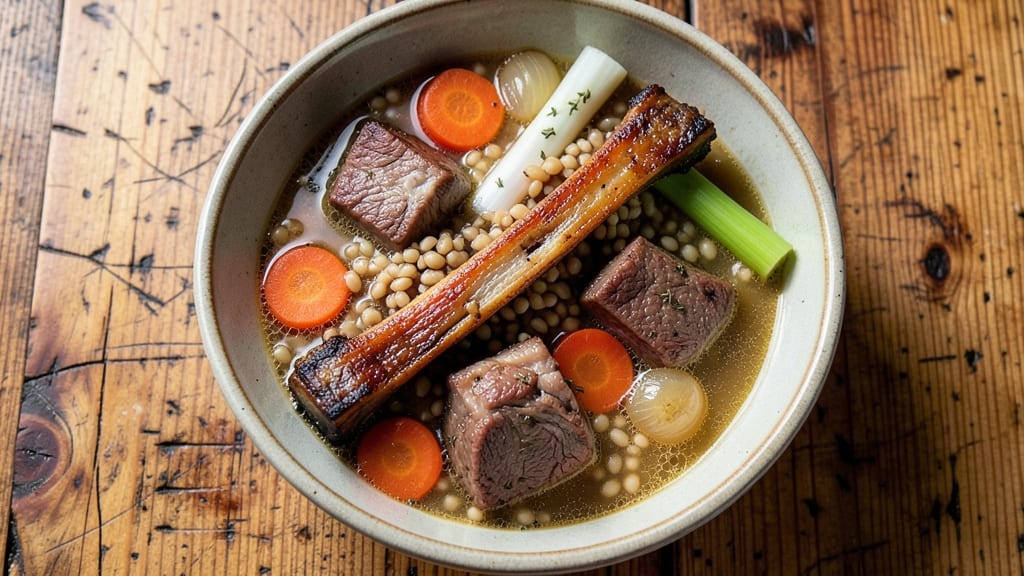
This beef barley soup recipe with prime rib bones transforms tough cuts into a deeply flavorful, hearty stew that simmers for hours to extract every ounce of umami from the marrow-rich bones. The secret lies in slow-cooking the bones first—creating a broth so rich it coats every spoonful with deep, savory notes. I developed this version after years of testing, and it’s the one my family begs me to make during cold weather when comfort food is non-negotiable.
The process starts with a par-boiled prime rib bone that’s roasted until golden, locking in flavor before it simmers for hours with aromatic vegetables and herbs. Barley adds hearty texture, while tender beef chunks melt into the broth, creating a soup that’s both nourishing and deeply satisfying.
The result is a bowl that tastes like a hug—warm, aromatic, and packed with layers of flavor that build with every bite.
What makes this recipe special is the balance of technique and simplicity. You’ll need patience for the long simmer, but the hands-off process means minimal effort once you get started.
The broth develops a deep, caramelized richness from the bones, while the barley softens just enough to be comforting without turning mushy. Serve it with crusty bread to soak up every last drop of that golden, umami-packed liquid.
The beauty of this soup is its versatility—it’s hearty enough for a winter dinner but simple enough for a weeknight meal. Once you taste the depth of flavor from slow-simmered prime rib bones, store-bought broths will never compare.
Let’s get cooking—your kitchen will smell like a home-cooked masterpiece by the time it’s done.
Ingredients for beef barley soup recipe with prime rib bones
Prime rib bones and aromatic veggies create this deeply flavorful, slow-simmered comfort soup.
| Ingredient | Amount | Notes |
|---|---|---|
| Prime Rib Bones 🦴 | 2 lb | Marrow-rich, par-boiled and roasted |
| Beef Chunks 🥩 | 2 lb | From prime rib, cut into 1-inch pieces |
| Carrots 🥕 | 3 medium | Peeled and cut into 1-inch chunks |
| Yellow Onions 🧅 | 2 whole | Quartered, skin on for color |
| Celery Stalks 🌿 | 4 whole | Trimmed and cut into 1-inch pieces |
| Pearl Barley 🌾 | 1 cup | Rinsed before adding |
| Garlic Cloves 🧄 | 6 cloves | Smashed, not minced |
| Fresh Thyme 🌿 | 2 sprigs | Stems removed, leaves only |
| Fresh Parsley 🌿 | ¼ cup | Chopped, for garnish |
| Tomato Paste 🍅 | 2 tbsp | High-quality, no sugar added |
| Dry Red Wine 🍷 | 1 cup | Bold, like Cabernet Sauvignon |
| Beef Broth 💧 | 4 cups | Homemade or high-quality store-bought |
| Olive Oil 🫒 | ¼ cup | Extra-virgin for roasting |
| Salt 🧂 | 2 tsp | Kosher or sea salt |
| Black Peppercorns 🌶️ | 1 tsp | Freshly cracked |
The prime rib bones are the soul of this soup—look for marrow-rich ones at Whole Foods or your local butcher. If you can't find them, beef marrow bones work too, but they won't give the same richness. The beef chunks should be roughly 1-inch pieces for even cooking. For the vegetables, organic carrots and celery taste sweeter, but regular works fine. I always buy extra thyme—it's one of those herbs that keeps for months if stored properly. The tomato paste? Rao's or Barilla are my go-tos; they've got the best flavor without added junk.
No red wine? Beef broth plus 1 tbsp balsamic vinegar mimics the depth. Fresh thyme is ideal, but dried works at half the amount. If you're using dried, crush the sprigs between your palms first to wake up the flavor. The carrots can be baby carrots if that's what's in the fridge—just trim the ends. For the barley, pearl barley is best here—it holds its shape better than steel-cut. If you're short on time, instant barley cuts cooking time in half, though it's less traditional. The beef broth? Homemade is best, but Swanson or Pacific Foods are solid store-bought options.
This soup tastes even better the next day—honestly, it's worth making a double batch. Store it in the fridge for up to 5 days, or freeze portions for 3 months. I like to portion it into individual containers so I can grab a bowl straight from the freezer. The bones? Save them for next time—roast them again and reuse. The barley softens as it sits, so if you're reheating, add a splash of broth to loosen it up. And trust me, the crusty bread is non-negotiable—French or sourdough soaks up every last drop of that golden broth.
Why You'll Love This Recipe
- One-Pot Magic: I swear by this recipe because it’s literally one pot—no chopping boards, no extra pans, just dump and simmer. The prime rib bones do all the heavy lifting while I sip tea and pretend I’m not cooking.
- Rich Without Effort: That first sip? Unreal. The marrow from the prime rib bones melts into the broth like a secret sauce, and the beef chunks stay tender without falling apart. Honestly, I’ve tried fancy broths—this beats them every time.
- Leftovers That Beg for More: This soup tastes even better the next day (yes, really). I make a double batch on Sundays, freeze half, and my kids fight over the portions. The barley thickens just enough to make it hearty, not mushy.
- Budget Beef Luxury: Prime rib bones sound fancy, but they’re cheaper than steak and pack way more flavor. A single bag stretches into three meals, and the carrots/onions/celery turn a simple pot into a restaurant-worthy bowl. My wallet (and taste buds) thank me.
Step-by-step instructions for beef barley soup with prime rib bones
Here's how to extract maximum flavor from those marrow-rich bones and create a soup that tastes like it simmered all day.
Roast the Prime Rib Bones for Deep Flavor
Preheat your oven to 425°F. Arrange the 2 lb prime rib bones on a rimmed baking sheet, marrow-side up. Drizzle with 0.25 cup olive oil and season generously with 1 tsp salt and ½ tsp black peppercorns (save the rest for later). Roast for 25-30 minutes until the bones are deeply browned and the marrow begins to soften.
This high-heat roast caramelizes the bone surfaces and creates a rich, nutty foundation for your soup. I like to flip the bones halfway through for even browning. The aroma alone will make your kitchen smell like a French bistro—worth the wait for that flavor payoff.
Brown the Beef Chunks and Vegetables
While the bones roast, heat a large Dutch oven over medium-high heat. Add the 2 lb beef chunks in batches, letting them brown deeply on all sides before removing. This should take about 5-6 minutes total. Set the browned beef aside.
In the same pot, add 0.25 cup olive oil and 2 tbsp tomato paste. Stir to coat the bottom, then add the 2 whole yellow onions (quartered), 4 whole celery stalks (cut into 1-inch pieces), and 3 medium carrots (chopped). Cook for 8-10 minutes, stirring occasionally, until everything softens slightly and the onions turn translucent.
Build the Soup Base with Wine and Broth
Pour in the 1 cup dry red wine and scrape up all those delicious browned bits from the bottom of the pot. Let it simmer for 3-4 minutes until the wine reduces by half and its alcohol burns off. Then add the 4 cups beef broth, scraping up any stuck-on bits.
Here's where the magic happens: return the browned beef chunks to the pot along with the roasted prime rib bones. Add the 6 smashed garlic cloves and 2 sprigs fresh thyme. Bring everything to a gentle boil, then reduce heat to low and let it simmer uncovered for 1 hour. You'll see the bones release their marrow and the broth turn rich and amber-colored.
Add Barley and Simmer to Perfection
Rinse the 1 cup pearl barley under cold water to remove any surface starch. Add it to the soup along with the remaining 1 tsp black peppercorns. Stir gently and return to a simmer. Cook uncovered for 45-50 minutes, stirring occasionally, until the barley is tender and the soup has thickened slightly.
I know it seems like a long time, but this slow cooking is what develops that deep, complex flavor. The barley should be al dente—you want a slight bite to balance the richness. Taste and adjust seasoning with additional salt if needed. The soup should be rich but not overly salty.
Finish and Serve with Fresh Herbs
Remove the prime rib bones and let them cool slightly. Use a spoon to scoop out the marrow and stir it back into the soup—this adds luxurious richness. Discard the bones. Stir in the 0.25 cup chopped fresh parsley just before serving to brighten the flavors.
Ladle the soup into bowls and serve immediately with crusty bread. The broth should coat the back of a spoon with a velvety texture, and each bite should deliver layers of umami from the bones, sweetness from the carrots, and earthy depth from the barley. Leftovers actually taste better the next day as the flavors meld further.
Pro Tips For Making Beef Barley Soup Recipe With Prime Rib Bones
- BLANCH THE BONES FIRST: I learned this the hard way—skip it, and your broth will taste like a butcher shop. Parboil the prime rib bones for 10 minutes before roasting to remove blood and impurities. Rinse them well afterward, or you’ll regret it when the soup tastes metallic. (Yes, even if you’re impatient like me.)
- SWEAT THE AROMATICS LOW AND SLOW: High heat turns onions and celery into sad, bitter mush. Cook them over medium-low for 8-10 minutes until soft but not browned—this builds flavor without burning. I used to rush this, and the soup never tasted as rich.
- ADD BARLEY LATE: Tossing barley in at the start turns it into glue. Wait until the last 20-25 minutes of simmering, or you’ll end up with a thick, pasty soup instead of tender, separate grains. (Your future self will thank you.)
- USE THE BONE MARROW: Sounds weird, but it works: crack open the marrow bones mid-cook (after 1.5 hours) and let the marrow melt into the broth. It adds a velvety richness that store-bought stock can’t match. Just don’t overcook the bones—10 minutes max in the pot.
Flavor customization for beef barley soup recipe with prime rib bones
Spice Level Control
Adjust heat to your preference by adding ½ tsp smoked paprika for subtle warmth or 1 tsp cayenne pepper for a fiery kick. For a smoky depth without heat, try 1 tsp chipotle powder—it adds complexity without overpowering the rich beef flavors.
I often keep a small bowl of crushed red pepper flakes on the table so guests can customize their bowls. 🌶️
Herb Variations
Swap out thyme for rosemary (1 sprig) for a piney, woodsy note that pairs beautifully with the beef. Or try bay leaves (2 leaves) for an earthy, slightly floral aroma that complements the wine.
Fresh sage (2 leaves) adds a peppery brightness that cuts through the richness. Always remove herbs before serving—no one wants to bite into a thyme stem!
Vegetable Swaps
For a spring-inspired twist, replace carrots with asparagus spears (trimmed) and swap celery for leeks (white and light green parts only). In fall, add sweet potatoes (peeled and cubed) for natural sweetness that balances the savory broth.
I also love mushrooms (8 oz cremini, sliced)—they absorb the rich flavors like a sponge. 🍄
Protein Alternatives
Short on beef? Use chicken thighs (2 lbs, bone-in) for a lighter version—just reduce simmering time to 30 minutes after adding barley. For a vegetarian option, swap beef for mushrooms (16 oz portobello) and lentils (1 cup, cooked).
The marrow from the bones still creates depth, but the texture becomes heartier. The barley holds up beautifully in both variations.
Umami Boosters
Take your soup to the next level with 1 tbsp fish sauce (like Red Boat) for an instant umami punch, or 1 tsp miso paste (white or red) for a fermented depth.
A splash of soy sauce (1 tbsp) enhances the beefy flavor without overpowering. For a smoky touch, add ½ tsp liquid smoke—just a whisper, but it makes a difference. 💫
Sweet-Savory Balance
Add 1 tbsp honey or maple syrup to the broth during the final 10 minutes of simmering for a subtle sweetness that rounds out the flavors. Or try 1 small apple (peeled and diced) for natural sweetness that caramelizes as it cooks.
The contrast with the savory beef is surprisingly delicious—like a hug for your taste buds.
Nutrition facts
Frequently asked questions
Can I use regular beef bones instead of prime rib bones?
Prime rib bones are ideal because they're marrow-rich, creating a deeply flavorful broth. However, you can substitute with beef marrow bones or short ribs—just add an extra 30 minutes to the simmering time to extract maximum flavor. The key is using bones with good marrow content for that rich, velvety texture.
How do I know when the barley is cooked just right?
Pearl barley should be tender but still have a slight bite—think al dente. Test by tasting a grain: it should be soft but not mushy. Cooking time varies, but 45-50 minutes is standard. If it's still crunchy, simmer uncovered for another 10 minutes. Overcooked barley turns to mush and loses texture.
Can I make this soup in a slow cooker?
Brown the beef and roast the bones as directed, then transfer everything to a 6-quart slow cooker. Add all ingredients except parsley, cover, and cook on low for 8 hours or high for 5 hours. The long cook time enhances flavor—just stir occasionally and add water if needed to maintain liquid level. Finish with fresh parsley before serving.
Why does my soup taste too salty?
Prime rib bones and broth can be surprisingly salty. Taste as you go and adjust with water (add ½ cup at a time) or unsalted broth to dilute. For a quick fix, stir in a few ice cubes—they melt and dilute without thinning the soup. If using store-bought broth, opt for low-sodium versions to start.
What's the best way to reheat leftovers?
Gently reheat on the stove over low heat—never microwave directly, as it can make the barley gummy. Add 2-3 tbsp broth or water to loosen the soup. For extra richness, stir in a spoonful of the marrow from reheated bones. If the soup seems thick, simmer uncovered for 5 minutes to restore proper consistency. Leftovers actually taste better the next day!