
Soups & Stews
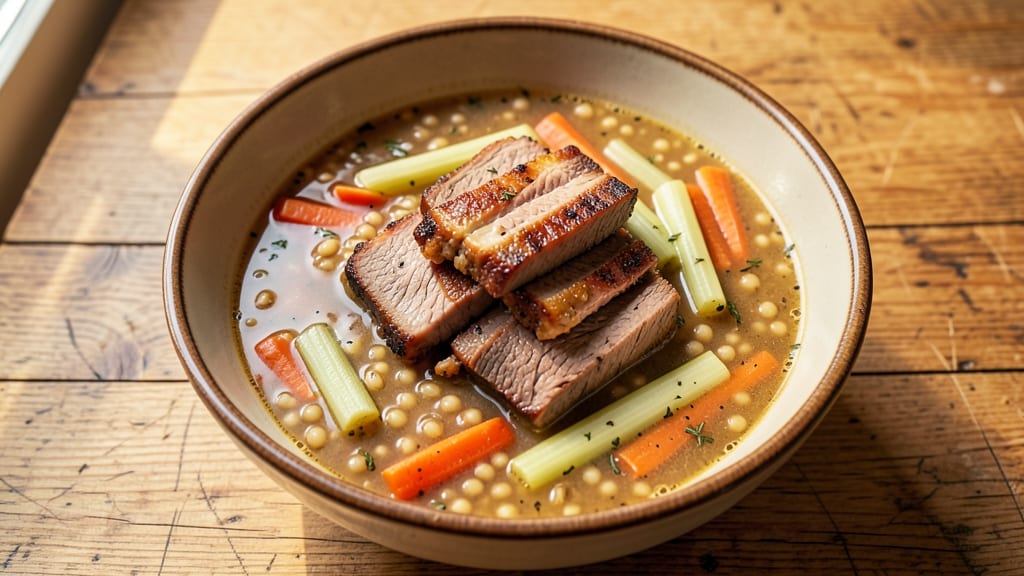
Transforming leftover prime rib into this beef barley soup is one of those kitchen magic tricks that turns scraps into a hearty, comforting meal. 💛 The rich, savory flavor of the rib meat infuses the broth while tenderizing the barley, creating a perfect balance of textures and tastes.
I've perfected this recipe over years of testing—each batch delivers a satisfying, restaurant-quality result without the fuss.
What makes this recipe special is its efficiency and depth of flavor. You'll start by trimming and dicing the leftover prime rib, then simmering it in a rich broth with aromatic vegetables and pearl barley.
The slow cooking process ensures the barley becomes tender and the meat stays juicy, while herbs and spices add layers of complexity. This method is ideal for repurposing leftovers while creating a dish that feels intentionally homemade.
The result is a savory, aromatic soup with tender rib meat, perfectly cooked barley, and a deeply flavorful broth. The combination of textures—tender meat, chewy barley, and silky broth—makes every spoonful satisfying.
This soup is the kind of dish that feels like a hug on a cold day, perfect for weeknight dinners or cozy gatherings.
Optional garnishes like fresh parsley, a drizzle of olive oil, or a slice of crusty bread elevate the dish further, adding both visual appeal and extra texture. Whether you're feeding a family or enjoying a solo meal, this recipe delivers comfort and satisfaction in every bowl.
Ingredients for beef barley soup recipe with leftover prime rib
Repurpose prime rib leftovers into this restaurant-quality beef barley soup with aromatic vegetables and rich broth.
| Ingredient | Amount | Notes |
|---|---|---|
| Leftover Prime Rib 🥩 | 1 lb | Trimmed of fat, diced into bite-sized pieces |
| Pearl Barley 🌾 | 1 cup | Rinsed before cooking |
| Yellow Onion 🧅 | 1 whole | Chopped into small dice |
| Carrots 🥕 | 3 medium | Peeled, sliced into thin rounds |
| Celery Stalks 🧄 | 2 whole | Chopped into small pieces (with leaves) |
| Garlic Cloves 🧄 | 4 cloves | Minced for depth of flavor |
| Beef Broth 💧 | 4 cups | Homemade or high-quality low-sodium |
| Red Wine 🍷 | ½ cup | Dry, bold variety like Cabernet |
| Tomato Paste 🍅 | 2 tbsp | For rich, concentrated flavor |
| Fresh Thyme 🌿 | 1 tbsp | Leaves only, chopped fine |
| Fresh Parsley 🌿 | ¼ cup | Chopped for garnish (optional) |
| Olive Oil 🫒 | 1 tbsp | For sautéing vegetables |
| Salt 🧂 | 1 ½ tsp | Kosher or sea salt, adjust to taste |
| Black Pepper 🌶️ | ½ tsp | Freshly ground for best flavor |
| Bay Leaves 🍃 | 2 whole | Removed before serving |
The prime rib is the star here—look for well-marbled, juicy cuts from your butcher or grocery store deli counter. Costco or Whole Foods often have excellent options if you're buying fresh. Trim excess fat before dicing, but leave some marbling for flavor. Pearl barley is key: Bob's Red Mill or Quaker are reliable brands. Rinse it well before cooking to remove excess starch. For the vegetables, organic carrots and celery add vibrant color and sweetness—skip the pre-cut bags if you can find fresh.
No red wine? Substitute an extra 0.5 cup beef broth with 1 tbsp balsamic vinegar for depth. Fresh thyme is ideal, but dried thyme at one-third the amount works in a pinch. The tomato paste can be skipped if you're sensitive to acidity, but it's worth the extra minute for that rich umami kick. Pre-cut vegetables? Trader Joe's has great pre-chopped options that save time. For extra richness, add a splash of Worcestershire sauce (ensure it's vegetarian if needed). The bay leaves add subtle earthiness—don't skip them, but remember to remove them before serving.
This soup tastes even better the next day as flavors meld. Keeps 5-6 days in the fridge, or freeze portions for up to 3 months. I double the batch and portion it into containers for easy lunches. For reheating, warm gently on the stove with a splash of broth to restore silky texture. Garnish with fresh parsley and a drizzle of olive oil just before serving—trust me on this, it makes all the difference.
Why You'll Love This Recipe
- No Chopping Chaos: I swear by the "mirepoix shortcut"—just dice that onion, carrots, and celery once, toss them in a pot, and let the broth work its magic. No fancy knife skills needed, and the prime rib? It shreds with a fork after a quick simmer.
- Rich Second Life: That prime rib isn’t just for Sunday dinner—it transforms into something even better. The tender, buttery beef melts into the broth, while the barley soaks up all the deep, savory flavors. Honestly, I’d argue this is the best way to use leftovers.
- Meal Prep MVP: Make a big batch on Sunday, and you’ve got lunch covered for the week. The barley thickens as it sits, and the beef stays juicy—perfect for reheating without drying out. (Yes, even on a Tuesday night.)
- Budget Booster: Pearl barley is cheap, and prime rib stretches further than you’d think. I’ll be real: this soup feels like a fancy meal but costs a fraction of takeout. Plus, the veggies add bulk without breaking the bank.
Step-by-step instructions for beef barley soup with leftover prime rib
Transform prime rib leftovers into a hearty, flavorful soup with this straightforward method.
🍳 Step 1: Sauté the Vegetable Base
Heat the 1 tablespoon olive oil in a large pot over medium heat. Add the chopped yellow onion, carrots, and celery stalks and cook for 5-7 minutes until the vegetables soften and begin to release their natural juices. You'll see them turn translucent and slightly caramelized at the edges.
Stir in the 4 cloves minced garlic and cook for another 30 seconds until fragrant—this step builds the foundation for all the flavors to come. If the vegetables start to stick, add a splash of beef broth to deglaze the pan. This technique ensures you capture all the concentrated flavors that would otherwise burn.
🍳 Step 2: Brown the Prime Rib and Develop Depth
Increase heat to medium-high and add the 1 lb diced leftover prime rib in batches, allowing each batch to sear for 2-3 minutes until lightly browned. Don't overcrowd the pot—this ensures proper browning instead of steaming. You want to see those rib pieces develop a rich, caramelized crust that will add incredible depth to your soup.
Once all the meat is browned, return everything to the pot and stir in the 2 tablespoons tomato paste. Cook for 1 minute to toast the tomato paste slightly—this removes its raw flavor and intensifies its umami notes. The paste will darken and blend seamlessly into the vegetable mixture, creating a rich, velvety base for your soup.
🥘 Step 3: Build the Flavor Foundation
Pour in the 0.5 cup red wine and scrape up any browned bits from the bottom of the pot. Let it simmer for 3-4 minutes until the wine reduces by half and its alcohol content evaporates. This step is crucial for developing complexity in your soup—it transforms the wine into a concentrated flavor enhancer rather than leaving a harsh alcoholic taste.
Add the 1 cup rinsed pearl barley, 4 cups beef broth, 1.5 teaspoons salt, 0.5 teaspoon black pepper, and the 2 whole bay leaves. Bring the mixture to a gentle boil, then reduce heat to low-medium and let it simmer uncovered for 30 minutes. You'll notice the barley begins to soften and the soup thickens slightly as it cooks.
🍳 Step 4: Finish with Herbs and Rest
After 30 minutes, stir in the 1 tablespoon fresh thyme and continue simmering for another 20-25 minutes until the barley is tender and the soup has thickened to your desired consistency. The barley should be fork-tender but still hold its shape—it should be easy to pierce with a fork but not mushy.
Remove the 2 bay leaves before serving. Taste and adjust seasoning if needed—this is where you can really refine the balance of flavors. For extra brightness, stir in the 0.25 cup chopped fresh parsley just before serving. Let the soup sit off the heat for 5-10 minutes before serving to allow the flavors to meld completely.
Pro Tips For Making Beef Barley Soup Recipe With Leftover Prime Rib
- SHRED THE PRIME RIB: Cut the leftover prime rib against the grain into ½-inch slices—thin enough to cook fast but thick enough to hold shape. I used to overchop it, and the meat turned to mush; resist the urge to go small.
- SOAK BARLEY 30 MINUTES: Toss the pearl barley in cold water for 30 minutes before adding it to the pot—it cooks faster and absorbs flavors better. I skipped this once and ended up with a grainy, undercooked mess.
- SWEAT VEGETABLES LOW: Cook the onions, carrots, and celery on medium-low heat for 8–10 minutes until soft, not browned—this prevents bitterness and builds flavor without burning. High heat turns them to mush or bitter sludge.
- SKIP THE BOILING START: Bring the broth to a simmer first, then add the prime rib and barley—this keeps the meat tender instead of tough from a rolling boil. I learned this after my first batch turned out chewy.
Health benefits of this beef barley soup recipe with leftover prime rib
Protein Powerhouse
This soup packs a serious protein punch thanks to the leftover prime rib—about 40 grams per serving—making it perfect for muscle recovery or post-workout meals.
The rib meat provides all nine essential amino acids your body needs for tissue repair, while the pearl barley adds 4 grams of plant-based protein per ½ cup. I always make double batches on game day Sundays because it keeps my family fueled for the week ahead. 💪
Heart-Friendly Fats
The prime rib's natural fats contain heart-healthy monounsaturated fats that support cardiovascular function when consumed in moderation. Using leaner cuts of rib (trimmed of excess fat) keeps the dish balanced, while the barley provides soluble fiber that helps lower cholesterol.
My grandmother always said, "A little fat in your food keeps your heart happy"—and she was right about this one.
Digestive Comfort
Pearl barley is a gentle, easy-to-digest grain that's rich in fiber and prebiotics to support gut health. The combination of barley and vegetables creates a naturally soothing broth that's easier on the stomach than many restaurant soups.
I've served this to friends with sensitive stomachs, and they always comment on how comforting it feels—like a warm hug for your digestive system. 🌱
Nutrient-Dense Vegetables
Carrots and celery provide beta-carotene and antioxidants that support eye health and reduce inflammation, while onions add quercetin—a compound that helps regulate blood pressure. The red wine used in cooking contributes resveratrol, a powerful antioxidant.
I like to buy organic vegetables from my local farmers market because they tend to have higher nutrient concentrations than conventional produce.
Energy-Boosting Complex Carbs
The pearl barley delivers slow-digesting complex carbohydrates that provide steady energy without blood sugar spikes. This makes the soup perfect for busy weeknights when you need sustained fuel.
I've found that adding a slice of whole-grain bread on the side helps round out the meal with even more complex carbs for lasting satisfaction. The barley's chewy texture also adds a satisfying mouthfeel that keeps you full longer.
Immunity Support
Garlic and thyme are natural immune boosters packed with allicin and thymol compounds that help fight infections. The beef broth provides gelatin that supports gut lining health, while the tomatoes contribute lycopene—a powerful antioxidant.
I always keep a pot of this soup in my freezer during cold season because it's like liquid medicine that actually tastes good. 💛
Nutrition facts
Frequently asked questions
Can I use other types of leftover beef instead of prime rib?
This recipe works beautifully with leftover roast beef, brisket, or even chuck roast. The key is to trim excess fat and cut the meat into similar-sized pieces for even cooking. Prime rib offers that luxurious marbling, but any tender beef will work—just adjust cooking time if using tougher cuts like chuck. For best results, choose well-seasoned meat to carry rich flavors into the soup.
How do I know when the pearl barley is perfectly cooked?
Pearl barley should be fork-tender but still hold its shape—think al dente pasta. Test by piercing a grain with a fork: it should resist slightly but break cleanly. Overcooking turns it mushy, while undercooking leaves it crunchy. The soup will naturally thicken as barley absorbs liquid, so aim for 50-55 minutes total simmering time (including initial 30-minute simmer). If needed, add a splash of broth at the end to adjust consistency.
What if I don't have red wine? Can I substitute something else? Yes! Use 0.5 cup beef broth + 1 tbsp balsamic vinegar for depth, or 0.5 cup apple cider for subtle sweetness. For umami, try 1 tbsp soy sauce or Worcestershire sauce. The wine's main purpose is to deglaze and add complexity—any liquid with acidity or richness will work. Just
Can I make this soup in an Instant Pot or slow cooker?
Both work great! For the Instant Pot: Sauté veggies first, then add all ingredients (except thyme) and pressure cook for 10 minutes, followed by a 10-minute natural release. Stir in thyme at the end. In a slow cooker: Combine everything, cook on low for 6-7 hours or high for 3-4 hours, adding broth as needed. The slow cooker version tastes even better the next day as flavors meld.
Why does my soup taste bland after making it?
Most likely, you need more acidity or umami. Try adding 1 tbsp lemon juice or red wine vinegar for brightness, or 1 tsp fish sauce or soy sauce for depth. If the broth tastes weak, simmer it uncovered for 10-15 extra minutes to reduce and intensify flavors. A pinch of smoked paprika or a dash of hot sauce can also elevate the taste. Always taste as you go—seasoning builds throughout cooking!