
Soups & Stews
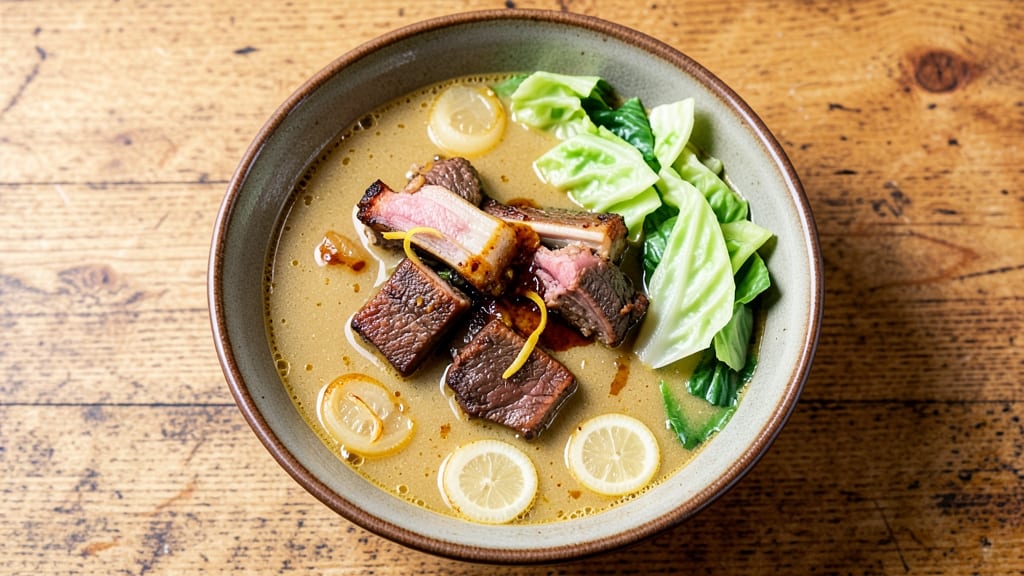
This beef bulalo soup recipe brings the heart of Filipino comfort food to your kitchen—tender beef shards floating in a deeply aromatic bone broth, where marrow melts into richness and ginger adds warmth. 🌟 The secret lies in slow simmering, where tough beef bones transform into melt-in-your-mouth texture while vegetables absorb the broth’s depth.
Unlike quick soups, bulalo rewards patience with layers of umami and savory complexity that turn simple ingredients into a celebration.
Traditional bulalo relies on three pillars: beef bones for marrow-infused broth, ginger and garlic for aromatic depth, and long simmering to meld flavors. I’ve refined the method to ensure the broth remains clear yet rich, with vegetables like cabbage and string beans adding texture without overpowering.
The key? A 3-4 hour simmer—no shortcuts—where the broth reduces to a velvety consistency that clings to every spoonful.
What makes this recipe special is its balance: tender beef that falls apart at the touch, crisp vegetables for contrast, and a broth so flavorful it deserves its own bowl. Serve it with steamed rice to soak up every drop and atchara (pickled papaya) for a tangy counterpoint.
The aroma alone—ginger, garlic, and beef—will have your kitchen smelling like a Filipino karinderia before the first bite.
Perfect for family gatherings or cozy weeknight dinners, this bulalo is as comforting as it is impressive. The slow cooking process makes it ideal for meal prep, too—just reheat the broth and add fresh veggies before serving. Let’s create a soup that tastes like home.
Ingredients for beef bulalo soup
Six pounds of beef bones and aromatic vegetables transform into this deeply flavorful Filipino masterpiece.
| Ingredient | Amount | Notes |
|---|---|---|
| Beef Bones 🦴 | 3 lb | Marbled, knuckle or shank preferred |
| Beef Chuck Roast 🥩 | 2 lb | Cut into 1.5-inch chunks |
| Yellow Onions 🧅 | 3 whole | Quartered, skin on |
| Garlic Cloves 🧄 | 8 cloves | Smashed, not minced |
| Fresh Ginger 🌿 | 3 oz | Unpeeled, sliced into 1-inch pieces |
| Hard Green Cabbage 🥬 | 1 lb | Cut into wedges, core removed |
| String Beans 🌱 | 1 lb | Trimmed, cut into 2-inch pieces |
| Russet Potatoes 🥔 | 2 lb | Peeled, cut into 2-inch chunks |
| Bay Leaves 🌿 | 4 whole | Dried, standard size |
| Salt 🧂 | 2 tsp | Kosher or sea salt |
| Black Peppercorns 🌶️ | 1 tsp | Whole, lightly crushed |
| Fish Sauce 🍶 | 1 tbsp | Red Boat preferred |
| Soy Sauce 🍶 | 1 tbsp | Dark or regular |
| White Vinegar 🍶 | 1 tbsp | For brightening broth |
The beef bones are the soul of bulalo—look for marbled knuckle or shank bones at your local butcher or Filipino markets for authentic quality. If you can't find them, beef marrow bones work as a substitute, though the broth will be slightly less rich. The chuck roast should be well-marbled; Costco or Whole Foods carry excellent cuts. Fresh ginger and garlic are non-negotiable here—organic ginger from the produce section (not the jarred kind) adds the most depth. For the vegetables, green cabbage with firm leaves holds up best during simmering, and string beans should be crisp when added later.
No fish sauce? Soy sauce plus a splash of Worcestershire mimics the umami, though it won't be identical. Running out of vinegar? Lemon juice works in a pinch, but the acidity will be more pronounced. The potatoes should be Russet or Yukon Gold—they hold their shape better than waxy varieties. For extra richness, add 1 tbsp of butter at the end of cooking, letting it melt into the broth. If you're prepping ahead, par-cook the beef in the broth for 2 hours before adding vegetables to save time.
This soup tastes even better the next day as flavors meld. Store in the fridge for up to 5 days, or freeze for 3 months—the broth thickens slightly when reheated, which is ideal. For serving, reheat gently and add fresh vegetables (like cabbage and string beans) just before eating to maintain crispness. The broth alone is worth saving—strain and freeze portions for quick future meals. Always serve with steamed rice and atchara if available, as they balance the dish perfectly.
Why You'll Love This Recipe
- One-Pot Magic: I swear by this—just toss the beef bones, chuck roast, onions, garlic, and ginger into one pot. No chopping, no fussing, just simmer until the flavors meld into pure comfort. The bones do all the work while you sip coffee.
- Deep, Rich Umami: That slow-cooked beef and marrow bones? It’s like a flavor explosion in every spoonful. The onions caramelize into sweetness, the garlic and ginger add warmth, and the broth turns velvety—no shortcuts needed.
- Leftovers That Beg for More: Between us, this soup only gets better the next day. The meat falls apart tender, the broth thickens just right, and I’ve caught myself reheating it for lunch three days in a row. (Yes, even on a Tuesday night.)
- Budget-Friendly Feast: Beef bones and chuck roast stretch across multiple meals without breaking the bank. A single pot feeds a crowd, and the leftovers freeze like a dream. Honestly, it’s my go-to for big gatherings or lazy Sundays—minimal cost, maximum satisfaction.
Step-by-step instructions for slow-simmered beef bulalo soup
Master this Filipino classic with precise technique for melt-in-your-mouth beef shards and deep umami broth.
🔥 Step 1: Parboil and Blanch the Beef Bones
Rinse the 3 lb beef bones thoroughly under cold water and pat dry. Place them in a large stockpot and cover with cold water by 2 inches. Bring to a boil over high heat, then immediately reduce to a simmer for 15 minutes. This parboiling removes impurities and blood that would cloud your broth.
Drain the bones and return them to the pot. Add fresh cold water to cover by 2 inches again. Bring to a boil over high heat, then reduce to a gentle simmer. Skim off any foam that rises to the surface during the first 10 minutes—this ensures a crystal-clear broth. The bones should barely be submerged, allowing them to render their collagen-rich gelatin over time.
🍳 Step 2: Build the Flavor Base with Aromatics
Add the 2 lb beef chuck roast cut into 1.5-inch chunks to the simmering pot. Stir in the 3 whole yellow onions (quartered with skin on), 8 smashed garlic cloves, 3 oz fresh ginger (sliced into 1-inch pieces with skin on), and 4 whole bay leaves. Let everything simmer uncovered for 45 minutes—this allows the aromatics to infuse the broth without burning.
After 45 minutes, add the 2 tsp salt and 1 tsp lightly crushed black peppercorns. The broth should now smell rich and savory, with a deep aroma from the rendered beef fat. This is the foundation of your bulalo's complex flavor profile—don't rush this step. The longer the aromatics simmer, the more their flavors meld into the broth.
🥘 Step 3: Add Vegetables in Stages for Perfect Texture
Add the 2 lb russet potatoes (cut into 2-inch chunks) and 1 lb string beans (trimmed and cut into 2-inch pieces) to the pot. Simmer uncovered for 30 minutes—the potatoes should be tender but still hold their shape, and the string beans should be bright green with a slight crispness. Overcooking will turn them mushy, which defeats the purpose of bulalo's textural contrast.
After 30 minutes, add the 1 lb hard green cabbage (cut into wedges with core removed). The cabbage needs less time to cook, so adding it later ensures it remains slightly crisp. Stir in the 1 tbsp fish sauce, 1 tbsp soy sauce, and 1 tbsp white vinegar—this brightens the broth and balances the richness. Simmer for another 15 minutes until the cabbage is tender but still holds its structure.
⏰ Step 4: Shred the Beef and Finish the Broth
Use two forks to carefully shred the beef chuck into ½-inch thick strips, leaving some larger chunks for texture. The beef should be fork-tender but not falling apart—this ensures each bite has both tender and slightly chewy elements. Return the shredded beef to the pot and simmer for another 10 minutes to allow the flavors to fully integrate.
Taste the broth and adjust seasoning if needed—you may need a pinch more salt or a splash of vinegar to brighten it. The final broth should be rich, slightly sweet, and deeply savory with a hint of tang. Serve immediately with steamed rice, letting each diner assemble their bowl with beef, vegetables, and broth for the perfect balance of textures and flavors.
Pro Tips For Making Beef Bulalo Soup
- BLISTER THE BONES FIRST: Skip the slow start—sear your beef bones in a dry pot over medium-high heat until they turn deep brown, even black in spots. This isn’t about burning; it’s about unlocking flavor by breaking down collagen faster later. (Yes, it’ll smell like a smoky campfire for a minute—that’s normal.)
- CHOP GINGER THIN, NOT MINCED: Thin, matchstick-sized slices of ginger (peeled) infuse flavor without turning the broth bitter. I used to grate it fine—big mistake. The slices sit nicely in the broth, releasing aroma over hours, and you can fish them out cleanly at the end.
- LOW AND SLOW MEANS 3-4 HOURS: Don’t rush the simmer—keep the pot at a gentle bubble, not a rolling boil, or you’ll turn the broth cloudy. After the first hour, skim any foam off the surface religiously. (I know, it’s tedious, but trust me: the broth will be crystal clear and rich.)
- SAVE TIME WITH SOY SAUCE: Add 2 tablespoons of soy sauce (or 1 tablespoon of fish sauce) with the aromatics. It deepens the umami fast and cuts down on the need for extra salt later. (No, it won’t taste "salty"—just trust the process.)
Regional styles of these flavors
Classic Filipino Style
The most traditional version of bulalo comes from the Luzon region, particularly Pampanga, where it originated as a hearty peasant dish. Here, beef bones are simmered for 4-5 hours to extract maximum marrow richness, and the broth is kept clear and unctuous—never cloudy.
The key difference? No potatoes in the original recipe; instead, taro roots or sweet potatoes are used for natural sweetness. I’ve seen authentic versions where the beef is pre-cooked separately and added back at the end to prevent overcooking. 🌟
Visayan Coastal Twist
In the Visayas region, especially Cebu and Iloilo, bulalo takes on a briny, seafood-infused character. Locals add shrimp heads or dried anchovies to the broth for extra umami, and the vegetables often include bamboo shoots and long beans.
The broth here is lighter—simmered for only 2.5-3 hours—and finished with a splash of calamansi juice for brightness. I love this version when I crave a lighter, tangier take on the classic. 🍋
Mindanao Spiced Version
Southern Filipino regions like Davao and Cotabato spice up bulalo with chili peppers and lemongrass, giving it a fiery, aromatic kick. The beef bones are often charred slightly before simmering to add a smoky depth, and turmeric is stirred in for color.
Here, plantains replace potatoes, and the broth is thicker, almost like a stew. This version is perfect if you love bold, complex flavors with a little heat. 🌶️
Modern Filipino-American Adaptation
For those in the US or Canada, bulalo often gets a simplified but still delicious twist. Beef bones are harder to find, so many cooks use beef marrow bones or even chuck roast as the sole protein.
Vegetables like green beans and carrots replace traditional ones, and fish sauce is sometimes swapped for soy sauce or Worcestershire. The broth is still rich, but the simmer time is cut to 2.5 hours for convenience. I’ve made this version countless times—it’s foolproof for busy weeknights. ⏰
Regional Broth Variations
Broth consistency varies wildly by region. In Tagalog areas, it’s thin and clear, almost like a consommé, with ginger and garlic as the stars. In Bicol, the broth is thicker, almost like a stew, thanks to coconut milk added at the end.
Meanwhile, Ilocano bulalo skips potatoes entirely and uses radishes for crunch. Each style offers a unique texture and depth—experiment to find your favorite! 🥄
Nutrition facts
Frequently asked questions
Why does traditional bulalo use beef bones instead of regular beef?
The beef bones are essential for creating that signature rich, marrow-infused broth that defines bulalo. When simmered for hours, the bones release collagen and gelatin, transforming into a velvety, deeply flavorful liquid. Regular beef won't give you that luxurious texture—it's what makes bulalo taste like a true Filipino comfort dish.
Can I make bulalo without fish sauce?
Yes, but you'll need to substitute carefully. Use 1 tbsp soy sauce plus 1 tsp Worcestershire sauce for umami depth, or ½ tsp MSG plus 1 tsp soy sauce for a similar savory punch. The broth will still be flavorful, though it won't have that authentic Filipino tang that fish sauce provides.
How do I know when the beef is tender enough?
The beef should be fork-tender but not falling apart—it should shred easily with two forks but still hold some structure. Test a piece by piercing it with a fork: if it separates cleanly into ½-inch strips without crumbling, it's ready. Overcooking will turn it mushy, so aim for that perfect balance between tender and slightly firm.
Can I prepare bulalo ahead of time?
This soup actually tastes better the next day as flavors meld. Store in the fridge for up to 5 days, or freeze for 3 months. When reheating, warm gently on the stove and add fresh vegetables (like cabbage and string beans) just before serving to maintain crispness.
What's the best way to serve bulalo?
Always serve with steamed white rice to soak up the rich broth, and atchara (pickled papaya) for tangy contrast. For extra authenticity, add calamansi wedges or sliced green onions as garnishes. The traditional way is to let each person assemble their bowl with beef, vegetables, and broth for the perfect balance.