
Soups & Stews
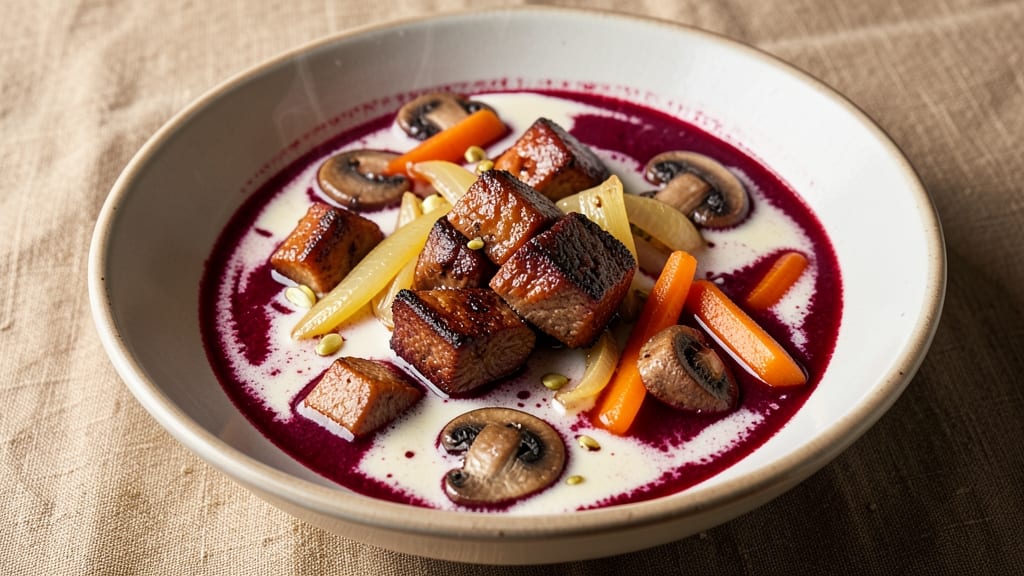
This beef Burgundy soup recipe transforms a simple pot into a restaurant-worthy dish with deep, wine-infused richness and melt-in-your-mouth beef. The secret lies in slow-braising tender beef until it practically falls apart, then building layers of flavor through caramelized onions, red wine reduction, and aromatic herbs.
I developed this version after years of refining the technique—balancing wine acidity, beef tenderness, and creamy depth without overpowering the dish.
The process starts with searing beef chunks until deeply browned, then deglazing with red wine to capture every flavorful bit. A classic roux thickens the broth while vegetables like carrots and mushrooms absorb the wine's essence, creating that signature deep burgundy hue.
What makes this recipe truly special is the patience required: letting the beef simmer low and slow until it's fork-tender while the wine reduces to a velvety consistency that coats every spoonful.
By the time you serve this soup, you'll have a dish that's hearty enough for winter dinners but elegant enough for company—golden broth dotted with tender beef chunks, caramelized vegetables, and a finish of cream or fresh herbs.
The aroma alone will have everyone gathering at the table, and the first bite delivers that perfect balance of savory, rich, and slightly tangy flavors. This is comfort food at its finest, with restaurant-quality results you can achieve at home.
Pair it with crusty bread for soaking up every last drop or serve alongside a simple green salad for a complete meal.
The beauty of this recipe is its versatility—make a big batch for leftovers that taste even better the next day, or adjust the wine-to-broth ratio to suit your preference. Here's how to create this classic dish step by step.
Ingredients for beef burgundy soup
Pantry staples meet restaurant-quality richness in this deep, wine-infused beef soup.
| Ingredient | Amount | Notes |
|---|---|---|
| Chuck Roast 🥩 | 2 lb | Cut into 1.5-inch chunks |
| Yellow Onions 🧅 | 2 large | Sliced thin for caramelizing |
| Red Wine 🍷 | 2 cups | Bold, dry variety like Cabernet |
| Carrots 🥕 | 4 medium | Peeled and sliced into rounds |
| Mushrooms 🍄 | 8 oz | Cremini or button, sliced |
| Garlic Cloves 🧄 | 4 cloves | Minced for aromatic depth |
| All-Purpose Flour 🌾 | 2 tbsp | For thickening roux |
| Beef Broth 💧 | 6 cups | Low-sodium preferred |
| Heavy Cream 🥛 | ½ cup | Full-fat for richness |
| Fresh Thyme 🌿 | 1 tbsp | Leaves only, chopped |
| Fresh Parsley 🌿 | ¼ cup | Chopped for garnish |
| Salt 🧂 | 1 ½ tsp | Kosher salt, adjust to taste |
| Black Pepper 🌶️ | ½ tsp | Freshly ground preferred |
| Olive Oil 🫒 | 2 tbsp | For searing beef |
| Tomato Paste 🍅 | 1 tbsp | For depth of flavor |
The chuck roast is non-negotiable here—Costco or Whole Foods have the best cuts with good marbling. Look for pieces with visible fat; that's what keeps the beef tender during the long simmer. If you're short on time, pre-cut chuck roast from the grocery store's meat counter works fine too. The red wine? Any bold, dry red works here—Cab Sauv, Merlot, whatever's open. Just avoid sweet wines like Zinfandel. For the mushrooms, cremini or button are perfect—avoid the pre-sliced kind if you can find whole ones; they caramelize better.
No red wine? Beef broth with a splash of balsamic gets you close. Fresh thyme is ideal but dried works at one-third the amount. If tomato paste feels like overkill for one tablespoon, those squeeze tubes at Trader Joe's are perfect—no waste, keeps for months. The carrots can be baby carrots if that's what's in the fridge, but whole carrots have better texture after simmering. For the flour, Diamond Crystal kosher salt is my go-to—it dissolves better than table salt. If you're gluten-free, swap the flour for cornstarch, but you'll need to adjust the amount.
This soup tastes even better the next day once everything melds together. Keeps 4-5 days in the fridge, freezes for 3 months. I portion mine into containers so lunches are sorted for the week. The beef chunks reheat beautifully—just add a splash of water or broth to prevent drying out. For serving, a sprinkle of fresh parsley and a drizzle of cream on top makes all the difference. Store the cream separately if you're freezing the soup—it separates when frozen.
Why You'll Love This Recipe
- One-Pot Magic: I swear by this—just dump everything in one pot, let it simmer, and walk away. No chopping small, no fancy steps, just beef, wine, and patience (the good kind).
- Wine’s Secret Weapon: That red wine isn’t just for show—it’s the soul of this soup. Deep, rich, and slightly tangy, it cuts through the beef’s richness while letting the mushrooms and carrots shine like a slow-cooked hug.
- Budget Booster: Chuck roast is cheap, but it turns into something luxurious. You’re feeding a crowd for pennies, and honestly? Nobody will guess it’s not a fancy restaurant dish. (Between us, I’ve served it at dinner parties and heard zero complaints.)
Step-by-step instructions for beef burgundy soup
Here's how to create a deeply flavorful, hearty soup with melt-in-your-mouth beef and rich wine-infused broth.
Sear the Chuck Roast for Maximum Flavor
Heat the 2 tablespoons olive oil in a large Dutch oven over medium-high heat until shimmering. Pat the 2 lb chuck roast dry with paper towels—this ensures a good sear. Working in batches if needed, brown the beef on all sides for 4-5 minutes per side until deeply golden. You want that crusty exterior because it carries so much flavor into the soup.
As the beef browns, it releases its natural juices and develops a caramelized crust. This step is what gives your soup that restaurant-quality depth. Don't rush it—let each piece get that beautiful golden-brown color before moving to the next batch. Once all pieces are browned, transfer them to a plate and set aside.
Build the Flavor Base with Onions and Carrots
In the same Dutch oven, add the 2 large yellow onions and 4 medium carrots (sliced into rounds). Cook for 8-10 minutes over medium heat, stirring occasionally, until the onions are translucent and the carrots begin to soften. You'll notice the onions release their sweet aroma and start to caramelize slightly—this is when they'll begin to turn golden at the edges.
After about 5 minutes, add the 8 ounces mushrooms (sliced) and continue cooking for another 3-4 minutes until they release their moisture and start to brown. This step develops the base flavors that will carry through the entire soup. The mushrooms will add an earthy depth that pairs perfectly with the wine and beef.
Deglaze and Simmer the Beef
Push the vegetables to one side of the Dutch oven and add the 4 cloves garlic (minced) and 1 tablespoon tomato paste. Stir for 30 seconds until fragrant. Pour in the 2 cups red wine and scrape up all the browned bits from the bottom of the pan—this is called deglazing, and it captures all the flavor that's stuck to the pot.
Return the beef to the pot along with any accumulated juices. Add the 6 cups beef broth and bring everything to a gentle boil. Once boiling, reduce the heat to low and cover partially. Let it simmer for 1 hour and 15 minutes, or until the beef is fork-tender. You'll know it's ready when a knife slides in easily and the beef pulls apart with minimal resistance.
Thicken and Finish the Soup
Remove the beef from the soup and set it aside. In a small bowl, whisk together the 2 tablespoons all-purpose flour with 1 tablespoon fresh thyme and 1 teaspoon salt. Gradually whisk this mixture into the simmering soup, stirring constantly for 2-3 minutes until it begins to thicken.
Return the beef to the pot and stir in the 0.5 cup heavy cream. Taste and adjust the seasoning with additional salt and 0.5 teaspoon black pepper if needed. Let the soup simmer uncovered for another 10 minutes to allow the flavors to meld together. The cream will add a luxurious richness, balancing the acidity of the wine and the heartiness of the beef.
Garnish and Serve
Ladle the soup into bowls and garnish each serving with 0.25 cup fresh parsley (chopped). The parsley adds a fresh contrast to the rich, wine-infused broth. Serve immediately with crusty bread to soak up every last drop of that velvety soup. Each spoonful should deliver tender beef, caramelized vegetables, and a deep, complex wine flavor that makes this soup feel like a cozy hug in a bowl.
Pro Tips For Making Beef Burgundy Soup
- BROWN THE CHUCK ROAST: High heat. Seriously, crank it up until the meat releases a deep, caramelized crust—this isn’t just for flavor, it’s the foundation of your soup. I learned this the hard way after making a pale, bland version because I rushed the sear. Let it sit in the pan for 3-4 minutes per side until it’s golden, not just pink.
- SWEAT THE ONIONS FIRST: Skip the rush and take the 10 minutes to cook the onions low and slow until they’re translucent and just starting to soften. This melts them into the wine instead of making your soup taste like raw onion chunks. Add a pinch of salt here—it draws out moisture and makes them caramelize faster.
- DEGLAZE WITH WINE IMMEDIATELY: As soon as you remove the meat, pour in that red wine right into the hot pan—no scraping, no waiting. The residual bits (fond) will dissolve into the wine, adding layers of depth you’d miss if you cleaned the pan first. Let it simmer for 2-3 minutes to cook off the alcohol before adding broth.
- ADD MUSHROOMS LAST: Tossing mushrooms in at the start turns them to mush—literally. Hold off until the beef and veggies have cooked for at least 20 minutes, then stir them in for the final 10. This keeps them tender but still recognizable, not a sad, waterlogged pulp. Baby bella or cremini work best; avoid anything too woody.
Essential equipment for this recipe
Dutch Oven Essentials
A 6-quart Dutch oven is my go-to for this recipe—it handles the searing, braising, and simmering all in one pot. I recommend a Le Creuset or Lodge cast iron Dutch oven for even heat distribution and durability.
If you don’t own one, a heavy-bottomed stainless steel pot works too, though it may require slightly more attention to prevent burning. The deep sides prevent spills when deglazing with wine, and the tight lid helps trap steam for even cooking. 🔥
Thermometer for Precision
An instant-read meat thermometer is non-negotiable for checking the beef’s doneness. I use a Thermoworks ThermoPop—it’s affordable and accurate. Insert the probe into the thickest piece of beef; it’s ready when it reaches 203°F (or when it’s fork-tender).
Without one, you risk overcooking or undercooking the beef. For the broth, a simple candy thermometer helps monitor the wine reduction—aim for a gentle simmer at 185°F to avoid alcohol evaporation.
Whisk for Smooth Thickening
A balloon whisk is perfect for blending the flour into the soup without creating lumps. I keep a OXO Good Grips in my kitchen—it’s sturdy and easy to handle.
When whisking the flour-thyme mixture into the simmering broth, go slow to avoid sudden temperature spikes that can cause the flour to cook too quickly. A whisk also helps distribute the cream evenly at the end for a silky finish. 💫
Fine-Mesh Strainer (Optional)
If you prefer a smoother soup, a fine-mesh strainer lets you strain out the vegetables before serving. I use a Mesh King—it’s sturdy and won’t clog easily.
Strain the broth into a clean pot, then return the beef and a splash of the strained broth to the pot to reheat. This step is optional but elevates the soup’s presentation, especially for formal gatherings. For a rustic touch, skip straining and garnish with chopped herbs instead.
Measuring Spoons for Accuracy
Precision matters when measuring the 2 tablespoons flour and 1 tablespoon tomato paste. A set of stainless steel measuring spoons (like OXO’s) ensures you don’t over- or under-thicken the soup. Too much flour can make the soup gluey, while too little leaves it watery.
For the thyme, use a small spoon to measure the leaves—avoid stems, as they’re bitter. A microplane also works for zesting garlic or lemon if you want to brighten the flavors further. ✨
Nutrition facts
Frequently asked questions
Can I substitute red wine with something else?
Yes, but the flavor will change. Use 2 cups beef broth plus 1 tablespoon balsamic vinegar for a similar tangy depth. For a non-alcoholic version, try grape juice (same amount) or cranberry juice for a sweeter twist. The wine's acidity helps tenderize the beef and balance richness, so substitutes may need extra salt.
Why does my soup turn out watery?
This usually happens from two things: not enough simmering time or too much liquid. Let the soup reduce uncovered for 10-15 minutes at the end to thicken naturally. If it's still thin, whisk in 1 teaspoon cornstarch mixed with 1 tablespoon cold water and simmer for 2-3 minutes. The flour roux in the recipe should handle thickening, but simmering longer helps too.
How do I make this soup ahead of time?
This soup actually tastes better the next day! Let it cool completely, then store in an airtight container in the fridge for up to 4-5 days. Reheat gently on the stove over low heat, stirring occasionally and adding a splash of water or broth if it gets too thick. For freezing, portion into containers and freeze for up to 3 months. Thaw overnight in the fridge before reheating.
Can I make this soup gluten-free?
Replace the 2 tablespoons all-purpose flour with 2 tablespoons cornstarch or arrowroot powder. Mix it with the thyme and salt, then whisk into the soup. You may need to simmer slightly longer (about 5 minutes) for the cornstarch to fully thicken. The texture will be just as smooth—just keep stirring to prevent lumps.
What's the best way to reheat leftovers?
Reheat gently on the stove over medium-low heat, stirring frequently to prevent scorching. Add 2-3 tablespoons water or broth if the soup seems too thick. For microwave reheating, transfer to a microwave-safe bowl, cover loosely, and heat in 1-minute intervals stirring between each. The cream may separate slightly when reheated—just stir vigorously to recombine before serving.