
Soups & Stews
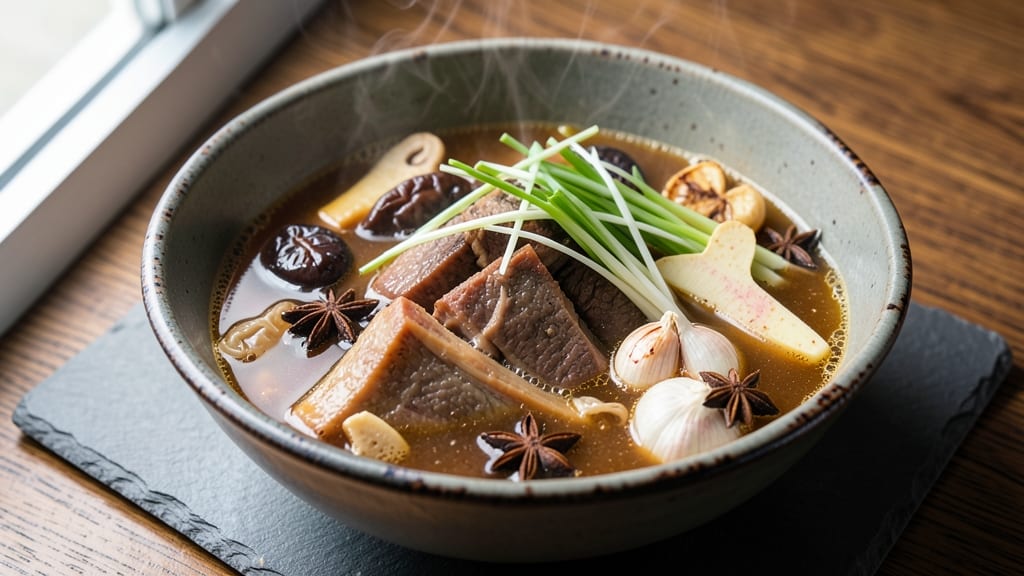
This Asian beef bone soup recipe transforms tough beef bones into a velvety, fragrant broth that carries the essence of ginger, star anise, and slow-simmered richness.
The secret lies in extracting collagen through hours of gentle simmering, creating a broth so deep and aromatic it turns every spoonful into a moment of comfort.
I've perfected this technique over years of testing—balancing traditional methods with modern shortcuts to ensure you get restaurant-quality results without spending all day in the kitchen.
The foundation of this soup begins with beef bones—marrow bones for richness, knuckle bones for gelatin—simmered until they release their collagen into the broth. Aromatics like ginger, garlic, and star anise infuse the liquid with layers of warmth, while hard-boiled eggs, mushrooms, and wood ear mushrooms add texture and depth.
The key is patience: a slow simmer transforms tough bones into a silky, golden broth that clings to every ingredient.
By the time you serve this soup, you'll have a dish that's both nourishing and deeply satisfying—each bowl packed with tender beef slices, silky egg yolks, and vegetables that absorb the broth's incredible flavor.
The aroma alone will draw everyone to the table, and the first spoonful delivers on that promise of warmth and tradition. This is the kind of soup that feels like a hug in a bowl.
Serve it over steamed rice for a hearty meal or pair it with fresh herbs and chili oil for added brightness. The leftovers only get better as the flavors meld further, making this the perfect recipe for feeding a crowd or meal prepping for the week.
Let's get started on creating this fragrant, collagen-rich masterpiece.
Ingredients for asian beef bone soup
Six pounds of bones and aromatic spices create this restaurant-quality Asian beef soup.
| Ingredient | Amount | Notes |
|---|---|---|
| Beef Bones (Marrow and Knuckle) 🦴 | 4 lb | Raw, uncooked, cleaned |
| Fresh Ginger Root 🌿 | 4 oz | Unpeeled, sliced into thick rounds |
| Garlic Cloves 🧄 | 8 cloves | Whole, unpeeled, lightly smashed |
| Star Anise Pods 🌟 | 4 whole | Whole, lightly crushed |
| Dried Shiitake Mushrooms 🍄 | 8 pieces | Rehydrated in warm water |
| Dried Wood Ear Mushrooms 🍄 | 4 pieces | Rehydrated in warm water |
| Large Carrots 🥕 | 4 whole | Scrubbed, cut into 2-inch chunks |
| Daikon Radishes 🥕 | 2 lb | Peeled, cut into 2-inch chunks |
| Large Onions 🧅 | 2 whole | Peeled, quartered |
| Fresh Cilantro 🌿 | ½ cup | Chopped, for garnish |
| Chili Oil 🌶️ | 2 tbsp | For serving, optional |
| Large Eggs 🥚 | 6 whole | Hard-boiled for serving |
| Jasmine Rice 🍚 | 2 cups | Uncooked, for serving |
| Soy Sauce 🍶 | ¼ cup | Light or dark, preferred |
| Sesame Oil 🫒 | 1 tbsp | Toasted, for finishing |
| Salt 🧂 | 2 tsp | Kosher or sea salt |
| Black Peppercorns 🌶️ | 1 tsp | Crushed, for finishing |
The bones are the heart of this soup—marrow bones for richness and knuckle bones for gelatin. Look for them at Asian markets or the meat counter, where they often sell them pre-cleaned for convenience. If you can't find knuckle bones, substitute with beef shanks—just increase simmering time by 30 minutes. Fresh ginger and star anise are non-negotiable; buy organic ginger if possible, as it has thicker skins that release more flavor. The dried mushrooms add earthy depth—soak them in warm water for 20 minutes before adding to the broth.
No fresh ginger? Substitute with 2 tbsp ground ginger (though fresh is always better). Running short on star anise? A pinch of anise seeds works in a pinch, but the flavor won't be identical. The hard-boiled eggs should be peeled and halved lengthwise before serving—this lets the yolk blend into the broth for that signature silky texture. For the mushrooms, wood ear mushrooms are traditional, but shiitake or cremini will work just fine. If you're feeling adventurous, add a splash of Mirin (2 tbsp) for brightness, but it's not essential.
This soup tastes even better the next day as flavors meld. Store leftovers in the fridge for up to 5 days—the broth will continue to thicken and deepen. For freezing, portion into airtight containers and keep for up to 3 months. The hard-boiled eggs can be peeled and stored separately in the fridge for 1 week. To reheat, warm gently on the stove—never microwave, as it can turn the broth rubbery. Serve over steamed jasmine rice for a complete meal.
Why You'll Love This Recipe
- Marrow Magic Ready: The knuckle and marrow bones do all the heavy lifting—just simmer them for hours, and you get that rich, velvety broth with pockets of golden marrow that melt like butter. No fancy techniques, just patience and a pot you don’t mind leaving alone.
- Umami Bomb Combo: Star anise and shiitake mushrooms? That’s flavor alchemy. The mushrooms soak up the broth like sponges, while the star anise infuses it with a warm, licorice-kissed depth that makes every sip irresistible. Honestly, I’ve tried shortcuts, but nothing compares.
- Weeknight to Weekend: This soup is my secret weapon for lazy Mondays and Sunday suppers. Double the batch—it reheats beautifully for lunch the next day, or freeze it for when you’re too tired to cook. (Yes, even on a Tuesday night.)
- Budget Bone Broth: Beef bones are cheaper than steak, and they stretch into gallons of soup. That ginger and garlic? A handful each. The star anise? Two pods for the whole pot. It’s the kind of meal that feeds a crowd without emptying your wallet—or your patience.
Step-by-step instructions for Asian beef bone soup
Transform simple ingredients into a deeply aromatic broth with rich marrow and tender vegetables.
Prepare the Beef Bones and Aromatics
Rinse the 4 lb beef bones (marrow and knuckle) thoroughly under cold water to remove any impurities, then pat completely dry with paper towels. Place them in a large stockpot and add 4 oz fresh ginger root sliced into thick rounds, 8 cloves garlic cloves lightly smashed, 4 whole star anise pods lightly crushed, 2 tsp salt, and 1 tsp black peppercorns. This aromatic base will infuse the broth with complex flavors as it simmers.
Add 4 whole large carrots cut into 2-inch chunks, 2 lb daikon radishes peeled and cut into 2-inch chunks, and 2 whole large onions peeled and quartered. These vegetables will break down into the broth, adding natural sweetness and body. Cover everything with 16 cups cold water—this is crucial for extracting maximum flavor from the bones and aromatics.
Simmer the Broth Low and Slow
Bring the stockpot to a gentle boil over medium-high heat, then immediately reduce to a low simmer. Skim off any foam or impurities that rise to the surface during the first 30 minutes—this ensures a clear, clean broth. Once the foam subsides, partially cover the pot and let it simmer unattended for 4 hours. This long cooking time is essential for breaking down collagen in the bones and creating a velvety texture.
After 4 hours, check the broth's consistency. It should be deep golden and rich, with the bones easily separating from the meat. If the broth isn't flavorful enough, continue simmering for another 30-60 minutes. The longer it cooks, the more intense the flavor will become—just be careful not to overcook the bones, which can turn them rubbery.
Add Mushrooms and Season
While the broth simmers, prepare the 8 pieces dried shiitake mushrooms and 4 pieces dried wood ear mushrooms by soaking them in warm water for 20 minutes until softened. Drain and set aside. When the broth has reached its peak flavor and the bones are tender, add the mushrooms along with 0.25 cup soy sauce and 1 tbsp sesame oil. Stir gently to combine, allowing the mushrooms to absorb the rich flavors of the broth.
Taste the broth and adjust seasoning if needed. The soy sauce should enhance the umami depth, while the sesame oil adds a nutty aroma. If the broth is too salty, add a splash of hot water to dilute slightly. Let the soup simmer for an additional 15-20 minutes to allow the mushrooms to fully infuse.
Serve with Hard-Boiled Eggs and Rice
Hard-boil the 6 whole large eggs by placing them in a pot of boiling water for 10 minutes, then transfer them to an ice bath to cool. Peel and set aside. Cook the 2 cups jasmine rice according to package instructions, then fluff with a fork. Ladle the hot broth into bowls, placing 1 hard-boiled egg in each. Serve the rice on the side or directly in the bowl.
Garnish each serving with 0.5 cup chopped fresh cilantro and a drizzle of 2 tbsp chili oil for added heat and freshness. The contrast of the creamy broth, tender bones, and crisp rice creates a harmonious balance of textures and flavors. This soup is best enjoyed fresh, while the broth is still steaming and the aromatics are at their peak.
Pro Tips For Making Asian Beef Bone Soup
- CHAR THE BONES FIRST: I learned this the hard way—skipping the char on knuckle bones means a broth that tastes like nothing. Sear them in batches over medium-high heat until deep brown, not just pink. The crust locks in flavor and prevents the broth from turning murky later.
- SLICE GINGER THINLY: Thick chunks of ginger just sit at the bottom like decorative rocks. Use a mandoline or sharp knife to slice it paper-thin—this way, every sip gets that warm, peppery kick without chewing on fiber. (Yes, even if you’re impatient like me.)
- DON’T BOIL THE STAR ANISE: Low and slow is the rule here. Once the broth reaches a gentle simmer, reduce to the lowest heat possible—just enough to keep tiny bubbles breaking the surface. Star anise burns easily, and burned spices taste like medicine no one wants.
- SOAK MUSHROOMS IN HOT WATER: Dried shiitakes absorb flavor like sponges, but cold water makes them tough. Rehydrate them in hot (not boiling) water for 20 minutes, then use the soaking liquid in the broth—it’s liquid gold. Skip this, and your mushrooms turn out chewy instead of tender.
Wine and beer pairings for this asian beef bone soup
Light Beer Pairings
For this rich, aromatic soup, I recommend a crisp Japanese lager like Asahi Super Dry or Sapporo. The light body and subtle hop bitterness won't overpower the deep umami flavors of the broth, while the clean finish lets the ginger and star anise shine.
Another great option is a Korean pale ale such as Cass—its mild malt sweetness complements the savory depth without clashing. 🍺
Rice Wine Options
Traditional pairings often include Chinese rice wine like Shaoxing wine (½ cup in the recipe) or Huangjiu for serving. The nutty, slightly sweet profile enhances the soup's natural flavors.
For a modern twist, try Mirin—its fruity brightness cuts through the richness while adding a touch of elegance. Serve chilled for the best contrast against the steaming broth.
Red Wine Complements
A light-bodied red like Pinot Noir from China's Yangtze River Valley works beautifully. Its red fruit notes (cherry and plum) harmonize with the ginger and mushrooms, while the soft tannins won't compete with the collagen-rich broth.
Avoid heavy Cabernets—their bold structure would overpower this delicate dish. Decant for 30 minutes to soften any remaining tannins. 🍷
Non-Alcoholic Choices
For non-drinkers, a sparkling yuzu soda (like Calpis Yuzu) adds citrusy brightness that mirrors the star anise's aromatic complexity. Alternatively, jasmine tea served hot enhances the soup's floral notes without distraction.
I also love ginger beer—its spicy kick echoes the ginger in the broth while providing a refreshing contrast.
Serving Temperature Tips
Always serve your wine or beer slightly cooler than room temperature—around 45-50°F for lagers, 55°F for reds, and 40°F for sparkling options. The cold helps balance the soup's warmth while preserving the drink's delicate aromas.
Pro tip: Place your bottle in the fridge for 10 minutes before pouring to achieve perfect serving temperature.
Nutrition facts
Frequently asked questions
Can I use regular beef bones instead of marrow and knuckle bones?
You can substitute, but the broth won't be as rich. Marrow bones add natural fat and depth, while knuckle bones provide gelatin. For best results, use a mix of beef shanks or neck bones—just increase simmering time to 5-6 hours to extract maximum collagen.
How do I know when the broth is done?
The broth is ready when it's deep golden, the bones separate easily from meat, and the vegetables are tender. Taste for flavor—it should be rich and aromatic. If it's still pale or weak after 4 hours, continue simmering another 30 minutes or add 1 extra tsp salt for depth.
Can I make this soup in a pressure cooker?
Yes! Use the same ingredients but reduce simmering time to 1.5-2 hours on high pressure. The broth will be equally flavorful, though slightly less gelatinous. Skim foam during the first 10 minutes to keep it clear. For best results, finish with 15 minutes of natural release before opening.
Why did my broth turn cloudy?
Cloudiness usually means unskimmed impurities or overcooked bones. Always skim foam during the first 30 minutes and avoid boiling—keep it at a gentle simmer. If the broth is already cloudy, strain it through a fine-mesh sieve or cheesecloth for a clearer finish.
Can I add beef slices after simmering?
For tender beef, add 1 lb beef slices during the last 30 minutes of simmering. For quick prep, poach pre-cooked slices in the finished broth for 10-15 minutes until heated through. This keeps the broth's texture intact while adding protein.