
Soups & Stews
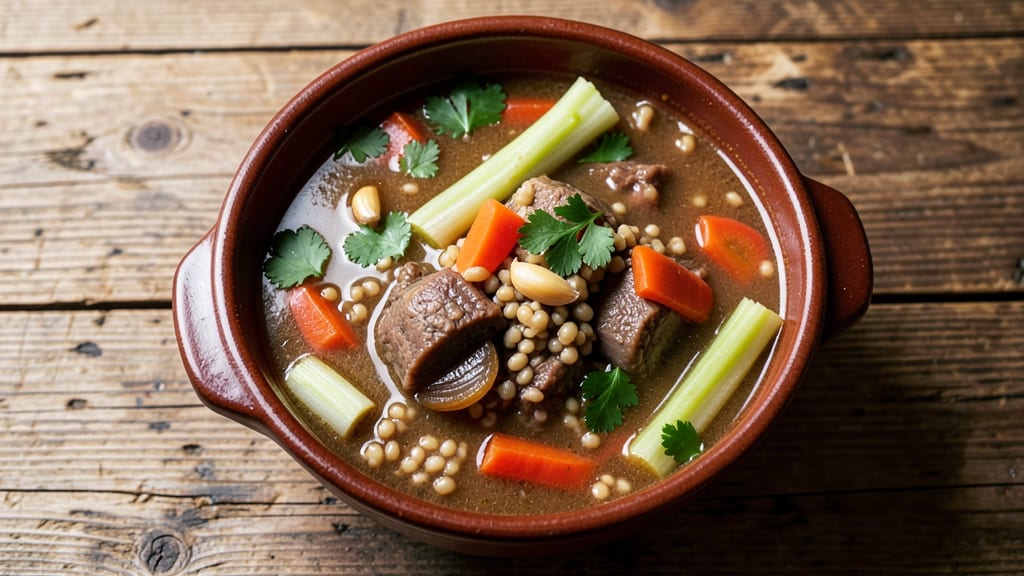
This beef bone barley soup recipe delivers the kind of slow-simmered richness that transforms tough cuts into melt-in-your-mouth perfection. The secret lies in parboiling beef bones to extract maximum flavor while keeping the broth crystal clear—no shortcuts here.
What starts as a simple pot of ingredients becomes a deeply aromatic, hearty soup that warms both body and soul on chilly evenings.
The beauty of this recipe is in its simplicity: just a few quality ingredients working together over hours to create a velvety broth infused with beefy depth and nutty barley. Unlike quick soups, this one rewards patience with layers of flavor that develop as it simmers.
The barley adds satisfying texture while soaking up all that rich broth, making every spoonful hearty and comforting.
By the time you're ready to serve, you'll have a steaming bowl of soup with tender beef, perfectly cooked barley, and a broth so flavorful it practically tastes like it simmered all day.
The aroma alone will have everyone gathering at the table. This is the kind of soup that tastes even better the next day—ideal for meal prep or feeding a crowd.
Pair it with crusty bread for dipping or pickled vegetables for brightness to round out the meal. The slow-cooked technique ensures every ingredient shines without overpowering the others, delivering restaurant-quality results in your own kitchen. Let's get started on this comforting classic.
Ingredients for beef bone barley soup
Quality bones and fresh produce form the soul of this slow-cooked masterpiece.
| Ingredient | Amount | Notes |
|---|---|---|
| Beef Bones 🦴 | 3 lb | Knee and knuckle bones preferred |
| Yellow Onion 🧅 | 2 whole | Chopped into 1-inch pieces |
| Carrots 🥕 | 4 medium | Peeled and cut into 1-inch chunks |
| Celery Stalks 🧆 | 4 whole | Trimmed and cut into 1-inch pieces |
| Garlic Cloves 🧄 | 6 cloves | Smashed but not minced |
| Pearl Barley 🌾 | 1 ½ cups | Rinsed before cooking |
| Tomatoes 🍅 | 4 whole | Roma or plum, crushed by hand |
| Bay Leaves 🍃 | 2 whole | Fresh preferred |
| Thyme Sprigs 🌿 | 4 whole | Fresh, stems removed |
| Black Peppercorns 🌶️ | 1 tbsp | Crushed lightly |
| Salt 🧂 | 2 tsp | Kosher or sea salt |
| Apple Cider Vinegar 🍎 | 2 tbsp | For parboiling bones |
| Parsley 🌿 | ¼ cup | Fresh, chopped for garnish |
The bones are non-negotiable—knee and knuckle cuts deliver the deepest flavor. Local butchers often have them at a fraction of grocery store prices, and they'll even cut them for you. If you can't find them fresh, Costco or Whole Foods usually stock them frozen. For the best clarity in your broth, parboil the bones in apple cider vinegar for 20 minutes before simmering—the acid helps extract collagen without clouding the broth. Pearl barley is ideal here; it holds its shape better than steel-cut varieties, giving you that satisfying bite. Bob's Red Mill is my go-to brand, but any quality pearl barley will work.
No fresh thyme? Dried works at one-third the amount, but the aroma is completely different. The tomatoes should be Roma or plum—their meaty texture breaks down better than beefsteak varieties. If you're short on time, San Marzano canned tomatoes are a great shortcut (just skip the peel). For the carrots and celery, organic is worth it—you're eating these raw in the broth, so avoiding pesticides matters. The bay leaves can be dried, but fresh ones infuse more quickly. If you're feeling adventurous, add a pinch of saffron for color and depth, though it's optional. The apple cider vinegar is crucial—it's what gives the broth that bright, clean taste.
This soup tastes even better the next day, so double the batch if you can. Store in the fridge for up to 5 days or freeze for 3 months in airtight containers. The barley thickens as it cools, so add a splash of broth when reheating. For meal prep, portion into individual jars—the bones and vegetables settle at the bottom, making serving easy. The broth alone freezes beautifully if you want to make it ahead and add fresh ingredients later. Garnish with fresh parsley just before serving to keep it vibrant.
Why You'll Love This Recipe
- One-Pot Magic: I swear by this soup because it’s literally just dump-and-simmer. Toss in the beef bones (no pre-cooking needed), onions, carrots, celery, and garlic—then let the slow cooker or pot do the work while you chop veggies for dinner. Minimal chopping, zero fuss, and that rich broth builds itself.
- Umami Bomb: Between us, the beef bones are the star here. They melt into the broth, turning it into a deep, savory elixir that tastes like a hug in a bowl. The garlic and onions caramelize just enough to add layers, while the barley soaks up all that flavor—no bland bites here.
- Leftovers That Win: This soup actually gets better the next day. The barley softens perfectly, the broth deepens, and it’s still hearty enough to pack for lunch. I make a big batch on Sundays and eat it all week—no sad, wilted leftovers, just warm, satisfying meals.
- Budget Bone Broth: Honestly, this is my go-to for stretching a dollar. Beef bones are cheap, and the veggies (onion, carrots, celery) are pantry staples. You end up with a gallon of flavorful broth that freezes beautifully—perfect for future soups, grains, or even a quick pasta sauce. Waste not, want not.
Step-by-step instructions for beef bone barley soup
A rich, slow-simmered broth with hearty barley and tender vegetables—this is how you build depth of flavor.
Parboil the Beef Bones for Maximum Flavor
Place the 3 lb beef bones in a large stockpot and cover them completely with cold water. Add the 2 tbsp apple cider vinegar and bring to a boil over high heat. Once boiling vigorously, reduce heat to medium-high and simmer uncovered for 15 minutes. This step removes impurities and extracts collagen from the bones, which will later transform into a velvety broth.
After 15 minutes, drain the bones and rinse them thoroughly under cold water to remove any scum. Return the cleaned bones to the same pot and cover with fresh cold water. Add the 2 whole bay leaves and 4 whole thyme sprigs—these aromatic herbs will infuse the broth with deep, earthy notes. Bring to a boil again, then reduce heat to low and let it simmer gently for 2 hours. You'll know it's working when the broth develops a rich, golden color and a subtle meaty aroma.
Sauté the Vegetable Base for Foundational Flavor
While the bones simmer, heat a large Dutch oven over medium heat. Add 2 whole yellow onion, 4 medium carrots, and 4 whole celery stalks (all chopped as specified). Cook for 8-10 minutes, stirring occasionally, until the vegetables soften slightly and begin to caramelize at the edges. This step builds a flavorful base that will carry through the entire soup.
Add the 6 cloves garlic cloves (smashed but not minced) and cook for another 1-2 minutes until fragrant. Be careful not to burn the garlic—it should smell sweet and nutty, not bitter. Remove the vegetables from the pot and set aside. You'll add them back later, but this step ensures they develop deep flavor before being fully cooked in the broth.
Add Barley and Tomatoes for Hearty Texture
Return the sautéed vegetables to the pot with the simmering bones. Add the 1.5 cups pearl barley (rinsed) and 4 whole tomatoes (crushed by hand). Stir in the 1 tbsp black peppercorns (lightly crushed) and 2 tsp salt. The barley will absorb some of the liquid initially, but don't worry—it will rehydrate fully as the soup simmers.
Let the soup simmer uncovered for 1 hour, stirring occasionally to prevent the barley from sticking to the bottom. The barley should be tender but still hold its shape slightly—it will finish cooking as it absorbs more liquid. The tomatoes will break down, adding a subtle sweetness and acidity that balances the richness of the broth.
Simmer to Perfection and Season
After 1 hour, taste the broth and adjust the seasoning if needed. The soup should be rich and flavorful, but not overly salty. If the barley still feels firm, continue simmering for another 30-45 minutes until tender. The bones should be falling off the frame, releasing their marrow into the broth for extra richness.
Once the barley is perfectly tender and the broth has deepened in color, remove the bones (they're done) and discard the bay leaves and thyme sprigs. The soup is now ready to be served. The 0.25 cup parsley can be added at the end as a garnish for freshness, but it's optional—this soup shines on its own.
Serve Warm with Fresh Herbs
Ladle the soup into bowls, making sure each serving gets a generous portion of barley and vegetables. Garnish with the 0.25 cup chopped parsley just before serving to add a bright, fresh contrast to the rich broth. Serve immediately while the soup is steaming hot—this is when the flavors are at their peak.
The result should be a deeply flavorful, hearty soup with a velvety broth, tender barley, and a perfect balance of sweet, savory, and aromatic notes. Each spoonful delivers the slow-simmered richness that makes this soup so satisfying.
Pro Tips For Making Beef Bone Barley Soup
- CRACK THE BONES FIRST: I learned this the hard way—skipping the bone-cracking step means you’re missing out on flavor gold. Use a meat mallet or rolling pin to crush marrow bones before simmering; this releases collagen and fat faster, giving your soup that rich, velvety depth in half the time. (Yes, it’s messy, but worth it.)
- SWEAT THE AROMATICS LOW: Don’t rush the onion, garlic, and celery—cook them on medium-low heat for 8–10 minutes until they’re deep golden, not just soft. Browning them properly builds a flavor base that won’t get overpowered by the barley later. (Your future self will notice the difference.)
- SKIP THE BARLEY WASH: Rinse barley before cooking? Big mistake. The starch clings to the grains, making your soup gluey. Just pick through it for debris, then add dry—it’ll plump up perfectly without turning your broth into paste. (Trust me, your spoon will thank you.)
- USE A LITTLE ACID: Toss in a splash of vinegar or a squeeze of lemon at the end—just enough to brighten the flavors. The beef bones can make soup taste flat, and a tiny acid hit cuts through the richness without overpowering. (Start with 1 teaspoon, taste, then adjust.)
Best sauces and condiments for this dish
Classic Horseradish Cream
This tangy, slightly spicy condiment cuts through the richness of beef bone barley soup beautifully. For the best results, use prepared horseradish (like Liberty brand) mixed with ½ cup sour cream and 1 tbsp fresh lemon juice.
Thin with 1-2 tbsp broth from your soup to balance the flavors. Serve a dollop on top or alongside for a bright, peppery kick that cleanses your palate between spoonfuls. 🌶️
Garlic Yogurt Drizzle
Blend ½ cup plain Greek yogurt with 1 minced garlic clove, 1 tsp lemon zest, and a pinch of salt. Thin with 1 tbsp water if needed. Drizzle over individual bowls just before serving—it adds a cool, creamy contrast that highlights the soup’s depth.
For extra richness, stir in 1 tsp melted butter at the end. This works especially well if your soup feels too heavy.
Crispy Onion Jam
Sauté 1 cup thinly sliced yellow onion in 2 tbsp butter over medium-low heat for 20-25 minutes until caramelized. Add 1 tbsp balsamic vinegar and 1 tsp brown sugar, then simmer for 5 more minutes.
Spread this jam on toasted baguette slices and serve as a side. The sweet, jammy onions pair perfectly with the savory broth and barley. 🍞
Spicy Tomato Relish
Chop 2 Roma tomatoes into small pieces and mix with 1 tbsp red wine vinegar, ½ tsp smoked paprika, 1 tsp honey, and 1 minced garlic clove. Let sit for 15 minutes to meld flavors.
This adds a fresh, slightly sweet contrast that brightens each spoonful. Store in the fridge for up to 3 days—it’s great for meal prep too.
Herbed Butter Blend
Mix ½ cup softened butter with 2 tbsp chopped parsley, 1 tbsp chopped chives, 1 tsp lemon zest, and ½ tsp black pepper. Roll into a log, wrap in parchment, and chill for 30 minutes.
Serve with crusty bread for dipping or melt a pat into hot soup for added richness. This blend elevates the soup’s herbal notes without overpowering the broth. ✨
Nutrition facts
Frequently asked questions
Why do I need to parboil the beef bones before simmering?
The parboiling step with apple cider vinegar removes impurities and blood that would otherwise cloud your broth. It also helps extract collagen from the bones, which transforms into that silky, rich texture during the long simmer. Skipping this step can leave your broth murky and less flavorful.
Can I substitute pearl barley with another grain?
Pearl barley is ideal here because it holds its shape well, but you can use steel-cut oats or wild rice for variation. Just adjust cooking times—steel-cut oats need 45-60 minutes while wild rice takes about 30 minutes. Avoid instant rice, as it becomes mushy and loses texture. The barley's nutty flavor also complements the beef beautifully.
How do I know when the barley is perfectly cooked?
The barley should be tender but still slightly firm to the bite—like al dente pasta. Press a grain between your fingers; it should be soft in the center but not falling apart. If it's still crunchy after 1.5 hours of simmering, add ½ cup hot water and cook another 15 minutes. Overcooking turns it mushy and ruins the texture.
Can I make this soup in a slow cooker?
After parboiling the bones, transfer everything (including bones and vegetables) to your slow cooker. Cook on low for 8-10 hours or high for 5-6 hours. The long cook time actually enhances the flavor, but check the barley doneness early—it cooks faster in a slow cooker. Stir occasionally to prevent sticking. The broth will be even more concentrated and rich.
What if my soup tastes too salty?
If you oversalted, add ½ cup cold water or 1 cup chopped fresh vegetables (like zucchini or potatoes) to dilute the flavor. For a quick fix, stir in 1 tbsp lemon juice or 2 tbsp heavy cream—both balance saltiness while adding brightness. Never add more liquid at the end; it weakens the broth's depth. Taste as you go!