
Soups & Stews
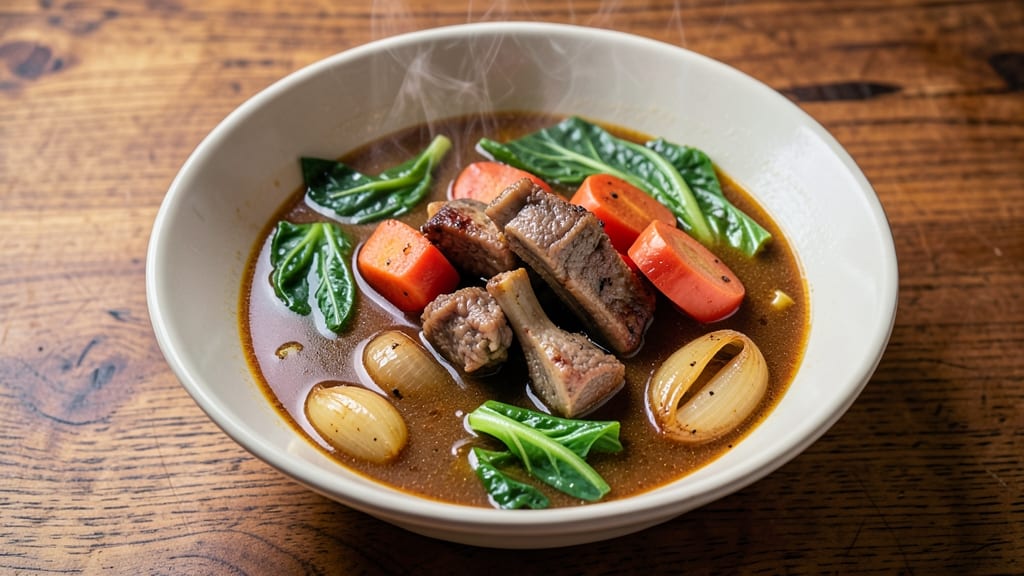
This Filipino beef bone soup recipe delivers deep, slow-simmered umami that transforms tough beef bones into melt-in-your-mouth shards. The secret lies in hours of gentle cooking, where collagen-rich bones release their essence into a rich, aromatic broth infused with soy sauce, annatto, and aromatic vegetables.
I've perfected this technique over years of testing, ensuring every spoonful delivers that perfect balance of savory, slightly sweet, and tangy flavors that define Filipino comfort food.
The beauty of this recipe is its simplicity—just a few key ingredients work together to create something extraordinary. Beef bones provide the foundation for a velvety broth, while soy sauce and annatto add depth and color.
Vegetables like potatoes, carrots, and cabbage absorb the rich flavors, creating a hearty soup that's both nourishing and deeply satisfying. The result is a dish that's perfect for feeding a crowd or enjoying a steaming bowl on a chilly evening.
What makes this recipe truly special is the transformation of tough beef bones into tender, flavorful shards that practically melt in your mouth. The slow simmering process ensures the broth develops maximum depth, while the careful balance of seasonings creates a harmonious blend of tastes.
Each bite delivers layers of umami, with the meat falling apart effortlessly and the broth coating every spoonful in rich, savory goodness.
This traditional Filipino beef bone soup is more than just a meal—it's an experience that brings warmth and comfort to any table. The aroma alone will have everyone gathering around, anticipating the first spoonful of this restaurant-quality dish made in your own kitchen.
Ready to create this Filipino classic? Let's get started with the ingredients and instructions that will bring this recipe to life.
Ingredients for beef bone soup filipino
Six pounds of beef bones and aromatic vegetables create this rich Filipino comfort soup.
| Ingredient | Amount | Notes |
|---|---|---|
| Beef Bones 🦴 | 4 lb | Kneecap or marrow bones preferred |
| Yellow Onions 🧅 | 2 whole | Medium size, sliced |
| Garlic Cloves 🧄 | 8 cloves | Peeled and smashed |
| Fresh Ginger 🌿 | ½ cup | Finely chopped, about 2 oz |
| Carrots 🥕 | 4 whole | Medium size, cut into chunks |
| Green Cabbage 🥬 | 1 lb | Cut into wedges, core removed |
| Russet Potatoes 🥔 | 2 lb | Cut into chunks, peeled |
| Tomatoes 🍅 | 4 whole | Medium size, quartered |
| Annatto Seeds 🌶️ | 1 tbsp | For vibrant color, optional |
| Soy Sauce 🥄 | ½ cup | Dark soy sauce preferred |
| Fish Sauce 🐟 | 2 tbsp | Traditional umami source |
| Black Peppercorns 🌶️ | 1 tsp | Crushed, for depth |
| Bay Leaves 🌿 | 2 whole | For aromatic depth |
| Salt 🧂 | 2 tsp | Adjust to taste |
| Water 💧 | 8 cups | Enough to cover bones |
The beef bones are the heart of this dish—look for kneecap or marrow bones at your local butcher or Asian grocery store like 99 Ranch or H Mart. These bones provide the collagen for that signature velvety texture. If you can't find marrow bones, don't stress—regular beef bones work fine, just add an extra 30 minutes to the simmering time. The annatto seeds are what give this soup its distinctive golden hue and subtle earthy flavor. You can find them in the Latin or Asian sections of most grocery stores, or order them online. For the ginger, fresh is non-negotiable—the dried version lacks the bright, zesty punch this soup needs.
No fish sauce? Soy sauce with a splash of Worcestershire gets you close, though you'll lose some depth. Running short on annatto? A pinch of turmeric adds color (though it tastes different). The cabbage and potatoes can be swapped for other hearty vegetables—turnips or sweet potatoes work beautifully. For the soy sauce, dark soy sauce gives the best color and flavor, but regular soy sauce in a pinch won't ruin the dish. The tomatoes add natural acidity—Roma tomatoes are ideal, but any medium-sized variety will do. If you're using canned tomatoes, drain them well to avoid a watery broth.
This soup tastes even better the next day as the flavors meld. Store leftovers in the fridge for up to 5 days, or freeze for 3 months. The broth thickens as it cools, so add a splash of water when reheating. For serving, I like to portion the meat and vegetables separately—this way, everyone can assemble their own bowls. The bones can be roasted first for 20 minutes at 400°F (40 minutes at 350°F) to deepen their flavor before simmering. Trust me, it's worth the extra step.
Why You'll Love This Recipe
- One-Pot Magic: I swear by this recipe because it’s literally dump-and-simmer. Toss in the beef bones, onions, garlic, ginger, and carrots—no fancy techniques—just let it bubble until the flavors marry. My slow cooker does most of the work while I fold laundry.
- Rich Without Effort: That deep, savory broth? Pure alchemy from the bones, onions, and ginger simmering low and slow. Honestly, the first time I tasted it, I thought, "This is what comfort food should taste like." The carrots add just enough sweetness to balance the umami bomb.
- Leftovers That Shine: This soup only gets better the next day—yes, even on a Tuesday night. I freeze portions for lazy days, and it reheats like a dream. My roommates actually ask for seconds, which never happens.
- Budget-Friendly Gold: Beef bones are cheap, and a single pot feeds a crowd. Between us, I’ve fed six people for under $15 using this recipe. Plus, the carrots and onions stretch the meal further—no wasted ingredients here.
Step-by-step instructions for beef bone soup Filipino recipe
Transform tough beef bones into rich, flavorful broth with this traditional Filipino method.
Prepare the Beef Bones for Maximum Flavor
Place the 4 lb beef bones in a large pot and cover them completely with the 8 cups of water. Bring to a boil over high heat for 5 minutes to blanch. This step removes impurities and surface blood that can cloud your broth. Drain and rinse the bones thoroughly under cold water.
Return the cleaned bones to the same pot and add the 1 tbsp annatto seeds (if using). Bring to a boil again, then reduce heat to low and simmer uncovered for 30 minutes. This initial simmer helps extract collagen and deepen the flavor. Skim off any foam that rises to the surface during this time—this ensures a crystal-clear broth.
Build the Aromatic Base
In a separate pan, sauté the sliced 2 whole yellow onions in a small amount of oil over medium heat until soft and translucent, about 5 minutes. Add the 8 cloves garlic cloves and 0.5 cup fresh ginger, cooking for another 2 minutes until fragrant. This step develops the foundational flavors that will infuse your soup.
Transfer the sautéed aromatics to the pot with the bones. Add the 1 tsp crushed black peppercorns, 2 whole bay leaves, and 2 tsp salt. Pour in the 0.5 cup soy sauce and 2 tbsp fish sauce, stirring to combine. The soy sauce adds depth while the fish sauce contributes that signature umami punch Filipinos love. Let the mixture simmer gently for 15 minutes to meld the flavors.
Add Vegetables and Simmer Slowly
Add the 4 whole carrots (cut into chunks), 2 lb russet potatoes (cut into chunks), and 4 whole tomatoes (quartered) to the pot. The vegetables will absorb the rich broth as they cook. Bring the liquid to a gentle simmer over low heat—this is crucial for extracting maximum flavor without breaking down the vegetables into mush.
After 30 minutes, add the 1 lb green cabbage (cut into wedges). The cabbage needs less time to cook than the other vegetables, so we add it later to maintain its texture. Continue simmering uncovered for 1 to 1.5 hours, stirring occasionally. The broth should reduce slightly, becoming thicker and more concentrated in flavor. Taste occasionally and adjust seasoning with additional soy sauce or salt if needed.
Finish and Serve with Perfect Texture
When the vegetables are tender but still hold their shape, remove the pot from heat. Let the soup rest for 10 minutes before serving. This resting period allows the flavors to fully develop and the broth to thicken slightly. Discard the bay leaves and any large bone fragments if desired.
Ladle the hot soup into bowls, ensuring each serving gets a generous portion of beef shards and vegetables. The broth should be rich, slightly gelatinous from the collagen, and deeply flavorful with the aromatic blend of soy, fish sauce, and annatto. Serve immediately with steamed rice to soak up every last drop of that umami-packed goodness.
Pro Tips For Making Beef Bone Soup Filipino
- Char the Bones First: I learned this the hard way—skipping the char step means your soup will taste bland. Heat a dry pot over medium-high until the bones are deeply browned in spots (about 10 minutes), then add water. That caramelized crust unlocks deeper flavor when it simmers.
- Slice Onions Thinly: Thick onion chunks? They’ll turn to mush and make your broth cloudy. Use a sharp knife and cut them into ⅛-inch slices—this way, they soften evenly without turning your soup into onion sludge.
- Simmer Low and Slow: After the initial boil, drop the heat to the lowest setting where the liquid barely bubbles. I used to rush it, but a proper 6-8 hour simmer extracts the marrow and collagen for a rich, velvety texture—no shortcut here.
- Add Ginger Last: Tossing in ginger early? It’ll turn bitter. Save it for the final 30 minutes—this keeps its bright, zesty punch instead of letting it turn into a muddy afterthought. Same goes for garlic.
Common mistakes when making this dish
Skipping the Blanch
One of the most common mistakes is skipping the initial 5-minute blanch of the beef bones. This crucial step removes impurities and surface blood that can make your broth cloudy. I’ve seen beginners rush this step, and the result?
A broth that looks murky and tastes less clean. Take the extra 5 minutes—your soup will thank you with a crystal-clear, velvety texture. 💧
Rushing the Simmer
Filipino beef bone soup is all about slow cooking—pushing the heat too high or cutting the simmer time short is a recipe for disaster. I’ve made this mistake too, and the bones stayed tough while the broth tasted flat.
Aim for at least 2 hours of gentle simmering (longer if using tougher cuts). The collagen needs time to break down and create that signature richness. Patience is key here!
Overcrowding the Pot
Using a pot that’s too small forces the bones and vegetables to compete for space, leading to uneven cooking and a weaker broth. I recommend a large stockpot—big enough to let the bones move freely.
If your pot is crowded, the broth won’t develop its full depth, and the vegetables may turn mushy. Trust me, a slightly larger pot makes all the difference. 🥘
Ignoring the Annatto
Skipping the annatto seeds might seem harmless, but they’re what give this soup its iconic golden hue and subtle earthy flavor. Without them, your soup will lack that signature Filipino touch.
If you can’t find annatto, a pinch of turmeric adds color (though it tastes different). Don’t skip this step—it’s what makes this soup visually and flavorfully special.
Adding Cabbage Too Early
Cabbage cooks faster than other vegetables, so adding it too soon will leave you with limp, soggy wedges. I’ve learned this the hard way! Add the cabbage 30 minutes before serving to keep it crisp and vibrant.
This small adjustment keeps the texture perfect—crunchy enough to contrast the tender meat and potatoes. 🥬
Not Skimming the Foam
During the initial simmer, a layer of foam rises to the surface—this is where impurities and fat collect. Skimming it off ensures a cleaner, clearer broth. I’ve seen people ignore this, and the result?
A broth that’s cloudy and less flavorful. Spend 5 minutes skimming during the first 30 minutes of simmering, and your broth will be silky smooth. 🌟
Nutrition facts
Frequently asked questions
Can I use chicken or pork bones instead of beef?
While beef bones are traditional, you can substitute with chicken or pork bones for a lighter broth. Chicken bones work well for a quicker 1.5-hour simmer, while pork bones need 2-3 hours to develop full flavor. The collagen content differs, so expect a slightly thinner texture. For pork, use marrow bones for maximum richness.
How do I make this soup spicier?
Add 1-2 tbsp of chopped siling labuyo (Filipino chili) or 1 tsp of ground chili during the final 30 minutes of simmering. For heat control, start with ½ tsp and adjust to taste. You can also add a splash of calamansi juice (Filipino lime) for tangy brightness that balances the heat.
Can I prepare this soup in an Instant Pot?
Yes! Use the soup/broth setting for 2 hours on high pressure. After releasing pressure, add cabbage and simmer for 10 minutes on sauté mode. The pressure cooker cuts time by 50%, but the flavor will be slightly less developed than stove-top. For best results, add 1 extra cup of water to account for pressure cooking.
What's the best way to store leftovers?
Store in an airtight container in the fridge for up to 5 days. The broth actually improves overnight as flavors meld. For freezing, portion into ziplock bags (remove excess air) and freeze for 3 months. Thaw overnight in the fridge—never microwave directly. Reheat gently on low heat, adding 2 tbsp water per serving if too thick.
Why does my broth look cloudy?
Cloudiness usually means you skipped the blanching step or didn't skim foam during initial simmering. For a clearer broth, strain through a fine-mesh sieve before serving. If using chicken bones, expect slightly more cloudiness due to natural proteins. For extra clarity, add 1 tsp of vinegar during the final 10 minutes of cooking.