
Soups & Stews
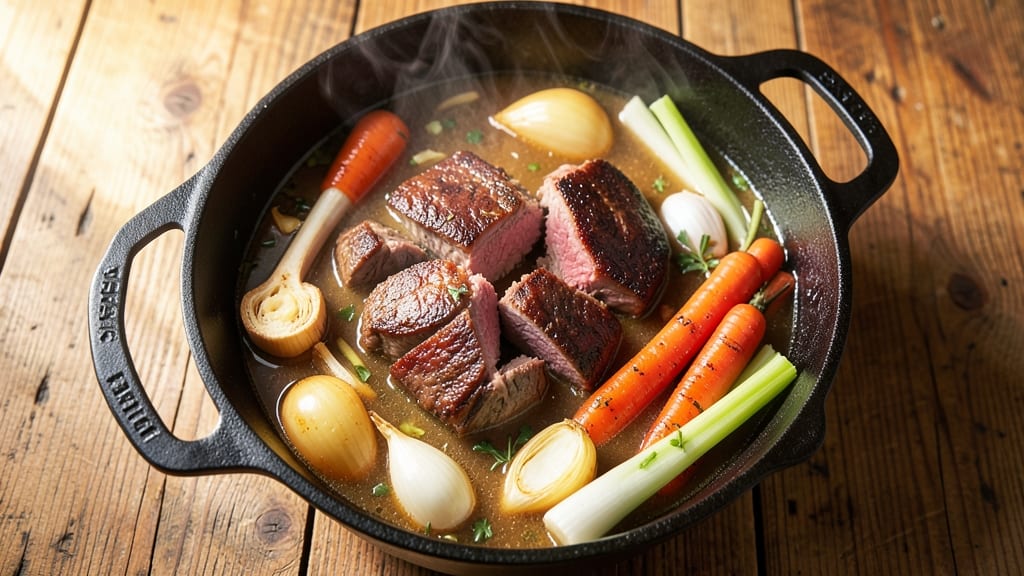
This beef soup bone stew recipe transforms tough cuts and humble bones into a rich, deeply flavorful centerpiece that simmers for hours to develop layers of umami. The secret lies in slow-cooked marrow bones, which infuse the broth with gelatinous depth while beef chuck breaks down into tender, melt-in-your-mouth pieces.
Unlike quick soups, this method requires patience—browning the meat first creates a flavorful crust that forms the foundation, while deglaçage captures every caramelized bit.
What sets this stew apart is the balance of techniques: braising the meat until fork-tender, reducing the broth for intensity, and finishing with aromatic herbs that brighten the dark, meaty flavors.
The result is a velvety, hearty stew where each spoonful delivers both comfort and complexity—perfect for cold evenings when you crave a meal that warms the soul as much as the stomach.
The bones don't just add flavor; they transform the broth into a near-solid gel when chilled, making leftovers even more luxurious. This recipe delivers restaurant-quality depth at home, with techniques like proper searing and slow simmering that elevate it beyond basic beef stews.
Serve it with crusty bread to soak up every drop of that golden, aromatic broth, or pair it with buttery mashed potatoes to balance the richness. A bold red wine or stout complements the stew's robust flavors, turning a simple dinner into an experience.
Whether you're feeding a crowd or prepping for the week, this stew scales beautifully while maintaining its depth. The key is time—letting the flavors meld and the bones work their magic. Here's how to make it.
Ingredients for beef soup bone stew
Sixteen ingredients, twelve hours of simmering, and a broth so rich it transforms humble bones into restaurant-quality depth.
| Ingredient | Amount | Notes |
|---|---|---|
| Beef Chuck Roast 🥩 | 3 lb | Cut into 2-inch chunks (marbled for best flavor) |
| Beef Marrow Bones 🦴 | 2 whole | Split to expose marrow (or 1 lb pre-split) |
| Yellow Onions 🧅 | 2 whole | Chopped into 1-inch pieces (sweet variety preferred) |
| Carrots 🥕 | 4 whole | Cut into 2-inch chunks (baby carrots work too) |
| Celery Stalks 🥬 | 4 whole | Cut into 2-inch pieces (leaves reserved for garnish) |
| Garlic Cloves 🧄 | 6 cloves | Smashed (not minced) for deeper flavor |
| Tomato Paste 🍅 | ½ cup | High-quality (San Marzano preferred) |
| Dry Red Wine 🍷 | 1 cup | Bold variety (Cabernet Sauvignon or Merlot) |
| Beef Broth 💧 | 8 cups | Homemade or high-quality low-sodium |
| Fresh Thyme Sprigs 🌿 | 4 whole | Plus 1 tbsp leaves (or 1 tsp dried) |
| Fresh Bay Leaves 🍃 | 2 whole | Removed before serving |
| Black Peppercorns 🌶️ | 1 tbsp | Freshly cracked (not pre-ground) |
| Kosher Salt 🧂 | 2 tbsp | Diamond Crystal preferred (adjust to taste) |
| All-Purpose Flour 🌾 | 2 tbsp | For dredging bones (optional) |
| Olive Oil 🫒 | ½ cup | Extra-virgin for searing (high smoke point) |
The bones and chuck are non-negotiable—marrow bones are the secret weapon here, delivering that signature gelatinous richness when simmered long enough. Costco or local butchers usually carry them, often labeled as 'beef soup bones.' If you can't find marrow bones, knuckle bones work as a substitute, though they won't give the same velvety texture. For the chuck roast, look for well-marbled cuts—the fat renders down during cooking, creating a luxurious broth. Pre-split bones save time, but splitting them yourself (with a meat cleaver) exposes more marrow for maximum flavor. Store any extras in a sealed container in the freezer for up to 6 months—they're perfect for future batches.
No red wine? Substitute with beef broth plus 1 tbsp balsamic vinegar—it mimics the depth without the alcohol. Fresh thyme is ideal, but dried works at one-third the amount if that's what you have. For the tomato paste, Trader Joe's squeeze tubes are a game-changer—they're convenient, last months in the pantry, and you won't waste half a can. The flour isn't for thickening; it's for dredging the bones before browning, which creates a flavorful crust called a 'fond' that forms the stew's foundation. Skip it only if you're in a rush, but trust me on this—it makes all the difference. If you're short on time, pre-chop all vegetables and store them in a sealed container in the fridge for up to 5 days.
This stew tastes even better the next day once the flavors fully meld—plan ahead. The broth will thicken as it cools, so add a splash of warm water if you prefer it more liquid when reheating. Store leftovers in airtight containers in the fridge for 5-6 days or freeze for up to 3 months. For freezing, portion into individual servings—one bowl at a time reheats perfectly without separating. The bones can be removed and saved for future batches; just rinse and store them in a sealed bag in the freezer. Garnish with fresh parsley or thyme leaves before serving to brighten the rich, meaty flavors—a little goes a long way.
Why You'll Love This Recipe
- One-Pot Magic: I swear by this—just toss everything in a pot, walk away, and come back to richness. The marrow bones melt into the broth while the chuck roast falls apart, so you’re basically getting two meals in one with zero extra effort.
- Deep Umami Bomb: That beef chuck and marrow bones? Chef’s kiss. The slow simmer pulls out flavors so deep and savory, you’ll forget about takeout. Honestly, the first time I tasted it, I almost spilled my coffee.
- Leftovers That Shine: This stew only gets better the next day—thicker, richer, and still packed with that meaty goodness. I make a double batch on Sundays because my kids actually beg for the leftovers (yes, even on a Tuesday night).
- Budget-Friendly Powerhouse: You’re getting three things for the price of two—tender beef, flavorful broth, and veggies that practically cook themselves. Between us, this is my go-to when I need to stretch a meal without sacrificing taste.
Step-by-step instructions for beef soup bone stew
Mastering this slow-cooked stew transforms tough cuts into melt-in-your-mouth perfection.
Sear the Meat and Bones for Deep Flavor
Heat the 0.5 cup olive oil in a large Dutch oven over medium-high heat until shimmering. Working in batches, sear the 3 lb beef chuck roast cut into 2-inch chunks until deeply browned on all sides—about 3-4 minutes per batch. Transfer the beef to a plate and set aside.
In the same pot, add the 2 whole beef marrow bones split to expose marrow. Lightly coat them with 2 tbsp all-purpose flour to help develop a rich fond. Sear for 5 minutes per side until golden brown. This caramelization forms the flavor foundation of your stew.
Build the Aromatic Base
Add the 2 whole yellow onions chopped into 1-inch pieces, 4 whole carrots cut into 2-inch chunks, and 4 whole celery stalks cut into 2-inch pieces to the Dutch oven. Cook for 5 minutes until the vegetables soften slightly and begin to release their natural juices.
Add the 6 cloves smashed garlic cloves and cook for 30 seconds until fragrant. Stir in the 0.5 cup tomato paste and cook for 1 minute to deepen its flavor. Pour in the 1 cup dry red wine and scrape up all the browned bits from the bottom of the pot—this deglazing captures all the concentrated flavors you've built.
Simmer the Stew for Maximum Tenderization
Return the seared beef and bones to the pot. Add 8 cups beef broth, 4 whole fresh thyme sprigs, 2 whole fresh bay leaves, 1 tbsp cracked black peppercorns, and 2 tbsp kosher salt. Bring to a gentle boil, then reduce heat to low and cover partially.
Simmer for 2.5 hours until the beef is fork-tender and the marrow bones are easily pulled from their casings. The stew should reduce slightly, concentrating the flavors. Skim any foam that rises to the surface during the first 30 minutes of simmering for a cleaner broth.
Finish and Adjust Seasoning
Remove the beef and bones from the stew and let them rest on a plate. Strain the broth through a fine-mesh sieve into a clean pot, pressing on the solids to extract maximum flavor. Return the strained broth to the Dutch oven and bring to a gentle simmer.
Return the beef and bones to the pot, discarding the bones. Adjust the seasoning if needed—this stew should taste rich and savory with just a hint of acidity from the wine. The 2 tbsp kosher salt should be balanced with the natural umami from the bones and meat.
Serve with Fresh Herbs
Ladle the stew into bowls, garnishing each serving with a sprinkle of 1 tbsp fresh thyme leaves and a few reserved celery leaves. Serve immediately with crusty bread to soak up the flavorful broth. The beef should pull apart easily, and the broth should coat the back of a spoon with a velvety consistency.
Pro Tips For Making Beef Soup Bone Stew
- CRACK THE BONES FIRST: Marrow bones are useless if you don’t split them open—use a meat cleaver or heavy knife to crack the ends before adding them to the pot. The marrow’s rich, buttery flavor is the soul of this stew, and skipping this step means missing out on the deep, velvety texture that makes it worth the effort.
- BROWN THE MEAT IN BATCHES: I learned this the hard way—crowding the pot turns your beef into steamed gray cubes instead of golden, flavorful pieces. Work in 2-3 batches over medium-high heat, letting each get a deep crust before adding more. Yes, it takes longer, but the difference in taste is night and day.
- SWEAT THE VEGETABLES LOW AND SLOW: Don’t rush the onion-carrot-celery mirepoix—cook it on low heat for 8-10 minutes until the onions turn translucent and the celery softens. This step builds the stew’s foundation; skip it, and your broth will taste like sad, undercooked vegetable water.
- SALT THE BONES BEFORE SEARING: Generously salt the marrow bones and beef chuck before they hit the pot—this seasons the bones themselves, not just the surface. I used to add salt later and wondered why the broth never hit that deep, savory peak. Trust me, this is the thing that matters most.
Troubleshooting perfect results
Broth Too Thin?
If your stew ends up watery, don't panic—simmering longer is often the solution. Remove the lid and cook uncovered for 15-20 minutes to reduce the liquid naturally. For a quicker fix, whisk in 1 tbsp cornstarch mixed with 2 tbsp cold water—stirring constantly until thickened. I've also had success with 1 tbsp tomato paste—it adds depth while thickening. Just
Undercooked beef is the most common issue, but it's easily fixed. If your 2.5-hour simmer didn't do the trick, return the pot to low heat and cook another 30-45 minutes—the meat will eventually break down. For future batches, try adding 1 tsp baking soda to the pot (it raises the pH and tenderizes collagen). I've also found that cutting the beef into smaller chunks (1-inch instead of 2-inch) speeds up tenderization. 🥩 Bitter flavors usually come from overcooked vegetables or skimmed broth. To fix it, add 1 tbsp apple cider vinegar or a splash of lemon juice—it brightens the whole dish. If the vegetables are mushy, strain them out and simmer the broth alone for 10 minutes to concentrate the flavors. For prevention, don't over-skim the broth (leave some fat for richness) and add vegetables later in the cooking process. 🌿 That white foam is protein and fat rising to the surface—it's normal but can make your stew look unappetizing. Skim it off during the first 30 minutes of simmering using a fine-mesh skimmer or spoon. For future batches, add 1 bay leaf and 1 sprig of thyme—they help clarify the broth naturally. If you miss the foam, don't worry—it won't affect the taste, just the presentation. ✨ If your marrow bones aren't yielding their rich centers, they likely weren't split properly or simmered long enough. For next time, split them more aggressively with a cleaver—expose as much marrow as possible. Also, ensure they simmer for the full 2.5 hours—the marrow softens gradually. Pro tip: If you're short on time, parboil the bones for 10 minutes before searing to jumpstart the process. 🦴 Cloudy broth often means impurities or undercooked vegetables. Strain the broth through a cheesecloth-lined sieve for a crystal-clear result. For a quicker fix, simmer the broth alone for 10-15 minutes—this helps clarify it naturally. If you're using pre-made broth, opt for low-sodium, high-quality versions like Pacific Foods or make your own for the clearest results. 💧Meat Not Tender?
Bitter Taste?
Foam on Top?
Bones Not Releasing Marrow?
Broth Too Cloudy?
Nutrition facts
Frequently asked questions
Can I substitute beef chuck with another cut?
Yes, but choose wisely! Beef short ribs or chuck roll work beautifully—they're even more flavorful. Avoid lean cuts like sirloin, as they won't become tender. If using short ribs, add 10-15 minutes to the simmering time since they have more connective tissue to break down.
How do I make this stew in a slow cooker?
Brown the meat and bones first in a skillet, then transfer everything to the slow cooker. Add all ingredients except herbs, then cook on low for 8 hours or high for 5 hours. Stir in fresh thyme and bay leaves at the end. The slow cooker version will be slightly thinner—reduce it on the stovetop before serving if needed.
Why does my broth look cloudy?
Cloudiness usually means impurities or undercooked vegetables. Strain through a cheesecloth-lined sieve for a crystal-clear result. For future batches, add vegetables later in cooking or use high-quality broth like Pacific Foods. If you prefer some texture, leave it—cloudiness doesn't affect flavor!
Can I make this stew ahead of time?
This stew tastes even better the next day. Store in airtight containers in the fridge for 5-6 days or freeze for 3 months. Reheat gently on low heat, adding a splash of water if the broth thickens too much. The flavors meld beautifully overnight.
What if I don't have marrow bones?
Use knuckle bones or beef soup bones instead—they'll still add great flavor. For maximum richness, add 1 tbsp gelatin powder when reheating to mimic the marrow's velvety texture. The stew will be delicious without being identical.