
Soups & Stews
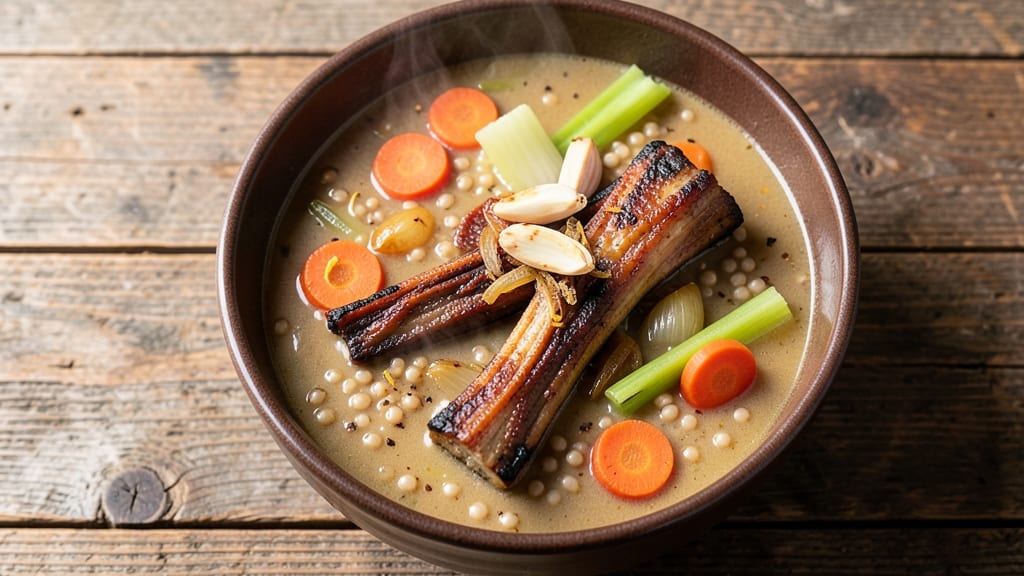
This beef barley soup recipe with soup bones transforms humble ingredients into a deeply flavorful bowl of comfort. The secret lies in slow-simmered bones that infuse the broth with rich, gelatinous depth—something store-bought versions simply can't match.
I've perfected this technique over years of testing, ensuring every spoonful delivers that perfect balance of hearty beef, chewy barley, and aromatic vegetables.
The process begins with roasting beef soup bones to develop a deep, caramelized crust before simmering them for hours. This slow extraction creates a broth so rich it practically melts in your mouth, while pearl barley cooks until tender yet maintains its satisfying bite.
The key is patience—letting flavors meld and the barley absorb all that savory goodness without turning mushy.
What you'll end up with is a soup that's equal parts nourishing and indulgent—perfect for chilly evenings or when you need a meal that feels like a hug. The barley adds substance and texture, while the beef provides protein and richness.
Each bite is packed with umami from the bones, sweetness from the carrots, and earthiness from the barley, all tied together with a broth that's worth savoring slowly.
This recipe scales beautifully for feeding a crowd or meal prepping for the week. The flavors only deepen as it sits, making it even more rewarding the next day.
Whether you're serving it to family or treating yourself to a cozy night in, this beef barley soup delivers restaurant-quality results at home.
Ingredients for beef barley soup recipe with soup bones
Here's what you'll need to make this deeply flavorful, bone-braised beef barley soup.
| Ingredient | Amount | Notes |
|---|---|---|
| Beef Soup Bones 🦴 | 3 lb | Knuckle bones for gelatinous broth |
| Pearl Barley 🌾 | 1 cup | Uncooked, rinsed well |
| Yellow Onions 🧅 | 2 whole | Medium, diced |
| Carrots 🥕 | 4 medium | Peeled, cut into chunks |
| Celery Stalks 🌿 | 4 whole | Trimmed, chopped |
| Garlic Cloves 🧄 | 6 cloves | Peeled, smashed |
| Tomato Paste 🍅 | 2 tbsp | Smooth, not chunky |
| Bay Leaves 🌿 | 2 whole | Dried, standard size |
| Black Peppercorns 🌶️ | 1 tsp | Freshly cracked |
| Salt 🧂 | 2 tsp | Kosher, coarse |
| Fresh Thyme 🌿 | 2 sprigs | Stems removed |
| Beef Broth 💧 | 4 cups | Low-sodium preferred |
| Olive Oil 🫒 | 2 tbsp | Extra-virgin for roasting |
| Red Wine 🍷 | 1 cup | Dry, bold variety |
The soup bones are non-negotiable here. Costco or butcher shops usually carry them—look for knuckle bones, not just marrow bones. The more surface area, the better the flavor. If you can't find them, beef chuck roast in a pinch, but it won't give the same gelatinous richness. The pearl barley should be uncooked and rinsed—it takes about 45 minutes to cook properly, so don't skip this step. For the vegetables, organic carrots and celery from the store's produce section work well, but if you're feeling fancy, hit up the farmers market for the freshest bunch.
No red wine? Beef broth with a splash of balsamic vinegar works in a bind. Fresh thyme is ideal, but dried thyme at half the amount is fine if that's what you've got. The tomato paste can be the squeeze tube kind from Trader Joe's—it's perfect for this recipe and lasts forever. If your carrots are small, just use more. The key is to have everything diced roughly the same size so it cooks evenly. And trust me, don't skip the roasting step on the bones—it builds insane flavor.
This soup tastes even better the next day, so make a big batch if you can. Store in airtight containers for up to 5 days in the fridge or freeze for 3 months. I like to portion it into individual containers so I can grab and go. The barley thickens as it cools, so you might want to add a splash of broth when reheating. And if you've got leftovers, it reheats beautifully—just warm it gently on the stove or microwave with a splash of water.
Why You'll Love This Recipe
- Soup Bones Shortcut: I swear by this trick—just toss those soup bones in a pot with cold water, bring it to a boil, then simmer. No fancy prep, no stress. The bones do all the work while you chop the veggies in 10 minutes flat.
- Rich Without Effort: That first sip? Chef’s kiss. The marrow from the soup bones melts into the broth, turning it into this deep, savory gold—no bouillon cubes needed. The barley soaks up all that flavor like a sponge.
- Weeknight to Potluck: Make a double batch on Sunday, and you’ve got lunch for three days. Or bring it to a holiday gathering—it’s the kind of dish that disappears fast, but no one will guess it’s this easy to pull together.
- Budget Magic: Soup bones are my secret weapon for stretching a meal into five servings without breaking the bank. Carrots, celery, onions—basic veggies that bulk up the pot while keeping costs low. Leftovers? Even better the next day.
Step-by-step instructions for bone-braised beef barley soup
This method transforms tough soup bones into rich, gelatinous broth while keeping barley chewy.
Roast the Beef Bones for Deep Flavor
Preheat your oven to 425°F. Pat the 3 lb beef soup bones completely dry with paper towels—this ensures maximum browning. Place them on a baking sheet in a single layer and roast for 25-30 minutes, turning halfway, until they develop a deep golden-brown crust. That caramelization unlocks layers of flavor that'll infuse your broth.
While they roast, take the 2 whole yellow onions, 4 medium carrots, and 4 whole celery stalks and cut them into ½-inch chunks. These will form the aromatic base of your soup. Keep them nearby—they'll join the pot after the bones are roasted. The roasting step is non-negotiable; it builds the foundation for that restaurant-quality depth.
Build the Soup Base with Aromatics
In a large Dutch oven, heat 2 tbsp olive oil over medium heat. Once shimmering, add the roasted bones and sear for 2-3 minutes per side until they're deeply browned. Remove and set aside temporarily. In the same pot, add the chopped onions, carrots, and celery—this is your mirepoix. Cook for 8-10 minutes, stirring occasionally, until the vegetables soften and release their juices.
Add the 6 cloves smashed garlic, 2 tbsp tomato paste, 2 whole bay leaves, 1 tsp black peppercorns, and 2 sprigs fresh thyme. Stir for 1 minute until fragrant—this is where all those aromas meld together. The tomato paste adds subtle sweetness that balances the richness of the bones. Don't skip this step; it's the flavor bridge between the roasted bones and the broth.
Simmer the Bones for Gelatinous Broth
Pour in 1 cup red wine and scrape up any browned bits from the bottom of the pot—this deglazing captures all that concentrated flavor. Let it simmer for 3-4 minutes until the wine reduces by half. Then add 4 cups beef broth and return the bones to the pot. Bring to a gentle boil, then reduce heat to maintain a barely simmering state—this is crucial for extracting gelatin without breaking down the bones.
Cover and simmer for 3 hours. Check occasionally and add ½ cup hot water if the liquid reduces too much. The bones should become fork-tender, and the broth should thicken slightly. This long cook time is what transforms simple ingredients into something extraordinary. Patience here is rewarded with a velvety texture that coats every spoonful.
Add Barley and Finish the Soup
After 3 hours, remove the bones (they're done contributing) and discard them. Add the 1 cup pearl barley (pre-rinsed) and 2 tsp salt to the broth. Return to a simmer and cook for 30-40 minutes, stirring occasionally, until the barley is tender but still chewy—it should hold its shape but be easy to bite through. Overcooking turns it mushy, so taste-test occasionally after 30 minutes.
Adjust seasoning with more salt if needed—this is where all the flavors come together. The barley should absorb the rich broth while maintaining its satisfying bite. Strain if you prefer a smoother texture, or leave it in for heartier bites. Either way, you've now got a soup that's equal parts comforting and sophisticated.
Pro Tips For Making Beef Barley Soup Recipe With Soup Bones
- BLANCH BONES FIRST: I learned this the hard way—skipping the 10-minute boil in water before adding bones to the pot saves you from murky broth. The quick blanch removes blood and impurities, so your soup starts with a clear, rich base instead of looking like swamp water. (Yes, even if you're impatient like me.)
- CHOP VEGETABLES UNIFORM: Carrots and celery in random sizes mean some cook to mush while others stay crunchy. Aim for ½-inch chunks—big enough to hold shape but small enough to soften in the same time the barley does. Onions? Quarter them and leave the skin on for deeper flavor, then peel after browning.
- DON’T SKIP THE BARLEY SOAK: Pearl barley swells unevenly if thrown in dry, leading to some grains turning to paste while others stay rock-hard. Soak it in cold water for 30 minutes first—drain well before adding to the pot. This guarantees a creamy texture without gummy spots. (Your future self will thank you.)
- SIMMER LOW AND LONG: After the initial boil, drop the heat to a gentle simmer—you shouldn’t see bubbles breaking the surface. High heat breaks down the collagen in the bones too fast, turning your soup into glue. Two hours at low heat extracts more flavor and makes the broth velvety. (I know, I know, but trust the process.)
Troubleshooting this recipe
Broth Too Thin?
If your broth isn't thickening enough after simmering, don't panic! The key is to reduce it longer—simmer uncovered for an extra 30-60 minutes while stirring occasionally. For faster results, add 1 tbsp cornstarch mixed with 2 tbsp cold water and stir in during the last 10 minutes of cooking.
The gelatin from the bones should naturally thicken as it cools, so let it rest 10-15 minutes before serving. 💫
Barley Mushy?
Overcooked barley ruins the texture, but you can salvage it by adding more broth and simmering for just 5-10 minutes longer. If it's already too soft, strain the soup and return the barley to the pot with ½ cup fresh broth for 15 minutes.
For next time, start checking doneness 30 minutes after adding barley and taste-test frequently—it should be al dente, not mushy. 🌾
Bones Not Tender?
If your bones aren't falling apart after 3 hours, extend the simmer to 4-5 hours—they need time to break down. For quicker results, add 1 extra cup of broth and cover tightly to trap steam.
If you're short on time, use beef chuck roast instead (cut into chunks) and simmer for 2-3 hours until tender. Just know it won't have the same gelatinous richness as bones. 🦴
Vegetables Too Soft?
To keep carrots and celery crisp, add them last—only 10 minutes before serving. If they're already overcooked, strain them out and replace with freshly chopped veggies (like ½ cup frozen peas) for color and texture.
For extra depth, roast the veggies with the bones in Step 1—this caramelizes their edges and adds sweetness. 🥕
Flavor Too Mild?
Boost umami by adding 1 tsp fish sauce or 1 tbsp soy sauce during the final 10 minutes of cooking. For depth, toast 1 tsp whole cumin seeds in the pot with the aromatics, then strain them out.
A splash of red wine vinegar (just 1 tsp) brightens the broth without overpowering. If it's still bland, simmer uncovered for 10 minutes to concentrate the flavors. 🍷
Barley Not Cooking?
If your barley stays crunchy, it might be old or undercooked. Rinse it well before adding, then simmer with 1 extra cup of broth for 15 minutes. For a shortcut, use quick-cooking barley (like pearl barley labeled "15-minute"), but adjust the cook time to 20-25 minutes.
If all else fails, blend half the soup for a creamy texture while keeping some whole barley for bite. 💡
Nutrition facts
Frequently asked questions
Can I substitute beef soup bones with other cuts?
While soup bones are ideal for their gelatinous richness, you can use beef chuck roast in a pinch. Cut it into 2-inch chunks and simmer for 2-3 hours until tender. For best results, marinate the meat overnight in 1 cup red wine and 2 tbsp soy sauce to mimic the bone's umami depth. The broth won't be as velvety, but the flavor will still be hearty and satisfying.
How do I know when the barley is perfectly cooked?
The barley should be tender but still slightly chewy—think al dente pasta. Start testing 30 minutes after adding it to the broth. Use a fork to pierce a grain: it should break apart easily but still have a slight resistance. Overcooking turns it mushy, while undercooked barley stays crunchy. Taste-test occasionally to adjust timing for your specific barley brand.
Why is my broth cloudy instead of clear?
A cloudy broth is normal during active simmering—fat and proteins naturally emulsify. For a clearer finish, skim off surface fat after simmering, then chill the broth overnight. The fat will solidify on top, making it easy to remove. If you prefer a smoother texture, strain the soup through a fine-mesh sieve before serving. The flavor won't suffer, but the appearance will be more refined.
Can I make this soup in a slow cooker?
Roast the bones as directed, then transfer everything (except barley) to the slow cooker. Cook on low for 8 hours or high for 5 hours. Add the barley and remaining ingredients during the last 30 minutes of cooking. The slow cooker's gentle heat helps tenderize the bones and develop flavors without risking overcooking the barley. Just stir occasionally to prevent sticking.
What's the best way to reheat leftovers?
Reheat gently on the stove over medium-low heat with a splash of broth or water to prevent drying. Avoid microwaving unless you stir vigorously—it can turn the barley mushy. For best results, reheat just until warmed through (5-7 minutes) and adjust seasoning with salt or pepper. The flavors actually deepen overnight, so leftovers often taste even better. Store in airtight containers for up to 5 days or freeze for 3 months.