
Soups & Stews
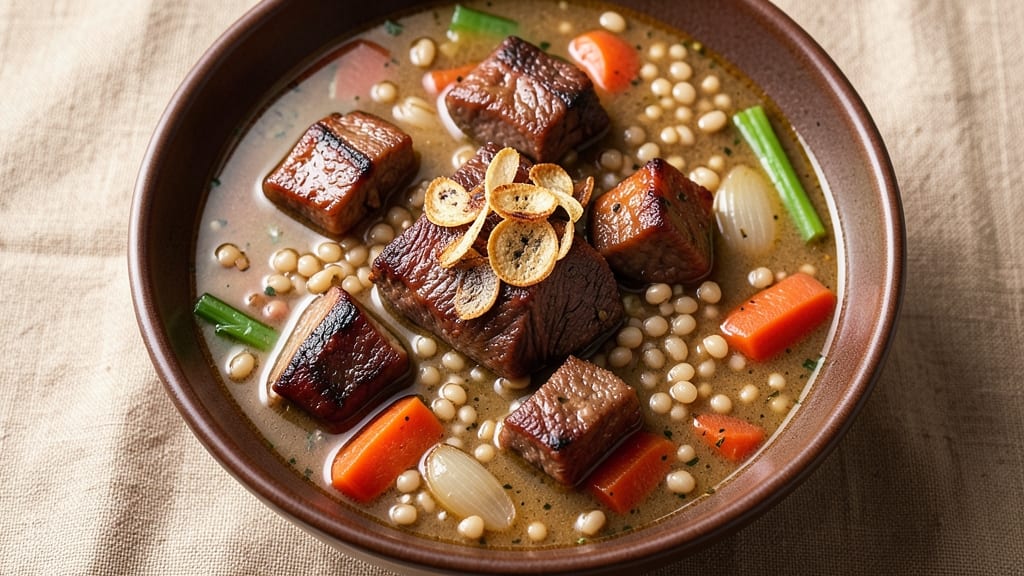
This beef barley bean soup recipe delivers tender beef, hearty barley, and earthy beans in a deep umami broth that warms you from the inside out. The slow-simmered beef breaks down into melt-in-your-mouth perfection while barley and beans absorb the rich flavors, creating a soup that's both comforting and satisfying.
What makes this recipe special is the balance of textures and flavors—tender beef, chewy barley, and creamy beans all working together in a savory broth.
The secret to achieving restaurant-quality results at home lies in proper preparation: browning the beef for deep flavor, simmering low and slow to tenderize the meat, and adding barley and beans at the right time to ensure they cook through without becoming mushy.
This method transforms tough cuts into fork-tender pieces while building layers of flavor in the broth. The result is a soup that's hearty enough for a cold evening but simple enough to prepare on a busy weeknight.
By the time you're done, you'll have a steaming bowl of beef barley bean soup with a rich, aromatic broth that's packed with deep umami flavors. The tender beef, perfectly cooked barley, and creamy beans create a harmonious combination that's both filling and nourishing.
This soup is the kind of dish that feels like a hug on a chilly day, perfect for feeding a crowd or enjoying a cozy meal at home.
Whether you're serving it as a main dish or pairing it with crusty bread, this recipe delivers a comforting meal that's sure to become a family favorite.
The best part? It tastes even better the next day, making it ideal for meal prep and leftovers. Let's get started on creating this heartwarming classic!
Ingredients for beef barley bean soup
Six hearty servings of restaurant-quality beef barley bean soup with tender beef and chewy barley.
| Ingredient | Amount | Notes |
|---|---|---|
| Chuck Roast 🥩 | 2 lb | Cut into 1-inch cubes for even cooking |
| Yellow Onion 🧅 | 1 whole | Diced, medium size preferred |
| Carrots 🥕 | 4 medium | Peeled and chopped into 1-inch pieces |
| Celery Stalks 🧅 | 3 whole | Diced, including leafy tops |
| Garlic Cloves 🧄 | 4 cloves | Minced for aromatic depth |
| Pearl Barley 🌾 | 1 cup | Rinsed before cooking |
| Dried Navy Beans 🌱 | 1 ½ cups | Soaked overnight for best texture |
| Beef Broth 💧 | 6 cups | Low-sodium preferred |
| Tomato Paste 🍅 | ½ cup | For umami depth |
| Red Wine 🍷 | 1 cup | Dry variety like Cabernet |
| Bay Leaves 🌿 | 2 whole | Fresh for subtle flavor |
| Thyme Sprigs 🌿 | 2 whole | Fresh preferred |
| Salt 🧂 | 1 ½ tsp | Kosher or sea salt |
| Black Peppercorns 🌶️ | ½ tsp | Freshly cracked |
| Olive Oil 🫒 | 2 tbsp | For browning beef |
The chuck roast is non-negotiable here—it's the secret to that melt-in-your-mouth texture. Look for well-marbled cuts at Costco or your local butcher shop, and ask for it pre-cut into cubes if you're short on time. The pearl barley should be rinsed before cooking to remove any dust, and if you can't find it, pot barley works just as well. For the beans, I always soak them overnight (or at least 8 hours) to cut down on cooking time—no soaking? Add 15 minutes to the simmering time. The beef broth should be low-sodium; if yours isn't, reduce the added salt later. Fresh thyme and bay leaves elevate the dish, but if you only have dried, use one-third the amount.
No red wine? Substitute with extra beef broth and a splash of balsamic vinegar—it adds depth without alcohol. Running low on carrots? Swap in parsnips or sweet potatoes for a slightly different flavor profile. The tomato paste can be replaced with 1 cup of crushed tomatoes if you prefer a chunkier texture. For a quicker version, use 1 can of drained white beans instead of soaking dried, but the texture won't be as hearty. If you're prepping ahead, brown the beef and store it in the fridge—just add the broth and simmer later. The celery leaves add subtle flavor, but if you're using pre-chopped celery, skip the leaves and use the stems only.
This soup tastes even better the next day as flavors meld together. Store in an airtight container in the fridge for up to 5 days. For freezing, portion into 2-cup servings—it reheats beautifully straight from frozen. To reheat, add a splash of broth or water and simmer until hot. The barley thickens as it cools, so add a little extra broth when reheating if it seems too thick. Leftovers make great lunches—pack with crusty bread for a complete meal. The broth can also be used as a base for other soups or sauces, so make extra if you're feeling ambitious.
Why You'll Love This Recipe
- One-Pot Magic: I swear by this recipe when I’m too tired to wash a million dishes. Chuck roast, carrots, and celery all simmer together—no separate pots, no extra pans—just dump, stir, and let it work its magic while you do something else.
- Garlic-Glazed Goodness: That slow-cooked chuck roast? It practically melts in your mouth, especially when it soaks up the caramelized onions and minced garlic. Honestly, the aroma alone makes my kitchen smell like a cozy diner, and the first spoonful is always the best part.
- Meal Prep MVP: Between us, this soup is my secret weapon for busy weeks. Make a big batch on Sunday, and you’ve got lunch or dinner covered for days—whether it’s a quick reheat for yourself or a hearty serving for guests who “just dropped by.”
- Budget-Friendly Feast: A pound of chuck roast and a handful of veggies stretch into six servings without breaking the bank. I’ll be real: my grocery bill stays low, but my freezer stays stocked with leftovers that taste even better the next day. Win-win.
Step-by-step instructions for beef barley bean soup
A hearty, umami-rich soup that builds flavor layer by layer—this method ensures tender beef and perfectly cooked grains.
Brown the Chuck Roast for Deep Flavor
Heat the 2 tablespoons olive oil in a large Dutch oven over medium-high heat. Pat the 2 lb chuck roast dry with paper towels and cut it into 1-inch cubes for even cooking. Working in batches if needed, brown the beef on all sides until deeply caramelized—this takes about 8-10 minutes total. You want a rich, nutty crust forming, not just lightly colored meat.
Remove the beef and set it aside on a plate. The browned bits left in the pot are pure flavor—don’t scrape them away. If the oil starts smoking, reduce the heat slightly. This step is critical for building the soup’s depth of flavor, so don’t rush it.
Sauté Vegetables and Aromatics
In the same Dutch oven, add the 1 whole yellow onion (diced), 4 medium carrots (chopped into 1-inch pieces), and 3 whole celery stalks (diced, including leafy tops). Cook over medium heat for 8-10 minutes, stirring occasionally, until the vegetables soften and the onion becomes translucent. This step mellows their sharpness and deepens their flavor.
Add the 4 cloves garlic (minced) and cook for 30 seconds until fragrant—don’t let it burn. Stir in the 0.5 cup tomato paste and cook for another 2 minutes, stirring constantly, until it darkens slightly. This creates a rich, umami base for the soup. If the vegetables release a lot of liquid, let it evaporate before moving forward.
Deglaze and Simmer the Base
Pour in the 1 cup red wine and scrape up any browned bits from the bottom of the pot with a wooden spoon. Let the wine simmer for 3-4 minutes until it reduces by half and the alcohol cooks off. This step intensifies the wine’s flavor and removes any harshness.
Add the 6 cups beef broth, 1 cup pearl barley (rinsed), 1.5 cups dried navy beans (if not pre-soaked), 2 whole bay leaves, and 2 whole thyme sprigs. Bring the mixture to a gentle boil, then reduce the heat to low and cover the pot. Let it simmer for 20 minutes, stirring occasionally, to allow the barley and beans to begin softening.
Cook Until Tender and Flavorful
Return the browned beef to the pot and add the 1.5 teaspoons salt and 0.5 teaspoon black peppercorns. Increase the heat to medium-low and simmer uncovered for 1.5 to 2 hours, stirring occasionally. The soup should reduce slightly, and the beef should become fork-tender with a rich, deep flavor. Skim off any foam that rises to the surface to keep the broth clear.
Check the tenderness of the beef and barley after 1.5 hours. The barley should be soft but still hold its shape, and the navy beans should be tender but not mushy. If the soup is too thick, add a splash of water or broth to reach your desired consistency. The longer it simmers, the more the flavors meld together.
Season and Serve Warm
Remove the bay leaves and thyme sprigs before serving. Taste the soup and adjust the seasoning if needed—add more salt or pepper if the flavors feel flat. The soup should be rich, savory, and balanced with a touch of acidity from the wine and tomato paste.
Ladle the soup into bowls and serve immediately with crusty bread or over a bed of greens. The beef should pull apart easily, the barley should be tender yet firm, and the broth should coat the back of a spoon with deep, comforting flavor. This soup tastes even better the next day as the flavors continue to develop, so make extra if you can!
Pro Tips For Making Beef Barley Bean Soup
- CRANK THE HEAT FIRST: Sear that chuck roast in a screaming-hot pot—no half-measures—until it’s deep brown in spots. I learned this the hard way: skipping the high heat means flavor stuck in the meat instead of dissolving into the broth. Once you’ve got color, turn it down to simmer and let the soup work its magic.
- SLICE THE ONIONS THIN: Dice those yellow onions paper-thin—no bigger than 1/8-inch slices—so they melt into the soup instead of sitting like sad, chewy chunks. I used to chop them roughly, and they’d always end up looking like they’d been through a blender. Thin slices cook faster and sweeten the broth better.
- DON’T SKIP THE BEAN SOAK: Give those dried barley beans a 4-hour (or overnight) soak in cold water—yes, even if you’re in a hurry. I once skipped it and ended up with a soup that tasted like glue. Drain and rinse them before adding to the pot, or they’ll turn the broth murky.
- SAVE THE STALKS, USE THE LEAFS: Toss the celery tops into the pot with the stalks—they’re packed with flavor and often go to waste. Chop them finely so they break down into the broth instead of floating like confetti. It’s an easy upgrade that makes the soup taste richer without extra effort.
Dietary considerations for these flavors
Gluten-Free Adaptations
This soup is naturally gluten-free as long as you use certified gluten-free ingredients. Check your beef broth label—many store-bought versions contain wheat additives. I recommend Pacific Foods gluten-free beef broth or homemade broth for safety.
The pearl barley is the only potential concern, but you can substitute with quinoa or millet in a 1:1 ratio for a nutty, gluten-free alternative. 🌾
Low-Carb Options
For a lower-carb version, reduce the 1 cup pearl barley to just ¼ cup and add 2 cups chopped cauliflower instead. The cauliflower absorbs flavors beautifully while keeping the soup hearty.
You can also omit the barley entirely and use shirataki noodles for a zero-carb option, though the texture will differ significantly. The beans remain essential for their creamy texture and protein.
Vegetarian Swap
Replace the beef with 2 cups crumbled tempeh or 1.5 cups extra-firm tofu (pressed and cubed). Brown the tempeh in the same way you would the beef to develop depth. For extra umami, add 1 tablespoon soy sauce or 1 teaspoon miso paste to the broth.
The beans and barley will still provide plenty of protein and fiber, making this a satisfying vegetarian alternative. 🌱
Protein Boost
Add ½ cup cooked lentils or 1 can white beans (drained) for an extra protein punch without altering the soup's texture. I also like adding ½ cup chopped mushrooms to the vegetable sauté for added umami and meaty texture.
For a creamy finish, stir in 2 tablespoons coconut milk at the end—it adds richness without dairy.
Allergen-Friendly Notes
This recipe is naturally free of top allergens except for potential gluten in the broth. For nut allergies, ensure your olive oil is nut-free (some brands process in shared facilities). If you're avoiding FODMAPs, reduce the onion and garlic to 2 tbsp each and use low-FODMAP carrot and celery.
The barley and beans are generally safe in moderate portions for most digestive sensitivities.
Nutrition facts
Frequently asked questions
Can I use canned beans instead of dried navy beans?
Yes, but with a few adjustments! Use 2 (15-ounce) cans of navy beans (drained and rinsed) instead of 1.5 cups dried. Since canned beans are pre-cooked, they'll add moisture to your soup. Reduce the beef broth by 1 cup to maintain the right consistency, and simmer for 30-45 minutes after adding the beef to let flavors meld. The texture will be slightly softer than dried beans but still delicious.
Why does my barley turn mushy?
Overcooking is the most common culprit! Pearl barley should simmer for 45-60 minutes total (not the full 2 hours with beef). Check it at 1.5 hours—it's done when tender but still holds its shape. If you're using a pressure cooker, cook for 20 minutes after adding barley. Always rinse barley before cooking to remove excess starch that causes mushiness.
Can I make this soup in a slow cooker?
Absolutely—it's perfect for hands-off cooking! Brown the beef first, then combine everything (including soaked beans) in your slow cooker and cook on low for 8 hours or high for 4-5 hours. The slow cooker's gentle heat prevents the barley from overcooking. Add a splash of broth if it gets too thick during cooking. The flavors will develop beautifully over time, making it even more comforting!
What's the best way to store leftovers?
Store in an airtight container in the fridge for up to 5 days. The soup actually tastes better the next day as flavors deepen! For freezing, portion into 2-cup servings and freeze for up to 3 months. When reheating, add a splash of broth or water to prevent thickening. The barley will firm up slightly when cold—just stir in a little extra liquid when reheating for perfect texture.
Can I substitute another type of barley?
Pearl barley is ideal here, but you can use pot barley (same cooking time) or hulless barley (simmer 15 minutes less). Avoid quick-cooking barley—it won't hold up in the long simmer. For a nuttier flavor, try wild rice blend (cook separately for 45 minutes first), but expect a slightly different texture. Always rinse your grain before cooking to remove dust and prevent grittiness.