
Soups & Stews
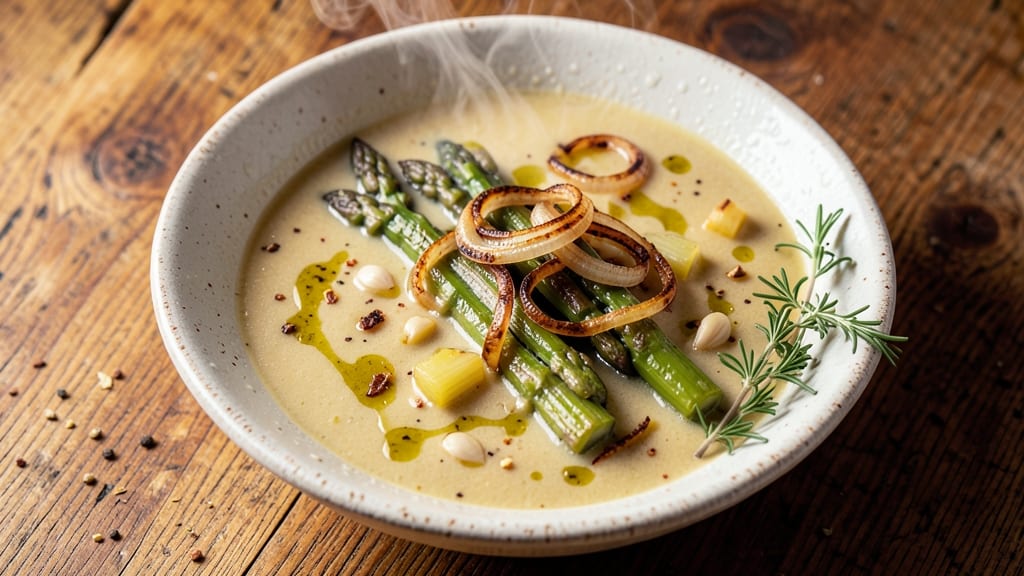
This asparagus stalk soup transforms humble spring vegetables into a luxurious velvety green soup with restaurant-worthy depth. The secret lies in roasting the asparagus first to concentrate its natural sweetness, then blending it into a silky purée that's rich enough to stand alone.
Every spoonful delivers that perfect balance of earthy asparagus and bright, herbal notes—no heavy cream required.
The velouté base creates that signature smooth texture while keeping the soup light, and the crispy celery topping adds a satisfying contrast that elevates this dish from simple to sophisticated.
What makes this recipe special is how it highlights asparagus stalks—the often-overlooked parts—while still delivering that vibrant green color we associate with spring soups.
By the time you're done, you'll have a soup that's velvety smooth with just the right amount of body, topped with golden, crispy celery that adds both texture and visual appeal.
The aroma alone will have everyone gathering at the table, and the first bite delivers on that promise of spring in a bowl.
This recipe works beautifully as a starter for dinner parties or a comforting lunch on chilly spring days. The method is straightforward but delivers professional results, making it perfect for cooks who want restaurant-quality soups without the fuss. Let's get started on creating this elegant spring classic.
Ingredients for asparagus stalk soup
Fresh spring vegetables and simple pantry staples create this restaurant-quality asparagus soup.
| Ingredient | Amount | Notes |
|---|---|---|
| Asparagus Stalks 🌱 | 1 ½ lb | Trimmed, tough ends removed |
| Yellow Onion 🧅 | 1 whole | Medium size, diced |
| Celery Stems 🧄 | 4 whole | For topping, cut into sticks |
| Garlic Cloves 🧄 | 4 cloves | Peeled, minced |
| Vegetable Stock 💧 | 4 cups | Low-sodium preferred |
| Extra-Virgin Olive Oil 🫒 | ½ cup | High quality, fruity |
| Fresh Thyme Leaves 🌿 | ¼ cup | Or 1 tbsp dried thyme |
| Fresh Parsley Leaves 🌿 | ¼ cup | Chopped, for garnish |
| Salt 🧂 | 1 ½ tsp | Kosher or sea salt |
| Black Pepper 🌶️ | ½ tsp | Freshly ground preferred |
| All-Purpose Flour 🌾 | 1 tbsp | For velouté base |
| Panko Breadcrumbs 🍞 | ½ cup | For crispy topping |
| Lemon Zest 🍋 | 1 tsp | Fresh, for brightness |
The asparagus stalks are the star—look for bright green, firm stalks with tight tips at the grocery store. Whole Foods or local farmers markets often carry the freshest spring asparagus. Trim the tough ends (about 1 inch) before roasting. For the celery topping, select crisp, pale green stems—avoid any with brown spots or limp sections. The thyme and parsley should be vibrant; wilted herbs lose their flavor fast, so use them within a few days of purchase. Store asparagus upright in the fridge with just the tips peeking out to keep it fresh longer.
No fresh thyme? Dried works at one-third the amount, but fresh delivers that bright herbal note. Substitute lemon zest for brightness if you're short on citrus. For the velouté base, low-sodium vegetable stock is critical—skip the salted kind to control seasoning. The celery topping can use any breadcrumbs, but panko stays crispier than regular. Need to skip the roasting step? Steam the asparagus first—it'll still work, though roasting concentrates the sweetness. For extra richness, blend in 1/4 cup silken tofu with the purée (no one will notice it's there).
Roasted asparagus keeps for 3 days in the fridge, but blend it into soup immediately for best texture. The velouté base thickens as it cools—reheat gently and thin with a splash of stock if needed. The crispy celery topping stays crunchy for 1 hour after baking, so make it fresh before serving. For meal prep, store components separately—reheat the soup and toast the celery topping just before serving. Freeze the purée (without topping) for up to 3 months—just thaw and reheat before adding fresh herbs.
Why You'll Love This Recipe
- Uses What You Already Have: Honestly, this soup is my go-to when I’m staring into the fridge wondering what to do with half a bag of asparagus and a sad onion. The base—onion, celery, garlic—is basically the holy trinity of pantry staples, so you’re not hunting for obscure ingredients here.
- Savory Depth in Minutes: That slow simmer of asparagus stalks in vegetable stock? It pulls all the earthy, slightly bitter notes into something rich and satisfying. Add a splash of lemon at the end, and it’s like a hug for your taste buds—no fancy techniques required.
- Leftovers That Don’t Let You Down: Between us, most soups turn into sad, watery memories by day three. Not this one. The asparagus holds its shape, and the flavors only get better as the stock reduces. I’ve reheated mine for five days straight—still delicious, still worth making.
- Weeknight Magic for Picky Eaters: My teenager rolls his eyes at “healthy” food, but this soup? He asks for it. The texture—creamy from the stalks, crisp from the roasted garlic—is weirdly addictive. Serve it with crusty bread, and suddenly you’re hosting a dinner party without trying.
Step-by-step instructions for asparagus stalk soup
Transform tough asparagus stalks into velvety soup with a crispy celery topping—every step ensures perfect texture and flavor.
Prepare the Asparagus and Build the Soup Base
Trim the tough ends from the 1.5 lb asparagus stalks and cut them into ½-inch pieces. In a large pot over medium-high heat, heat 0.5 cup extra-virgin olive oil until shimmering. Add the diced 1 whole yellow onion and cook for 5 minutes until softened and translucent.
Add the asparagus pieces, 4 cloves minced garlic, and 1.5 tsp salt. Stir to coat everything in the oil, then pour in the 4 cups vegetable stock. Bring to a boil, then reduce heat to medium-low and simmer uncovered for 20 minutes, stirring occasionally. The asparagus should break down completely into a smooth, vibrant green purée.
Create the Velouté Texture and Season
While the soup simmers, whisk together 1 tbsp all-purpose flour with 1 tsp lemon zest in a small bowl. Once the asparagus is tender, use an immersion blender to purée the soup until completely smooth. Return the pot to medium heat and stir in the flour mixture, whisking constantly for 2-3 minutes until thickened.
Season with 0.5 tsp black pepper and 0.25 cup fresh thyme leaves, then taste and adjust salt if needed. The soup should be silky and rich, with a bright lemon note balancing the earthy asparagus. Keep warm while you prepare the crispy topping.
Make the Crispy Celery Topping
Cut the 4 whole celery stems into ½-inch sticks. In a small skillet over medium heat, add 1 tbsp extra-virgin olive oil and toast the celery for 3-4 minutes until softened but not browned. Remove from heat and transfer to a bowl.
In the same skillet, add 0.5 cup panko breadcrumbs and toast for 2 minutes until golden. Stir in the celery, 0.25 cup chopped fresh parsley leaves, and an additional ½ tsp salt. The mixture should be crispy and aromatic—this will add texture contrast to the silky soup.
Assemble and Serve
Ladle the velvety asparagus soup into bowls, dividing evenly among 4 servings. Top each portion generously with the crispy celery mixture. The contrast between the smooth, green soup and the crunchy topping creates the perfect balance of textures.
Garnish with an extra sprinkle of fresh parsley leaves for color and freshness. Serve immediately while the topping is still crispy—this dish is best enjoyed fresh from the stove. The lemon zest brightens the earthy flavors, while the celery topping adds a satisfying crunch with every bite.
Pro Tips For Making Asparagus Stalk Soup
- CHAR THE ONIONS LOW: I used to rush this step and end up with bitter, caramelized bits that overpowered the delicate asparagus flavor. Sauté the onions and celery at medium-low heat for 10-12 minutes until they’re soft and translucent—not golden. This builds flavor without burning, and you’ll taste every spoonful of that stock later.
- TRIM THOSE STALKS RIGHT: Cut the asparagus stalks into 1-inch pieces before peeling them—it’s easier to handle and you won’t waste the tough bottoms. Peel the thicker ends after cutting, then save those scraps for stock (or compost if you’re not into that). The thinner, sweeter parts go straight into the pot.
- SIMMER DON’T BOIL: Once everything’s in the pot, keep the heat at a gentle simmer—tiny bubbles at the edges, not a rolling boil. Boiling turns asparagus mushy and bitter; simmering coaxes out its natural sweetness while keeping the texture tender but intact. Cover it for the first 10 minutes to soften the veggies faster.
- SAVE THE GARLIC FOR LATER: Add the garlic after the onions and celery have softened—about 2 minutes before the soup finishes simmering. Raw garlic burns easily and tastes harsh; cooking it just until fragrant (not browned) lets its flavor shine without overpowering. If you’re impatient, mince it extra fine so it blends faster.
Troubleshooting your asparagus stalk soup
Over-Simmered Soup Fix
If your soup tastes too thin after simmering, don’t panic—simmering too long just means you need to thicken it. Remove from heat and whisk in 1 tbsp cornstarch mixed with 2 tbsp cold water until smooth.
Return to medium-low heat and stir for 2-3 minutes until it reaches your desired consistency. This trick works like magic without altering the flavor. 💫
Blending Issues
If your purée isn’t smooth, strain it through a fine-mesh sieve to catch any fibrous bits. For extra-smooth results, blend the soup again with ¼ cup silken tofu—it adds creaminess without changing the taste.
If you don’t have an immersion blender, transfer the soup to a regular blender in batches, but be cautious—hot liquids can cause splattering. Always vent the lid!
Celery Topping Too Soft
If your celery topping loses its crunch, bake it instead of toasting. Spread the celery-panko mixture on a parchment-lined baking sheet and bake at 375°F for 8-10 minutes until golden and crispy.
For extra insurance, add 1 tbsp grated Parmesan cheese to the mix—it helps bind the crumbs and adds a savory depth. 🌟
Lemon Zest Missing
If you forgot the lemon zest, don’t skip it—it’s what brightens the earthy asparagus. In a pinch, add 1 tsp fresh lemon juice or a pinch of citric acid (found in baking aisles) to mimic the zest’s tangy kick.
For a deeper flavor, infuse the stock with a lemon peel strip while simmering the asparagus.
Stock Too Salty
If your vegetable stock is too salty, balance it by adding ½ cup unsalted chicken or vegetable stock to dilute the flavor. For a quick fix, stir in 1 tbsp heavy cream or coconut milk—it smooths out the saltiness while adding richness.
Taste as you go, and adjust gradually to avoid overcompensating. 💡
Herbs Too Strong
Fresh herbs can overpower if used too generously. If your soup tastes like thyme or parsley, reduce the amount next time to 1 tbsp fresh thyme and 2 tbsp parsley.
For a more balanced flavor, infuse the stock with herbs instead of adding them directly to the soup. Remove the herb stems before blending to avoid bitterness. 🌿
Nutrition facts
Frequently asked questions
Can I use regular asparagus (tips only) instead of stalks?
The recipe is designed specifically for asparagus stalks to maximize flavor and texture. Stalks have a more robust, earthy flavor that works beautifully in soups. If you only have tips, you'll need 2 bunches (about 1.5 lbs) and they'll give a lighter, more delicate flavor. For best results, trim the tips and use them for garnish while cooking the stalks separately.
How can I make this soup vegan?
This recipe is already vegan-friendly! Simply ensure your vegetable stock is plant-based and use olive oil instead of butter. For extra richness, stir in 2 tbsp coconut cream or ¼ cup cashew cream when blending. The crispy celery topping stays vegan as long as you skip any dairy in the panko mixture.
What's the secret to making the celery topping extra crispy?
For maximum crunch, bake the celery topping instead of toasting it. Spread the celery-panko mixture on a parchment-lined baking sheet and bake at 375°F for 8-10 minutes until golden brown. Add 1 tbsp grated Parmesan (or nutritional yeast for vegan) to help bind the crumbs. Let it cool slightly before serving to maintain crispness.
Can I make this soup ahead of time?
Yes, but prepare components separately. Refrigerate the finished soup (without topping) for up to 3 days. Reheat gently and add fresh celery topping when ready to serve. For freezing, store the purée (without topping) for up to 3 months. Thaw overnight in the fridge and make the crispy topping fresh before serving.
Why does my soup taste bitter?
Bitterness often comes from overcooked asparagus or using wilted herbs. Always simmer asparagus for exactly 20 minutes and use fresh thyme and parsley. If needed, balance the flavor with 1 tsp sugar or ½ tsp lemon juice to brighten the earthy notes. Avoid using dried herbs—they can add bitterness when overused.