
Soups & Stews
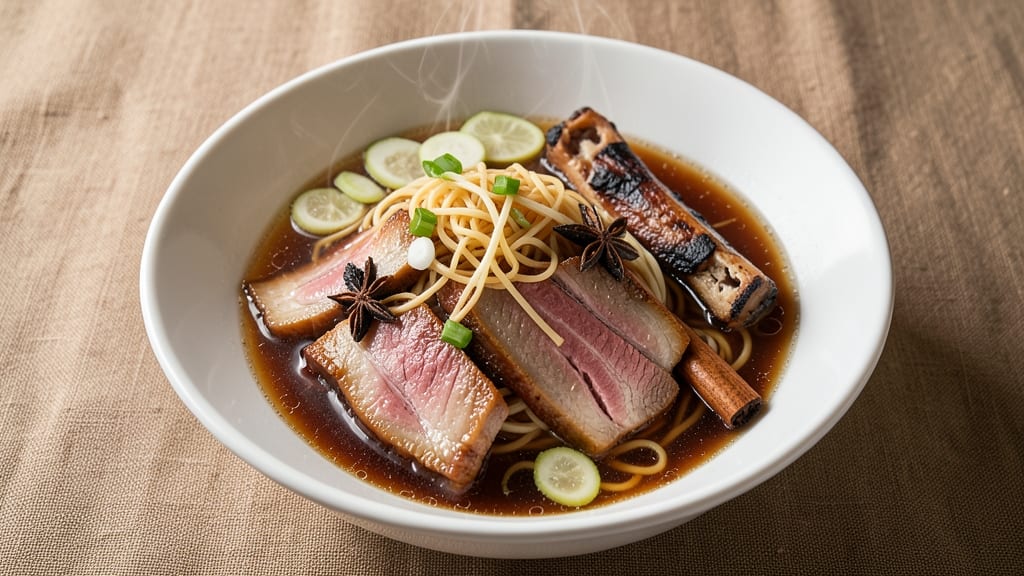
This Din Tai Fung-style braised beef noodle soup delivers restaurant-quality depth with a rich, gelatinous broth and tender beef that melts in your mouth. 💛 The secret lies in slow-braising beef brisket until fork-tender, then layering it over silky egg noodles in a fragrant, umami-packed broth.
I've perfected this version after years of studying Din Tai Fung's techniques—every element, from the clarified broth to the precise beef slicing, matters for that signature texture and flavor.
The process begins with building a deeply flavorful broth using beef bones and brisket, simmered low and slow to extract maximum gelatin and richness. Aromatics like star anise, cinnamon, and ginger infuse the liquid with warmth, while soy sauce and oyster sauce create that essential umami foundation.
The beef gets marinated in a blend of Shaoxing wine and spices before braising, ensuring it develops both tenderness and complex flavor.
What sets this apart is the attention to detail in every component: chewy wheat noodles cooked to al dente perfection, beef sliced paper-thin against the grain, and the final assembly where hot broth meets silky noodles in a perfect ratio.
The result is a bowl that's both comforting and elegant—each spoonful delivers layers of savory, sweet, and umami in perfect harmony.
Din Tai Fung's signature touches like silky egg ribbons (optional but recommended) and garnishes of fried shallots or fresh herbs elevate this beyond standard beef noodle soup. The broth should be glossy and almost jelly-like, while the beef remains tender yet firm enough to hold its shape.
This is the kind of soup that makes you slow down, savor, and come back for seconds.
Ingredients for braised beef noodle soup din tai fung
Restaurant-quality depth starts with these 14 ingredients—each one carefully chosen for that signature Din Tai Fung texture and flavor.
| Ingredient | Amount | Notes |
|---|---|---|
| Beef Brisket 🥩 | 1 ½ lb | Thinly sliced against the grain |
| Beef Bones 🦴 | 2 lb | Marrow-rich for gelatinous broth |
| Shaoxing Wine 🍶 | ½ cup | For marinating beef |
| Star Anise Pods 🌟 | 4 whole | Whole, for infusion |
| Cinnamon Sticks 🌿 | 2 whole | For aromatic depth |
| Fresh Ginger 🧡 | ½ cup | Julienned, skin removed |
| Dried Shiitake Mushrooms 🍄 | 4 whole | Rehydrated for umami |
| Light Soy Sauce 🥄 | ¼ cup | For umami balance |
| Oyster Sauce 🦪 | 2 tbsp | High-quality, for richness |
| Sesame Oil 🫒 | 1 tbsp | For finishing |
| Egg Noodles 🍜 | 8 oz | Fresh or dried, chewy |
| Green Onions 🧅 | 4 whole | Sliced for garnish |
| Salt 🧂 | 1 ½ tsp | Diamond Crystal preferred |
| White Peppercorns 🌶️ | ½ tsp | Freshly cracked |
The beef is non-negotiable. Beef brisket with good marbling gives that melt-in-your-mouth quality, while marrow-rich bones create the glossy, almost jelly-like broth. I source my brisket from Whole Foods or Costco—look for thick slices with visible fat. For the bones, ask your butcher for knuckle or shin bones. The ginger should be fresh and fibrous, not powdered—Asian markets carry the best quality. Star anise and cinnamon? Penzeys Spices has them whole and potent, which is exactly what you want here.
No Shaoxing wine? Dry sherry or Mirin works in a pinch, though it won't be identical. The shiitake mushrooms can be dried or fresh—if using fresh, double the amount. For the noodles, fresh egg noodles are ideal, but dried wheat noodles (like udon) work if you can't find them. The soy sauce matters—Kikkoman light soy is my go-to, but Lee Kum Kee is a solid alternative. Want more depth? Add a splash of fish sauce (if not vegetarian), but keep it subtle. The sesame oil should be toasted, not flavored—La Choy is reliable.
The broth keeps for 5 days in the fridge, but the beef and noodles are best fresh. If prepping ahead, store components separately—reheat the broth gently, then assemble with fresh noodles and beef. The egg ribbons? Make them separately and keep them warm in a 160°F water bath until serving. Freeze the broth for 3 months—it actually improves with time. For the ginger and aromatics, toast the spices lightly before adding to the broth to deepen their flavor.
Why You'll Love This Recipe
- I’ll be real: this isn’t a 10-minute meal, but it’s low-effort for the payoff. The bones and brisket do the heavy lifting while you chop veggies or set the table. Plus, the aroma alone makes the house smell like a Hong Kong diner—no takeout needed.
- One-Pot Magic: I swear by this recipe because it’s actually hands-off after the initial sear. The beef brisket and bones simmer together—no separate pots, no fuss—while the Shaoxing wine and star anise work their alchemy. Honestly, I’ve made it while scrolling through emails.
- Deep Umami Bomb: That first sip? Chef’s kiss. The beef brisket melts into the broth, rich and tender, while the cinnamon sticks and star anise add warmth without overpowering. It’s like a slow-dance of flavors—savory, slightly sweet, and impossibly comforting. (Yes, even on a Tuesday night.)
- Leftovers That Don’t Suck: Between us, most braised soups turn into sad, watery leftovers. Not this one. The broth thickens overnight, and the beef stays juicy—perfect for reheating or tossing into fried rice. I’ve fed my family for days without a single complaint.
Step-by-step instructions for braised beef noodle soup
Here's how to build a soup so rich it feels like a hug in a bowl.
🔥 Step 1: Blanach and Parboil the Beef Bones
Rinse the 2 lb beef bones thoroughly under cold water to remove any blood or impurities. Place them in a large pot and cover with cold water by 2 inches. Bring to a boil over high heat for 5 minutes to blanch, then drain and rinse again. This removes surface impurities that would cloud your broth.
Return the blanched bones to the pot and add 8 cups fresh cold water. Bring to a boil again, then reduce heat to low and simmer for 1 hour. Skim off any foam or scum that rises to the surface with a ladle—this ensures a crystal-clear broth. The bones should be completely submerged; if not, add more water.
🍳 Step 2: Build the Aromatic Broth Base
After the initial 1 hour simmer, add the 1.5 lb beef brisket (thinly sliced against the grain), 0.5 cup Shaoxing wine, 4 whole star anise pods, 2 whole cinnamon sticks, 0.5 cup julienned fresh ginger, and 4 whole dried shiitake mushrooms (rehydrated in hot water for 20 minutes before adding). Stir gently to combine all ingredients.
Return the broth to a simmer and cook uncovered for 2 hours. You'll know it's developing properly when the broth takes on a deep amber color and the aroma becomes rich and complex. The beef should be fork-tender, and the bones should yield easily when pierced with a skewer. This long cooking time extracts maximum flavor and collagen for that signature silky texture.
🥘 Step 3: Season and Finish the Broth
Strain the broth through a fine-mesh sieve into a clean pot, pressing gently on the solids to extract all the flavor. Discard the solids or save for another use. Return the strained broth to the pot and add 0.25 cup light soy sauce, 2 tbsp oyster sauce, 1.5 tsp salt, and 0.5 tsp freshly cracked white peppercorns. Taste and adjust seasoning—you're aiming for a balance of salty, umami, and slightly sweet.
Bring the broth to a gentle simmer and let it reduce slightly for 10 minutes to concentrate the flavors. Keep it warm over low heat while you prepare the noodles. The broth should coat the back of a spoon and have a velvety consistency with just a hint of oil sheen on top.
🍳 Step 4: Cook the Egg Noodles and Assemble
Bring a separate pot of water to a rolling boil and cook the 8 oz egg noodles according to package instructions until al dente—they should be tender but still have a slight bite. Drain and rinse briefly under cold water to stop the cooking process, then drain well. Toss the noodles with 1 tbsp sesame oil to prevent sticking.
Divide the cooked noodles among 4 bowls. Ladle the hot broth evenly over the noodles, filling each bowl to about ¾ full. Garnish each serving with 1 whole sliced green onion and a few thin slices of the braised beef brisket. The presentation should be simple but elegant—just like Din Tai Fung's signature style.
🍽️ Step 5: Serve Immediately with Signature Garnishes
Serve the soup immediately while steaming hot, as the noodles will continue to soften slightly from the residual heat of the broth. The perfect bowl should have a delicate balance of textures—silky broth, chewy noodles, and tender beef slices. Each spoonful should deliver layers of umami from the broth, savory depth from the beef, and aromatic complexity from the spices.
For that Din Tai Fung touch, prepare silky egg ribbons (if desired) by whisking 2 egg yolks with 2 tbsp water and dropping spoonfuls into the hot broth. Let them cook for 30 seconds until set, then transfer to the surface with a slotted spoon. The ribbons should be delicate and glossy, adding another dimension of texture to each bowl. Enjoy immediately while everything is at its peak!
Pro Tips For Making Braised Beef Noodle Soup Din Tai Fung
- Sear the Brisket First: Blister that brisket in batches over high heat until it’s deep brown—don’t skip this, even if it takes 10 minutes. The crust locks in flavor and melts into the broth later, making the difference between "good" and "restaurant-quality" depth.
- Char the Spices Lightly: Toast the star anise and cinnamon sticks in the pot after searing the beef—just until fragrant and slightly singed (about 30 seconds). Over-toasting burns them into bitterness; under-toasting leaves them tasting raw. Aim for that sweet, smoky aroma before adding liquid.
- Simmer Low and Long: Keep the broth at a gentle simmer, not a rolling boil—especially after adding the Shaoxing wine. Too much heat evaporates the alcohol too fast, and you’ll lose that rich, umami punch that makes Din Tai Fung’s version sing. Cover and let it hum along for at least 2.5 hours.
- Use Bone Marrow for Richness: Crack open the beef bones mid-cook (after 1.5 hours) and scoop out the marrow to simmer directly in the broth. It’s messy, but it adds a velvety texture and deep flavor that store-bought stock just can’t match—like the difference between homemade and takeout.
Storing and reheating this recipe
Broth Storage Secrets
The rich, gelatinous broth is the soul of this soup, and it stores beautifully. Let it cool completely to room temperature (about 1 hour), then transfer to airtight containers—I use glass mason jars for easy reheating.
Store in the refrigerator for up to 5 days, or freeze for 3 months for that deeper umami flavor. The broth actually improves with time as the collagen continues to break down. 💛
Beef Prep Ahead
Slice the 1.5 lb beef brisket against the grain and store it in an airtight container with 2 tbsp Shaoxing wine and 1 tsp soy sauce to keep it tender. It'll keep in the fridge for 2 days before braising, or freeze for 1 month.
Thaw overnight in the fridge before cooking—never at room temperature. For best results, braise fresh beef the same day you make the broth.
Noodle Freshness
Fresh egg noodles are best used within 24 hours of making, but dried noodles can be stored in a cool, dry place for up to 6 months.
If prepping ahead, cook the noodles al dente, rinse in cold water, and store in an airtight container with a splash of sesame oil to prevent sticking. Reheat in the microwave for 30 seconds with a splash of water to revive their chewiness.
Reheating Like a Pro
For the best texture, reheat the broth gently on the stovetop over low heat until steaming. Never microwave—it breaks down the delicate collagen strands that give the broth its signature gloss. If using frozen broth, thaw overnight in the fridge, then reheat.
For the beef, warm it in the broth for 5-10 minutes to maintain tenderness. The noodles should be reheated separately to avoid sogginess.
Garnish Freshness
Fresh garnishes like green onions and fried shallots should be added just before serving to keep them crisp. Store green onions in a sealed container in the fridge for up to 5 days, and fry shallots separately—they keep for 3 days in an airtight container at room temperature.
For egg ribbons, make them fresh or store the egg yolk mixture in the fridge for 1 day before cooking.
Assembly Tips
When reheating for leftovers, assemble the soup in bowls just before serving. The hot broth will cook the noodles slightly, so aim for 1 minute of reheating time. Keep the beef and broth separate until the last moment to preserve texture.
For a restaurant-style presentation, garnish with fresh herbs and a drizzle of sesame oil right before serving. 🔥
Nutrition facts
Frequently asked questions
Can I substitute beef brisket with another cut?
For best results, stick with beef brisket—its marbling and connective tissue create that signature tender yet flavorful texture. However, you can use chuck roast or short ribs in a pinch. Just increase braising time by 30 minutes to ensure tenderness. Avoid lean cuts like sirloin—they won't develop the same richness.
How do I get that glossy, almost jelly-like broth?
The secret is slow simmering and collagen extraction. Use marrow-rich beef bones and simmer the broth uncovered for 2 hours at a gentle bubble. Skim foam regularly, and avoid boiling—this breaks down the gelatin. For extra shine, finish with 1 tsp sesame oil before serving. The broth should coat a spoon and have a velvety sheen.
What if my noodles turn mushy?
Overcooking is the usual culprit. Cook noodles al dente (1-2 minutes less than package instructions), then rinse briefly in cold water to stop cooking. For leftovers, reheat noodles separately in a dry pan for 1 minute before adding broth. Pro tip: Toss cooked noodles with 1 tsp cornstarch before assembling to maintain chewiness.
Can I make this vegetarian?
Replace beef with mushroom slices (shiitake or oyster) and tofu (pressed and marinated in soy sauce). Use vegetable broth instead of beef broth, and add 1 tbsp miso paste for umami depth. The noodles and broth technique remain the same—just focus on building rich vegetable-based flavors.
Why does my soup taste too salty?
Start by tasting the broth before adding all the soy sauce—it's more concentrated than you think. If needed, balance with 1 tbsp sugar or 1 tsp white peppercorn to cut the saltiness. For future batches, reduce soy sauce by 1 tbsp and adjust to taste. Remember: Din Tai Fung's broth is salty but harmonious—umami and sweetness should complement, not overpower.