
Soups & Stews
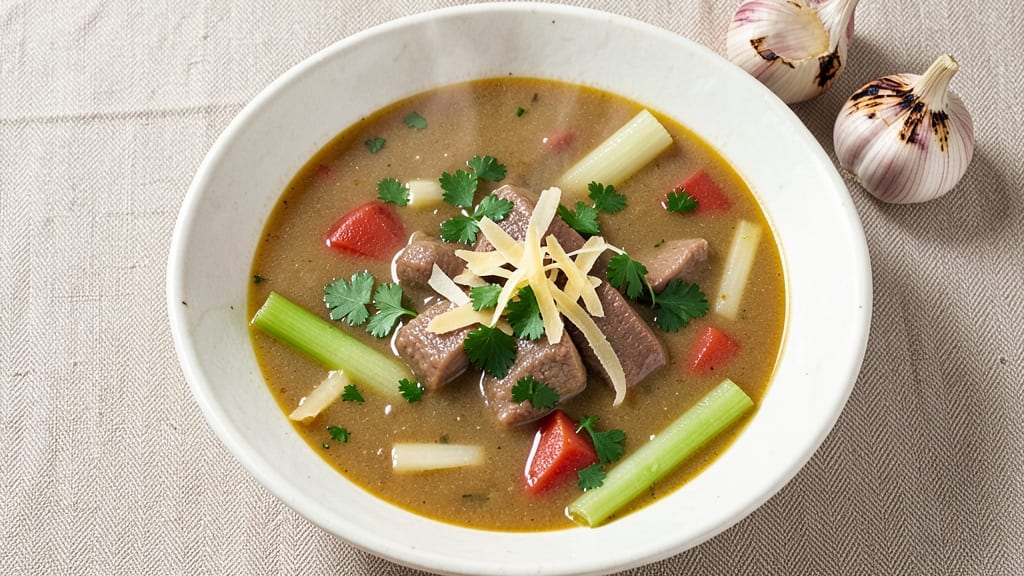
This bone marrow broth soup recipe transforms humble ingredients into a deeply flavorful bowl of comfort that tastes like a hug in soup form. The secret lies in extracting rich umami from slow-simmered bones and marrow, creating a velvety broth that carries layers of savory depth.
I've perfected this technique over years of testing—each step builds flavor that store-bought versions simply can't match.
The process begins with carefully preparing beef marrow bones, which release their gelatinous goodness when simmered low and slow for hours. You'll add aromatic vegetables and herbs that infuse the broth with subtle sweetness, while skimming impurities ensures a crystal-clear, restaurant-quality result.
The key is patience—the longer it simmers, the more intense the flavor becomes.
What you'll end up with is a soup that's rich yet balanced, with tender vegetables and optional protein floating in a golden, velvety broth. The marrow adds a luxurious mouthfeel, while herbs and spices provide fresh contrast.
This is the kind of soup that disappears quickly from bowls—and leaves everyone asking for seconds.
Serve it as a hearty starter or complete meal, garnished with fresh herbs or crispy croutons for texture. The beauty of this recipe is its versatility—use it as a base for other dishes or enjoy it exactly as is. Here's how to make it perfectly every time.
Ingredients for bone marrow broth soup
Transform humble bones and aromatic vegetables into velvety umami richness through slow simmering.
| Ingredient | Amount | Notes |
|---|---|---|
| Beef Marrow Bones 🦴 | 2 lb | Raw, uncooked, knuckle or femur |
| Yellow Onion 🧅 | 1 whole | Peeled, halved, root end intact |
| Carrots 🥕 | 4 medium | Whole, scrubbed, cut into chunks |
| Celery Stalks 🧄 | 4 whole | Trimmed, cut into 2-inch pieces |
| Garlic Cloves 🧄 | 6 cloves | Peeled, smashed with side of knife |
| Fresh Parsley 🌿 | ½ cup | Stems removed, loosely packed |
| Fresh Thyme 🌿 | ¼ cup | Stems removed, loosely packed |
| Fresh Ginger 🌿 | 1 inch | Peeled, sliced into thick rounds |
| Bay Leaves 🍃 | 2 whole | Dried, standard size |
| Black Peppercorns 🌶️ | 1 tsp | Crushed, not ground |
| Sea Salt 🧂 | 1 ½ tsp | Diamond Crystal preferred |
| Extra-Virgin Olive Oil 🫒 | 2 tbsp | High-quality, fruity |
| Beef Bones 🦴 | 2 lb | Knuckle or neck, for extra depth |
| Fresh Ginger 🌿 | ½ oz | Peeled, grated for finishing |
| Lemon Juice 🍋 | 1 tbsp | Freshly squeezed, for brightness |
The marrow bones are the heart of this soup—look for knuckle or femur bones at specialty butchers or well-stocked grocery stores like Whole Foods or Eataly. Freshness matters here: bones should smell clean, not fishy, and be free of any slimy residue. If you can't find marrow bones, beef neck bones work as a secondary option, though they won't provide the same luxurious mouthfeel. The ginger and garlic should be freshly grated and smashed, respectively, to maximize flavor extraction during the long simmer. For the herbs, organic parsley and thyme from the grocery store's produce section will give you the brightest flavor profile.
No marrow bones? Substitute with beef shank bones, though the texture will differ slightly. Fresh ginger hard to find? Ground ginger at half the amount works in a pinch, though it lacks the same aromatic complexity. The bay leaves can be omitted entirely if you prefer a cleaner flavor profile, but they add subtle earthiness that complements the richness. For the olive oil, avoid the cheap supermarket variety—look for Italian or Spanish extra-virgin with noticeable fruity notes. The lemon juice at the end is non-negotiable for brightness, but if you're serving this to children, you can reduce it to 1 teaspoon or serve it on the side.
This soup tastes even better the next day as flavors meld further. Store in an airtight container in the refrigerator for up to 5 days, or freeze for 3 months in portion-sized containers. For reheating, bring to a gentle simmer over medium heat—never boil—to preserve the delicate texture. The broth can be strained and used as a base for other dishes, or served as-is with a swirl of high-quality olive oil and a sprinkle of freshly grated ginger for garnish. The bones can be roasted first at 425°F for 20 minutes before simmering to deepen their flavor.
Why You'll Love This Recipe
- Marrow Magic Simplicity: I swear by this—just toss in the bones, a handful of chopped veggies, and water. The marrow bones do all the heavy lifting while I sip wine and wait. That’s how you make soup feel like a reward, not a chore.
- Umami Bomb: The marrow bones? Absolute flavor gold. They melt into the broth, turning it into this rich, velvety elixir that makes every spoonful taste like a hug from your grandma’s kitchen. (Yes, even the carrots and celery get star billing here.)
- Leftovers That Shine: This soup only gets better the next day. I make a big batch on Sundays, and by Wednesday, it’s the star of my lunch—warmed up, garnished with a crack of black pepper, and suddenly fancy. Zero waste, all win.
- Budget-Boosting Powerhouse: Marrow bones are cheaper than you think, and they stretch into gallons of broth. I’ve fed my whole family for three days on one bag—plus, the broth freezes perfectly for future soups or braises. Frugal? Absolutely. Delicious? Even more so.
Step-by-step instructions for bone marrow broth soup
Transform simple ingredients into a velvety, umami-rich broth with this precise slow-cooking method.
Prepare the Bones for Maximum Flavor Extraction
Begin by thoroughly cleaning the 2 lb beef marrow bones and 2 lb beef bones under cold water, removing any remaining tissue or marrow with a sharp knife. This step ensures clarity in your broth. In a large Dutch oven, heat 2 tbsp extra-virgin olive oil over medium-high heat until shimmering.
Add the cleaned bones in a single layer and sear for 8-10 minutes on each side until they develop a deep golden-brown crust. This caramelization creates the foundation for complex flavors. While searing, add the halved yellow onion (cut-side down) and cook for an additional 5 minutes until lightly browned.
Build the Aromatic Base with Vegetables and Herbs
Remove the seared bones and onions from the pot, setting them aside. In the same Dutch oven, add the cut 4 medium carrots, 4 whole celery stalks, 6 cloves garlic cloves, 1-inch fresh ginger (sliced), and 2 whole bay leaves. Stir to combine with any rendered fat remaining in the pot.
Cook the vegetables over medium heat for 5 minutes, stirring occasionally, until they begin to soften and release their natural juices. This step develops their sweetness and ensures they contribute to the broth's depth. Add 1 tsp crushed black peppercorns and 1.5 tsp sea salt, stirring to coat the vegetables evenly.
Slow-Simmer the Broth for Deep Flavor Development
Return the seared bones and onions to the pot. Add enough cold water to cover the bones by about 2 inches—approximately 8-10 cups. Bring the mixture to a boil over high heat, then immediately reduce the heat to low to maintain a gentle simmer. This low-and-slow approach is critical for extracting collagen and marrow from the bones.
Skimming any foam or impurities that rise to the surface during the first 30 minutes of simmering is essential. After the initial skimming, cover the pot and continue simmering for 3-4 hours, maintaining a consistent simmer. The broth should reduce slightly, becoming richer and more concentrated in flavor.
Finish with Fresh Herbs and Brightness
Once the broth has simmered for the full time, strain it through a fine-mesh sieve into a clean pot, pressing gently on the solids to extract every last drop of flavor. Discard the solids. Return the broth to the pot and stir in the 0.5 cup fresh parsley, 0.25 cup fresh thyme, and 0.5 oz grated fresh ginger. These herbs add freshness and balance the deep, rich flavors.
Add 1 tbsp freshly squeezed lemon juice and adjust the seasoning with additional salt if needed. The lemon juice brightens the broth and cuts through the richness. Serve the broth immediately, or store it in the refrigerator for up to 5 days or freeze for up to 3 months. This broth is the perfect base for soups, stews, or simply enjoyed on its own with crusty bread.
Pro Tips For Making Bone Marrow Broth Soup
- Char the Bones First: I learned this the hard way—skipping the char step means a broth that tastes like it’s missing something. Use a blowtorch or broiler to blacken the marrow bones on all sides before simmering. The smoke and caramelization add depth that no amount of simmering alone can replicate.
- Split the Marrow Early: Don’t wait until the end to scoop out the marrow—crack the bones open before they hit the pot. Use a meat cleaver or heavy knife to split them lengthwise, then scrape out the marrow with a spoon. This releases flavor into the broth immediately and prevents you from fishing for it later like a frustrated archaeologist.
- Don’t Crowd the Pot: After charring, add the bones to the pot sparse—leave at least an inch of space between them. Crowding steams the bones instead of browning them, and you’ll end up with a cloudy, weak broth. If your pot is small, work in batches or use a larger vessel.
- Toast the Aromatics Hard: Sounds weird, but it works: cook the onions, carrots, and celery until they’re deep golden, almost caramelized—about 15 minutes at medium heat. The garlic goes in last, just until fragrant. This isn’t just about flavor; it’s about building a flavor base that won’t dissolve into the broth like sugar in tea.
Creative variations of this dish
Asian-Inspired Ginger-Marrow Soup
Transform this classic into a ginger-scented Asian fusion by doubling the fresh ginger to 2 inches and adding 1 tbsp grated galangal (or extra ginger if unavailable) during the simmer.
Stir in 1 tbsp fish sauce and 1 tsp soy sauce after straining, then finish with 2 tbsp chopped cilantro and 1 tsp sesame oil before serving. 🌶️ This version shines with sliced shiitake mushrooms and soft-boiled eggs for texture.
Italian-Style Osso Buco Broth
Elevate your soup with Italian flair by adding 2 sprigs fresh rosemary and 1 sprig fresh sage during the simmer. After straining, stir in 1 cup dry white wine (like Pinot Grigio) and reduce by half before adding the herbs.
Finish with grated Parmesan (about 2 tbsp) and lemon zest instead of juice. Serve with crusty bread and a side of polenta for a hearty meal.
Spicy Cajun Bone Marrow Soup
For a bold Cajun twist, add 1 tbsp Cajun seasoning (like Tony Chachere’s) with the salt and pepper, and stir in 1-2 tbsp hot sauce (like Crystal or Tabasco) after simmering.
Top with chopped green onions, crumbled andouille sausage, and a dash of cayenne pepper for heat. This version pairs perfectly with cornbread or buttery biscuits. 🔥
Vegetarian Adaptation
Skip the marrow bones and use 2 lb mushrooms (like shiitake or cremini) and 1 lb dried shiitake stems for umami depth. Add 1 tbsp miso paste during the simmer and finish with toasted sesame seeds and scallions.
This version is just as rich and satisfying—ideal for plant-based eaters or those avoiding meat. The broth still develops a luxurious mouthfeel from the mushrooms.
Winter Comfort Bowl
Turn this into a complete meal by adding 1 cup cooked farro or wild rice to the broth before serving. Stir in ½ cup cooked chicken (or crumbled tempeh for vegetarian) and top with roasted butternut squash cubes, toasted pumpkin seeds, and a drizzle of maple syrup.
The sweetness of the squash balances the broth’s richness, making it perfect for chilly evenings. ✨
Global Umami Boost
Infuse global flavors by adding 1 tsp gochugaru (Korean chili flakes) for Korean-inspired heat, or 1 tsp smoked paprika for a Spanish touch. For Middle Eastern depth, stir in 1 tsp ground cumin and ½ tsp coriander during simmering.
Finish with crumbled feta (for Greek style) or chopped mint (for Moroccan flair). These variations keep the broth’s essence while adding exciting twists.
Nutrition facts
Frequently asked questions
Why do marrow bones create a richer broth than regular beef bones?
The marrow inside marrow bones releases gelatin and collagen during simmering, creating a naturally thick, velvety texture. Regular beef bones lack this marrow, so their broth stays thinner and less luxurious. The marrow also adds a subtle sweetness that enhances the umami depth.
Can I use chicken or pork marrow bones instead of beef?
While you can technically use chicken or pork marrow bones, beef is ideal for this recipe because its collagen breaks down more slowly, creating a richer, more gelatinous broth. Chicken marrow bones will produce a lighter broth, and pork can become greasy. For best results, stick with beef marrow bones.
What's the best way to store leftover bone marrow broth?
Store in an airtight container in the fridge for up to 5 days, or freeze in portion-sized containers for 3 months. For reheating, warm gently over low heat—never boil—to preserve the delicate texture. The broth actually tastes better the next day as flavors meld further!
How do I know when the broth is done simmering?
The broth is ready when it has reduced slightly (about 3-4 hours of simmering) and develops a deep golden color. The bones should be tender enough to pull apart easily. Taste it—it should be rich, savory, and well-balanced with no bitter aftertaste. The longer it simmers, the more intense the flavor becomes.
Can I make this soup in an Instant Pot or pressure cooker?
Yes, but with adjustments: Sear the bones first, then pressure cook on high for 90 minutes (natural release). The broth will be less gelatinous but still flavorful. For maximum richness, simmer the pressure-cooked broth uncovered on the stove for 1-2 hours to reduce and develop depth.