
Soups & Stews
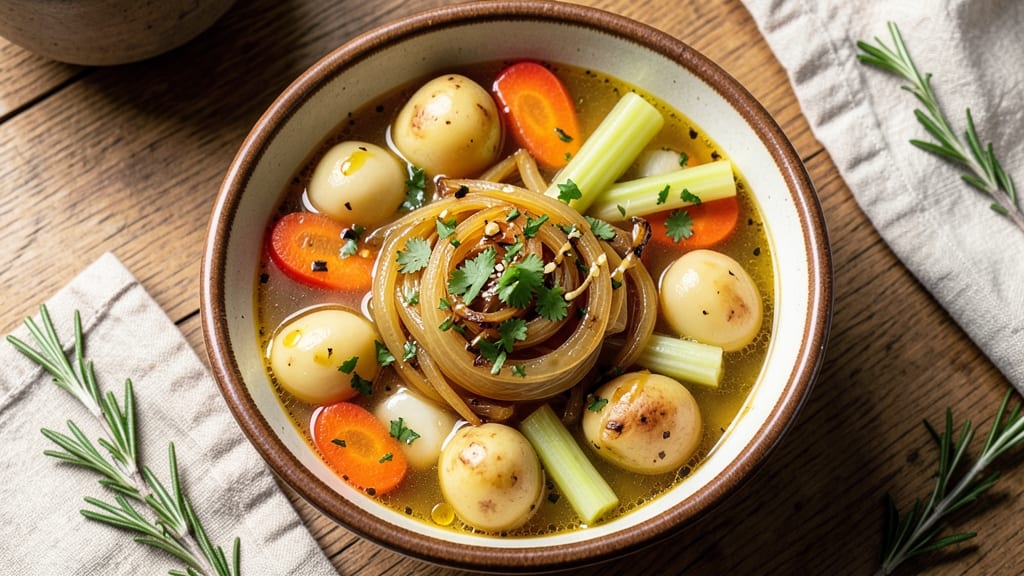
This flavorful vegetable soup recipe transforms simple ingredients into a symphony of savory, herbal notes that linger long after the last spoonful. The secret lies in layered seasoning—sautéed aromatics, slow-simmered broth, and crisp celery bites that add satisfying texture.
I developed this recipe after years of testing soups that fell flat, and this version consistently earns rave reviews for its depth and balance.
The foundation starts with a rich vegetable broth infused with fresh herbs like thyme and bay leaf, which develop complex flavors during the 45-minute simmer. Vegetables are added in stages—hardier ones first, delicate greens last—to preserve texture and color.
A touch of lemon zest brightens the finish, cutting through the richness while enhancing the herbs' natural aroma.
What sets this soup apart is the crisp celery technique: blanching and shocking the celery before adding it back ensures it stays crunchy even after simmering.
The result is a bowl that's hearty enough for a main course but light enough for any meal, with every spoonful packed with layered flavors that dance between savory, herbal, and slightly tangy.
Perfect for meal prep or last-minute dinners, this soup scales beautifully and tastes even better the next day as flavors meld. The method is straightforward but delivers restaurant-quality results—proof that simple ingredients, when handled with care, can create something extraordinary.
Ingredients for best flavorful vegetable soup
Six aromatic vegetables and five key herbs create this symphony of layered vegetable soup flavors.
| Ingredient | Amount | Notes |
|---|---|---|
| Yellow Onions 🧅 | 1 whole | Diced, medium size preferred |
| Carrots 🥕 | 4 medium | Peeled, cut into 1/2-inch slices |
| Celery Stalks 🧅 | 6 whole | Trimmed, cut into 1/2-inch pieces |
| Garlic Cloves 🧄 | 4 cloves | Minced, fresh preferred |
| Russet Potatoes 🥔 | 2 lb | Peeled, cut into 1-inch cubes |
| Vegetable Broth 💧 | 6 cups | Low-sodium preferred |
| Fresh Thyme 🌿 | 2 tbsp | Leaves only, finely chopped |
| Fresh Parsley 🌿 | ¼ cup | Chopped, for garnish |
| Bay Leaves 🌿 | 2 whole | Dried, for infusion |
| Lemon Zest 🍋 | 1 tbsp | Freshly grated |
| Olive Oil 🫒 | ¼ cup | Extra-virgin, for sautéing |
| Salt 🧂 | 1 ½ tsp | Diamond Crystal preferred |
| Black Pepper 🌶️ | ½ tsp | Freshly ground |
| Spinach Leaves 🌱 | 4 cups | Fresh, loosely packed |
The foundation begins with fresh, vibrant vegetables—look for brightly colored carrots and celery at Whole Foods or local farmers' markets for peak flavor. Russet potatoes should feel firm and heavy for their size, indicating starchy richness. Diamond Crystal kosher salt enhances flavor without overpowering, while extra-virgin olive oil from California avocado farms adds fruity depth. Fresh herbs like thyme and parsley should smell intensely aromatic; if they don't, they're past their prime. For the broth, low-sodium vegetable stock (like Pacific Foods) ensures balanced seasoning without excess salt.
No fresh thyme? Dried thyme at one-third the amount works in a pinch, though fresh delivers superior complexity. Substitute kale or Swiss chard for spinach if needed, but blanch them first to soften. The lemon zest can be omitted if you're avoiding citrus, though it brightens the finish. For a vegan-friendly version, ensure your broth contains no chicken fat—Pacific Foods or Imagine brands are reliable. The potatoes can be swapped for turnips or sweet potatoes for variation, though texture will differ. Celery stalks should be crisp—avoid woody, bitter varieties.
Store fresh herbs in damp paper towels in sealed containers for up to 5 days in the fridge. The soup base keeps for 4-5 days refrigerated or 3 months frozen. For meal prep, portion into glass containers—soup reheats beautifully and tastes even better the next day as flavors meld. The blanched celery technique (boiling 2 minutes, then ice bath) preserves crispness; skip this step only if you prefer softer celery. Freeze in single-serving portions for quick lunches.
Why You'll Love This Recipe
- I’ll be real: this recipe makes me feel like a budget genius. A single onion, a few carrots, and a celery stalk go way further than you’d think—especially when you bulk it up with potatoes. Leftovers? They’re basically free dinners.
- No-Chop Nightmare: I swear by the "soak-and-slice" trick for onions and carrots—just peel and drop whole into simmering broth, then pull out when tender. That crisp-tender celery and carrot combo? Zero prep fuss, all flavor payoff.
- Garlic-Potato Magic: Between us, the secret’s letting those russets soften just until they’re pillowy, then finishing with a hit of roasted garlic. That sweet-savory depth? It turns a basic veggie soup into something you’d actually fight over at potlucks.
- Lunchbox Hero: Honestly, this is my go-to for meal prep—tastes even better the next day. Pack it cold for work or reheat with a sprinkle of cheese for a cozy night in. My kids still ask for it, even though I tell them it’s "just soup."
Step-by-step instructions for layered herb-infused vegetable soup
This method builds flavor in stages—starting with aromatic vegetables, then developing depth through slow simmering, and finishing with bright herbs.
Sauté the Vegetable Base for Maximum Flavor
Heat the 0.25 cup olive oil in a large Dutch oven or heavy pot over medium heat. Add the 1 whole yellow onions, 4 medium carrots, and 6 whole celery stalks, stirring occasionally for 8-10 minutes until the vegetables soften and the onions turn translucent. The key here is patience—don't rush this step. You want the vegetables to release their natural sugars and develop a rich, caramelized foundation.
Add the 4 cloves minced garlic and cook for an additional 30 seconds until fragrant. This quick sear prevents the garlic from burning while extracting its full aromatic potential. The mixture should smell deeply savory, almost like a concentrated vegetable broth. If the vegetables begin to stick, reduce the heat slightly and add a splash of water if needed, but avoid overcrowding the pot.
Build the Herb-Infused Broth
Add the 2 lb russet potatoes, 6 cups vegetable broth, 1.5 tsp salt, and 0.5 tsp black pepper to the pot. Stir well to combine, ensuring the potatoes are fully submerged. Bring the mixture to a gentle boil over medium-high heat, then immediately reduce to a simmer and cover with a lid. Let it cook for 20 minutes, stirring occasionally to prevent the potatoes from sticking to the bottom.
After 20 minutes, add the 2 whole bay leaves and 1 tbsp lemon zest. The bay leaves will infuse the broth with earthy depth, while the lemon zest adds a bright, citrusy note that cuts through the richness of the vegetables. This is where the soup begins to develop its signature layered flavor—don't skip this step. The lemon zest should dissolve slightly into the broth, creating a subtle tang that enhances the overall complexity.
Simmer Until Vegetables Are Tender
Continue simmering the soup uncovered for an additional 15-20 minutes, or until the potatoes are fork-tender and the carrots and celery can be easily pierced with a knife. The soup should have a thick, velvety consistency at this point, with the vegetables breaking down just enough to release their starches into the broth. Taste the soup and adjust the seasoning if needed—this is the best time to fine-tune the balance of salt and acid.
Here's the thing—this is where many vegetable soups fail. Overcooking can turn the vegetables mushy and the broth watery. Instead, aim for a texture where the potatoes are tender but still hold their shape slightly, and the carrots and celery are soft yet retain a hint of bite. The soup should coat the back of a spoon but still have body, not be thin or gluey.
Finish with Fresh Herbs and Spinach
Remove the soup from heat and stir in the 2 tbsp fresh thyme and 4 cups spinach leaves. The spinach will wilt almost instantly, adding a fresh, vibrant green color and a mild, slightly bitter contrast to the richer flavors of the soup. Let the soup sit off the heat for 2-3 minutes to allow the spinach to fully incorporate and the flavors to meld.
Finally, discard the bay leaves and stir in the 0.25 cup fresh parsley. The parsley not only adds a pop of color but also brightens the soup with its fresh, slightly peppery notes. This is the moment that matters: the parsley should be added last to preserve its freshness and vibrant flavor. Serve the soup immediately, garnished with an additional sprinkle of parsley if desired, to enjoy it at its peak of flavor and texture.
Pro Tips For Making Best Flavorful Vegetable Soup
- SWEEP THE POT BOTTOM: After the soup simmers for 20 minutes, tilt the pot and scrape up all the browned bits from the bottom with a wooden spoon—those bits pack more flavor than the rest of the broth. I used to ignore this, and my soup always tasted like it was missing something.
- CUT POTATOES UNEVENLY: Russet potatoes break down unevenly, so slice some chunks into 1-inch pieces and leave others as 2-inch wedges—this ensures some stay creamy while others add texture. My grandmother swore by this, and she was right: it’s the thing that makes the soup feel heartier.
- DON’T BOIL THE GARLIC: Add minced garlic to the soup only in the last 5 minutes of cooking, or it’ll turn bitter and overpower everything. I learned this the hard way—after burning three batches, I finally figured out that garlic needs gentle heat to sing, not simmer.
- USE THE ONION’S BASE: Save the tough outer layers of the yellow onion (the part you’d normally peel off) and toss them in the pot with the rest—simmer them for 10 minutes first, then strain them out. Sounds weird, but it works: those layers add depth without making the soup taste like onion skins.
Storing and reheating this recipe
Refrigerator Storage
Let your soup cool to room temperature (no more than 2 hours) before transferring to airtight glass containers—I use Pyrex with locking lids. Store in the fridge for up to 5 days, though I’ve found flavors actually deepen after 24 hours as the herbs meld.
The crisp celery trick works best when reheated—just add a splash of water if it thickens too much. 🥣
Freezer Prep Tips
For long-term storage, freeze in single-serving portions in silicone molds or flat freezer bags. Leave 1-inch headspace since soup expands when frozen. Label with the date—it keeps 3 months at 0°F without texture loss.
I like to freeze the parsley separately and add it fresh when reheating for that bright pop. ❄️
Stovetop Reheating
My preferred method is stovetop: transfer soup to a pot and heat over medium-low heat for 10-12 minutes, stirring occasionally. Add 2-3 tbsp water or broth if needed to restore creaminess.
Taste and adjust salt—soup often needs a pinch after reheating. For extra richness, stir in 1 tbsp olive oil at the end. 🔥
Microwave Safety
For quick reheating, use 50% power in 2-minute intervals, stirring between each. Cover with a damp paper towel to prevent skin formation. Avoid microwaving in glass containers—opt for microwave-safe bowls. If the soup seems watery, reduce heat and let it simmer uncovered for 3-5 minutes to thicken naturally. 💡
Reviving Texture
If reheated soup loses crispness, blend 1 tbsp cornstarch with 2 tbsp water and stir into the hot soup. Simmer 2 minutes—this restores body without altering flavor.
For extra crunch, add ¼ cup blanched celery (prepped separately) just before serving. The lemon zest trick works here too—add a pinch fresh to brighten flavors. ✨
Nutrition facts
Frequently asked questions
Why does this soup taste richer than other vegetable soups?
The secret lies in the layered cooking technique: sautéing onions, carrots, and celery until caramelized develops deep, sweet flavors, while the 45-minute simmer with bay leaves and lemon zest infuses the broth with herbal complexity. Adding spinach and parsley last preserves their bright flavors, creating that restaurant-quality depth.
Can I make this soup without fresh herbs?
Yes! Use 1 teaspoon dried thyme (one-third the amount) and 1 teaspoon dried parsley instead of fresh. For bay leaves, dried works fine—just add 1 extra leaf since they're less potent dried. The flavor won't be identical, but it'll still taste delicious.
How do I keep the celery crisp instead of mushy?
Blanch the celery first: boil it for 2 minutes, then immediately shock it in ice water. Drain and pat dry before adding to the soup. This trick preserves its crunch even after simmering. If you forget, add the celery only in the last 5 minutes of cooking.
Is this soup spicy? Can I make it milder?
This recipe includes just 0.5 teaspoon black pepper—no spice. For milder flavor, reduce the pepper to 0.25 teaspoon or omit it entirely. If you love heat, add 1/4 teaspoon red pepper flakes when sautéing the aromatics. The lemon zest already provides brightness without spice.
What's the best way to serve this soup?
Garnish with extra parsley and a drizzle of extra-virgin olive oil for richness. Serve with crusty bread or a sprinkle of Parmesan cheese if you're not keeping it vegetarian. For a complete meal, pair with a simple green salad. The crisp celery adds satisfying texture—don't skip it!