
Soups & Stews
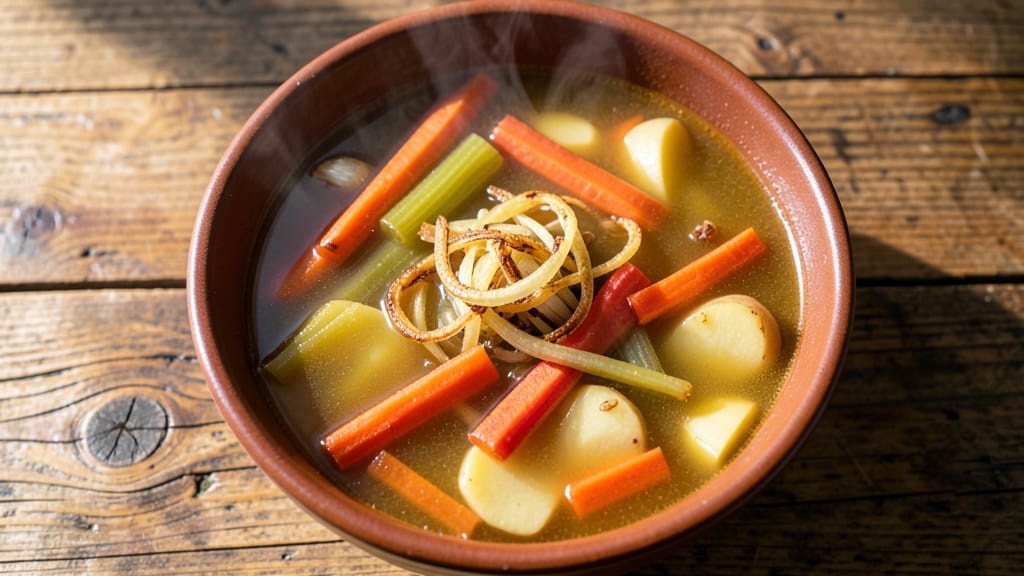
This bone broth veggie soup recipe transforms simple ingredients into a deeply comforting bowl of slow-simmered umami perfection. The secret lies in crispy celery bites that add satisfying texture, while the broth infuses vegetables with rich, savory depth.
What makes this vegetarian version work is using mushroom or seaweed broth instead of traditional bone broth, preserving that essential umami foundation.
The process is straightforward but rewarding: sauté aromatic vegetables until golden, then simmer with broth and seasonal produce for hours. This slow cooking transforms tough vegetables into tender, flavorful bites while developing complex layers of taste.
The crispy celery comes from a quick pan-fry at the end, adding both texture and visual appeal that makes this soup feel special.
What you'll end up with is a soup that's equal parts nourishing and indulgent—creamy from blended vegetables, aromatic from fresh herbs, and satisfyingly crispy from those celery bites.
The broth coats every spoonful, while the vegetables provide both nutrition and hearty substance. It's the kind of soup that feels like a warm embrace on chilly days.
Serve with crusty bread for dipping or a sprinkle of fresh parsley for brightness. This recipe scales beautifully for meal prep or feeding a crowd, making it perfect for weeknight dinners or comforting gatherings. The flavor only deepens as it sits, so leftovers taste even better the next day.
Ingredients for bone broth veggie soup
Six cups of rich broth plus seasonal vegetables create this deeply comforting vegetarian soup.
| Ingredient | Amount | Notes |
|---|---|---|
| Vegetable or Mushroom Broth 💧 | 6 cups | Low-sodium preferred for flavor control |
| Yellow Onions 🧅 | 1 whole | Medium size, diced finely |
| Garlic Cloves 🧄 | 4 cloves | Fresh, minced for depth |
| Carrots 🥕 | 1 ½ lb | Organic preferred, cut into chunks |
| Celery Stalks 🧅 | 4 whole | For crispy bites, cut into 1-inch pieces |
| Russet Potatoes 🥔 | 2 lb | Yukon gold works too, cubed |
| Sweet Potatoes 🍠 | 1 ½ lb | Peeled, cubed for even cooking |
| Butternut Squash 🎃 | 1 lb | Peeled, cubed for tender texture |
| Seaweed Flakes 🌊 | 1 tbsp | For umami depth, optional |
| Dried Thyme 🌿 | 1 tsp | Or 1 tbsp fresh thyme leaves |
| Bay Leaves 🍃 | 2 whole | Fresh or dried, removed before serving |
| Olive Oil 🫒 | ¼ cup | Extra-virgin for frying celery |
| Fresh Parsley 🌿 | ¼ cup | Chopped, for garnish only |
| Salt 🧂 | 1 ½ tsp | Diamond Crystal preferred |
| Black Peppercorns 🌶️ | ½ tsp | Freshly cracked for aroma |
The broth is your flavor foundation—mushroom or vegetable works best for that deep umami without animal products. Pacific Foods or Imagine brands excel here, but homemade is ideal if you have time. For the celery, organic stalks prevent bitterness, and cutting them into even 1-inch pieces ensures consistent crispiness. The sweet potatoes and butternut squash should be peeled and cubed uniformly—about 1-inch pieces—so they cook through together. Carrots can stay whole or be cut into chunks, but organic is worth the splurge here to avoid soil residue.
No seaweed flakes? Dried shiitake mushrooms at half the amount add similar depth. Fresh thyme is ideal but dried works at one-third the quantity. For the crispy celery, pan-fry in olive oil until golden brown—this is non-negotiable for texture. The potatoes and squash can be swapped for other root vegetables like parsnips or turnips if needed. If you prefer creaminess, blend half the finished soup and return it to the pot—cashew cream works beautifully for a vegan option.
Broth reheats beautifully—simmer gently to preserve texture. Store in airtight containers for 5 days in the fridge or 3 months frozen. The crispy celery loses crunch when reheated, so always make a fresh batch to serve on top. For meal prep, portion into containers with a thin layer of broth on top to prevent browning. The flavor actually improves overnight as the vegetables absorb more of the savory broth.
Why You'll Love This Recipe
- Pantry Rescue: I swear by this when my fridge is bare—just broth, onions, carrots, and celery. No fancy ingredients, no stress. The golden caramelized onions alone make it taste like a restaurant dish.
- Umami Bomb: That deep, savory punch from the bone broth and garlic? It’s the kind of flavor that lingers. I’ll be real: I’ve made it without broth before, and it’s just… sad. Don’t skip it.
- Meal Prep MVP: Double the batch, store it for days, and still have something hearty to throw together. My kids grab it straight from the fridge—no reheating drama, just warm, cozy bites. (Yes, even on a Tuesday night.)
- Budget Magic: Vegetables are cheap, broth is cheap, and it stretches for ages. I’ve fed a crowd of six for under $10 with this—no compromises, just good food. My wallet thanks me every time.
Step-by-step instructions for slow-simmered umami veggie soup
Master this technique and you'll achieve restaurant-quality depth with perfectly balanced textures.
Prepare the Celery for Crispy Bites
Cut the 4 whole celery stalks into 1-inch pieces and set aside. In a separate skillet, heat 0.25 cup olive oil over medium-high heat until shimmering. Add the celery in a single layer and cook undisturbed for 3-4 minutes until edges turn deep golden brown and crispy. This creates texture contrast that elevates the soup.
Transfer the crispy celery to a plate and set aside. Keep the remaining oil in the skillet—it's perfect for sautéing the onions. The crispy celery will be added back at serving for that satisfying bite.
Develop the Umami Base
In the same skillet with the reserved olive oil, add the 1 whole yellow onion (diced) and cook over medium heat for 5 minutes until softened and translucent. Add the 4 cloves garlic cloves (minced) and cook for 30 seconds until fragrant—don't let it brown or it'll turn bitter.
Stir in the 1 tbsp seaweed flakes and 1 tsp dried thyme, cooking for 1 minute until the seaweed releases its oceanic aroma. This umami foundation transforms ordinary broth into something extraordinary. The seaweed flakes are optional but add depth that's hard to replicate.
Simmer the Vegetables
In a large stockpot, combine the 6 cups vegetable or mushroom broth, 2 whole bay leaves, 1.5 tsp salt, and 0.5 tsp black peppercorns. Bring to a boil over high heat, then reduce to a gentle simmer. Add the 1.5 lb carrots (cut into chunks), 2 lb russet potatoes (cubed), 1.5 lb sweet potatoes (cubed), and 1 lb butternut squash (cubed).
Simmer uncovered for 20-25 minutes until all vegetables are tender but not mushy. The potatoes should pierce easily with a fork. Taste the broth and adjust seasoning if needed—this is where you ensure perfect balance before adding the crispy celery.
Finish with Fresh Herbs
Remove the 2 whole bay leaves and stir in the 0.25 cup fresh parsley (chopped). This bright herb cuts through the richness of the broth and adds freshness. The parsley should be added at the very end to preserve its vibrant color and flavor.
Return the crispy celery to the pot and heat through for 1 minute. The celery will soften slightly but maintain its satisfying texture. Ladle into bowls immediately—this soup tastes best fresh from the pot when the vegetables are still warm and the broth is vibrant.
Pro Tips For Making Bone Broth Veggie Soup
- Sweat the Onions: I learned this the hard way—skip the quick sauté and let those yellow onions cook low and slow for 8-10 minutes until they’re soft, translucent, and just starting to caramelize. That deep flavor is what makes your broth sing, not just burn them in 3 minutes like I used to.
- Chop Celery Small: No one likes mushy celery chunks in soup. Cut the stalks into ¼-inch pieces so they cook evenly and break down just enough to release flavor without turning to mush—especially important when using mushroom broth, which can be heavier.
- Salt the Broth Early: Add half the salt when you first combine the broth with veggies, then taste again at the end. Mushroom broth is often saltier than vegetable, and waiting until later can leave you scrambling to fix a bland bowl (or overdoing it).
- Use a Splatter Screen: Garlic cloves have a habit of flying everywhere when they hit the pan. Pop a silicone splatter screen over them while they sizzle—it keeps your stovetop clean and ensures you don’t lose half your aroma to the walls. (Yes, even if you’re impatient like me.)
Troubleshooting this recipe
Broth Too Weak?
If your broth lacks depth, boost it with 1 tbsp soy sauce or 1 tsp miso paste during simmering. For vegetarian broth, add ½ cup tomato paste to the base before vegetables.
I’ve found that Pacific Foods mushroom broth works best when combined with 1 tsp seaweed flakes—this combo mimics traditional bone broth umami. 💫
Vegetables Overcooking
Root vegetables like carrots and potatoes cook at different rates. To prevent mushiness, add harder veggies (carrots, squash) first and softer ones (potatoes) later. Use a large stockpot with at least 6 quarts capacity to avoid overcrowding.
For extra control, I simmer at 180°F instead of boiling—this keeps textures intact. ⏰
Celery Not Crispy
For perfect crispy celery, use organic stalks and cut into even 1-inch pieces. Cook in 0.25 cup olive oil over medium-high heat until golden brown—don’t stir! If your pan isn’t hot enough, the celery will steam instead of crisp. I recommend a nonstick skillet for even browning. 🔥
Broth Too Salty
If your broth tastes too salty, add ½ cup cold water or broth and stir. For a more natural fix, blend ½ cup cooked vegetables with ¼ cup water, then return to the pot—this dilutes salt while adding creaminess. Always taste before adding salt to prevent over-seasoning. 🧂
Herbs Lose Flavor
Fresh herbs like parsley should be added at the very end to preserve their brightness. Dried herbs should be toasted in the skillet for 30 seconds before adding to the broth. I store dried thyme in airtight containers to keep it potent—this prevents flavor loss over time. 🌿
Soup Too Thin
If your soup is watery, simmer uncovered for 10-15 extra minutes to reduce. For instant thickening, blend ½ cup vegetables with ¼ cup water and stir back in.
A roux (2 tbsp butter + 2 tbsp flour) works too—just whisk it into the hot broth and simmer for 2 minutes. 💡
Nutrition facts
Frequently asked questions
Can I make this soup without seaweed flakes?
Skip the seaweed flakes and boost umami with 1 tbsp soy sauce or ½ cup tomato paste when building the base. For depth, add 2 dried shiitake mushrooms (crumbled) or 1 tsp miso paste to the simmering broth. These alternatives work especially well with mushroom broth for that rich, savory profile.
How do I make this soup creamy without dairy?
Blend ½ cup of the cooked vegetables with ¼ cup water or broth until smooth, then stir back into the pot. For extra richness, add ¼ cup cashew cream (blend soaked cashews with water) or 2 tbsp tahini. The soup will have a velvety texture without dairy.
Can I prep this soup ahead of time?
Yes! Assemble everything except the crispy celery and simmer for 20 minutes, then cool and refrigerate in an airtight container for up to 5 days. Reheat gently on the stove, adding the crispy celery fresh at serving. For freezing, store broth and vegetables separately—freeze the broth for 3 months and reheat with fresh celery.
What vegetables can I swap in?