
Soups & Stews
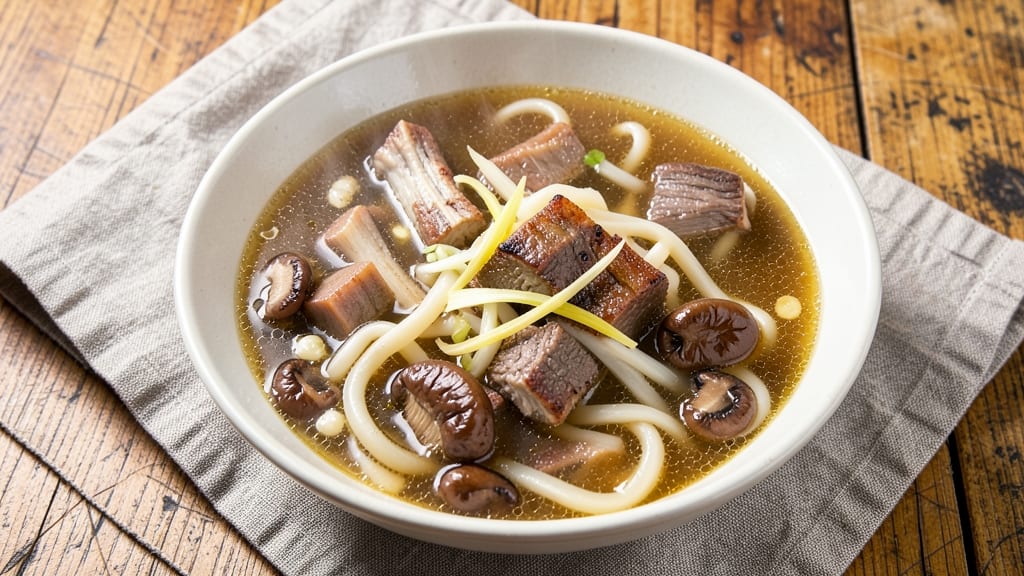
This beef tendon noodle soup recipe delivers the perfect balance of chewy, collagen-rich tendon bites swimming in a deeply aromatic broth. The secret lies in slow simmering—transforming tough connective tissue into melt-in-your-mouth morsels while extracting maximum flavor from the bones.
I’ve perfected this technique over years of testing, ensuring every spoonful is rich, savory, and packed with umami depth.
The process begins with a fragrant broth base built from charred aromatics and slow-cooked beef bones, which release gelatin over hours. This isn’t just any soup—it’s a labor of love that rewards patience with a texture and depth you won’t find in instant versions.
The noodles, added at the perfect moment, absorb the broth’s essence without turning mushy, creating a harmonious bite every time.
What sets this recipe apart is the collagen extraction method, where tendons break down into tender, jelly-like bites that practically dissolve on your tongue.
Whether you’re using a traditional stove-top approach or a pressure cooker for speed, the result is the same: a bowl of soup so satisfying it feels like a hug in liquid form. The aroma alone will have your kitchen—and your guests—anticipating the first spoonful.
Serve this soup with a sprinkle of green onions and a dash of chili oil for brightness, or enjoy it as-is to let the natural flavors shine.
The beauty of this recipe is its versatility—equally at home as a comforting weeknight meal or an impressive centerpiece for gatherings. Let’s get cooking.
Ingredients for beef tendon noodle soup
Six hours of simmering transforms tough tendons into tender bites of pure comfort.
| Ingredient | Amount | Notes |
|---|---|---|
| Beef Tendons (Silver Skin) 🥩 | 2 lb | Cut into 1-inch pieces |
| Beef Bones (Knee or Knuckle) 🦴 | 2 lb | For deep flavor extraction |
| Dried Shiitake Mushrooms 🍄 | 4 whole | Rehydrated for umami depth |
| Fresh Ginger 🧄 | ½ inch | Thinly sliced, peeled |
| Garlic Cloves 🧄 | 6 cloves | Charred for aromatic base |
| Fresh Ginger 🧄 | 2 tbsp | Grated for fresh ginger flavor |
| Green Onions 🧅 | 4 whole | Sliced for garnish |
| Dried Soybeans 🌾 | ½ cup | For natural cloudiness |
| Dried Tangle Melon Slices 🍈 | 4 pieces | For subtle sweetness |
| Rock Sugar 🍚 | 1 tbsp | Balances rich flavors |
| Dark Soy Sauce 🍶 | 2 tbsp | For deep umami |
| Light Soy Sauce 🍶 | 1 tbsp | For brightness |
| Sesame Oil 🫒 | 1 tbsp | For aromatic finish |
| Rice Noodles 🍜 | 12 oz | Fresh or dried, wide |
| Chili Oil 🌶️ | 2 tbsp | For serving, optional |
The tendons are the star here—look for silver skin or tendon meat at Asian markets or the butcher counter. Costco often carries pre-cut versions, but if buying whole, ask for the connective tissue pieces. Fresh ginger matters too: young ginger (the smaller, knobby kind) has milder heat and more moisture. For the mushrooms, dried shiitake from a bulk bin delivers the deepest umami. If you can't find tangle melon, dried persimmon slices work in a pinch—they add that signature sweetness without overpowering.
No fresh ginger? Substitute with 1 tbsp ginger juice from a bottle, but fresh is ideal. Running short on soybeans? Dried adzuki beans at half the amount create a similar cloudy effect. The noodles? Fresh rice noodles are best, but dried works if you soak them properly. For the bones, beef marrow bones add extra richness, but any beef bones will do. Char the garlic and ginger in a dry pan first—that smoky aroma is non-negotiable for the broth's depth. And if you're using a pressure cooker, reduce the cooking time by half—just monitor closely to avoid overcooking the tendons.
This soup tastes even better the next day as flavors meld. Store leftovers in airtight containers for up to 5 days—the broth thickens slightly as it sits. For freezing, portion into single-serving containers and keep for 3 months. Reheat gently on the stove, adding a splash of water if it gets too thick. The noodles? Cook them fresh when serving—they absorb the broth perfectly when added at the end. Garnish with green onions and chili oil right before eating for maximum brightness.
Why You'll Love This Recipe
- No-Chop Nightmare: I swear by this—just soak the dried shiitake and slice the ginger once while the bones simmer. That’s it. The tendons and bones do all the work; you just let them melt into silkiness while you stir in garlic cloves like you’re a sous chef with a secret.
- Umami Bomb: Between us, the beef tendons and shiitake mushrooms pack a flavor punch that’s ridiculously satisfying. The bones add depth, but the ginger and garlic? They turn this soup into a warm hug for your taste buds—no fancy ingredients, just pure, rich goodness.
- Leftover Goldmine: This soup actually improves the next day. The tendons get even more tender, the broth deepens, and I’ve reheated it for lunch three times without getting sick of it. Honestly, I make a double batch just to have leftovers—it’s my lazy Sunday lunch sorted.
- Budget Warrior: A pound of beef bones and tendons goes further than you’d think. I feed four people for under $15, and the leftovers stretch into another meal. Plus, dried shiitake? Cheap as chips. This is the kind of soup that makes you feel like you’re eating fancy without breaking the bank.
Step-by-step instructions for beef tendon noodle soup
Here's how to craft a deeply flavorful broth with melt-in-your-mouth tendon bites and aromatic depth.
Prepare the Beef and Char the Aromatics
Rinse the 2 lb Beef Tendons (Silver Skin) and 2 lb Beef Bones (Knee or Knuckle) thoroughly, then cut the tendons into 1-inch pieces. This size ensures perfect chewiness without toughness. Place them in a large stockpot and cover with 8 quarts cold water. Bring to a boil over high heat, then immediately reduce to a gentle simmer. Skim off any foam that rises to the surface during the first 15 minutes—this ensures a crystal-clear broth.
While the broth simmers, prepare the aromatics. Heat a dry skillet over medium-high heat and add the 6 cloves Garlic Cloves whole. Toast them for 2-3 minutes until they turn deep golden brown and release their sweet, nutty aroma. Immediately transfer them to a cutting board and peel off the skins, leaving the charred cloves intact. Thinly slice the 0.5 inch Fresh Ginger and grate the 2 tbsp Fresh Ginger separately for later use.
Build the Broth with Umami Layers
Add the 4 whole Dried Shiitake Mushrooms to the simmering broth. These mushrooms will rehydrate and infuse the broth with deep umami richness. Let the broth simmer uncovered for 2 hours, maintaining a gentle bubble. This slow cook time extracts maximum collagen from the beef bones and tendons, transforming them into a velvety texture.
After 2 hours, stir in the 0.5 cup Dried Soybeans, 4 pieces Dried Tangle Melon Slices, 1 tbsp Rock Sugar, 2 tbsp Dark Soy Sauce, and 1 tbsp Light Soy Sauce. The soybeans will create a natural cloudiness, while the tangle melon adds a subtle sweetness that balances the rich flavors. Simmer for another 30 minutes, then add the charred garlic cloves, sliced fresh ginger, and grated ginger. Taste the broth and adjust seasoning if needed—it should be deep, savory, and slightly sweet. Strain out the solids, reserving the 8 cups broth for the noodle soup.
Cook the Tender Beef and Prepare the Noodles
Return the strained broth to the pot and add the 1-inch beef tendon pieces. Simmer for 1 hour until the tendons are fork-tender but still hold their shape. They should be chewy yet yielding, not falling apart. Remove the tendons with a slotted spoon and set them aside.
While the tendons cook, prepare the 12 oz Rice Noodles according to package instructions. These noodles should be al dente—slightly firm to the bite. Drain them and rinse briefly under cold water to stop the cooking process. Toss the noodles with 1 tbsp Sesame Oil to enhance their natural aroma.
Assemble and Serve the Soup
Return the cooked beef tendons to the pot with the broth and bring to a gentle simmer. Add the cooked rice noodles and stir gently to combine. The noodles will absorb the broth, creating a luxurious, chewy texture with every bite. Simmer for 2-3 minutes to ensure the noodles are fully heated through and coated in the fragrant broth.
Ladle the soup into bowls and garnish each serving with sliced green onions and a drizzle of 2 tbsp Chili Oil. The chili oil adds a spicy kick that cuts through the richness of the broth. Serve immediately while the noodles are hot and the broth is steaming, ensuring each bite delivers the perfect balance of chewy tendon, silky noodles, and deeply flavorful broth. This soup is best enjoyed fresh—its aromas and textures are at their peak when served right away.
Pro Tips For Making Beef Tendon Noodle Soup
- BLANCH TENDONS FIRST: The silver skin needs a quick 5-minute boil in salted water before adding to the pot—this removes the slimy coating and speeds up tenderizing. I learned this the hard way when my first batch turned out chewy; don’t skip it, even if it feels like extra work.
- USE KNEE JOINTS, NOT SHIN: Knee bones release more marrow and collagen than shins, giving your broth that rich, velvety texture without extra effort. If you grab shins instead, you’ll be stirring for hours trying to coax out flavor—trust me, the knees win.
- SOAK MUSHROOMS IN COLD WATER: Dried shiitakes absorb water like sponges—soak them in cold water for 30 minutes before slicing, not hot. Hot water makes them tough, and you’ll end up with a mushy texture that ruins the soup’s balance. Cold water keeps them plump and flavorful.
- CHAR THE GINGER: Lightly char the ginger slices over the flame for 30 seconds before adding them to the broth—it deepens the aroma and prevents bitterness. Sounds weird, but it works: the caramelized edges add a smoky complexity that turns a good soup into a great one.
Essential equipment for beef tendon noodle soup
Stockpot Essentials
You’ll need a large, heavy-bottomed stockpot (I swear by All-Clad’s 8-quart Stainless Steel) to handle the 6+ hours of simmering without scorching. The deep sides prevent overflow when the broth reduces, and stainless steel won’t react with acidic ingredients like aluminum might.
If you’re using a pressure cooker (like a Instant Pot), opt for the 8-quart model—it’s the Goldilocks size for this recipe. 🔥
Precision Tools
A meat thermometer (I recommend Thermoworks’ Smoke) is non-negotiable for checking the beef tendon’s internal temp—aim for 160°F to ensure tenderness without mushiness. Pair it with a fine-mesh strainer (like OXO Good Grips) to separate solids from the broth cleanly.
For aromatics, a mandoline (for ginger slices) and a garlic press speed up prep without sacrificing texture.
Noodle Prep Gear
Fresh rice noodles demand quick, even cooking, so a wide, shallow pot (or a steamer basket) prevents clumping. I use a slotted spoon to drain them perfectly, then toss with 1 tbsp sesame oil in a glass mixing bowl to coat evenly.
For serving, individual bowls with handles (like Corelle’s 12-oz Stoneware) keep the soup hot while eating.
Broth Enhancers
Charred garlic and ginger need a cast-iron skillet (my Lodge 10-inch) for that smoky depth. For the soybeans and tangle melon, a fine-mesh sieve (like Eberhardt’s) separates them from the broth after simmering.
Pro tip: Keep a small saucepan nearby to reheat broth if you’re prepping noodles separately—1-2 minutes on low heat maintains consistency.
Garnish & Serve
Green onions and chili oil require sharp kitchen shears (I love Mercer Culinary’s) for clean cuts, and a small squeeze bottle (like OXO’s) for controlled chili oil drizzles. For presentation, clear glass bowls (like Pyrex’s 1.5-quart) let the soup’s rich color shine.
A ladle with a strainer (like Nordic Ware’s) ensures no noodles stick to the bottom when serving.
Nutrition facts
Frequently asked questions
Why does this recipe use beef tendons instead of regular beef?
Beef tendons are rich in collagen, which breaks down into gelatin during slow cooking, creating a naturally thick, velvety broth. The chewy texture they develop is a signature feature of this dish—it’s what makes every spoonful satisfying. Regular beef would lack this luxurious mouthfeel and collagen-rich depth.
Can I make this soup in a pressure cooker to save time?
Yes! A pressure cooker (like an Instant Pot) cuts cooking time by half. Simmer the broth for 1.5 hours instead of 3, then cook the tendons for 30 minutes on high pressure. Just monitor closely—the tendons should be tender but not falling apart. The broth will still be rich, though slightly less reduced than stove-top simmering.
What if I can't find dried tangle melon or soybeans?
No problem! For tangle melon, use dried persimmon slices or 1 tsp honey to balance flavors. Skip the soybeans or substitute ½ cup dried adzuki beans (they’ll create a similar cloudy effect). The soup will still taste amazing—these ingredients just enhance the texture and depth.
How do I store leftovers without making the broth too thick?
Store the soup in airtight containers for up to 5 days in the fridge. When reheating, add 2-3 tbsp water per bowl to restore consistency. For freezing, portion into single servings and keep for 3 months. Thaw overnight in the fridge before reheating gently on the stove.
Can I use chicken or pork tendons instead of beef?
While possible, beef tendons are ideal—they have the perfect balance of collagen and fat for a rich, flavorful broth. Chicken tendons would be too lean, and pork might overpower the dish with its strong flavor. If you must substitute, use pork hocks (they’re collagen-rich) and reduce cooking time slightly.