
Soups & Stews
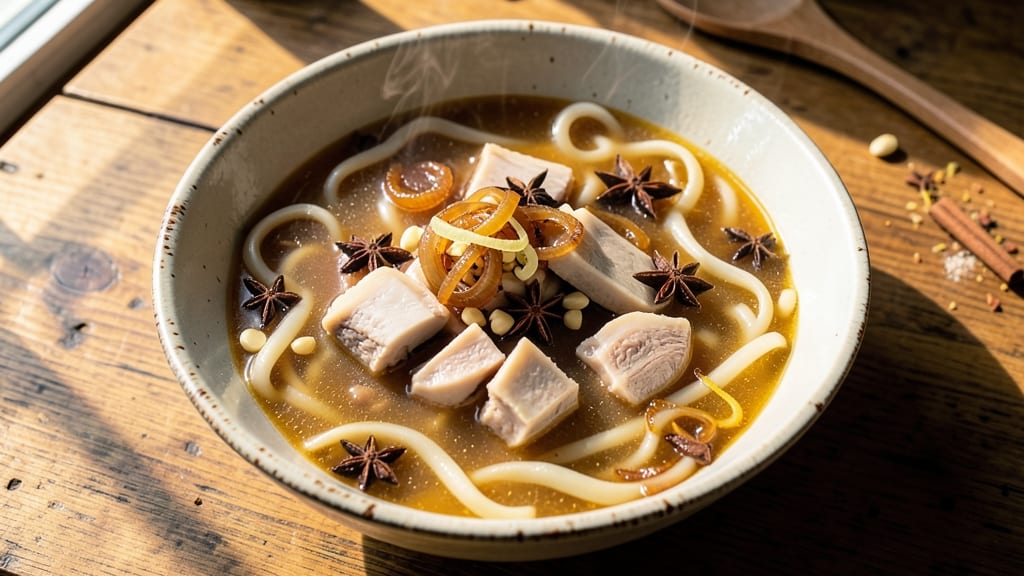
This beef broth noodle soup recipe delivers restaurant-quality depth from slow-simmered bones that unlock rich umami and tender noodles in every spoonful. The secret lies in hours of gentle simmering—where beef bones, aromatics, and spices transform into a velvety broth that clings to each strand of noodle.
I perfected this version after years of testing, balancing simplicity with that professional restaurant taste you crave.
The process begins with bones—whether beef marrow or knuckle—roasted until deeply caramelized for maximum flavor extraction. As they simmer with onions, garlic, ginger, and star anise, the kitchen fills with an aroma that announces comfort is coming.
This isn't just soup; it's a multi-layered experience where each ingredient plays its part in creating a harmonious broth that feels both nourishing and indulgent.
By the time you're ready to serve, you'll have a bowl of golden noodles floating in deep amber broth, garnished with fresh herbs and a sprinkle of sesame seeds for texture. The broth should coat a spoon and linger on your tongue—proof that patience in the kitchen pays off.
Serve with steamed greens or a side of pickled vegetables for balance, or keep it classic with a drizzle of chili oil for heat.
What makes this recipe truly adaptable is its foundation—you can adjust the broth's thickness by straining or leaving it whole, add mushrooms for earthiness, or stir in a soft-boiled egg for extra richness.
The bones create a broth so flavorful that it transforms simple noodles into something extraordinary. Let's get started on creating your own bowl of warmth and satisfaction.
Ingredients for beef broth noodle soup
Rich umami starts with bones and aromatics—simple ingredients that transform into velvety broth perfection.
| Ingredient | Amount | Notes |
|---|---|---|
| Beef Marrow or Knuckle Bones 🦴 | 2 lb | Split for maximum surface area |
| Yellow Onions 🧅 | 2 whole | Chopped into 1-inch pieces |
| Garlic Cloves 🧄 | 6 cloves | Smashed but not minced |
| Fresh Ginger 🌿 | 2 tbsp | Grated, peeled, fresh only |
| Star Anise Pods 🌟 | 2 whole | Lightly crushed for aroma |
| Cinnamon Sticks 🌿 | 1 whole | 2-inch length preferred |
| Black Peppercorns 🌶️ | 10 whole | Crushed lightly with mortar |
| Bay Leaves 🍃 | 2 whole | Fresh preferred, dried works |
| Vegetable Oil 🫒 | 2 tbsp | High smoke point preferred |
| Dried Shiitake Mushrooms 🍄 | 4 whole | Rehydrated in broth |
| Egg Noodles 🍜 | 8 oz | Fresh or dried, medium width |
| Green Onions 🧅 | 3 whole | Thinly sliced for garnish |
| Sesame Seeds 🌰 | 1 tbsp | Toasted lightly for crunch |
| Chili Oil 🌶️ | 2 tbsp | Store-bought or homemade |
| Kosher Salt 🧂 | 1 ½ tsp | Adjust to taste at end |
The bones are non-negotiable. Beef marrow or knuckle bones from a quality butcher yield the deepest flavor—Costco or Whole Foods carry them year-round. Split them with a cleaver for maximum surface area, then roast until caramelized. The aroma alone tells you this will be special. For the aromatics, fresh ginger is a must—dried lacks the punch. Star anise and cinnamon add complexity without overpowering. If you're short on time, pre-toasted spices from Penzeys work fine, but fresh is always better.
No shiitake mushrooms? Dried porcini or cremini work in a pinch—just rehydrate them first. The noodles can be fresh or dried, but egg noodles hold up best to the rich broth. For extra depth, add a splash of dark soy sauce or miso paste when straining the broth. The chili oil is optional but worth it—Lao Gan Ma is my go-to brand, but any quality chili oil will do. If you're feeling adventurous, swap the sesame seeds for crushed peanuts for a Southeast Asian twist.
This broth tastes even better the next day—plan ahead. Store in the fridge for up to 5 days or freeze for 3 months. Reheat gently over low heat, adding a splash of water if it thickens too much. The noodles cook in minutes, so keep them separate until serving. Garnish with fresh herbs if you have them—cilantro or Thai basil add a bright contrast. Leftovers? Double the batch—this soup only gets richer with time.
Why You'll Love This Recipe
- No-Chop Nightmare: The bones do all the work—just toss them in cold water, bring to a boil, then simmer. That’s it. No dicing, no mincing, no stress. I’ve made this after a 10-hour shift and still had energy left for a shower.
- Umami Bomb: Between the marrow bones (which melt into the broth like butter) and star anise (earthy, not sweet), every sip tastes like a hug. The ginger and garlic? They’re the cherry on top—crisp, bright, and lingering.
- Leftovers That Lie: This soup tastes better the next day. Honestly, I’ve reheated mine three times and never gotten tired of it. Freeze half for when you’re too lazy to cook—or just admit you’re avoiding the dishes.
- Budget Magic: A single knuckle bone or marrow piece stretches into four meals. Onions and garlic are cheap, star anise lasts forever, and the broth’s rich flavor makes even the simplest noodles feel like a splurge. My wallet thanks me every time.
Step-by-step instructions for deep umami beef broth noodle soup
Here's how to transform simple ingredients into a deeply flavorful broth that clings to every noodle.
Prepare the Bones for Maximum Flavor Extraction
Split the 2 lb beef marrow or knuckle bones into rough pieces using a heavy cleaver or meat mallet. You want to expose as much surface area as possible—this is where all the rich collagen and gelatin will dissolve into the broth. Place the bones in a large pot and cover them with cold water by about 2 inches. Let them soak for 30 minutes to remove any blood or impurities that can make the broth cloudy.
After soaking, drain the bones and rinse them thoroughly under cold water. This step is crucial—it removes surface debris that would otherwise create an off-flavor. Return the cleaned bones to the pot and add 10 cups of fresh cold water. The bones should be completely submerged, which ensures maximum flavor extraction during the simmer.
Build the Aromatic Base and Simmer Low and Slow
Heat the pot over medium-high heat until it reaches a gentle boil. Once boiling, reduce the heat to maintain a barely simmering temperature—you should see small bubbles breaking the surface but no vigorous rolling. This low-and-slow approach is key to extracting collagen and creating a velvety texture.
Add the 2 whole yellow onions (chopped into 1-inch pieces), 6 smashed garlic cloves, 2 tbsp grated fresh ginger, 2 lightly crushed star anise pods, 1 cinnamon stick, 10 lightly crushed black peppercorns, and 2 bay leaves. These aromatics will infuse the broth with layers of flavor. Let the mixture simmer uncovered for 3 hours, skimming off any foam or impurities that rise to the surface with a fine-mesh skimmer. This step ensures a crystal-clear, deeply flavorful broth.
Add Shiitake Mushrooms and Season to Perfection
After 3 hours, remove the bones from the pot using tongs and discard them. Strain the broth through a fine-mesh sieve into a clean pot, pressing gently on the solids to extract every last drop of flavor. Return the strained broth to the pot and add the 4 rehydrated dried shiitake mushrooms (soaked in hot water for 20 minutes and drained). Bring the broth back to a simmer and add the 1.5 tsp kosher salt. Taste and adjust the seasoning—you want a deep, umami-rich flavor that's balanced but not salty.
Simmer the broth for another 1 hour to meld all the flavors together. The shiitake mushrooms will add an earthy depth that complements the beef broth beautifully. Keep the broth at a gentle simmer—this ensures the flavors continue to develop without breaking down the delicate mushroom texture.
Cook the Noodles and Assemble the Soup
While the broth simmers, bring a separate pot of salted water to a rolling boil. Add the 8 oz egg noodles and cook them according to the package instructions—usually 3-5 minutes for al dente noodles. Drain the noodles and rinse them briefly under cold water to stop the cooking process. This ensures they hold their shape when added to the hot broth.
To assemble the soup, ladle the hot broth into individual bowls, adding 2 oz of cooked noodles to each. Drizzle with 2 tbsp chili oil and sprinkle with 1 tbsp toasted sesame seeds and 3 thinly sliced green onions for garnish. The chili oil adds a subtle heat and aromatic depth, while the sesame seeds and green onions provide a textural contrast that elevates the dish.
Serve Immediately for the Best Experience
Serve the soup immediately while it's steaming hot. The contrast between the silky broth, chewy noodles, and umami-rich mushrooms creates a harmonious balance of flavors. Each bite should deliver a deep, savory richness with a hint of spice from the chili oil and a touch of freshness from the green onions. If you find the soup too thick after serving, simply stir in a splash of hot water to adjust the consistency to your preference.
This soup is best enjoyed fresh, as the flavors continue to develop and meld together. Leftovers can be refrigerated for up to 3 days, but the texture may change slightly as the broth cools and the noodles absorb more liquid. Reheat gently on the stove, stirring occasionally, and adjust the seasoning if needed before serving again.
Pro Tips For Making Beef Broth Noodle Soup
- Char Bones First: I learned this the hard way—skipping the sear means your broth will taste more like watered-down beef than rich, caramelized gold. Sear marrow bones or knuckle bones in a dry pot for 5-7 minutes until deep brown before adding liquid. The crust locks in flavor and prevents the bones from floating like lazy dumplings.
- Peel Onions Wrong: Sounds weird, but it works: leave the root end intact when peeling yellow onions for broth. The tough base keeps the layers together during the long simmer, so you won’t end up with a pot full of onion confetti. Just trim the top and peel down to the root—no chopping needed.
- Crush Ginger Hard: Fresh ginger needs to break down fast, and slicing it won’t cut it. Use a heavy knife or the flat side of your chef’s knife to smash the whole knob into a pulp before adding it to the pot. This releases the oils and aroma immediately—no waiting for it to "steep" like a sad tea bag.
- Strain Twice, Slowly: After simmering, strain the broth through a fine-mesh sieve first, then a cheesecloth-lined colander for that silky texture. I know, it’s extra work, but rushing it leaves behind grit that turns your noodle soup into a mouthful of sandpaper. Take your time—your broth deserves it.
Serving suggestions for leftovers
Classic Garnish Trio
Start with toasted sesame seeds—lightly dry-toast them in a small pan over medium heat for 1-2 minutes until golden and fragrant. Their nutty crunch contrasts beautifully with the silky broth. Next, thinly slice 3 green onions and scatter them across each bowl for a fresh, bright finish.
Finally, drizzle 2 tablespoons chili oil in a zigzag pattern—this adds subtle heat and aromatic depth. 🌟
Protein Upgrades
For extra heartiness, stir-fry 4 oz sliced shiitake mushrooms in 1 tbsp sesame oil until golden, then add them to the broth. Or, poach 2 soft-boiled eggs in the broth for 6 minutes before serving—slice them open and nestle them into the noodles.
If you prefer meat, add 4 oz thinly sliced brisket (pre-cooked) for a deeper beef flavor.
Vegetable Pairings
Serve alongside steamed bok choy—its crisp texture and mild bitterness balance the richness. For a hearty side, roast 1 lb baby carrots with 1 tbsp honey and 1 tsp soy sauce at 400°F for 20 minutes.
Alternatively, a simple cucumber salad with rice vinegar and sesame seeds adds refreshing contrast. 🥗
Bread Pairings
Warm crusty baguette slices in the oven for 5 minutes at 375°F and serve with garlic-herb butter. For a lighter option, toast rice crackers until crispy—they’re perfect for dipping into the flavorful broth. If you’re feeling indulgent, try potstickers or spring rolls on the side.
Dipping Sauces
Whisk together 2 tbsp soy sauce, 1 tbsp rice vinegar, 1 tsp honey, and ½ tsp grated ginger for a tangy dipping sauce. For a spicy kick, mix 1 tbsp chili oil, 1 tsp gochujang, and ½ tsp sesame oil.
These sauces elevate every bite, especially when paired with extra noodles or vegetables. 🌶️
Make-Ahead Serving
Prepare the broth and noodles separately ahead of time—store the broth in the fridge for up to 5 days or freeze for 3 months. When ready to serve, reheat the broth gently and cook the noodles fresh.
Assemble bowls just before serving to keep the noodles al dente. Garnish with fresh herbs or extra chili oil right before eating for the best flavor. 💡
Nutrition facts
Frequently asked questions
Can I use chicken broth instead of beef broth?
The recipe is designed for beef broth's deep umami richness, but you can substitute with chicken broth for a lighter flavor. For best results, add 1 tbsp soy sauce and 1 tsp miso paste to the broth to mimic beef's depth. The noodles will still cook beautifully, though the overall taste will be more delicate.
How do I make this soup spicier?
Add 1-2 tbsp chili oil directly to the broth while simmering, or stir in 1 tsp gochujang (Korean chili paste) with the salt. For extra heat, toss ½ tsp red pepper flakes into the broth during the final 10 minutes of simmering. Adjust to taste—start with less if you're sensitive to spice!
Can I make this soup without a pressure cooker?
The recipe uses a stovetop method that simmers for 4 hours total. The key is maintaining a gentle simmer—never a rolling boil—to extract collagen from the bones. If you're short on time, use a slow cooker on low for 8 hours instead. The flavor will develop just as deeply!
What if my broth turns cloudy?
Cloudiness usually means impurities weren't skimmed properly. Strain the broth through a fine-mesh sieve lined with cheesecloth for a crystal-clear result. For extra clarity, chill the broth overnight—the fat will solidify on top, and you can skim it off before reheating. Never use bleach or vinegar, as they can alter the flavor.
Can I use dried noodles instead of fresh?
Yes! Dried egg noodles work perfectly—they absorb the broth beautifully. Cook them 1 minute less than package instructions (since they'll finish cooking in the hot broth) and rinse briefly in cold water to stop cooking. Fresh noodles are ideal for a silkier texture, but dried noodles save time without sacrificing flavor.