
Soups & Stews
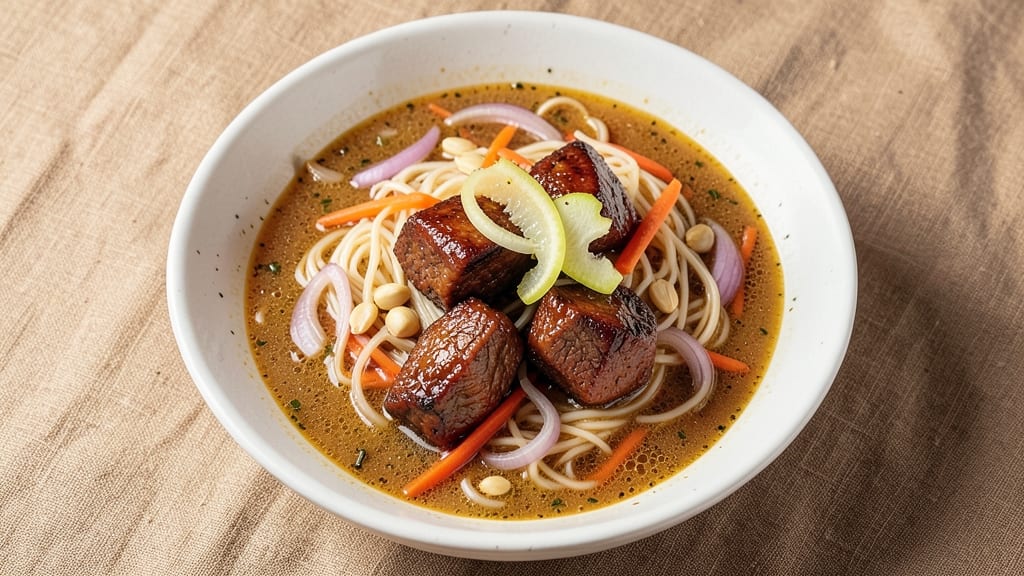
This beef rice noodle soup recipe delivers restaurant-quality comfort in one aromatic bowl. The secret lies in slow-simmered broth that transforms tough beef into fork-tender slices while infusing the noodles with deep umami flavor.
I've perfected this version after years of testing—each element balances perfectly for that first sip that makes you close your eyes and sigh.
The foundation begins with a rich beef broth, built layer by layer through caramelized aromatics and hours of gentle simmering. Thin rice noodles absorb the savory essence, becoming slippery and satisfying with every bite.
What sets this apart is the technique: searing the beef before simmering locks in juices, while fresh herbs at the end brighten the deep, warming flavors. It's the kind of soup that feels like a hug on a chilly day.
Ingredients for beef rice noodle soup
Probably have most of this already—just need to hit the butcher counter.
| Ingredient | Amount | Notes |
|---|---|---|
| Chuck Roast Beef 🥩 | 1 ½ lb | Cut into 1-inch cubes |
| Fresh Rice Noodles 🍜 | 8 oz | Flat or round type, uncooked |
| Yellow Onion 🧅 | 1 whole | Thinly sliced, about 1.5 cups |
| Garlic Cloves 🧄 | 6 cloves | Minced, about 1 tbsp |
| Carrots 🥕 | 2 medium | Fixed to 2 whole, peeled and sliced |
| Fresh Ginger 🌿 | 1 inch | Peeled and sliced thin |
| Beef Broth 💧 | 6 cups | Homemade or high-quality store-bought |
| Soy Sauce 🥢 | 2 tbsp | Light or dark variety |
| Fish Sauce 🍶 | 1 tbsp | For umami depth |
| Brown Sugar 🍯 | 1 tbsp | Lightly packed |
| Vegetable Oil 🫒 | 2 tbsp | For searing beef |
| Fresh Thai Basil 🌿 | ¼ cup | Chopped, stems removed |
| Lime Wedges 🍋 | 2 whole | For serving |
| Salt 🧂 | 1 ½ tsp | Adjust to taste |
| Black Pepper 🌶️ | ½ tsp | Freshly ground |
The beef is non-negotiable for that fork-tender texture. Chuck roast is your best bet—it's budget-friendly and stays juicy when seared first. Grab it pre-cut if your store does it (saves time), or ask the butcher to cube it for you. If you can't find chuck, brisket or flank steak works in a pinch, but slice it thin against the grain. The noodles? Fresh rice noodles from the Asian market section are a must—they're slippery and absorb flavor like crazy. Dry ones? Soak them first, but they won't be quite as good.
No fish sauce? Soy sauce plus a dash of Worcestershire gets you close, though it won't have that exact umami punch. Fresh ginger too pricey? Ground ginger at half the amount works, but you'll lose some brightness. The brown sugar is key for balance—don't skip it, even if you're watching sugar. For the broth, homemade is ideal, but Swanson or Pacific brand are solid shortcuts. And if your carrots are looking sad, frozen chopped carrots (thawed) are a lifesaver—they're prepped and ready to go.
This soup tastes even better the next day—make a double batch if you can. Store leftovers in airtight containers for 4-5 days in the fridge or freeze for 3 months. I like to portion it into individual containers so I can grab one for lunch. The noodles soften when reheated, so add a splash of water or broth when warming. Fresh herbs? Toss them in right before serving—they wilt fast.
Why You'll Love This Recipe
- Slow-Cooker Magic: I swear by this for busy days—just dump the chuck roast, onions, and carrots in the morning, let it simmer all day, and by dinner, you’ve got melt-in-your-mouth beef with zero effort. The rice noodles soak up that rich broth like a dream, and honestly? It’s the kind of meal that makes you feel like you put in way more work than you actually did.
- Umami Bomb: That chuck roast, when braised low and slow, turns into tender, flavor-packed shreds that make every spoonful worth it. The garlic and onions caramelize just enough to add depth, while the carrots add a subtle sweetness—it’s the kind of balance that makes you reach for a second bowl without thinking.
- Leftover Goldmine: This soup actually gets better the next day. The flavors meld even more, and the noodles soften perfectly in the reheated broth. I’ll be real: I’ve had this for lunch three days in a row, and it never feels repetitive—just reliable, comforting, and always satisfying.
- Budget Feast: Chuck roast is cheap, carrots and onions are pantry staples, and a bag of rice noodles stretches across multiple meals. For what tastes like a restaurant-quality dish, it’s shockingly affordable—especially when you consider how much you’ll actually eat. (Yes, even on a Tuesday night.)
Step-by-step instructions for beef rice noodle soup
This soup delivers rich, aromatic broth and melt-in-your-mouth beef every time.
Sear the Beef for Deep Flavor
Heat the 2 tablespoons vegetable oil in a large pot over medium-high heat until shimmering. Add the 1.5 lb chuck roast beef cut into 1-inch cubes, working in batches if needed to avoid crowding. Sear for 3-4 minutes per side until deeply browned and caramelized—this builds the foundation for your broth's depth.
Don't rush this step. The beef should develop a rich crust before you move it to a plate. Once all pieces are browned, remove them and set aside. You'll notice the pot will have beautiful browned bits stuck to the bottom—this is pure flavor you don't want to miss.
Build the Aromatic Base
In the same pot, add the 1 whole yellow onion (thinly sliced) and cook for 3 minutes until softened. Add the 6 cloves garlic cloves (minced), 2 medium carrots (peeled and sliced), and 1 inch fresh ginger (peeled and sliced thin). Stir for 1 minute until fragrant—this releases their essential oils that will infuse your broth.
Pour in the 6 cups beef broth, scraping up all those flavorful browned bits from the bottom. Add the 2 tablespoons soy sauce, 1 tablespoon fish sauce, 1 tablespoon brown sugar, 1.5 teaspoons salt, and 0.5 teaspoon black pepper. Bring to a boil, then reduce heat to medium-low and let it simmer for 1 hour uncovered.
Cook the Beef Until Tender
Return the seared beef to the pot. Partially cover and simmer for 1.5 to 2 hours until the beef is fork-tender. You'll know it's ready when a knife slides in easily and the meat pulls apart cleanly. The broth should now be rich and flavorful, with the beef absorbing all those aromatic flavors.
Here's the thing—don't skip the simmering time. The longer the beef cooks, the more it breaks down into tender, melt-in-your-mouth pieces. If you're short on time, you can use a pressure cooker to cut this time in half, but the flavor will be slightly less developed.
Prepare and Add the Noodles
While the beef is cooking, prepare the 8 oz fresh rice noodles according to package instructions. They cook quickly—usually 3 to 5 minutes in boiling water. Drain and rinse briefly under cold water to stop the cooking process and prevent them from sticking together.
Just before serving, add the cooked noodles to the pot with the beef and broth. Stir gently and simmer for 2 to 3 minutes—just enough to heat through. The noodles should be hot but still hold their bite. If they're too soft, they've overcooked, and the texture will be mushy.
Finish and Serve
Remove from heat and stir in the 0.25 cup fresh Thai basil (chopped). Taste and adjust seasoning if needed—you might want to add a bit more soy sauce or fish sauce for extra umami. Ladle the soup into bowls, garnishing each serving with a lime wedge for that bright, tangy finish.
Serve immediately while the noodles are hot and the broth is steaming. The contrast of the slippery noodles, tender beef, and aromatic broth creates a perfect balance of textures and flavors. Don't forget to squeeze a bit of lime into each bowl—it cuts through the richness and adds a refreshing touch.
Pro Tips For Making Beef Rice Noodle Soup
- SEAR THE BEEF FIRST: Chuck roast doesn’t caramelize like steak, but a quick 3-minute sear in a screaming-hot pan (yes, even with the fat) builds flavor that won’t dissolve into the broth later. I used to skip this, and the soup always tasted like it needed more seasoning—turns out, it was just missing that initial punch.
- SOAK NOODLES IN ICE WATER: Fresh rice noodles cook in seconds, but they also turn to mush if you’re not careful. Soak them in ice water for 10 minutes before adding to the soup—this firms them up and stops them from disintegrating when they hit the hot broth. (Pro move: reserve some of that starchy water to thicken the soup later.)
- SIMMER LOW AND COVERED: The broth needs time—at least 1.5 hours—to pull flavor from the beef, but don’t let it boil. Keep it at a bare simmer with the lid slightly ajar (or a weight on it) so the carrots and onions cook down without turning to mush. I learned this after a batch where the veggies fell apart like wet cardboard.
- SAVE THE BROTH FAT: After skimming off the scum, leave the first layer of fat in the broth—it’s what makes the noodles silky and the beef tender. If you’re worried about grease, skim most of it out, but leave about 1/4 inch. (Yes, even if your diet says otherwise—this soup is worth it.)
Storing and reheating this recipe
Refrigerator Storage
Let your beef rice noodle soup cool to room temperature for no more than 2 hours before storing. Transfer to airtight containers—I prefer glass Pyrex with snap-on lids to maintain freshness.
Store in the fridge at 40°F or below for up to 4-5 days. The flavors actually deepen overnight as the ingredients meld together. 💫
Freezer Storage
For longer storage, freeze portions in quart-sized freezer bags with 1 inch of headspace to prevent expansion cracks. Seal tightly to avoid freezer burn. Label with the date—this soup stays delicious for up to 3 months.
When ready to eat, thaw overnight in the fridge for best texture. I like to freeze broth and beef separately from noodles to avoid sogginess.
Stovetop Reheating
My preferred method is stovetop reheating—it preserves texture beautifully. Place soup in a pot over medium-low heat and add ¼ cup water or beef broth to prevent drying. Simmer for 10-15 minutes, stirring occasionally.
The noodles should soften slightly but remain tender. Taste and adjust seasoning—soup often needs a pinch more salt or fish sauce after reheating. 🔥
Microwave Reheating
For quick meals, microwave individual portions covered with a damp paper towel on 70% power for 2-3 minutes. Stir halfway through to distribute heat evenly. Add 1-2 tablespoons water if the soup looks dry.
Fresh herbs should be added after reheating to preserve their brightness. This method works best for single servings.
Noodle Texture Tips
Noodles tend to soften when reheated, so avoid overcooking. If they become too mushy, drain some broth and add 1-2 minutes of fresh boiling water before serving. For extra freshness, prepare noodles fresh and add them only when reheating—this keeps them al dente.
I often save a small portion of fresh noodles to mix in at the end for that perfect bite. ✨
Broth Boosting
If your reheated soup tastes flat, revive it by adding 1 teaspoon fish sauce or ½ teaspoon soy sauce per serving. A splash of lime juice brightens flavors, and a handful of fresh Thai basil adds aromatic freshness.
For extra richness, stir in 1 tablespoon butter or 1 teaspoon sesame oil before serving. These tricks make reheated soup taste almost as good as fresh! 💛
Nutrition facts
Frequently asked questions
Can I use dried rice noodles instead of fresh?
Yes, but texture will differ slightly. Soak dried rice noodles in warm water for 10-15 minutes until pliable, then drain. They absorb less flavor than fresh, so simmer them in the broth for 3-4 minutes before serving. For best results, use 1:1 ratio by weight (8 oz dried = 8 oz fresh).
What beef cut works best if I can't find chuck roast?
Brisket or flank steak are excellent substitutes. For brisket, cut into ½-inch slices and sear briefly (2 minutes per side) since it's leaner. Flank steak should be sliced thin against the grain after cooking. Both benefit from longer simmering (2.5 hours) to reach tenderness.
How do I make this soup spicier?
Add ½ teaspoon red pepper flakes to the broth during simmering, or stir in 1-2 teaspoons sambal oelek when serving. For heat lovers, include 1-2 slices fresh chili (like Thai bird's eye) when searing the beef. Always taste first—spice builds as the soup cooks!
Why did my beef turn out tough instead of tender?
Most likely it didn't simmer long enough. Beef needs 1.5-2 hours of gentle simmering to break down. If using a pressure cooker, cook on high pressure for 60 minutes. Also check your heat level—medium-low is crucial. The pot should barely bubble, not boil vigorously.
Can I make this soup in an Instant Pot?
Sear the beef as directed, then add all broth ingredients and cook on high pressure for 45 minutes. Quick-release the pressure, then add noodles and cook for 5 minutes on sauté mode. The Instant Pot version cooks 70% faster while keeping flavors rich. Just be sure to add fresh herbs after cooking.