
Soups & Stews
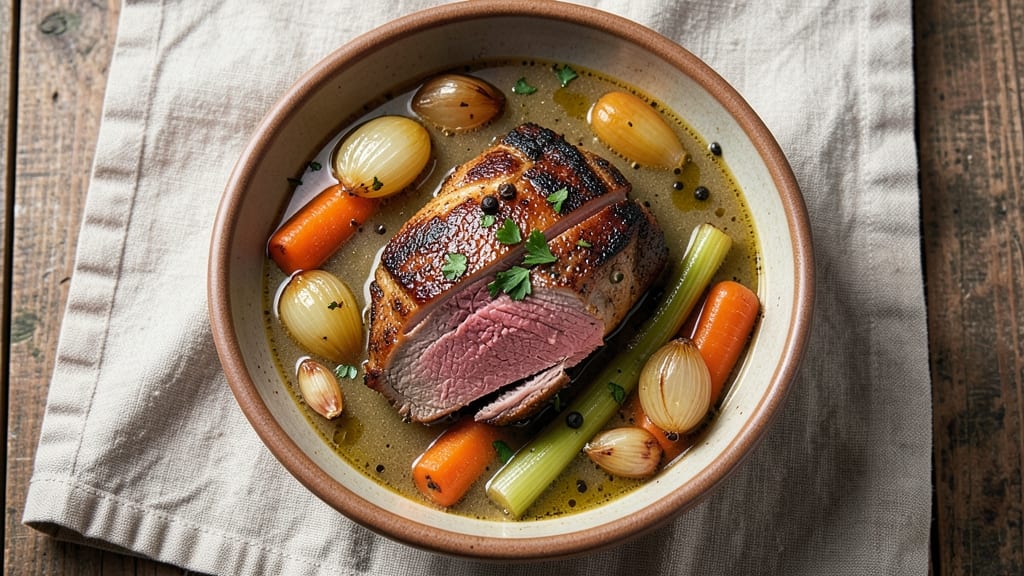
This beef pot roast soup recipe transforms tough cuts into melt-in-your-mouth tenderness through slow braising, creating a deeply flavorful broth that simmers with caramelized onions and aromatic vegetables.
The secret lies in patience—letting the beef break down over hours while building layers of rich, savory depth that turn simple ingredients into a hearty, comforting meal.
What starts as a humble pot of broth and vegetables becomes a restaurant-quality soup with just the right balance of meaty satisfaction and velvety texture.
Perfect for chilly evenings or meal prep, this recipe delivers restaurant-quality results with minimal effort after the initial cooking time. The caramelized onions form a sweet, sticky base that enhances every spoonful, while herbs and spices infuse the broth with warmth and complexity.
Unlike quick soups, this method ensures tender beef that practically falls apart, making it ideal for feeding a crowd or storing for leftovers that taste even better the next day.
What you’ll achieve is a deeply satisfying soup with perfectly tender beef chunks swimming in a rich, aromatic broth. The caramelized onions add sweetness that cuts through the meaty richness, while herbs and vegetables contribute freshness and texture.
This is the kind of soup that warms both body and soul, proving that slow cooking transforms simple ingredients into something extraordinary.
Pair with crusty bread for dipping or a sprinkle of fresh parsley for brightness. The beauty of this recipe lies in its versatility—use store-bought broth for convenience or homemade for deeper flavor, and adjust seasonings to your taste. Here’s how to make it happen.
Ingredients for beef pot roast soup
Slow-braised beef and caramelized aromatics create a restaurant-quality soup that transforms simple ingredients into rich, velvety comfort.
| Ingredient | Amount | Notes |
|---|---|---|
| Chuck Roast 🥩 | 2 ½ lb | Well-marbled, cut into 1.5-inch cubes |
| Yellow Onions 🧅 | 3 whole | Thinly sliced for caramelization |
| Carrots 🥕 | 4 whole | Medium size, peeled and cut into chunks |
| Celery Stalks 🌿 | 4 whole | Trimmed, cut into 1-inch pieces |
| Garlic Cloves 🧄 | 6 cloves | Peeled, smashed for aromatic depth |
| Beef Broth 💧 | 6 cups | Homemade or high-quality store-bought |
| Tomato Paste 🍅 | 2 tbsp | For umami richness |
| Red Wine 🍷 | 1 cup | Bold dry variety like Cabernet Sauvignon |
| Fresh Thyme 🌿 | 2 tbsp | Leaves only, stems removed |
| Fresh Rosemary 🌿 | 1 tbsp | Chopped, for herbal depth |
| Bay Leaves 🍃 | 2 whole | For subtle aromatic complexity |
| Salt 🧂 | 2 tsp | Diamond Crystal preferred |
| Black Peppercorns 🌶️ | 1 tsp | Freshly cracked for brightness |
| Olive Oil 🫒 | 2 tbsp | Extra-virgin for initial searing |
| All-Purpose Flour 🌾 | 1 tbsp | For thickening the broth |
The chuck roast is non-negotiable here—its marbling ensures tender, flavorful meat after slow braising. Costco or Whole Foods carry excellent pre-cut chuck roasts, but if buying whole, ask the butcher to cube it into 1.5-inch pieces for even cooking. The onions, carrots, and celery form the aromatic trinity—yellow onions with their sweetness balance the beef's richness, while the celery adds earthy depth. For the best flavor, use fresh herbs: Trader Joe's or local farmers markets often have superior quality compared to grocery store plastic containers.
No red wine? Beef broth with 2 tbsp balsamic vinegar delivers similar depth, though the acidity will be slightly different. Substituting dried thyme for fresh? Use one-third the amount—Penzeys or McCormick organic blends work well. The tomato paste can be replaced with 1 cup crushed tomatoes if you prefer a smoother texture, but the paste concentrates umami more efficiently. For the broth, homemade is ideal, but Pacific Foods or Kettle & Fire brands offer excellent store-bought options with rich, meaty flavor. The flour for thickening should be tossed with a pinch of salt before adding to prevent clumping.
This soup tastes even better the next day as flavors meld, so plan ahead. Store in an airtight container in the fridge for up to 5 days or freeze portions for 3 months. For reheating, simmer gently on the stove—never microwave, as it can make the broth watery. The beef will continue to tenderize overnight, so if you're short on time, cook it an extra 30 minutes to ensure maximum tenderness. Garnish with fresh parsley just before serving to brighten the dish.
Why You'll Love This Recipe
- Five-Ingredient Start: I swear, the only prep is slicing the onions and chopping the carrots—no fancy techniques, just a knife and a cutting board. The celery and garlic? Toss them in whole if you’re lazy (I often do).
- Rich Without Effort: That chuck roast turns shockingly tender with just a slow simmer, and the onions caramelize right in the pot—no separate pan needed. Honestly, the aroma alone makes my kitchen smell like a cozy restaurant.
- Leftover Goldmine: This soup only gets better the next day, and it reheats like a dream. Freeze half for when you’re too tired to cook, or pack it for work—it’s the kind of meal that tastes like you put in hours (but you didn’t).
- Budget Beef Boost: A big cut of chuck roast stretches into so many servings, and the veggies? They’re the cheap, crunchy kind you can grab in bulk. Between us, this is how I feed my family for under $10.
Step-by-step instructions for beef pot roast soup
Here's the method for developing deep, caramelized flavors and tender beef through precise timing and technique.
Sear the Chuck Roast for Maximum Flavor
Heat a heavy Dutch oven over medium-high heat until it's very hot. Add 2 tablespoons olive oil and swirl to coat the bottom evenly. Pat the 2.5 lb chuck roast completely dry with paper towels—this ensures a proper sear. Working in batches if needed, add the beef to the pot and sear for 3-4 minutes per side until deeply browned with a crust forming.
This initial searing creates the Maillard reaction, which builds complex flavors that will infuse into your soup. Don't rush this step—you'll know it's ready when the beef releases easily from the bottom of the pot. Transfer the seared roast to a plate and set aside temporarily.
Build Layers of Caramelized Vegetables
In the same Dutch oven, reduce heat to medium and add 3 whole yellow onions that have been thinly sliced. Cook for 10-12 minutes, stirring occasionally, until the onions become golden brown and sweet. This caramelization process develops rich, complex flavors that form the soup's foundation.
Add 4 whole carrots cut into chunks and 4 whole celery stalks cut into 1-inch pieces. Cook for another 5 minutes, stirring occasionally, until the vegetables begin to soften slightly. The vegetables should maintain some texture—this ensures they hold their shape while adding body to the soup.
Develop the Flavor Base with Aromatics
Add 6 cloves garlic that have been peeled and smashed, 2 tablespoons tomato paste, and 1 cup red wine. Stir well to combine and cook for 2 minutes until the alcohol smell dissipates. The tomato paste will deepen the umami profile while the wine adds acidity and complexity.
Sprinkle in the 1 tablespoon all-purpose flour and stir for 30 seconds to coat the vegetables and meat juices. This creates a light roux that will help thicken the broth slightly. Pour in 6 cups beef broth and scrape up any browned bits from the bottom of the pot—these contain concentrated flavors that will enrich your soup.
Simmer the Pot Roast Until Tender
Return the seared chuck roast to the Dutch oven. Add 2 whole bay leaves, 2 tablespoons fresh thyme, 1 tablespoon fresh rosemary, 2 teaspoons salt, and 1 teaspoon black peppercorns. Bring the liquid to a gentle simmer, then reduce heat to low to maintain a bare simmer.
Cover the pot and let the soup cook for 2-2.5 hours until the beef is fork-tender and easily pulls apart. The vegetables should be soft but still hold their shape. This slow cooking process breaks down the connective tissue in the beef, creating a rich, velvety texture. Check occasionally to ensure the liquid level hasn't reduced too much—add water if needed to maintain the proper consistency.
Finish and Adjust the Soup
Once the beef is tender, remove it from the pot and transfer to a cutting board. Using two forks, shred the beef into bite-sized pieces. Return the shredded beef to the soup pot and discard the bay leaves. Taste the soup and adjust the seasoning if needed—add more salt or pepper as necessary to achieve the perfect balance.
Simmer uncovered for an additional 10 minutes to allow the flavors to meld together. The soup should have a rich, velvety consistency with well-developed flavors from the caramelized vegetables and slow-cooked beef. Serve immediately with crusty bread to soak up every last drop of this comforting, hearty soup.
Pro Tips For Making Beef Pot Roast Soup
- SEAR THE ROAST FIRST: Chuck roast needs that crust to lock in flavor, so don’t skip the sear—even if you’re in a hurry. Hit it with oil in a hot pot until deep brown all over (about 3-4 minutes per side), then remove it. That’s the thing that makes your soup taste homemade, not canned.
- CUT ONIONS SMALLER THAN YOU THINK: I used to chop onions into big chunks for soup, thinking they’d soften enough. Wrong—they just sit there like rubber. Dice those yellow onions into 1/4-inch pieces so they melt into the broth completely by the end. No one wants onion chunks in their pot roast soup.
- DON’T CROWD THE POT: If you dump everything in at once, your carrots and celery will steam instead of caramelize. Start with onions, garlic, and celery in one layer, cook until softened, then add carrots and the roast. This way, the veggies actually develop flavor instead of turning mushy.
- USE COLD WATER FOR STARTER: Sounds weird, but it works: Start with cold water in the pot, even if the recipe says otherwise. The chuck roast will render fat and sear properly without the water boiling over immediately. Once it’s hot, add more water or broth to your desired level—no splatter, no mess.
Creative variations of beef pot roast soup
Classic French Style
Transform this soup into a bœuf bourguignon-inspired version by adding 8 oz mushrooms (cremini or button) sautéed with the onions, and 1 cup pearl onions (peeled) to the pot.
Deglaze with 1½ cups dry red wine instead of 1 cup, and finish with 1 tbsp Dijon mustard for tangy depth. Serve with crusty baguette slices for dipping. 🍷
Spicy Cajun Twist
For a Louisiana-inspired kick, swap the thyme and rosemary for 1 tbsp Cajun seasoning (like Tony Chachere's) and add ½ tsp smoked paprika. Stir in 1 jalapeño, seeded and diced, during the final 10 minutes of simmering.
Garnish with green onions and a squeeze of lemon for brightness. 🌶️
Creamy Mushroom Upgrade
Take your soup to the next level with a mushroom-cream variation. After shredding the beef, stir in 1 cup sliced mushrooms sautéed in 1 tbsp butter, then mix in ½ cup heavy cream during the final 5 minutes of simmering.
Top with fresh parsley and a sprinkle of grated Parmesan for a luxurious finish. 🍄
Asian-Inspired Ginger-Garlic
Infuse this soup with East Asian flavors by adding 2 tbsp grated ginger and 3 minced garlic cloves with the tomato paste. Replace the red wine with 1 cup coconut milk and add 1 tbsp soy sauce and 1 tsp sesame oil at the end.
Garnish with cilantro and a drizzle of chili oil for heat. ✨
Vegetarian Adaptation
Make this a hearty vegetarian version by replacing the beef with 2.5 lb extra-firm tofu (pressed and cubed) or portobello mushrooms (sliced). Use vegetable broth and add 1 tbsp miso paste for umami. Boost texture with 1 cup lentils cooked separately. The caramelized onions and herbs still shine! 🌱
Slow Cooker Shortcut
For a hands-off version, sear the beef in a skillet first, then transfer everything to a 6-quart slow cooker. Cook on low for 8 hours or high for 5 hours, then shred the beef and finish with the flour slurry.
This method delivers the same tender results with minimal effort. Perfect for busy weeknights! ⏰
Nutrition facts
Frequently asked questions
Why does this recipe use chuck roast instead of a more expensive cut?
Chuck roast is perfect for slow-cooked soups because its marbling and connective tissue break down beautifully over time, creating tender, flavorful meat. Unlike leaner cuts, it stays moist while developing rich depth of flavor—exactly what you want in a hearty soup. The slow braising process transforms tough muscle fibers into melt-in-your-mouth texture.
Can I make this soup in a regular pot instead of a Dutch oven?
Yes, but a Dutch oven is ideal because its heavy base distributes heat evenly and prevents burning during the long cooking time. If using a regular pot, reduce heat slightly and stir more frequently to prevent sticking. The key is maintaining a gentle simmer—never a rolling boil—to keep the beef tender.
How do I know when the beef is tender enough?
The beef should be fork-tender after 2-2.5 hours of simmering. Test by piercing a piece with a fork—it should shred easily with minimal resistance. If it feels slightly chewy, cook another 30 minutes. The longer it cooks, the more flavorful the broth becomes, but avoid overcooking or the meat may turn mushy.
What can I do if my soup is too thin after cooking?
Stir in a slurry of 1 tablespoon flour mixed with 2 tablespoons cold water and simmer for 5-10 minutes until thickened. For a creamier texture, whisk in ½ cup heavy cream or ½ cup Greek yogurt at the end. The caramelized onions and vegetables already add body, so a slightly thicker consistency still works well.
Can I make this soup ahead of time for meal prep?
This soup actually tastes better the next day as flavors meld. Store in an airtight container in the fridge for up to 5 days or freeze portions for 3 months. Reheat gently on the stove—never microwave—to preserve texture. The beef continues tenderizing overnight, making leftovers even more comforting.