
Soups & Stews
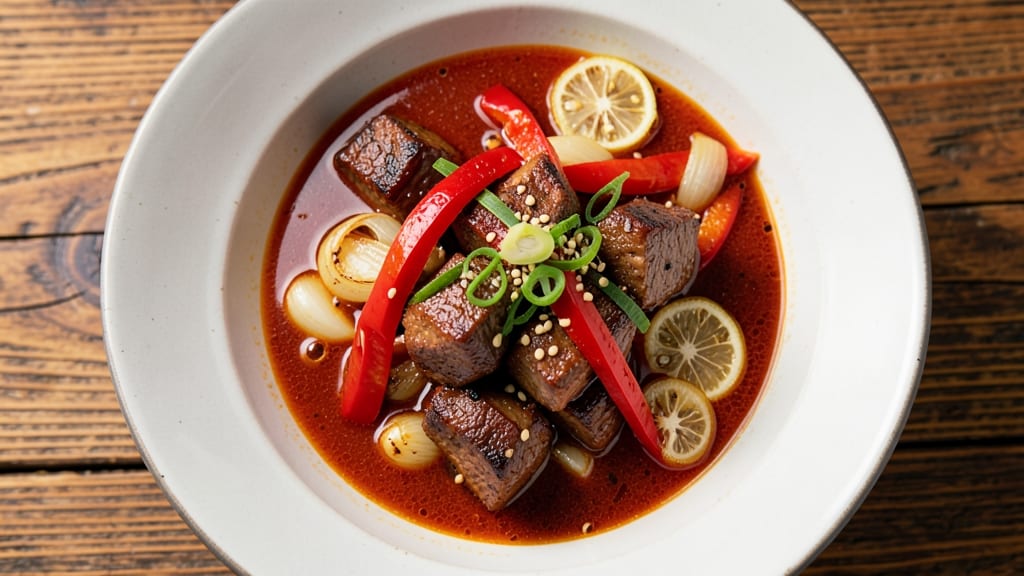
This beef pepper soup recipe delivers the bold, spicy-sweet flavors of Korean comfort food without the restaurant price tag. The secret lies in slow-cooked beef that practically melts in your mouth, paired with a deep, aromatic broth infused with red peppers and fragrant spices.
I've perfected this version over years of testing—each ingredient plays a crucial role in balancing heat, sweetness, and umami for that signature depth.
The process is simpler than it sounds: tender beef simmers until fork-tender while peppers caramelize in the broth, creating layers of flavor that build with every sip. No pressure cooker required—just a Dutch oven and patience.
The result? A steaming pot of soup that's rich enough to satisfy but light enough for weeknight dinners, with optional garnishes to customize your bowl.
What makes this recipe truly special is how it transforms simple ingredients into something restaurant-worthy. The beef becomes melt-in-your-mouth tender, the peppers add just the right amount of heat, and the broth reduces to a perfect consistency—neither too thin nor too thick.
It's the kind of soup that disappears quickly, leaving everyone asking for seconds.
Perfect for chilly evenings or when you crave something hearty yet comforting, this beef pepper soup is versatile enough to adapt with your favorite toppings. Let's get cooking—your taste buds will thank you.
Ingredients for beef pepper soup
Bold flavors start with these 15 ingredients—simple but powerful for restaurant-quality soup.
| Ingredient | Amount | Notes |
|---|---|---|
| Chuck Roast 🥩 | 1 ½ lb | Cut into 1-inch cubes |
| Red Bell Peppers 🌶️ | 3 whole | Cut into thick strips |
| Yellow Onion 🧅 | 1 whole | Sliced into half-moons |
| Garlic Cloves 🧄 | 6 cloves | Minced finely |
| Fresh Ginger 🌿 | 1 ½ oz | Peeled and grated |
| Gochujang Paste 🌶️ | ¼ cup | Korean chili paste |
| Soy Sauce 🍶 | ½ cup | Dark or regular |
| Brown Sugar 🍚 | ¼ cup | Light or dark |
| Beef Broth 💧 | 4 cups | Homemade or low-sodium |
| Sesame Oil 🫒 | 1 tbsp | Toasted sesame oil |
| Fresh Green Onions 🧅 | ¼ cup | Sliced for garnish |
| Toasted Sesame Seeds 🌾 | 1 tbsp | For garnish |
| Salt 🧂 | 1 tsp | Kosher or sea salt |
| Black Pepper 🌶️ | ½ tsp | Freshly ground |
| Vegetable Oil 🫒 | 2 tbsp | For searing |
The chuck roast is non-negotiable here—it's the secret to that melt-in-your-mouth texture. Costco or Kroger usually have it pre-cut, but if you're buying a whole roast, look for good marbling. The red bell peppers should be firm and vibrant; Trader Joe's carries great organic ones. Fresh ginger is key too—Asian markets often have it pre-peeled, but grab a knob and grate it yourself for maximum punch. The gochujang paste? Mae Mun or Dae Jang Geum are my go-tos, but any Korean brand works.
No chuck roast? Brisket or short ribs hold up well, though they'll need longer cooking. Swap bell peppers for red jalapeños or serranos if you want more heat. The soy sauce can be swapped for coconut aminos if you're avoiding sodium. Brown sugar substitutes? Honey or maple syrup work in a pinch, though they'll change the depth slightly. The beef broth? Homemade is ideal, but Swanson or Pacific Foods low-sodium cubes are solid. And if you can't find toasted sesame oil, regular sesame oil plus a pinch of sesame seeds mimics the flavor.
This soup tastes even better the next day as flavors meld. Store in the fridge for up to 5 days or freeze for 3 months—portion into containers for easy lunches. The broth reduces as it sits, so you might need to add a splash of water when reheating. For extra richness, stir in a spoonful of butter or coconut milk before serving. Garnishes like green onions and sesame seeds keep well in the fridge for 1 week—just store them separately to keep them fresh.
Why You'll Love This Recipe
- One-Pot Magic: I swear by this recipe—just toss everything into one pot, walk away, and let the chuck roast melt into tender perfection while the peppers caramelize. No chopping boards to clean, no extra pans, and honestly? That’s my kind of cooking.
- Deep Umami Bomb: The combo of ginger, garlic, and slow-cooked chuck roast creates this rich, savory depth that just hits. Add the sweetness of the bell peppers, and it’s like a flavor party in your mouth—no fancy spices needed.
- Meal Prep MVP: Make a big batch on Sunday, and you’ve got lunch or dinner covered for days. The flavors actually get better the next day, and I’ve sent this to work with my husband in a thermos—he always asks for seconds.
- Budget-Friendly Feast: Chuck roast is cheap, but it feels like a restaurant meal. Between us, this soup stretches to feed four for under $15, and the leftovers? Even better reheated than they were fresh. (Yes, even on a Tuesday night.)
Step-by-step instructions for spicy-sweet beef and pepper pot
Here's how to create a deeply comforting Korean-style beef pepper soup that balances heat, sweetness, and rich umami perfectly.
Sear the Chuck Roast for Maximum Flavor
Heat the 2 tablespoons vegetable oil in a large Dutch oven over medium-high heat until shimmering. Pat the 1.5 lb chuck roast dry with paper towels—this ensures a proper sear. Working in batches if needed, add the beef cubes and sear for 3-4 minutes per side until deeply browned and caramelized.
Don't rush this step—the Maillard reaction creates those deep, meaty flavors that form the soup's foundation. Once all pieces are browned, transfer them to a plate and set aside. You'll notice the oil will darken slightly from the beef's rendered fat, which you'll want to keep in the pot.
Build the Aromatic Base
In the same Dutch oven, add the sliced yellow onion and red bell peppers in even layers. Cook for 5-6 minutes, stirring occasionally, until the onions soften and the peppers begin to blister slightly. Add the minced garlic cloves and grated fresh ginger, cooking for another 30 seconds until fragrant.
Here's where the magic starts—the combination of sweet peppers, pungent ginger, and garlic creates a complex flavor profile. If you notice the garlic starts to brown too quickly, reduce heat to medium to prevent burning. The goal is aromatic intensity without bitterness.
Develop the Sauce with Gochujang and Soy
Lower heat to medium-low and stir in the 0.25 cup gochujang paste, 0.5 cup soy sauce, and 0.25 cup brown sugar. Cook for 2-3 minutes, stirring constantly, until the mixture thickens slightly and the raw paste flavor disappears. This step creates the soup's signature spicy-sweet balance.
Taste the mixture now—you should detect heat from the gochujang, sweetness from the brown sugar, and umami from the soy. If it needs more depth, add a splash of beef broth to help emulsify the flavors. The sauce should coat the back of a spoon but still be pourable.
Simmer the Beef Until Tender
Return the seared beef to the pot and pour in the 4 cups beef broth. Bring to a gentle boil, then reduce heat to low and cover partially. Simmer for 1.5-2 hours, stirring occasionally, until the beef is fork-tender and easily pulls apart. The soup should reduce slightly, intensifying the flavors.
This is where patience pays off—low and slow cooking ensures the beef becomes melt-in-your-mouth tender while allowing all the spices and aromatics to meld together. Check the beef's tenderness by piercing a piece with a fork; it should slide in easily with no resistance.
Finish and Garnish for Perfect Presentation
Once the beef is tender, stir in the 1 tablespoon sesame oil and adjust seasoning with the 1 teaspoon salt and 0.5 teaspoon black pepper if needed. Taste and balance the flavors—add more gochujang for heat, brown sugar for sweetness, or soy sauce for umami.
Ladle the soup into bowls and garnish with 0.25 cup sliced fresh green onions and 1 tablespoon toasted sesame seeds. The green onions add freshness to cut through the richness, while the sesame seeds provide a nutty crunch. Serve immediately with steamed rice to soak up every delicious spoonful.
Pro Tips For Making Beef Pepper Soup
- SEAR THE CHUCK ROAST: Chuck roast has a thick layer of fat that needs to render fast—don’t skimp on the heat. Use a heavy pot (Dutch oven works best) and sear the meat over medium-high until the edges are deep golden, about 5-6 minutes per side. I learned this the hard way—rushing it leaves the soup tasting flat, while taking the time builds real flavor.
- CHAR THE ONIONS LOW: Yellow onions caramelize best when cooked slow and steady. After searing the beef, reduce heat to medium-low and let those onions sweat for 10-12 minutes until they’re soft, jammy, and just starting to turn golden. Skipping this step means your soup will taste raw and one-note—your nose will thank you.
- GRATE THE GINGER FINE: Fresh ginger loses its punch when chopped roughly. Use the smallest holes on a box grater (or a microplane) to get a paste-like texture—this ensures it blends smoothly into the soup. I was skeptical until I tried it: the difference between gritty chunks and silky integration is night and day.
- ADD PEPPERS LAST: Red bell peppers soften quickly and turn mushy if simmered too long. Toss them in only during the final 10 minutes of cooking—this keeps them vibrant and slightly crisp. (Yes, even if you’re impatient like me, resist the urge to add them earlier.)
Dietary considerations for this recipe
Gluten-Free Adaptations
This soup is naturally gluten-free if you use gluten-free soy sauce or coconut aminos instead of regular soy sauce. San-J Tamari or Kikkoman Gluten-Free Soy Sauce work perfectly.
Double-check your beef broth label—many store-bought versions contain wheat or barley. For extra safety, use a dedicated gluten-free beef broth like Pacific Foods Gluten-Free Beef Broth. 💯
Low-Sodium Options
To reduce sodium, swap regular soy sauce for low-sodium soy sauce or coconut aminos, which contain about 70% less sodium. Use homemade beef broth instead of store-bought to control salt levels.
If you must use canned broth, opt for low-sodium brands like Swanson Low-Sodium Beef Broth. Taste frequently while simmering to adjust seasoning gradually.
Dairy-Free Considerations
This recipe is already dairy-free, but if you're adding toppings, avoid butter garnishes. Instead, stir in coconut milk at the end for creaminess. For extra richness, use toasted coconut flakes instead of sesame seeds.
The soup's natural umami from the beef and gochujang means no dairy substitutes are needed—just enjoy it as-is for a clean, flavorful bowl. ✨
Vegetarian Swaps
For a vegetarian version, replace the beef with extra-firm tofu or mushrooms like king oyster or portobello. Press and cube the tofu, then marinate in 1 tbsp soy sauce + 1 tbsp sesame oil for 30 minutes before searing.
Mushrooms add a meaty texture—sauté 8 oz sliced mushrooms until golden before adding broth. The gochujang and sweetness will still shine through beautifully. 🌱
Spice Level Control
Adjust heat by reducing or increasing the gochujang. For mild heat, use 1-2 tbsp instead of ¼ cup. For extra spice, add 1 tbsp gochugaru (Korean red pepper flakes) at the end.
If you love heat but want depth, blend 1 tbsp gochujang with 1 tbsp water to thin it before adding. Always taste before serving—you can always add more, but you can't take it out! 🌶️
Protein Alternatives
Need a different protein? Swap chuck roast for pork shoulder (cook time remains similar) or chicken thighs (reduce simmering to 45 minutes). For seafood lovers, use firm white fish like cod or halibut, adding it only in the last 10 minutes of cooking to prevent overcooking.
The broth's flavors will adapt beautifully to any protein—just adjust cooking times accordingly. 🐟
Nutrition facts
Frequently asked questions
Can I use ground beef instead of chuck roast?
Ground beef works, but the texture will be different—it won't achieve the same melt-in-your-mouth tenderness. For a similar result, use ground chuck and simmer for 20-25 minutes instead of 2 hours. The flavor will be rich, but the beef won't break apart as beautifully. For best results, stick with chuck roast or brisket.
How do I make this soup less spicy?
Reduce the gochujang to 1-2 tablespoons instead of ¼ cup, or swap it for 1 tablespoon sweet paprika for mild heat. For extra mildness, add 1 tablespoon honey or sugar to balance any remaining spice. Taste as you go—you can always add more sweetness, but you can't remove heat once it's in!
Can I prepare this soup in a slow cooker?
Brown the beef and veggies as directed, then transfer everything to a 6-quart slow cooker. Add the broth and simmer on low for 6-8 hours or high for 3-4 hours. The slow cooker's gentle heat ensures tender beef without drying out the broth. Stir occasionally and adjust seasoning at the end.
What are the best toppings to add?
Classic toppings include steamed rice, sliced green onions, toasted sesame seeds, or crispy fried shallots. For extra richness, try soft-boiled eggs or kimchi. If you love crunch, add crushed peanuts or toasted coconut flakes. Fresh herbs like cilantro or Thai basil also brighten the flavors beautifully.
Why does my soup taste too salty?
Store-bought broth and soy sauce often contain hidden sodium. To fix it, dilute the soup with ½ cup water or low-sodium broth and simmer for 10 minutes to balance flavors. For future batches, use homemade broth or low-sodium soy sauce. Taste as you go—adding a splash of water or broth at the end can also help.