
Soups & Stews
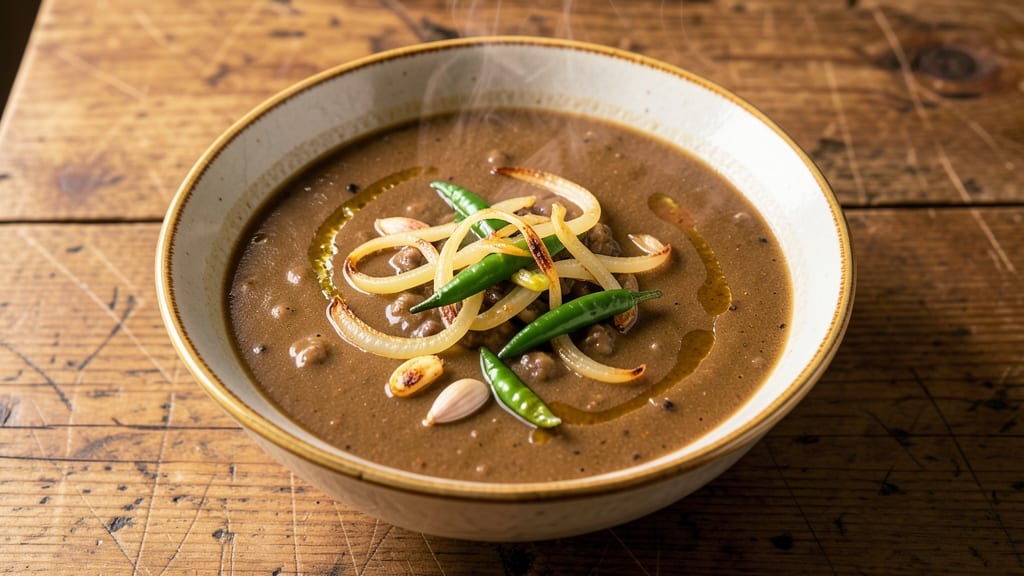
This black gram soup recipe delivers the soul-soothing warmth of South Indian home cooking in every steaming bowl. The earthy, nutty flavor of black gram—also called urad dal—combines with aromatic spices to create a vegan, protein-rich dish that’s as nourishing as it is comforting.
I’ve perfected this one-pot recipe to balance traditional tempering techniques with modern convenience, so you get restaurant-quality depth without hours in the kitchen.
The secret lies in the tempering: toasted mustard seeds, curry leaves, and asafoetida sizzle in ghee (or oil) to release their signature flavors, while ginger and green chilies add a subtle kick.
Unlike instant versions, this soup builds flavor gradually as the black gram simmers into a velvety, slightly thick consistency—no blending required. The result is a soup that’s hearty enough for a main dish but light enough for any meal.
What makes this recipe special is its versatility. Serve it as-is for a classic South Indian experience, or customize with vegetables like spinach, drumsticks, or potatoes for added texture. The aroma alone—spiced, earthy, and slightly sweet—will transport you to a bustling Indian street food stall.
Ready in about 45 minutes, this soup is the ultimate weeknight solution for cozy, wholesome eating.
Perfect for monsoon season or chilly evenings, this black gram soup pairs beautifully with steamed rice, roti, or even as a base for dosas. The best part? It tastes even better the next day as flavors meld further. Let’s get cooking—your taste buds (and body) will thank you.
Ingredients for black gram soup
Earthy urad dal, aromatic spices, and velvety coconut oil—this one-pot wonder delivers restaurant-quality South Indian comfort.
| Ingredient | Amount | Notes |
|---|---|---|
| Black Gram (Urad Dal) 🌾 | 1 cup | Split, rinsed thoroughly |
| Extra-Virgin Coconut Oil 🫒 | ½ cup | Or vegetable oil for neutral taste |
| Yellow Onion 🧅 | 1 whole | Finely chopped, medium size |
| Fresh Ginger 🌿 | 2 tbsp | Grated, aromatic variety preferred |
| Green Chilies 🌶️ | 2 whole | Slit lengthwise, adjust for heat |
| Garlic Cloves 🧄 | 6 cloves | Minced, fresh preferred |
| Mustard Seeds 🌱 | 1 tbsp | Whole, light brown preferred |
| Curry Leaves 🌿 | ¼ cup | Fresh, dried as last resort |
| Asafoetida (Hing) 🌶️ | ¼ tsp | Pinch for authentic aroma |
| Ground Turmeric 🌿 | ½ tsp | Freshly ground if possible |
| Ground Cumin 🌿 | ½ tsp | Toasted for deeper flavor |
| Ground Coriander 🌿 | ½ tsp | Freshly ground preferred |
| Salt 🧂 | 1 tsp | Adjust to taste, plus more |
| Water 💧 | 4 cups | Filtered preferred for purity |
| Fresh Spinach 🌱 | 1 cup | Optional, chopped for texture |
The urad dal is the heart of this soup—look for split black gram at Indian specialty stores or bulk bins for the best texture. Costco or local Indian markets usually carry it in bulk, which saves money and ensures freshness. Fresh ginger and curry leaves make all the difference: buy organic ginger if possible, and curry leaves should be bright green with no wilting. The mustard seeds and asafoetida are non-negotiable for that authentic street food aroma—Penzeys Spices carries excellent asafoetida if your local store doesn't stock it. Toast your whole spices lightly before adding to release their oils—trust me, it's worth the extra minute.
No fresh curry leaves? Dried leaves at half the amount work in a pinch, but the flavor won't be the same. Short on spinach? Baby kale or chopped collard greens keep the same earthy vibe. The green chilies can be swapped for red pepper flakes at one-third the amount if you prefer milder heat. For extra richness, add a splash of coconut milk at the end—it balances the earthiness beautifully. If you're using store-bought urad dal, rinse it twice to remove any dust or impurities before cooking. The coconut oil adds incredible depth, but vegetable oil works just fine if you're avoiding coconut flavor.
This soup tastes even better the next day as flavors meld further—store leftovers in airtight containers for up to 5 days. For freezing, portion into ice cube trays and transfer to bags for easy single-serving portions. The dal thickens as it cools, so add a splash of water when reheating. Garnish with fresh cilantro and a drizzle of coconut oil before serving—it's that simple. The aroma alone will have your whole house smelling like a South Indian street stall, and the leftovers make perfect lunches for the week.
Why You'll Love This Recipe
- No-Fuss Simmer: I swear by this recipe because it’s the kind of dish that forgives you. Soak the black gram overnight (or even just 4 hours if you’re in a rush), toss it in a pot with coconut oil, and let it bubble while you chop an onion—no fancy techniques, just patience. The soup thickens itself, and honestly? That’s half the magic.
- Earthy, Nutty Magic: That first spoonful of black gram soup? It’s where warm, toasty urad dal meets bright ginger and a whisper of coconut oil—like a hug in a bowl. The green chilies add just enough kick to wake it up, but the real star is how the flavors deepen the longer it simmers. Not too heavy, not too light—just right.
- Lunchbox Hero: Between us, this soup is my go-to for meal prep. It reheats beautifully, keeps for days in the fridge, and turns into a hearty lunch when paired with rice or roti. My kids actually ask for it—yes, even on a Tuesday—and it’s the kind of dish that tastes just as good cold as it does hot.
- Pocketbook Wins: A cup of black gram and a handful of pantry staples? That’s it. No specialty ingredients, no markup—just pure, satisfying flavor without breaking the bank. I’ve made this for potlucks, sick days, and lazy Sundays, and it’s always the dish everyone reaches for second. Budget-friendly doesn’t have to mean boring.
Step-by-step instructions for South Indian spice-infused comfort in one pot
This aromatic black gram soup transforms simple ingredients into a velvety, spice-kissed masterpiece.
Prepare the Black Gram Base
In a heavy-bottomed pot, combine the 1 cup of split black gram (urad dal) and 4 cups of water. Bring to a rolling boil over medium-high heat, then immediately reduce to medium-low heat. Let it simmer uncovered for 20-25 minutes, stirring occasionally, until the dal softens and the water reduces by half.
Here's the thing—don't rush this step. You'll know it's ready when the dal breaks down into a creamy, thick consistency with no hard granules. The longer it simmers, the deeper the nutty flavor develops. If it looks too dry, add ½ cup of water and continue cooking until you reach that perfect velvety texture.
Temper the Spices for Maximum Flavor
Heat ½ cup of extra-virgin coconut oil in a separate small pan over low heat. Add the 1 tablespoon of mustard seeds and let them splutter for 30 seconds until they release their signature aroma. Then add the ½ cup of curry leaves and 2 whole slit green chilies, cooking for 1 minute until the leaves darken slightly and the chilies turn vibrant.
Now add the 6 minced garlic cloves and 2 tablespoons of grated ginger, cooking for another 1 minute until the raw garlic smell disappears and the mixture becomes fragrant. Finally, stir in the ½ teaspoon each of ground turmeric, cumin, and coriander, and the ¼ teaspoon of asafoetida (hing). This aromatic blend is the soul of your soup—don't skip any ingredients.
Build the Soup's Complex Flavor Profile
Add the finely chopped yellow onion to the tempered spices and cook for 3-4 minutes until softened and golden. Pour this entire spice mixture into the simmering dal pot and stir well. Add the 1 teaspoon of salt and let the soup simmer together for 10 minutes, allowing all flavors to meld beautifully.
This is where the magic happens. The coconut oil carries the spices into the dal, creating a symphony of flavors. Taste and adjust the salt if needed—South Indian soups should balance earthy dal with bright, aromatic spices. The soup should now have a rich, golden hue and a tantalizing aroma that fills your kitchen.
Finish with Fresh Spinach for Vibrancy
Stir in the 1 cup of chopped fresh spinach and cook for 2-3 minutes until just wilted. The spinach adds a vibrant green color and a fresh contrast to the rich dal. Remove from heat and let the soup rest for 5 minutes—this allows the flavors to settle and the texture to become even creamier.
For an extra touch of authenticity, you can garnish with a drizzle of coconut oil and a sprinkle of curry leaves before serving. This soup tastes even better the next day as the flavors deepen, but it's so comforting fresh that you might not want to wait. Serve warm with crusty bread or steamed rice to soak up every last drop of that spice-infused dal goodness.
Pro Tips For Making Black Gram Soup
- SOAK THE DAL LONGER: Black gram needs at least 6 hours—or overnight if you’re not in a rush—because it’s denser than other dals. I learned this the hard way when my soup turned into a gluey mess; the longer it soaks, the creamier and easier to blend it becomes.
- TOAST THE DAL FIRST: Heat the black gram in coconut oil on medium-low for 3-4 minutes until it smells nutty and darkens slightly. This step cuts bitterness and prevents the soup from tasting raw. (Yes, even if you’re impatient like me.)
- BLITZ THE ONIONS: Finely mince the yellow onion—think rice grain size—and cook it in coconut oil until it’s translucent but not brown. Overcooking turns it sweet and mushy, which throws off the soup’s balance. Keep the heat steady and stir often.
- SALT LATE: Add salt only after the soup has simmered for 10 minutes. Black gram releases starch early, and salting too soon makes it split and turn grainy. Trust me, the flavor will be smoother if you wait.
Essential equipment for this recipe
Heavy-Bottomed Pot
This is my non-negotiable piece of equipment for black gram soup. A 3-4 quart heavy-bottomed pot (I use All-Clad Stainless Steel) distributes heat evenly, preventing scorching while letting the dal simmer gently.
The thick base also handles the 20-25 minute simmer without hot spots that can burn your spices. Look for tri-ply construction if budget allows—it's worth every penny for professional results. 🔥
Fine-Mesh Strainer
Rinsing your split black gram (urad dal) thoroughly is crucial, and a fine-mesh strainer (like OXO Good Grips) makes this step effortless. The small holes remove all impurities while preserving the dal's delicate texture. I rinse mine twice under cold water before cooking to ensure no dust remains.
For bulk purchases, a large colander works too, but the fine strainer catches those stubborn particles that would otherwise muddy your soup's clarity.
Small Tempering Pan
A small stainless steel pan (about 8-inch diameter) is perfect for tempering your spices separately. This technique creates those signature spluttering mustard seeds and aromatic curry leaves without overcooking them. I use a Calphalon nonstick pan for easy cleanup, but any well-seasoned pan works.
The key is to keep heat low to medium—too high and your garlic burns before releasing its sweetness. 🌿
Wooden Spoon
Never use metal utensils when tempering spices—they can cause the oil to splatter dangerously. A heat-resistant wooden spoon (I prefer ambrosia applewood) gently stirs the spices without breaking their delicate textures.
The same spoon works beautifully for stirring the dal as it simmers, preventing any scorching at the pot's edges. For extra durability, choose one with a long handle that fits comfortably in your pot.
Spice Grinder
Freshly ground spices make all the difference in this soup. A small spice grinder (like KitchenAid BCG1111OB) lets you grind cumin, coriander, and turmeric just before cooking for maximum flavor. Pre-ground spices lose potency quickly, but freshly ground ones release their essential oils during the tempering process.
If you don't have a grinder, toast whole spices in a dry pan for 30 seconds before grinding—this enhances their aroma significantly. 💫
Measuring Spoons Set
Precision matters with spices in South Indian cooking. A set of stainless steel measuring spoons (I use OXO Good Grips) ensures you get the exact ½ teaspoon turmeric or ¼ teaspoon asafoetida called for. The tiny measurements might seem insignificant, but they balance the soup's complex flavors perfectly.
For asafoetida specifically, a pinch (about ⅛ teaspoon) is often enough—it's potent stuff! Store your spices in airtight containers to preserve their freshness between uses.
Nutrition facts
Frequently asked questions
Can I use black gram (urad dal) without soaking?
Yes! This recipe skips soaking entirely—split black gram cooks directly in water for 20-25 minutes until creamy. The key is using medium-low heat and stirring occasionally to prevent sticking. Whole urad dal would need soaking, but split dal breaks down faster and creates that signature velvety texture.
What if I don't have asafoetida (hing)?
You can omit it entirely—the soup will still taste great. Asafoetida adds that signature umami depth, but a pinch of garlic powder (⅛ tsp) or extra cumin (¼ tsp) works as a substitute. Just reduce other spices slightly to balance flavors. The mustard seeds and curry leaves carry most of the aromatic punch anyway.
Can I make this soup thicker or thinner?
For a thicker consistency, simmer uncovered for 5-10 extra minutes to reduce the liquid. Need it thinner? Add ½ cup water at a time until reaching your desired texture. The soup should coat the back of a spoon but remain spoonable. Pro tip: Let it rest 5 minutes after cooking—it thickens as it cools.
How do I store leftovers?
Store in airtight containers in the fridge for up to 5 days, or freeze in ice cube trays for single servings. Reheat gently on the stove with 1-2 tablespoons of water to restore creaminess. The flavors actually deepen overnight, making it even more comforting! For best texture, reheat to 165°F and stir well.
What vegetables pair well with black gram?
Classic additions include spinach, drumsticks, or potatoes (chopped small). For extra protein, stir in chickpeas or tofu during the last 5 minutes of cooking. Avoid watery veggies like zucchini—they dilute the dal's rich texture. The spinach in this recipe adds vibrant color without overpowering the earthy urad dal flavor.