
Soups & Stews
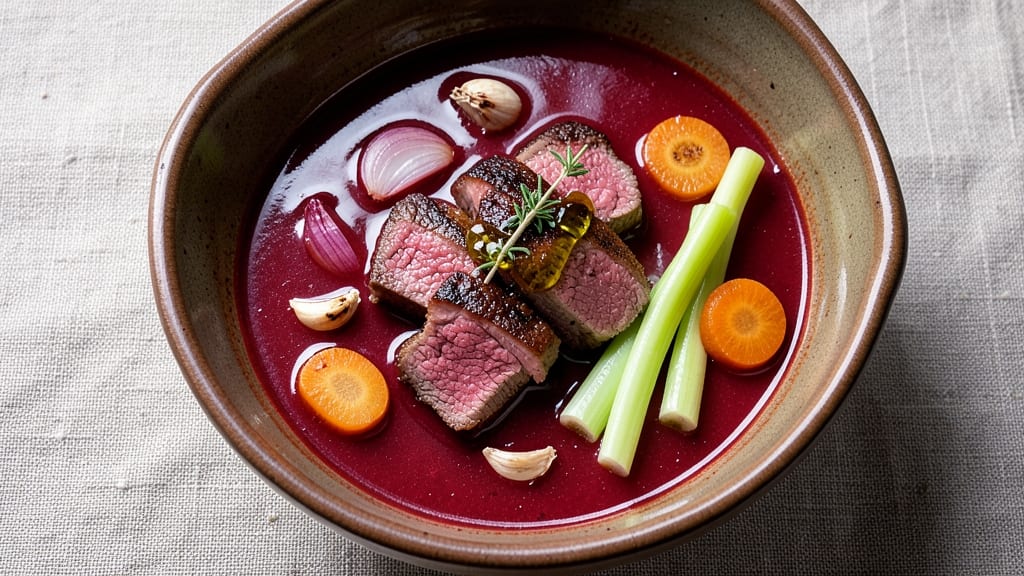
This beef cheek soup recipe transforms tough cuts into a velvety, restaurant-quality masterpiece that melts in your mouth. The secret lies in slow-braising, where collagen-rich beef cheek dissolves into a silky, gelatinous broth packed with deep, savory flavor.
I’ve perfected this technique over years of testing—each sip delivers that luxurious mouthfeel and rich umami that makes it worth the effort.
The process begins with soaking the beef cheek to tenderize, followed by searing for a deep, caramelized crust that forms the flavor base. Aromatics like onions, garlic, and celery build complexity, while red wine and bay leaves add depth.
After hours of simmering, the broth becomes thick, glossy, and impossibly rich—perfect for ladling over crusty bread or serving with roasted vegetables.
What makes this soup truly special is its silky texture and ability to feed a crowd without breaking the bank. The slow-cooked beef cheek creates a natural thickening agent, eliminating the need for cornstarch or roux.
It’s the kind of dish that tastes even better the next day, as flavors meld and the broth deepens.
Pair it with a bold red wine, a sprinkle of fresh parsley, and a slice of crusty bread to soak up every last drop. This isn’t just soup—it’s a comforting, hearty meal that feels like a hug in a bowl. Let’s get started on creating it.
Ingredients for beef cheek soup
Six servings of restaurant-quality richness start with these carefully chosen ingredients.
| Ingredient | Amount | Notes |
|---|---|---|
| Beef Cheek 🥩 | 2 lb | Tough cut, collagen-rich preferred |
| Yellow Onions 🧅 | 2 whole | Sliced into half-moons |
| Carrots 🥕 | 4 whole | Peeled, cut into chunks |
| Celery Stalks 🌿 | 4 whole | Trimmed, cut into pieces |
| Garlic Cloves 🧄 | 6 cloves | Minced for depth of flavor |
| Red Wine 🍷 | 1 cup | Bold, dry variety like Cabernet |
| Beef Broth 💧 | 6 cups | Homemade or high-quality store-bought |
| Tomato Paste 🍅 | 2 tbsp | For rich, concentrated flavor |
| Bay Leaves 🌿 | 2 whole | Fresh or dried for aroma |
| Fresh Parsley 🌿 | ¼ cup | Chopped for garnish |
| Olive Oil 🫒 | ½ cup | Extra-virgin for searing |
| Salt 🧂 | 1 ½ tsp | Kosher or sea salt |
| Black Peppercorns 🌶️ | 1 tsp | Freshly cracked for heat |
| Thyme Sprigs 🌿 | 4 whole | Fresh preferred for brightness |
The beef cheek is the star—look for well-marbled cuts at Whole Foods or specialty butchers. Costco often carries it pre-packaged, but check for freshness. Soak the meat overnight in cold water to tenderize, changing the water twice. The onions, carrots, and celery form the aromatic base, so don’t skimp on quality. If using dried herbs, Penzeys or bulk bins at natural food stores offer the best flavor. Fresh thyme and bay leaves elevate the dish beyond basic seasoning.
No red wine? Dry white wine or extra beef broth works, but the depth of flavor will differ. Substitute tomato paste with crushed tomatoes if needed, though it’ll be less concentrated. Fresh parsley is ideal, but dried parsley at half the amount suffices in a pinch. For the broth, homemade is best, but Swanson or Pacific Foods brands are reliable store-bought options. The garlic can be roasted for a sweeter note—wrap whole cloves in foil and roast at 400°F for 20 minutes before mincing.
This soup tastes even better the next day as flavors meld. Store in an airtight container in the fridge for up to 5 days, or freeze for 3 months in portioned containers. Reheat gently on the stove, stirring occasionally. Serve with crusty bread to soak up every last drop of that luxurious broth. The leftovers reheat beautifully—just add a splash of water if it thickens too much.
Why You'll Love This Recipe
- Foolproof Simplicity: I swear by this—just chop the veggies (onions, carrots, celery) roughly, toss them in a pot with garlic, and let the beef cheek melt into tender perfection. No fancy techniques, no stress.
- Rich, Deep Flavor: That beef cheek? It turns into melt-in-your-mouth goodness, while the garlic and onions caramelize into a base so savory, you’ll want to lick the spoon. Honestly, it’s the kind of taste that sticks with you.
- Weeknight Wonder: Between us, this is my go-to when I’m too tired to fuss. It reheats beautifully for lunches, freezes like a dream, and still tastes fresh even after three days. (Yes, even on a Tuesday night.)
- Budget Magic: A pound of beef cheek goes a long way—this recipe feeds four for under $15 and leaves me with leftovers that taste better the next day. My wallet and my family thank me for it.
Step-by-step instructions for beef cheek soup
Transform tough beef cheek into velvety, restaurant-quality soup with this slow-braised method.
Sear the Beef Cheek Until Deeply Browned
Pat the 2 lb beef cheek dry with paper towels—this ensures maximum browning. Heat the 0.5 cup olive oil in a large Dutch oven over medium-high heat until shimmering. Add the beef cheek in a single layer and sear undisturbed for 5 minutes per side until deeply browned and caramelized.
This step develops the rich, meaty flavor that forms the soup's foundation. If the oil smokes excessively, reduce the heat slightly and continue searing. Once browned, remove the beef cheek and set it aside on a plate.
Sauté the Aromatic Vegetables
In the same Dutch oven, add the sliced 2 whole yellow onions, chopped 4 whole carrots, and trimmed 4 whole celery stalks. Cook over medium heat for 8-10 minutes, stirring occasionally, until the vegetables soften and the onions become translucent.
Add the minced 6 cloves garlic and cook for an additional 30 seconds until fragrant. This step builds the soup's flavor base by developing the vegetables' natural sweetness and releasing their aromatic oils. Don't let the garlic burn—it should add color and aroma, not bitterness.
Deglaze and Simmer the Soup
Pour in the 1 cup red wine and scrape up any browned bits from the bottom of the pot with a wooden spoon. This deglazing step captures all the flavorful fond that's built up during searing. Add the 2 tbsp tomato paste, 1.5 tsp salt, 1 tsp freshly cracked black peppercorns, and 4 whole thyme sprigs, stirring to combine.
Return the beef cheek to the pot, then pour in the 6 cups beef broth. Bring the mixture to a gentle simmer over medium-low heat, then reduce the heat to maintain a bare simmer. Cover partially and cook for 3 hours, stirring occasionally to prevent the broth from sticking to the bottom.
Braise Until Tender and Rich
After the initial 3 hours, check the beef cheek for tenderness. It should be fork-tender and easily pull apart. If it's not yet tender, continue simmering uncovered for another 1-2 hours, adding water as needed to maintain the liquid level. The soup should reduce slightly, becoming thicker and more concentrated.
During the final hour, add the 2 whole bay leaves to enhance the soup's depth of flavor. The beef cheek should be so tender it practically melts in your mouth, and the broth should have a rich, velvety consistency. This slow cooking process transforms the tough beef cheek into luxurious, melt-in-your-mouth pieces.
Finish and Serve
Remove the beef cheek from the soup and shred it with two forks directly in the serving bowl. Discard the bay leaves and thyme sprigs. Return the shredded beef cheek to the soup and stir in the chopped 0.25 cup fresh parsley just before serving.
Ladle the soup into bowls, garnishing each serving with additional parsley if desired. The finished soup should have a deep, caramel color from the seared beef cheek, a rich aroma from the braised vegetables, and a silky texture that coats the spoon. Serve immediately with crusty bread to soak up every last drop of this luxurious broth.
Pro Tips For Making Beef Cheek Soup
- SEAR THE CHEEKS FIRST: Don’t skip browning—those dark, crusty bits are where the flavor lives. After trimming excess fat, hit the beef cheeks in a cold pot over medium-high heat with just a splash of oil. Let them sit undisturbed for 3-4 minutes until a deep, caramelized crust forms. I learned this the hard way—skipping the sear means a soup that tastes more like broth than comfort food.
- CUT ONIONS IN HALVES: Whole onions caramelize unevenly and take forever. Instead, cut them into 6-8 uneven wedges (like a flower with the root intact) so they soften faster and release sweetness into the broth. The celery and carrots can stay in larger chunks—they’ll hold their shape while the onions break down. (Yes, even if you’re impatient like me.)
- SIMMER LOW AND COVERED: Beef cheek soup isn’t a race—after the initial sear, reduce heat to a bare simmer and keep the pot covered. Too much heat = tough, stringy meat; too little = bland broth. Aim for tiny bubbles at the edges, not a rolling boil. I was skeptical until I tried it: the collagen melts into a velvety texture instead of turning the meat to shoe leather.
- STRAIN AND RETURN: Once the meat is fork-tender, strain the broth through a fine-mesh sieve back into the pot. This removes stray bits of fat and connective tissue that can make the final soup look unappetizing. Return the strained broth to the pot, then shred the beef directly in the bowl—no extra bowls needed. (Your future self will thank you.)
Perfect pairings for this dish
Crusty Bread Pairing
Nothing complements this soup like a crusty baguette or sourdough loaf—the perfect vehicle for soaking up the rich, gelatinous broth. I reach for a baguette from my local bakery (ask for one baked just that morning) or a whole-grain sourdough for added texture.
Toast it lightly in the oven for 3-5 minutes at 375°F to enhance its crunch, then serve with extra parsley sprinkled on top. 🥖
Roasted Vegetable Accompaniments
Add a side of roasted root vegetables to balance the soup’s richness. Toss parsnips, carrots, and sweet potatoes with 2 tbsp olive oil, 1 tsp smoked paprika, and ½ tsp salt, then roast at 400°F for 25-30 minutes until caramelized.
The sweetness contrasts beautifully with the deep umami of the soup. For extra flair, drizzle with a touch of honey before serving.
Wine Pairings for Depth
A bold red wine elevates the soup’s flavors—my go-to is a Cabernet Sauvignon or Syrah with their dark fruit and earthy notes. For something lighter, a Pinot Noir offers bright acidity that cuts through the richness.
If you prefer white, a Chardonnay with oak (like a Meursault) stands up to the dish’s depth. Avoid overly tannic wines—they’ll clash with the silky broth. 🍷
Herb and Citrus Garnishes
Brighten the soup with a lemon wedge or fresh thyme sprig on the side—squeezing a little lemon juice into each bowl adds a refreshing zing.
I also love a sprinkle of crispy fried shallots for crunch (toss thinly sliced shallots in ½ cup oil at 350°F for 3-4 minutes until golden). The contrast of textures and flavors makes every spoonful unforgettable.
Cheese and Charcuterie Boards
Turn your meal into a spread by pairing the soup with aged cheddar, blue cheese, and prosciutto. The salty, tangy notes of the cheese complement the soup’s richness, while the prosciutto adds a savory crunch.
Serve with fig jam or mustard for dipping—it’s a crowd-pleaser for gatherings. I often set up a charcuterie board alongside the soup for a cozy, interactive dining experience. 🧀
Spiced Nuts for Crunch
Add a handful of toasted pecans or walnuts tossed with ½ tsp cinnamon and ¼ tsp cayenne for a sweet-spicy crunch. Toast the nuts in a dry pan over medium heat for 5-7 minutes, then sprinkle them over the soup or serve on the side.
The warmth of the spices ties into the soup’s depth while adding a delightful contrast in texture. 🌰
Nutrition facts
Frequently asked questions
Why does beef cheek need soaking before cooking?
Soaking removes surface impurities and helps tenderize the tough connective tissue. The beef cheek contains a lot of collagen, which breaks down during slow cooking—but starting with a 12-24 hour soak in cold water (changing it twice) removes blood and myoglobin that can make the broth bitter. This step is especially important for restaurant-quality results.
Can I substitute beef cheek with another cut of beef?
While you can use chuck roast or brisket as substitutes, they won't deliver the same luxurious texture. Beef cheek's collagen-rich composition creates that signature silky mouthfeel when slow-cooked. If you must substitute, choose a cut with good marbling and plan for additional cooking time (4-6 hours) to achieve tenderness.
How do I know when the beef cheek is fully tender?
The beef cheek should be so tender it practically falls apart with a fork. After 3 hours of simmering, pierce it with a fork—if it slides in easily and the meat separates cleanly, it's ready. If not, continue cooking uncovered for another 1-2 hours, adding water as needed to maintain the broth level. The final texture should be melt-in-your-mouth luxurious.
Can I make this soup in a slow cooker? Brown the beef cheek in a skillet first, then transfer everything to a 6-quart slow cooker. Cook on low for 8-10 hours or high for 5-6 hours, adding water if needed. The slow cooker's gentle heat mimics the Dutch oven's braising effect perfectly. Just
What should I do if the broth becomes too thick?
If the broth thickens beyond your desired consistency, simply add ½ cup hot water or beef broth at a time while stirring until you reach the perfect silky texture. The soup should coat the back of a spoon but still be ladle-friendly. Avoid thinning it too much—this soup's richness comes from its concentrated flavor.