
Soups & Stews
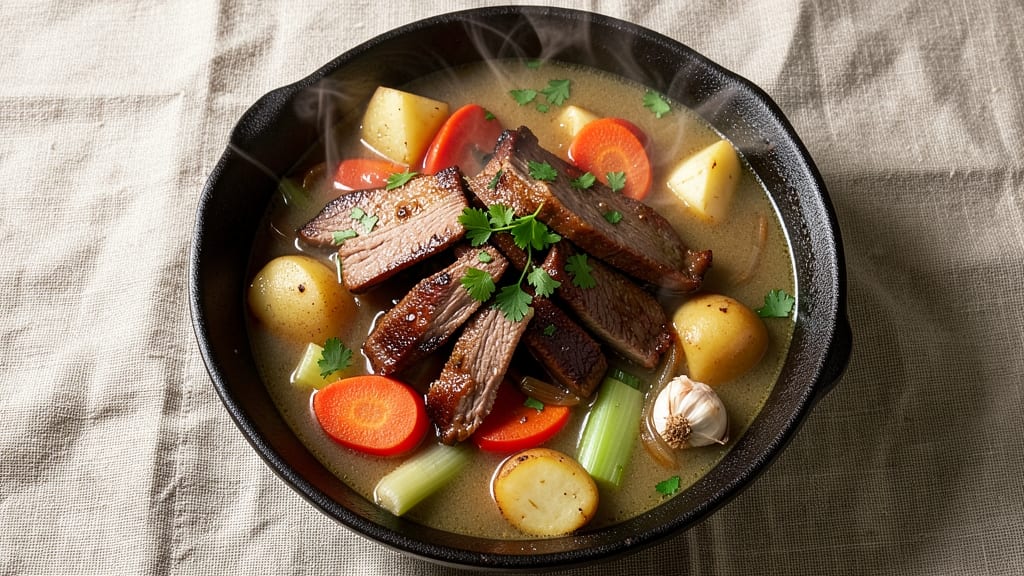
This beef brisket vegetable soup recipe transforms tough cuts into melt-in-your-mouth tenderness through slow-cooked perfection. The key lies in low-and-slow cooking that develops deep, rich flavors while breaking down the brisket into fork-tender pieces.
I've perfected this method over countless batches, ensuring every spoonful delivers that satisfying combination of hearty meat and comforting vegetables.
What sets this recipe apart is the balance of simplicity and depth—just a few core ingredients that work together to create a soup bursting with flavor. The brisket simmers for hours, infusing the broth with its natural richness, while an aromatic blend of spices and herbs enhances every component.
Vegetables like carrots, potatoes, and celery absorb the brisket's savory essence, creating a harmonious blend of textures and tastes.
The result is a soup that's equally satisfying as a main dish or hearty starter, with fall-apart brisket that practically dissolves on your tongue. The broth is deeply flavorful yet balanced, and the vegetables retain their natural sweetness while becoming tender enough to melt.
This is the kind of soup that warms you from the inside out, perfect for chilly evenings or when you crave a meal that feels like a hug in a bowl.
Whether you're feeding a family or meal prepping for the week, this recipe delivers restaurant-quality comfort food at home. The slow-cooking process makes it ideal for hands-off cooking, allowing the flavors to develop fully without constant attention. Let's get started on creating this deeply satisfying soup.
Ingredients for beef brisket vegetable soup
Just 14 ingredients deliver restaurant-quality brisket soup with melt-in-your-mouth meat and rich, aromatic broth.
| Ingredient | Amount | Notes |
|---|---|---|
| Beef Brisket 🥩 | 3 lb | Flat cut preferred, trimmed of excess fat |
| Yellow Onions 🧅 | 2 whole | Medium size, roughly chopped |
| Carrots 🥕 | 1 ½ lb | Whole, peeled, cut into chunks |
| Celery Stalks 🧄 | 4 whole | Fresh, trimmed and cut into pieces |
| Russet Potatoes 🥔 | 2 lb | Medium size, peeled and quartered |
| Garlic Cloves 🧄 | 6 cloves | Fresh, peeled and smashed |
| Tomato Paste 🍅 | ½ cup | High-quality, smooth texture |
| Beef Broth 💧 | 8 cups | Low-sodium preferred, homemade or store-bought |
| Bay Leaves 🌿 | 2 whole | Dried, for infusion |
| Thyme Sprigs 🌿 | 2 whole | Fresh, or 1 tsp dried |
| Salt 🧂 | 2 tsp | Diamond Crystal kosher salt |
| Black Peppercorns 🌶️ | 1 tsp | Freshly cracked |
| Bouquet Garni 🌿 | 1 piece | Optional, thyme + parsley + bay leaf bundle |
| Olive Oil 🫒 | 2 tbsp | Extra-virgin, for searing |
The brisket is non-negotiable—flat-cut from a trusted butcher gives you that perfect fall-apart texture. Look for good marbling and ask for it to be trimmed of excess fat. Costco or local meat counters usually have the best cuts, but any supermarket with a good deli section will work. If you're buying a whole brisket, trim it yourself for better control. The onions, carrots, and celery form what I call the 'holy trinity' of soup veggies—buy organic if possible, especially for the carrots, since they absorb flavors like a sponge. For the potatoes, Russets are ideal—they hold up better to long cooking than waxy varieties.
No fresh thyme? Dried works at one-third the amount, but fresh has that extra punch. Short on beef broth? Water plus bouillon cubes gets you close, but you'll lose some depth. The tomato paste can be that squeeze tube from Trader Joe's—it's perfect for this. Want more richness? Add 1/4 cup red wine when deglazing. For the bouquet garni, I usually just tie thyme, parsley, and a bay leaf in cheesecloth, but a simple bundle of twine works too. The olive oil matters here—use something fruity and peppery like California extra-virgin. If you're in a pinch, light olive oil works, but it won't have the same depth of flavor.
This soup tastes even better the next day—plan ahead. Store in airtight containers for 5-6 days in the fridge or 3 months frozen. I always make double batches because it reheats beautifully. For freezing, portion into individual containers so you can pull out exactly what you need. The brisket will keep for 3-4 days in the fridge before the soup if you're prepping ahead, but it's worth the wait for that tender texture.
Why You'll Love This Recipe
- One-Pot Wonder: I swear by this soup because it’s that easy—just dump everything in one pot, simmer, and let the brisket melt into tender perfection. No fancy techniques, no stressing over multiple pans.
- Deep Umami Magic: The slow-cooked brisket turns these humble veggies into something ridiculously rich—carrots caramelize, celery softens just enough, and the onions? They develop this sweet, savory depth that makes every spoonful feel like a hug.
- Leftovers That Shine: Honestly, I always make extra because reheated brisket soup is even better the next day—especially with crusty bread or a sprinkle of fresh herbs. It’s the kind of meal that tastes like effort, even when it’s not.
- Budget-Friendly Feast: Brisket stretches across multiple meals, and the veggies (onions, carrots, celery) are pantry staples that won’t break the bank. It’s my go-to for feeding a crowd without the grocery shock.
Step-by-Step instructions for slow-cooked beef brisket vegetable soup
Here's how to transform tough brisket into tender, fall-apart meat with rich vegetable flavors.
Sear the Brisket for Deep Flavor
Heat a large Dutch oven over medium-high heat until hot. Add the 2 tablespoons olive oil and swirl to coat. Pat the 3 lb beef brisket completely dry with paper towels - this ensures maximum browning. Season both sides generously with 1 teaspoon of the salt and ½ teaspoon of the black peppercorns.
Place the brisket in the Dutch oven and sear for 4-5 minutes per side until deep golden brown with crisp edges. Don't move it during searing - this creates the Maillard reaction that builds rich flavor. Transfer the brisket to a plate and set aside.
Build the Vegetable Base
In the same Dutch oven, reduce heat to medium and add the roughly chopped 2 whole yellow onions. Cook for 5-6 minutes until softened and beginning to caramelize. Add the cut 1.5 lb carrots, 4 whole celery stalks (cut into pieces), and 2 lb russet potatoes (quartered) to the pot.
Stir to combine with the onions, then sprinkle with the remaining 1 teaspoon salt and ½ teaspoon black peppercorns. Cook for 5 minutes to let the vegetables begin to soften and release their flavors. Add the 6 smashed garlic cloves and 0.5 cup tomato paste, stirring to coat everything evenly.
Create the Aromatic Broth Foundation
Pour in the 8 cups beef broth, scraping up any browned bits from the bottom of the pot. Add the 2 whole bay leaves, 2 whole thyme sprigs, and 1 piece bouquet garni (if using). Bring the mixture to a gentle simmer, then carefully return the seared brisket to the pot, placing it fat-side up.
Here's the key: the brisket should be mostly submerged but not completely covered. This allows the meat to cook slowly while still being bathed in flavorful liquid. The broth should bubble gently - if it's boiling vigorously, reduce the heat slightly to maintain a steady simmer.
Slow Cook Until Tender
Cover the Dutch oven and transfer to the oven preheated to 300°F. Cook for 3-4 hours, checking occasionally. The brisket is ready when it's fork-tender and pulls apart easily - this typically happens when the internal temperature reaches 205°F at the thickest part.
About 30 minutes before the brisket is done, taste the broth and adjust seasoning if needed. The vegetables should be tender but still hold their shape. If the broth appears too thin, uncover and simmer for 10-15 minutes to reduce slightly and intensify the flavors.
Finish and Serve
Once the brisket reaches the perfect tenderness, carefully remove it from the pot and let it rest for 10 minutes. During this time, skim any excess fat from the surface of the broth if desired. Using two forks, shred the brisket into bite-sized pieces and return it to the pot.
Gently stir to combine the brisket with the vegetables and broth. Taste and adjust seasoning one final time. Ladle the soup into bowls, being sure to include both the brisket pieces and vegetables. Serve immediately with crusty bread to soak up every last drop of that rich, savory broth.
Pro Tips For Making Beef Brisket Vegetable Soup
- Sear the Brisket First: Skip the slow start—brown that brisket in batches over medium-high heat until it’s deep golden. I learned this the hard way: rushing the sear means the soup tastes more like stewed beef than rich, caramelized flavor. Let the onions and veggies wait; the meat’s crust is non-negotiable here.
- Cut Brisket Against the Grain: Slice the brisket before adding it to the pot—thin strips, not chunks. The grain runs diagonally, so angle your knife at 45 degrees for tender bites. I used to add it whole and ended up with chewy, uneven pieces. Do this first, then simmer.
- Salt the Potatoes Early: Toss the Russet potatoes in salt before they hit the pot—about 1 teaspoon per pound. It seasons them evenly and keeps them from turning into bland, waterlogged mush. (Yes, even if you’re impatient like me, give them 10 minutes to absorb the salt.)
- Simmer Low and Long: Cover the pot and keep the heat at a bare simmer—just bubbles breaking the surface, nothing more. I used to crank the heat to speed things up, and the soup ended up thin and mealy. Two hours minimum; three if your brisket’s tough. Patience here makes the difference.
Flavor customization for this beef brisket vegetable soup
Spicy Heat Boost
For a kick, add 1-2 tablespoons of smoked paprika and ½ teaspoon of cayenne pepper to the seared brisket before slow-cooking. If you love heat, toss in 2-3 slices of chipotle peppers in adobo sauce with the broth.
I like to finish with a sprinkle of crushed red pepper flakes on top—just ½ teaspoon adds a nice tangy burn. 🌶️
Smoky Depth
Infuse the broth with smoky flavor by adding 1-2 smoke chips (like Traeger or Stove Top brand) to the pot during slow cooking. Alternatively, simmer 1 cup of apple cider with the broth for a subtle sweetness that complements the brisket.
For extra depth, char a halved onion and add it to the pot for the last 30 minutes of cooking.
Herb Variations
Swap out thyme for rosemary or sage—both add earthy notes that pair beautifully with brisket. For a Mediterranean twist, add 1 teaspoon of dried oregano and ½ teaspoon of cinnamon when searing the brisket.
Fresh herbs like parsley or cilantro brighten the soup at the end—just stir in ¼ cup chopped fresh herbs before serving.
Creamy Texture
For a velvety finish, stir in ½ cup of coconut milk or ¼ cup of heavy cream during the last 10 minutes of cooking. If you prefer dairy-free, blend ½ cup of cooked white beans into the broth for creaminess without altering the flavor.
A splash of lemon juice (just 1 tablespoon) adds brightness to balance the richness. 💫
Umami Upgrade
Boost the savory depth with 1 tablespoon of fish sauce or 1 teaspoon of soy sauce when building the broth. For a deeper umami punch, add 2 tablespoons of miso paste (white or red) to the pot with the broth.
I also love adding 1-2 slices of bacon to sear with the brisket—just remove them before slow-cooking and crumble into the soup at the end.
Nutrition facts
Frequently asked questions
Can I use a slow cooker instead of the oven for this recipe?
Transfer everything to a 6-quart slow cooker after Step 3 and cook on low for 8-10 hours or high for 5-6 hours. The key is maintaining a steady simmer - if the broth looks thin, reduce cooking time slightly. The brisket will still become tender, though you may need to shred it more carefully since slow cookers don't provide the same even heat as an oven.
How do I know when the brisket is fully tender?
Use the fork test: insert a fork into the thickest part of the brisket - if it slides in easily and the meat falls apart, it's done! The internal temperature should reach 205°F at the thickest point. For extra assurance, check the texture of a small piece - it should be so tender it practically dissolves on your tongue.
What vegetables can I substitute if I don't have all the original ones?