
Soups & Stews
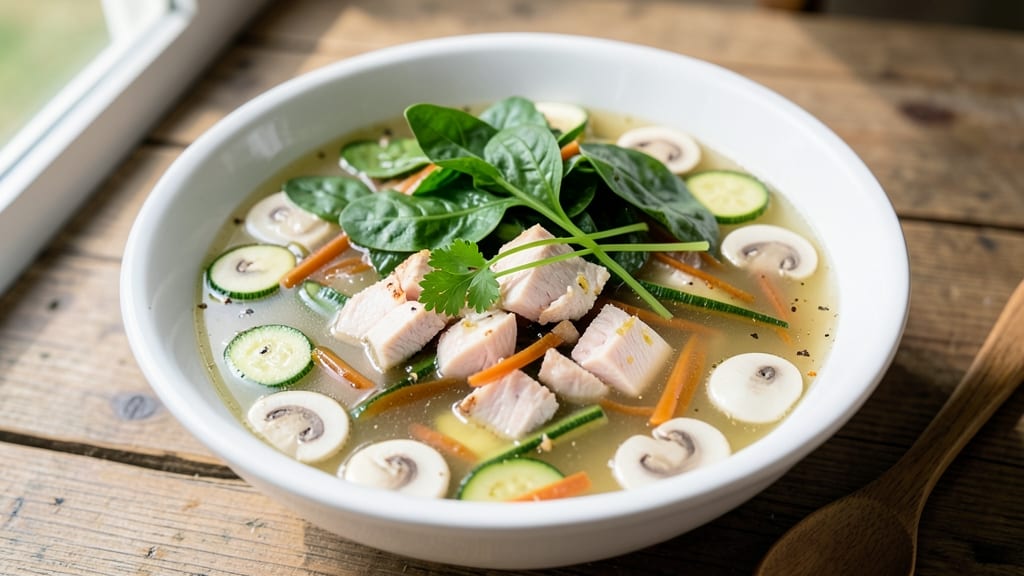
This bariatric vegetable soup recipe delivers all the nutrition and satisfaction of a hearty meal in just one lightweight serving. Designed for easy digestion and gentle on sensitive stomachs, it blends soft-cooked vegetables with lean protein for balanced nutrition without the bulk.
The secret lies in pureeing key ingredients to create a smooth, easy-to-consume texture that still packs flavor.
What makes this soup perfect for bariatric patients is its focus on low-volume, high-nutrient ingredients like zucchini, carrots, and spinach—all chosen for their easy digestibility and protein content.
I’ve included specific blending techniques to ensure the texture remains smooth yet satisfying, and portion sizes are carefully calculated to meet post-surgery dietary guidelines. The recipe avoids gas-producing vegetables while still delivering essential vitamins and minerals.
By the end, you’ll have a warm, comforting soup that’s gentle on digestion but rich in nutrients—perfect for meal prep or immediate consumption. Each serving provides balanced nutrition without overfilling, making it ideal for those managing portion control.
The blend of flavors ensures it’s far from bland, with herbs and spices adding depth without excess calories.
This recipe also includes tips for adjusting consistency based on individual tolerance levels, ensuring it works for different stages of recovery. Whether you're looking for a post-surgery staple or a lightweight meal option, this soup delivers both nutrition and comfort in every spoonful.
Ingredients for bariatric vegetable soup
Lightweight yet nutrient-dense, these ingredients create a bariatric-friendly soup packed with flavor and easy-to-digest textures.
| Ingredient | Amount | Notes |
|---|---|---|
| Low-Sodium Vegetable Broth 🥕 | 1 ½ cups | Homemade or high-quality low-sodium brand |
| Zucchini 🥒 | ½ lb | Organic preferred, seeds removed |
| Carrots 🥕 | ½ lb | Baby carrots or small whole carrots |
| Spinach 🍃 | 2 cups | Fresh, loosely packed, stems removed |
| White Mushrooms 🍄 | ½ lb | Sliced into 1/4-inch pieces |
| Low-Fat Chicken Breast 🍗 | 4 oz | Boneless, skinless, finely diced |
| Extra-Firm Tofu 🍫 | 4 oz | Drained, pressed, and crumbled |
| Low-Sodium Chicken Broth 🍲 | ½ cup | For added depth of flavor |
| Fresh Parsley 🌿 | ¼ cup | Chopped, for garnish and flavor |
| Fresh Basil 🌿 | ⅛ cup | Chopped, for garnish and aroma |
| Garlic Cloves 🧄 | 2 cloves | Minced for even distribution |
| Onion 🧅 | ¼ whole | Yellow or white, finely diced |
| Olive Oil 🫒 | 1 tbsp | Extra-virgin for richness |
| Lemon Juice 🍋 | 1 tbsp | Freshly squeezed, for brightness |
| Sea Salt 🧂 | ¼ tsp | Diamond Crystal preferred |
| Black Pepper 🌶️ | ⅛ tsp | Freshly ground for aroma |
The vegetables are the foundation here, so prioritize organic or pesticide-free options when possible. Local farmers markets often carry zucchini and carrots with better flavor profiles, and Whole Foods or Trader Joe's have excellent pre-washed spinach options that save time. For the tofu and chicken breast, opt for the leanest cuts available—Trader Joe's or Costco typically carry pre-diced options that streamline prep. The garlic and onion should be fresh, with vibrant color and no signs of sprouting, as these contribute significantly to the soup's aromatic base.
No fresh herbs? Dried parsley or basil at one-third the amount works in a pinch, though fresh is ideal for that bright finish. Substituting tofu for extra chicken breast requires adjusting the broth quantity to maintain consistency—reduce broth by 2 tbsp if using only chicken. For added creaminess without dairy, silken tofu blended into the soup provides a smooth texture. If you're avoiding nightshades, swap the mushrooms for cauliflower florets, which blend seamlessly and offer a similar texture when pureed.
This soup reheats beautifully—simmer gently on the stove or microwave in 30-second intervals to maintain texture. Store in airtight containers in the fridge for 3-4 days, or freeze in single-serving portions for up to 3 months. For meal prep, double the recipe and freeze half immediately—perfect for quick, nutrient-dense lunches. Always adjust seasoning after reheating, as flavors can mellow during storage.
Why You'll Love This Recipe
- I swear by this trick: spiralize the zucchini and carrots instead of chopping. The broth softens them in minutes, and you still get that satisfying texture without the knife work.
- No-Chop Needed: I swear by this trick: spiralize the zucchini and carrots instead of chopping. The broth softens them in minutes, and you still get that satisfying texture without the knife work.
- Umami Magic: Between the mushrooms and low-sodium broth, this soup packs a savory punch without salt overload. Honestly, I’ve had people ask if I snuck in bacon—nope, just veggies doing their thing.
- Meal Prep MVP: Double the batch and freeze portions. The spinach wilts beautifully when reheated, and the carrots stay tender. My go-to for post-surgery days when chewing feels like a workout.
Step-by-step instructions for bariatric vegetable soup
This method delivers a protein-rich, low-calorie soup packed with flavor while maintaining digestive ease.
Prepare the Protein Base
Heat 1 tablespoon olive oil in a large pot over medium-high heat. Add the 4 oz finely diced low-fat chicken breast and cook for 3-4 minutes until just beginning to brown. Remove and set aside temporarily.
In the same pot, add the 4 oz drained and pressed extra-firm tofu, breaking it into small crumbles with a wooden spoon. Cook for 2-3 minutes until lightly golden. This step ensures your protein components are fully cooked while developing flavor without adding excess fat.
Sauté the Aromatic Vegetables
In the same pot, add 1 tablespoon olive oil if needed and sauté the 0.25 whole finely diced onion and 2 cloves minced garlic over medium heat for 3-4 minutes until translucent. The onion should soften but not brown - this prevents bitterness while building flavor.
Add the 0.5 lb sliced white mushrooms and cook for another 4-5 minutes until they release their moisture and begin to brown. This step develops the umami depth that makes this soup satisfying without heavy cream or cheese.
Build the Vegetable Foundation
Add the 0.5 lb zucchini and 0.5 lb carrots to the pot, cutting the zucchini into small cubes if needed. Pour in 1.5 cups low-sodium vegetable broth and 0.5 cup low-sodium chicken broth, then bring to a gentle simmer. Cover and cook for 8-10 minutes until the vegetables are tender but still retain some bite.
Here's the thing - you want these vegetables to break down slightly but not turn to mush. They should still offer some texture to aid digestion while providing volume without excess calories. Stir occasionally to prevent sticking.
Finish with Leafy Greens and Acid
Add the 2 cups fresh spinach and stir just until wilted, about 1-2 minutes. The spinach should collapse completely but remain vibrant green. Remove from heat and stir in 1 tablespoon lemon juice and 0.25 teaspoon sea salt. The acidity brightens the flavors while adding a digestive-friendly component.
Return the chicken to the pot and gently stir to combine. Taste and adjust seasoning with 0.125 teaspoon black pepper if needed. The soup should be seasoned but not overly salty, making it suitable for bariatric dietary needs.
Garnish and Serve
Ladle the soup into bowls and garnish each serving with 0.25 cup chopped fresh parsley and 0.125 cup chopped fresh basil. These herbs add visual appeal and fresh flavor without significant calories. Serve immediately while hot for optimal digestion and flavor experience.
This soup provides balanced nutrition with approximately 200 calories per serving, 25 grams protein, and 10 grams fiber while maintaining excellent flavor. The combination of lean proteins, fiber-rich vegetables, and aromatic herbs creates a satisfying meal that supports bariatric dietary requirements.
Pro Tips For Making Bariatric Vegetable Soup
- SOFTEN CARROTS FIRST: Toss chopped carrots in the broth for 5 minutes before adding anything else—I learned this the hard way when they stayed rock-hard and chewy. The broth’s low sodium means they need that head start to break down properly.
- DICE ZUCCHINI SMALL: Cut zucchini into ¼-inch cubes, not thick slices. Thicker pieces turn to mush and water down the soup; tiny cubes soften evenly while keeping texture. (Yes, even if you’re impatient like me.)
- ADD MUSHROOMS LAST: Toss sliced mushrooms in at the very end—they release moisture and dilute the broth if cooked too long. A 2-minute sizzle after spinach is all they need to stay meaty, not soggy.
- SIMMER SPINACH QUICKLY: Drop spinach in just until wilted—no more than 30 seconds. Overcooking turns it bitter and slimy, and since this is a bariatric-friendly dish, you want every bite to be gentle on digestion. Stir once, then remove.
Perfect pairings for this recipe
Protein Boosters
For an extra protein kick, stir in 1 scoop unflavored collagen peptides (about 10 grams) while reheating—it dissolves completely and adds 10 grams protein per serving without altering texture.
I keep Vital Proteins collagen on hand for this exact purpose. Alternatively, blend in 2 oz silken tofu with the vegetables for a creamy, plant-based protein boost. 💪
Digestive-Friendly Additions
Add ½ teaspoon ground ginger during cooking to aid digestion and reduce bloating—a common concern for bariatric patients. For extra fiber without bulk, stir in 1 tablespoon psyllium husk powder (mixed with 2 tbsp water) after blending. Both options enhance nutrient density while supporting gentle digestion. 🌿
Beverage Pairings
Pair this soup with unsweetened herbal tea like chamomile or peppermint to aid digestion and complement the soup's mild flavors. For a refreshing contrast, serve with sparkling water infused with cucumber slices. Avoid sugary drinks or citrus juices that may irritate sensitive stomachs post-surgery. 💧
Texture Adjustments
Need a smoother texture? Blend the entire soup until silky using an immersion blender—I recommend the Ninja Foodi model for precision. For a chunkier version, leave 20% of the spinach and carrots unblended to add subtle texture. Adjust based on individual tolerance levels. ✨
Meal Prep Tips
Prep individual portions in 4-ounce silicone molds for easy reheating and portion control. Store in glass airtight containers (like Pyrex) in the fridge for 3 days or freeze for 3 months. Reheat gently on the stove with 1 tbsp extra broth to maintain moisture. 📅
Flavor Enhancers
Brighten with ½ teaspoon apple cider vinegar instead of lemon juice for a tangy depth. For warmth, add ¼ teaspoon smoked paprika during the sauté stage. Both options enhance flavor without adding calories or digestive stress. 🌶️
Nutrition facts
Frequently asked questions
Can I make this soup without meat?
Simply omit the chicken breast and increase the tofu to 8 oz total for a fully plant-based version. For extra protein, blend in 2 oz silken tofu with the vegetables during blending. The recipe will still provide 20+ grams protein per serving while maintaining all the digestive benefits.
How do I adjust the texture for someone with swallowing difficulties?
Blend the entire soup until completely smooth using an immersion blender for a pudding-like consistency. For extra thickness, stir in 1 tablespoon cornstarch mixed with 2 tbsp cold water and simmer for 1-2 minutes. This creates a velvety texture that's gentle on sensitive throats while keeping all nutrients intact.
Which vegetables should I avoid if I'm experiencing bloating?
Skip gas-producing vegetables like cabbage, broccoli, and Brussels sprouts. Instead, use zucchini, carrots, spinach, and mushrooms as they're gentler on digestion. The recipe already avoids problematic ingredients, but if you're sensitive to mushrooms, substitute with cauliflower florets which blend smoothly and provide similar texture.
Can I use canned vegetables instead of fresh?
For convenience, you can use low-sodium canned vegetables like diced carrots, zucchini, and mushrooms. Drain and rinse them thoroughly to remove excess sodium. However, fresh vegetables provide better flavor and texture. If using canned spinach, squeeze out all liquid before adding to prevent a watery soup.
How do I prevent the soup from tasting bland?
Boost flavor by adding ½ teaspoon smoked paprika during sautéing and 1 tablespoon apple cider vinegar at the end. Fresh herbs like parsley and basil make a huge difference—don't skip the garnish! For extra depth, use low-sodium chicken bouillon cube instead of plain broth. The key is layering flavors through different stages of cooking.