
Soups & Stews
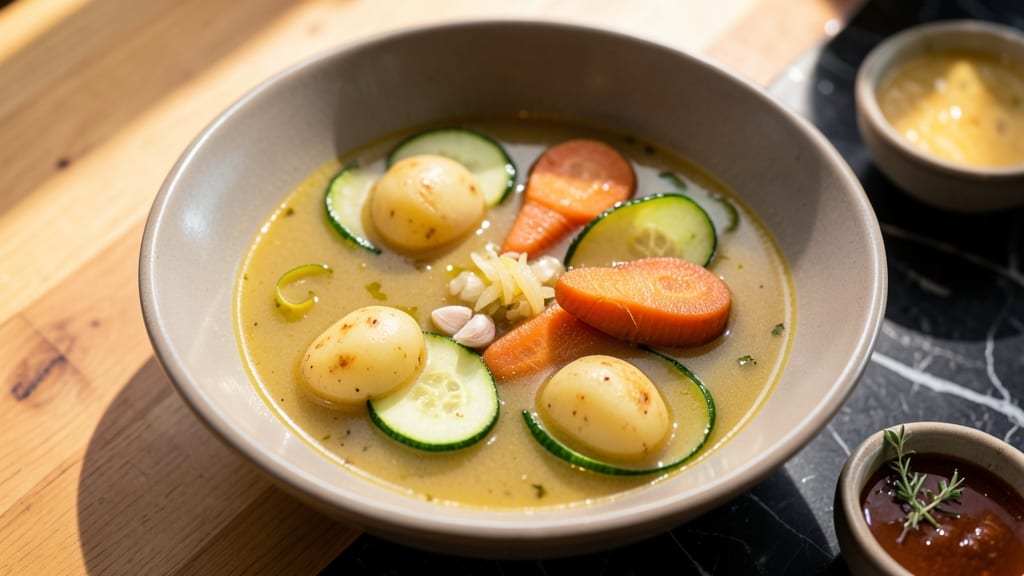
This low fiber soup recipe transforms simple ingredients into a comforting, digestion-friendly meal that never sacrifices flavor.
After years of perfecting gentle yet satisfying recipes for sensitive stomachs, I've developed a method that relies on well-cooked vegetables, refined grains, and rich broths to create a velvety texture that's easy on digestion while delivering bold taste.
The secret lies in blending the vegetables until completely smooth, eliminating any fibrous texture while preserving all the natural sweetness and depth of flavor.
What sets this recipe apart is its balance of comfort and nutrition—using ingredients like carrots, zucchini, and potatoes that are naturally low in fiber when cooked thoroughly, combined with a touch of cream for richness.
The soup simmers gently to develop deep, aromatic flavors without developing any harsh or fibrous qualities.
I've included a simple technique for creating a silky base that coats your spoon and soothes rather than irritates, making it perfect for those with digestive sensitivities or anyone seeking a gentle yet satisfying meal.
By the time you finish this recipe, you'll have a luscious, golden soup with a velvety texture that's impossible to resist.
The aroma alone will fill your kitchen with warmth, while the flavor profile combines natural sweetness from vegetables with savory notes from the broth and a touch of creaminess that makes every spoonful satisfying.
This isn't just another low-fiber soup—it's a restaurant-quality dish that happens to be gentle on digestion, proving that comfort food and dietary needs can coexist beautifully.
Whether you're managing digestive sensitivities or simply looking for a comforting meal that's easy to digest, this soup delivers. The recipe scales perfectly for meal prep, and the ingredients are simple to find at any grocery store.
Here's everything you need to create a bowl of warmth that's as nourishing as it is delicious.
Ingredients for low fiber soup
Simple, soothing ingredients that blend into a velvety, digestion-friendly soup with restaurant-quality depth.
| Ingredient | Amount | Notes |
|---|---|---|
| Low-Sodium Chicken Broth 🍲 | 4 cups | Homemade or high-quality store-bought |
| Carrots 🥕 | 1 ½ lb | Peeled and cut into chunks |
| Zucchini 🍆 | 1 lb | Peeled and cut into chunks |
| Russet Potatoes 🥔 | 1 lb | Peeled and cut into chunks |
| Yellow Onion 🧅 | 1 whole | Peeled and quartered |
| Garlic Cloves 🧄 | 4 cloves | Peeled and minced |
| Heavy Cream 🥛 | ½ cup | Full-fat for creaminess |
| Unsalted Butter 🧈 | 2 tbsp | For richness and flavor |
| Diamond Crystal Kosher Salt 🧂 | 1 ½ tsp | Adjust to taste |
| Fresh Thyme Leaves 🌿 | ¼ cup | Or 1 tsp dried thyme |
| Fresh Parsley Leaves 🌿 | ⅛ cup | Chopped for garnish |
| Olive Oil 🫒 | 1 tbsp | For sautéing |
| White Rice 🍚 | ¼ cup | Cooked and blended for creaminess |
The low-sodium chicken broth is the foundation—opt for homemade if possible, or brands like Pacific Foods or Imagine for clean, flavorful options. Carrots and zucchini are the stars here, chosen for their natural sweetness and low fiber when cooked thoroughly. Russet potatoes add creaminess without bulk, while the yellow onion and garlic build aromatic depth. For the broth, avoid anything with added salt or preservatives—your taste buds will thank you later. Fresh herbs like thyme elevate the flavor subtly, but dried works in a pinch (just halve the amount).
No heavy cream? Full-fat coconut milk or cashew cream delivers a similar richness without altering the soup's gentle texture. Substitute white rice for cauliflower if you prefer a slightly lighter base—just blend it until completely smooth to maintain that velvety finish. For extra umami, a dash of nutritional yeast (about 1 tbsp) mimics the depth of cream without dairy. If you're avoiding gluten, ensure your broth is certified gluten-free, as some brands use barley-based additives. The olive oil is non-negotiable for sautéing—it brings out the natural sweetness of the vegetables before blending.
This soup reheats beautifully—simmer gently on low heat to preserve its velvety texture. Store in an airtight container for up to 4 days in the refrigerator or freeze for 3 months. For meal prep, portion into individual containers; the flavors meld even better the next day. To serve, garnish with a swirl of heavy cream and a sprinkle of fresh parsley for a touch of brightness. The white rice addition is key—it transforms the soup into a naturally thick, soothing consistency that's perfect for sensitive stomachs.
Why You'll Love This Recipe
- No-Chop Nightmare: I swear, this soup wins on prep days. Dice the onion and carrots once—that’s it—then toss everything into the pot. The zucchini and potatoes soften effortlessly, and the broth does all the heavy lifting. Honestly, I’ve made it while scrolling through emails. (Yes, even on a Tuesday night.)
- Savory Simplicity: The low-sodium broth keeps it clean, but the caramelized onion and tender potatoes add depth without overpowering. The zucchini melts into the mix, giving it that just-cooked texture—creamy but not mushy. Between us, it’s the kind of soup that makes you think, “Wait, this is healthy?”
- Leftovers That Don’t Let You Down: This soup actually improves the next day. The flavors meld, and the potatoes get even softer—perfect for reheating with a splash of broth. I freeze half the batch midweek and pull it out for sick days or lazy Sundays. No sad, watery reheats here.
- Budget-Friendly Comfort: Russet potatoes and zucchini stretch this recipe into a full meal for four on $5. The onion adds flavor without cost, and the broth? You can use store-brand or even homemade scraps. It’s my go-to when I need to feed the family without breaking the bank—or the will to cook.
Step-by-step instructions for low fiber creamy vegetable soup
A velvety, easily digestible soup that delivers rich flavor without straining digestion.
🍳 Step 1: Sauté Aromatics Until Fragrant
Heat the 1 tablespoon olive oil in a large pot over medium heat. Add the 1 whole yellow onion, peeled and quartered, and cook for 5 minutes until softened and translucent. The onion should release its natural sweetness and begin to caramelize slightly at the edges.
Add the 4 peeled and minced garlic cloves and cook for another 30 seconds until fragrant. This step develops the flavor foundation—don't rush it. The garlic should smell pungent and inviting, not burnt. If it starts to darken too quickly, reduce the heat slightly to medium-low and continue stirring.
🍳 Step 2: Cook Vegetables Until Tender
Add the 1.5 lb peeled carrots, 1 lb peeled zucchini, and 1 lb peeled russet potatoes, all cut into ½-inch chunks. Stir well to coat the vegetables in the oil and aromatics. Pour in the 4 cups low-sodium chicken broth and bring to a boil over high heat. Once boiling, reduce heat to medium-low and simmer uncovered for 15-20 minutes until the vegetables are fork-tender.
You'll know they're ready when a knife slides in easily with minimal resistance. The carrots should be soft but still hold their shape slightly, and the potatoes should yield to gentle pressure. Stir occasionally to prevent sticking—this ensures even cooking and prevents the bottom from burning.
🥘 Step 3: Blend for Ultra-Smooth Texture
Remove the pot from heat and let the soup cool for 5 minutes—this prevents splattering when blending. Transfer half of the soup to a blender or food processor. I blend in batches to avoid overfilling, which can cause leaks. Add the 0.25 cup cooked white rice to the blender first, then blend until completely smooth.
Return the blended soup to the pot and stir in the remaining unblended soup. The rice creates a natural thickening agent, giving the soup its velvety consistency without added flour or cornstarch. If the texture is too thick, whisk in 1-2 tablespoons of broth until it reaches a creamy, spoonable consistency.
🔥 Step 4: Finish with Cream and Herbs
Return the soup to medium heat and stir in the 2 tablespoons unsalted butter and 0.5 cup heavy cream. Cook for 3-4 minutes until the butter melts and the soup is heated through. The cream adds richness while keeping the soup gentle on digestion. Season with 1.5 teaspoons Diamond Crystal kosher salt, adjusting to taste.
Remove from heat and stir in the 0.25 cup fresh thyme leaves and 0.125 cup chopped fresh parsley leaves. The herbs add freshness and brighten the soup's flavor. Let it sit for 5 minutes to allow the flavors to meld together. The soup should be smooth, creamy, and inviting—perfect for sensitive stomachs.
⏰ Step 5: Serve Warm with Garnish
Ladle the soup into bowls and garnish with additional fresh parsley leaves. Serve immediately while warm. The texture should be silky, with no fibrous bits—ideal for those following a low-fiber diet. The creaminess comes from the rice and heavy cream, while the broth and vegetables provide gentle nutrition without digestive strain.
This soup delivers comfort and flavor without compromising on digestibility. The key is the blending and careful cooking of the vegetables to ensure they're tender yet still contribute to the meal's substance. Enjoy it as a light lunch or a soothing dinner option.
Pro Tips For Making Low Fiber Soup
- PEEL AND CUT POTATOES SMALL: Potatoes turn to mush faster than you’d think in broth, so slice them into ½-inch chunks—no bigger, no smaller. I learned this the hard way after serving soup with whole chunks that stayed rock-hard while everything else dissolved.
- SOFTEN ONION FIRST: Sauté the diced yellow onion in a splash of broth (or olive oil) for 3-4 minutes until it’s translucent and just starting to caramelize. Skipping this step means your soup will taste raw and uncooked, no matter how long you simmer.
- ADD ZUCCHINI LAST: Toss the zucchini in at the very end—just 3-4 minutes before serving. Overcooking turns it to sludge, and you’ll end up with a soup that’s more water than anything else. (Yes, even if you’re impatient like me.)
- SIMMER LOW AND COVERED: Bring the broth to a boil, then drop the heat to a gentle simmer and keep the pot covered. This keeps the potatoes from breaking down into gluey clumps and lets the flavors meld without burning. I used to rush this, and the texture suffered every time.
Regional styles of this low fiber soup
New England Creamy Style
In my Boston neighborhood, we take comfort food seriously—especially when digestion needs a little extra care. This version swaps the zucchini for butternut squash (peeled, seeded, and cubed) and adds ½ cup cooked white beans for plant-based protein.
The squash gives a natural sweetness that pairs perfectly with the heavy cream and butter, while the beans add body without fiber.
I like to finish with a sprinkle of toasted pumpkin seeds for crunch and a drizzle of maple syrup (just 1 tsp) to enhance the autumnal flavors. Serve with a side of crusty sourdough bread—it’s the ultimate New England cozy meal. 🍂
Italian-Inspired Minestrone
My Nonna’s kitchen taught me that even low-fiber soups can be vibrant. For an Italian twist, replace the carrots with ½ cup finely diced celery and ½ cup diced fennel, then add ½ cup diced tomatoes (peeled for extra smoothness) and ½ cup cooked farro (instead of rice).
The fennel adds a subtle anise flavor, while the farro gives a nutty depth. Stir in ½ cup grated Parmesan cheese at the end for richness, and garnish with fresh basil instead of parsley. This version keeps the low-fiber profile but feels like a taste of Italy. 🍝
Southern Comfort Twist
Down South, they don’t skimp on flavor—even in gentle soups. Swap the potatoes for ½ cup cooked corn kernels (fresh or frozen, thawed) and add ½ cup diced smoked sausage (like Johnsonville mild Italian) for depth. The corn adds natural sweetness, while the sausage brings smoky richness.
For extra comfort, stir in ½ cup shredded cheddar cheese at the end and top with crispy fried onions. This version is hearty enough for a main course but still easy on digestion. It’s the kind of soup that warms you from the inside out. 🔥
French-Inspired Velouté
For a refined touch, transform this soup into a French-style velouté by using leek greens (white parts only, finely chopped) instead of onions and adding ½ cup heavy cream at the end.
Replace the thyme with fresh tarragon for an elegant aroma, and finish with a swirl of crème fraîche and a sprinkle of chives. The velouté texture is ultra-smooth, perfect for a light lunch or dinner. Serve with buttered crustini for dipping—it’s simple yet sophisticated. ✨
Mexican-Inspired Tortilla Soup
This low-fiber twist on tortilla soup swaps the veggies for ½ cup diced avocado (blended in for creaminess) and ½ cup diced tomatoes (roasted and peeled). Add ½ cup shredded rotisserie chicken for protein, and season with ½ tsp ground cumin and ½ tsp smoked paprika.
Top with crumbled cotija cheese, cilantro, and a squeeze of lime. The avocado adds healthy fats, while the spices keep it vibrant and flavorful. It’s a gentle yet exciting take on a classic. 🌶️
Nutrition facts
Frequently asked questions
Can I make this soup without dairy?
Swap the heavy cream and butter for ½ cup full-fat coconut milk or cashew cream (blend soaked cashews with water until smooth). The soup will still be creamy and gentle on digestion. For extra richness, stir in 2 tablespoons olive oil at the end. The texture remains velvety while keeping it dairy-free.
How do I make this soup even smoother?
For an ultra-smooth texture, strain the blended soup through a fine-mesh sieve after blending to remove any tiny vegetable particles. You can also add 1 more tablespoon of cooked white rice to the blender before puréeing—it helps create an even silkier consistency. If using a high-powered blender, pulse longer until completely smooth. The goal is to eliminate all fibrous texture while keeping the flavor intact.
What are the best vegetables for low-fiber soups?
The best choices are naturally low-fiber when cooked thoroughly: carrots, zucchini, potatoes, butternut squash, and celery. Avoid cruciferous veggies like broccoli or cabbage—they're high in fiber even when cooked. For extra flavor without fiber, try leeks (white parts only) or fennel. Always peel vegetables and cut them into small, even pieces for even cooking.
Can I freeze this soup?
Yes! Let the soup cool completely, then transfer to airtight containers or freezer bags. It keeps for up to 3 months in the freezer. For best results, thaw overnight in the refrigerator and reheat gently on low heat, stirring occasionally. Avoid microwaving—it can make the texture grainy. The flavors actually improve after freezing! Just add a splash of broth when reheating if it thickens too much.
Why does my low-fiber soup still feel heavy?
Heavy texture often comes from unblended vegetable pieces or insufficient cooking time.