
Soups & Stews
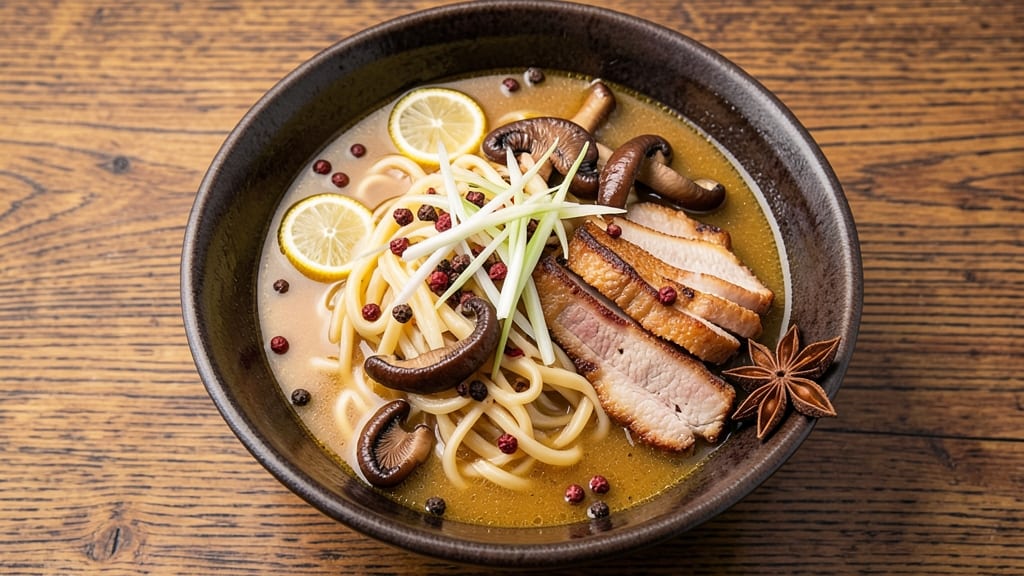
This Ban Mian soup recipe brings the soul-warming essence of Chinese street food into your kitchen with its fragrant star anise broth and wok-fried noodles.
The secret lies in balancing a clear pork broth infused with aromatic spices—star anise, cinnamon, and Sichuan peppercorns—with chewy wheat noodles that absorb every layer of flavor.
I’ve perfected this dish over years of testing, ensuring the broth remains rich yet light, while the stir-fried noodles develop a satisfying crisp-tender texture.
The magic happens in two stages: first, building the broth by simmering pork bones and aromatics until deeply flavorful, then quickly wok-frying fresh noodles with a splash of the broth to create that signature smoky aroma.
Toppings like thinly sliced pork, wood ear mushrooms, and pickled vegetables add texture and brightness, while a drizzle of chili oil brings just the right kick. This isn’t just a soup—it’s a comforting bowl of nostalgia that transforms a simple meal into an experience.
What sets this recipe apart is the harmony of techniques: slow-simmered broth meets fast, high-heat stir-frying, resulting in a dish that’s both restaurant-quality and achievable at home. The star anise and cinnamon infuse the broth with warmth, while the Sichuan peppercorns add a subtle tingling heat.
Every spoonful delivers a balance of savory, umami, and aromatic depth that keeps you reaching for more.
Perfect for chilly evenings or as a hearty lunch, this Ban Mian soup is versatile enough to adapt with your favorite proteins or vegetables.
Whether you’re serving a family or treating yourself, the key is confidence in the cooking process—let the spices sing, the noodles dance, and the broth work its magic. Ready to make this your new go-to comfort dish?
Ingredients for ban mian soup
Pantry staples meet aromatic spices for this fragrant Ban Mian soup experience.
| Ingredient | Amount | Notes |
|---|---|---|
| Pork Bones 🥩 | 2 lb | Marrow bones for richness |
| Fresh Ginger 🧄 | ½ inch | Sliced into thick matchsticks |
| Star Anise Pods 🌿 | 4 whole | Whole pods for infusion |
| Cinnamon Sticks 🌿 | 2 whole | 2-inch pieces preferred |
| Sichuan Peppercorns 🌶️ | 1 tbsp | Lightly toasted first |
| Dried Shiitake Mushrooms 🍄 | 4 whole | Rehydrated in hot water |
| Fresh Wheat Noodles 🍜 | 12 oz | Ban mian noodles preferred |
| Thinly Sliced Pork 🥩 | 8 oz | Boneless, skinless preferred |
| Wood Ear Mushrooms 🍄 | ½ cup | Rehydrated and sliced |
| Green Onions 🧅 | ¼ cup | Thinly sliced for garnish |
| Chili Oil 🌶️ | 2 tbsp | For finishing drizzle |
| Light Soy Sauce 🍶 | ¼ cup | For seasoning broth |
| Sesame Oil 🫒 | 1 tbsp | For aroma finish |
| Salt 🧂 | 1 ½ tsp | Adjust to taste |
| White Peppercorns 🌶️ | ½ tsp | Freshly ground preferred |
The star anise and Sichuan peppercorns are non-negotiable for that signature aroma. Penzeys Spices has the best whole pods, but the Asian market section at Trader Joe's usually carries them too. Look for vibrant, unbroken pods—those wrinkled or cracked ones lose their punch fast. The ginger should be fresh, with a bright color and firm texture. If you can't find Sichuan peppercorns, substitute with a pinch of cayenne plus a dash of black pepper for heat, though it won't be the same. For the pork bones, marrow bones add the most richness, but knuckle bones work too if that's what's available.
No pork bones? Use chicken or beef bones instead, but increase the simmering time by 30 minutes. The dried shiitake mushrooms can be found in the Asian aisle—look for thick, meaty ones. If your wood ear mushrooms are tough to find, substitute with rehydrated black fungus mushrooms. For the noodles, ban mian noodles are ideal, but fresh egg noodles work in a pinch. The chili oil? Lao Gan Ma brand is the gold standard, but any good-quality chili oil will do. If you're short on time, use bottled chili oil and add a pinch of sugar to balance the heat.
The broth keeps for 3 days in the fridge, and the noodles can be prepped ahead too—just toss them with a little oil so they don't stick. Freeze the broth in 1-cup portions for quick future meals. The Sichuan peppercorns lose potency after 3 months, so store them in a sealed jar away from light. For extra flavor, toast the whole spices in a dry pan for 30 seconds before adding to the broth—this deepens their aroma dramatically.
Why You'll Love This Recipe
- Pork Bones Do the Work: I swear by this—simmer those pork bones for a few hours, and the broth basically assembles itself. No constant stirring, no fancy techniques, just throw everything in and let the spices infuse. Honestly, the hardest part is waiting for it to get rich enough to coat a spoon.
- Spice Symphony in a Bowl: That combo of star anise, cinnamon, and Sichuan peppercorns? It’s like a warm hug for your taste buds. The ginger cuts through the richness, and the peppercorns add this subtle, tingling kick that makes you want to slurp it straight from the pot. (Yes, even on a Tuesday night.)
- Leftovers That Beg for More: This soup only gets better the next day—like a flavor upgrade your future self will thank you for. I make a big batch on Sundays, and by Wednesday, it’s the only thing anyone in my house will eat. Freezes like a dream too, so you’re always covered.
- Budget-Winning Comfort: Pork bones are cheaper than you think, and a single batch stretches to feed four for two meals. Between us, this is my go-to when I’m broke but still want to feel fancy. The spices are cheap, the prep is minimal, and the result? Pure satisfaction in a bowl.
Step-by-step instructions for wok-fried noodles with fragrant star anise broth
This aromatic ban mian soup delivers rich, layered flavors through careful broth-building and wok-frying techniques.
Prepare the Star Anise Broth
In a large pot, combine the 2 lb pork bones, 0.5 inch fresh ginger (sliced), 4 whole star anise pods, 2 whole cinnamon sticks, and 1 tbsp Sichuan peppercorns (lightly toasted). Cover with 8 cups cold water and bring to a boil over medium-high heat. Once boiling, reduce to a gentle simmer and skim off any foam that rises to the surface.
Simmer uncovered for 2 hours, maintaining a gentle bubble. The broth should reduce slightly and develop a deep, aromatic fragrance from the spices. If it reduces too much, add hot water to maintain 4 cups liquid. This slow cooking extracts maximum flavor from the bones while infusing the broth with warm, spiced notes.
Rehydrate and Prepare Mushrooms
While the broth simmers, place the 4 whole dried shiitake mushrooms in a bowl and cover with hot water. Let them soak for 20 minutes until softened. Drain, reserving the soaking liquid, then slice the mushrooms. In another bowl, cover the 0.5 cup wood ear mushrooms with hot water and let them soak for 15 minutes. Drain and slice thinly.
Add the reserved mushroom soaking liquid to the broth along with 0.25 cup light soy sauce and 1.5 tsp salt. Bring to a gentle simmer and cook for 10 minutes to meld flavors. Strain the broth through a fine-mesh sieve into a clean pot, pressing gently on the solids to extract maximum flavor. Discard the solids.
Cook the Pork and Noodles
Heat a wok or large skillet over high heat until smoking. Add the 8 oz thinly sliced pork and stir-fry for 2-3 minutes until just cooked through. Remove pork and set aside. In the same wok, add 1 tbsp sesame oil and swirl to coat. Add the 12 oz fresh wheat noodles and stir-fry for 1-2 minutes until they begin to soften.
Return the pork to the wok and add the sliced shiitake and wood ear mushrooms. Pour in 2 cups of the strained broth and toss everything together. Cook for 2-3 minutes until the noodles are tender but still have a slight bite. The broth should coat the noodles without making them soggy.
Finish and Serve
Remove the wok from heat and stir in 2 tbsp chili oil and 0.5 tsp freshly ground white peppercorns. Taste and adjust seasoning with additional light soy sauce or salt if needed. Divide the noodles among 4 bowls, garnishing each with 1 tbsp thinly sliced green onions. Drizzle with any remaining broth from the wok.
Serve immediately while hot, with extra chili oil on the side for those who prefer more heat. The soup should have a perfect balance of rich, spiced broth, tender pork, and chewy noodles with a hint of numbing Sichuan peppercorn finish.
Pro Tips For Making Ban Mian Soup
- BLISTER THE BONES FIRST: I learned this the hard way—skipping the char on pork bones means a broth that’s pale and bland. Sear them over high heat until deep brown in spots (about 5 minutes per side) before simmering. That crust unlocks flavors you’d miss otherwise, and it’s non-negotiable for real depth.
- SLICE GINGER THINLY: Thick ginger chunks just sit at the bottom like decorative rocks. Instead, shave it paper-thin with a mandoline or knife—this way, it infuses the broth evenly and dissolves without bitterness. (Yes, even if you’re impatient like me.)
- DON’T BOIL THE STAR ANISE: Tossing whole star anise pods into a rolling boil kills their aroma. Add them after the broth returns to a gentle simmer, and they’ll perfume the soup without turning it into perfume. A splash of cold water can help too—just enough to lower the heat.
- RESIST THE URGE TO ADD NOODLES EARLY: I used to dump noodles in too soon, and they’d turn mushy before the broth was ready. Wait until the pork bones are fork-tender (about 1.5–2 hours) and the broth’s rich enough to coat the back of a spoon. Then, shock the noodles in ice water for 30 seconds before adding—they’ll stay al dente.
Storing and reheating this recipe
Broth Storage Tips
The star anise broth keeps beautifully in the fridge for up to 3 days in an airtight container. I always store it in a glass Pyrex container with a tight lid to preserve those aromatic spices.
For longer storage, freeze the broth in 1-cup portions—this makes it perfect for quick future meals. Just thaw overnight in the fridge before reheating. 🌡️
Noodle Prep Ahead
Cook the noodles just before serving to maintain their perfect texture, but you can prep them ahead by tossing with 1 tsp neutral oil to prevent sticking. Store in a resealable plastic bag in the fridge for up to 2 days.
When ready to use, simply reheat in the wok with a splash of broth for 1-2 minutes—they'll be ready to stir-fry in no time. ✨
Reheating Leftovers
If you have leftover soup, reheat it gently on the stovetop over medium-low heat with ¼ cup water or broth to prevent drying. Stir occasionally and add more liquid if needed.
Avoid microwaving—it can make the noodles mushy. For extra flavor, finish with a drizzle of chili oil and fresh green onions. 🍜
Freezer-Friendly Toppings
Prep your toppings ahead and store them separately in the freezer. The thinly sliced pork freezes well for 1 month in a single layer before transferring to a bag.
The rehydrated mushrooms can also be frozen—just slice them after thawing. When reheating, add them back to the wok with the noodles for that fresh-off-the-stove texture. 🥩
Reviving Stale Noodles
If your noodles lose their chewiness, revive them by boiling in fresh broth for 2-3 minutes before stir-frying. This restores their bite while reabsorbing flavor. For extra richness, add a splash of sesame oil and a pinch of white peppercorns to the reheated broth. 💫
Broth Flavor Boost
If your broth tastes flat after reheating, revive it with a toasted star anise pod and a splash of light soy sauce. Simmer for 5 minutes to reactivate those aromatic notes. For a smoky finish, add a pinch of Sichuan peppercorns while reheating—it’ll wake up the dish instantly. 🌿
Nutrition facts
Frequently asked questions
What makes this ban mian soup different from regular noodle soup?
The key difference lies in the wok-frying technique and the aromatic spice blend—star anise, cinnamon, and Sichuan peppercorns create that signature warm, slightly numbing flavor. Traditional ban mian also uses chewy wheat noodles stir-fried quickly to maintain texture, rather than soft-boiled noodles. The broth is lighter than many Chinese soups but packed with depth from slow-simmered pork bones.
Can I use chicken or beef instead of pork for the broth?
Yes! For a chicken broth, use 2 lb chicken bones (including backbone for flavor) and simmer for 1.5 hours instead of 2. For beef broth, beef marrow bones work best—simmer for 2.5 hours to extract rich collagen. Adjust soy sauce to taste, as beef broth tends to be saltier. The star anise and cinnamon will still shine through.
How do I prevent the noodles from turning mushy when reheating?
Never microwave—always reheat on the stovetop with ¼ cup broth or water over medium-low heat. Stir frequently and add more liquid if needed. For extra insurance, toss the noodles with 1 tsp sesame oil before reheating to create a protective barrier. If they still feel limp, stir-fry them for 1-2 minutes in a dry wok to restore chewiness.
What's the best way to adjust the spice level?
Start with the 2 tbsp chili oil called for, then add more to taste. For heat-sensitive eaters, reduce to 1 tbsp and boost flavor with extra Sichuan peppercorns (½ tsp toasted) or a pinch of cayenne. The star anise and cinnamon provide warmth without heat—save the chili oil for the final drizzle.
Can I make this soup vegetarian?
Replace the pork with extra mushrooms (shiitake + wood ear) and add tofu or king oyster mushrooms for protein. Boost umami with 1 tbsp vegetarian oyster sauce and ½ cup reserved mushroom soaking liquid in the broth. The star anise and ginger will still create that comforting aromatic base.