
Soups & Stews
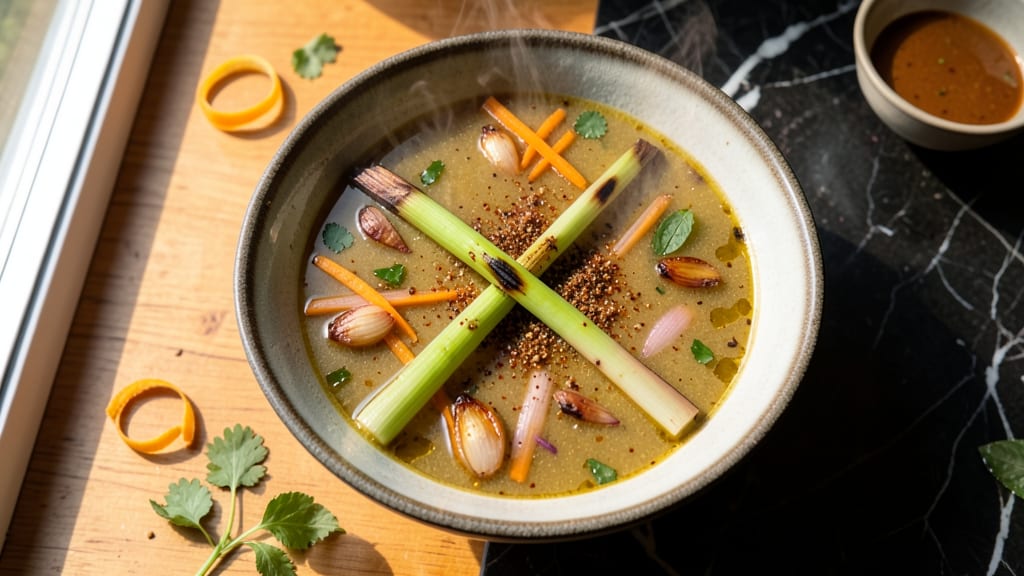
This Bengali-Thai soup recipe bridges two culinary worlds with a fragrant broth that marries lemongrass and galangal with the warmth of mustard oil and panch phoron. The fusion begins with a slow-simmered base of aromatic roots and spices, creating a depth that's both familiar and excitingly new.
What makes this dish special is how it balances traditional Bengali flavors—like fish and mustard—with Thai techniques, such as coconut milk and fresh herbs.
The result is a silky, comforting soup where tender noodles float in a broth that’s simultaneously bright and savory. The galangal and lemongrass lend a citrusy sharpness, while the mustard oil adds a rich, earthy backbone.
This isn’t just a soup; it’s a harmonious blend of textures and tastes that invites you to savor every spoonful. Perfect for chilly evenings or as a light yet satisfying main course, it’s a recipe that proves fusion cooking can be both bold and balanced.
What sets this apart is the layering of flavors—starting with a toasted spice blend, then building the broth with slow-cooked aromatics, and finishing with fresh herbs and lime. The noodles, silky and just al dente, absorb the broth’s richness without losing their structure.
Each bite delivers a symphony of heat, citrus, and umami, making it a dish that feels both nostalgic and refreshingly modern.
Whether you’re serving it as a hearty lunch or a comforting dinner, this soup adapts effortlessly to dietary preferences—vegetarian or not. The broth’s versatility means it can be made richer with fish or kept lighter with tofu, all while maintaining its signature depth.
Ready in about 45 minutes, it’s a recipe that delivers restaurant-quality results with minimal fuss.
Ingredients for bengali thai soup
These aromatic roots and spices create a fragrant broth that bridges Bengali warmth with Thai brightness.
| Ingredient | Amount | Notes |
|---|---|---|
| Fresh Lemongrass Stalk 🌿 | 3 whole | Bruised and cut into 2-inch pieces |
| Galangal Slices 🍋 | 2 pieces | Fresh, peeled, 1-inch thick |
| Mustard Oil 🫒 | ¼ cup | Cold-pressed, for authentic flavor |
| Panch Phoron 🌶️ | 1 tsp | Toasted until fragrant |
| Fresh Turmeric Root 🧅 | 1 piece | Peeled, 2-inch length |
| Shallots 🧅 | 4 whole | Peeled, halved lengthwise |
| Garlic Cloves 🧄 | 6 cloves | Peeled, lightly crushed |
| Vegetable or Fish Stock 💧 | 4 cups | Homemade preferred |
| Coconut Milk 🥥 | ½ cup | Full-fat for creaminess |
| Rice Noodles 🍜 | 8 oz | Fresh or dried, soaked if needed |
| Fresh Thai Basil Leaves 🌿 | ¼ cup | Chopped for garnish |
| Lime Wedges 🍋 | 2 whole | For serving |
| Salt 🧂 | 1 tsp | Adjust to taste |
| White Peppercorns 🌶️ | ½ tsp | Crushed lightly |
| Fish (optional) 🐟 | ½ lb | White fish, cubed (for non-veg) |
The mustard oil and panch phoron are non-negotiable for authentic flavor. Mustard oil should be cold-pressed and stored in a cool, dark place—Indian grocery stores carry the best brands like Saffola. Panch phoron, a five-spice blend, is available at specialty stores or online; if unavailable, substitute with equal parts cumin, fennel, fenugreek, nigella, and black pepper. Fresh galangal and lemongrass are essential—Asian markets stock them year-round, but frozen works in a pinch. For the broth, homemade stock elevates the dish, but high-quality store-bought (like Pacific Foods) suffices. The turmeric and shallots should be vibrant, not dried out.
No fresh galangal? Substitute with ginger at half the amount, though it won’t replicate the citrusy depth. Mustard oil too strong? Mix with equal parts neutral oil like avocado or vegetable. The fish stock can be swapped for vegetable stock plus 1 tbsp fish sauce for umami. For a vegetarian version, omit the fish entirely and add extra tofu or mushrooms for protein. The rice noodles should be fresh if possible—they cook faster and hold their texture better. If using dried, soak them in warm water for 10-15 minutes before adding to the broth.
The broth keeps its depth for 3-4 days in the fridge, but the noodles soften over time—best to cook fresh. Store the broth separately and reheat gently. The panch phoron loses potency after 2 weeks, so buy small amounts or store in an airtight container in the freezer. For meal prep, assemble the soup just before serving to preserve the herbs' freshness. Lime wedges should be added last—their acidity brightens the dish instantly, but they’ll turn the broth bitter if steeped too long.
Why You'll Love This Recipe
- No Chopping Chaos: That lemongrass and turmeric? You just bruise the stalks and slice the galangal—no dice, no mincing, no stress. Honestly, I’ve made this while scrolling through my phone; the hardest part is finding the mustard oil in my pantry.
- Umami Bomb: Mustard oil hits first—bold, nutty, unmistakable—then the panch phoron blooms into this earthy, toasty warmth. It’s the kind of flavor that makes you pause mid-sip, like, "Wait, why does soup taste this good?"
- Leftovers That Shine: This soup only gets better the next day. The galangal and lemongrass infuse deeper, and the broth thickens just enough to feel richer. I’ll be real: I’ve reheated it three times in a row without a single complaint.
- Budget Flexibility: Mustard oil and galangal might sound fancy, but they stretch like crazy. A little goes a long way—enough to feed four for under $10, and the leftovers? Even better. (Yes, even on a Tuesday night.)
Step-by-step instructions for Bengali Thai soup with lemongrass-galangal broth
Transform simple ingredients into a fragrant, restaurant-quality soup with this precise method.
Toast the Spice Blend for Maximum Flavor
Heat a small dry skillet over medium heat. Add the 1 teaspoon toasted panch phoron and toast for 30-45 seconds until fragrant and lightly golden. This step unlocks the full aromatic potential of the spices—don't skip it. Immediately transfer the toasted panch phoron to a small bowl and set aside.
In the same skillet, add the 0.25 cup mustard oil and warm over medium-low heat for 1 minute until shimmering but not smoking. The oil should smell nutty and rich—this is your flavor base. Remove from heat and set aside with the panch phoron.
Build the Aromatic Base with Lemongrass and Galangal
In a large pot, combine the 4 cups vegetable or fish stock, 3 whole lemongrass stalks (bruised and cut), 2 pieces galangal slices, and 1 piece fresh turmeric root (peeled). Bring to a boil over high heat, then immediately reduce to a simmer. Let cook uncovered for 10 minutes to extract maximum flavor from the aromatic ingredients.
While simmering, peel and halve the 4 whole shallots lengthwise, then peel and lightly crush the 6 cloves garlic. When the stock has reduced slightly and smells intensely fragrant, add the shallots and garlic. Simmer for another 5 minutes until the shallots are translucent but not browned. This creates the perfect aromatic foundation for your soup.
Create the Signature Broth Texture
Strain the broth through a fine-mesh sieve into a clean pot, pressing gently on the solids to extract all the flavor. Discard the solids. Return the strained broth to medium heat and add the 0.5 cup coconut milk. Stir gently—you want to create a silky, velvety texture without breaking the milk's emulsion.
Season with the 1 teaspoon salt and 0.5 teaspoon crushed white peppercorns. Taste and adjust seasoning—this is where the soup comes together. The broth should be balanced between the earthy galangal, citrusy lemongrass, and subtle heat from the panch phoron. If using the 0.5 lb fish, add it now and cook for 3-4 minutes until just opaque.
Prepare and Cook the Noodles
While the broth simmers, prepare the 8 oz rice noodles according to package instructions. Fresh noodles should cook in 2-3 minutes in boiling water, while dried noodles may take 5-7 minutes. Drain and rinse briefly with cold water to stop cooking, then drain again. The noodles should be al dente—slightly firm to the bite.
Divide the cooked noodles among 4 bowls. Ladle the hot broth evenly over the noodles, making sure each serving gets its share of fish (if using) and coconut milk. The broth should just cover the noodles—this ensures each bite delivers that perfect balance of texture and flavor.
Finish and Serve with Fresh Garnishes
Let each bowl sit for 1 minute to allow the noodles to absorb some of the broth's warmth. Garnish each serving with 1 tablespoon chopped fresh Thai basil leaves and serve immediately with the 2 lime wedges on the side. The basil adds a bright, herbal contrast to the rich broth, while the lime provides a final citrus punch.
Serve with extra mustard oil drizzled on top if desired—this adds another layer of depth to the dish. The soup should be aromatic when you lift the spoon, with the lemongrass and galangal flavors dominating but balanced by the creamy coconut milk and subtle heat from the spices. Each bite should deliver that perfect harmony of textures and flavors that makes this soup so special.
Pro Tips For Making Bengali Thai Soup
- Bruise the Galangal: Slap those galangal slices with the flat side of your knife a few times before slicing—it releases the oils and makes the flavor pop. I learned this the hard way after skipping it; the soup tasted flat until I tried it again.
- Low and Slow for Turmeric: Add the fresh turmeric root last and simmer on the lowest heat possible—just above a whisper. High heat burns it bitter, and you’ll regret it when the soup tastes like medicine. Trust me, patience here matters.
- Mustard Oil First: Heat the mustard oil alone for 30 seconds before adding anything else—just until it shimmers. This removes the raw bite and lets the panch phoron toast properly without smoking up your kitchen. (Yes, even if you’re impatient like me.)
- Lemongrass in Halves: Split the lemongrass stalks lengthwise and scrape out the tough inner core before using the pale green parts. It’s less work than chopping, and the flavor stays bright instead of turning to mush. (Your future self will notice the difference.)
Creative variations of this dish
Spicy Fish Fusion
For a bolder, more traditional Bengali-Thai fusion, add 1 tablespoon of chili paste (like Maesri Sriracha) to the broth while simmering. Toss in ½ lb firm white fish (like cod or snapper) cut into 1-inch cubes after adding the coconut milk.
Cook for 4-5 minutes until just opaque—this keeps the fish tender while infusing it with the galangal-lemongrass flavors. Garnish with extra Thai basil and a drizzle of mustard oil for a restaurant-style finish. 🌶️
Vegetarian Tofu Twist
Skip the fish entirely and use 1 block (14 oz) extra-firm tofu, pressed and cubed. Pan-fry the tofu in 1 tablespoon mustard oil until golden before adding it to the broth. For extra depth, stir in 1 tablespoon soy sauce and ½ teaspoon turmeric with the tofu.
The tofu absorbs the broth’s flavors beautifully while adding a satisfying texture. Serve with sriracha on the side for heat lovers. 🥬
Coconut Curry Infusion
Transform this into a lighter curry-style soup by adding ½ cup coconut milk after the broth has simmered for 15 minutes. Stir in 1 teaspoon mild curry powder and ½ teaspoon ground coriander for warmth.
Swap the rice noodles for egg noodles and top with crispy fried shallots for crunch. The curry spices mellow the galangal’s sharpness while keeping the dish creamy and aromatic. 🥥
Herb-Forward Spring Version
Brighten the broth for spring by adding ½ cup fresh mint leaves and ¼ cup cilantro while simmering. Reduce the galangal to 1 piece and increase lemongrass to 4 stalks for a citrusier profile.
Serve with lime wedges and a sprinkle of toasted cumin seeds for a refreshing, herbaceous twist. This version works perfectly with chilled rice noodles for a no-cook option. 🌿
Smoky Grilled Broth
For a smoky depth, char 1 lemongrass stalk and 1 piece galangal over an open flame or under a broiler for 2-3 minutes before adding to the broth. The charred aromatics add a subtle smokiness that pairs beautifully with the coconut milk.
Garnish with crispy fried garlic (pan-fry 3 minced garlic cloves in oil until golden) for an extra layer of complexity. 🔥
Protein-Packed Mushroom
Replace fish with 8 oz shiitake mushrooms, sliced, and ½ cup baby bok choy for a vegetarian powerhouse. Sauté the mushrooms in 1 tablespoon mustard oil until golden before adding to the broth.
The mushrooms absorb the galangal’s earthy notes while the bok choy adds a crisp, fresh element. Finish with Thai basil and a squeeze of lime for brightness. 🍄
Nutrition facts
Frequently asked questions
What makes this soup different from regular Thai or Bengali soups?
This recipe blends authentic Bengali flavors—like mustard oil and panch phoron—with Thai techniques such as lemongrass-galangal broth and coconut milk. The fusion creates a unique balance of earthy warmth (from mustard oil) and citrusy brightness (from galangal), while the noodles add a satisfying texture that bridges both cuisines.
Can I make this soup vegetarian or vegan?
Skip the fish and use tofu, mushrooms, or extra vegetables like bok choy. For umami depth, add 1 tablespoon soy sauce or ½ teaspoon miso paste to the broth. The coconut milk and galangal will still deliver rich, satisfying flavors without animal products.
How do I substitute galangal if I can’t find it?
Use ginger at half the amount (1-inch piece instead of 2) for a milder, spicier alternative. For a closer match, blend equal parts ginger and turmeric—this mimics galangal’s citrusy warmth. Just note that ginger lacks galangal’s unique peppery depth, so adjust seasoning to taste.
Why does the broth smell so strong before it tastes balanced?
The intense aroma comes from the toasted panch phoron and simmered aromatics (galangal, lemongrass). Once the broth reduces and blends with coconut milk, the flavors harmonize—earthy galangal softens, mustard oil’s heat mellows, and the coconut milk adds creaminess. Taste as you go! The final dish should be complex but cohesive.
Can I prepare this soup ahead of time?
Yes! Make the broth up to 3 days ahead and store it refrigerated. Reheat gently, then add fresh noodles and garnishes just before serving. For the best texture, avoid overcooking the broth—it thickens as it sits. The mustard oil and herbs should be added fresh to preserve their brightness.