
Soups & Stews
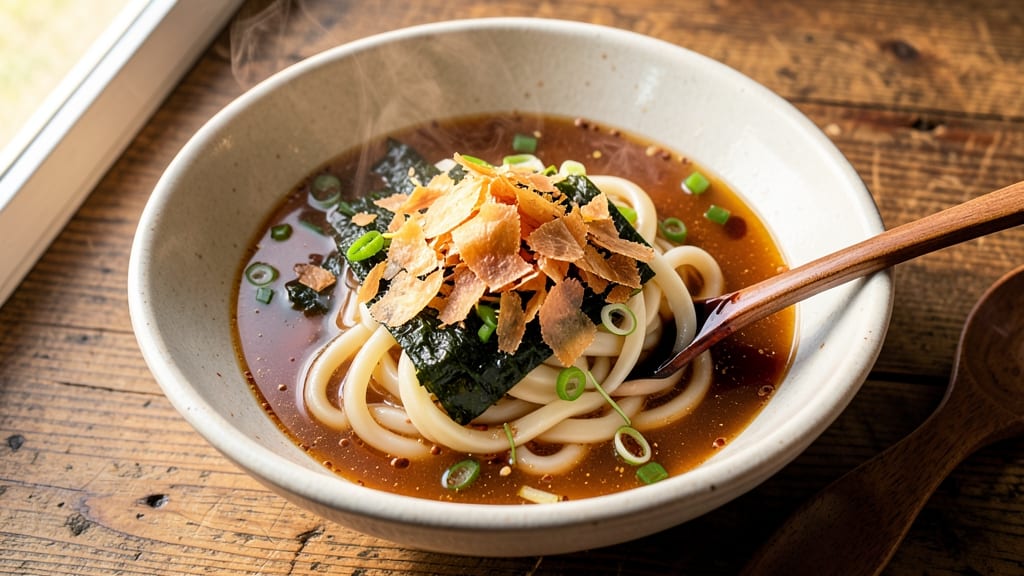
This authentic udon noodle soup recipe brings the comforting essence of Japanese home cooking to your kitchen with its signature slippery noodles and fragrant soy-ginger broth.
The secret lies in the broth—built layer by layer with kombu, bonito flakes, and a touch of mirin for depth, creating that unmistakable umami richness. I developed this after years of perfecting the balance between chewy udon, silky broth, and the right toppings to elevate every spoonful.
The udon noodles themselves are key—thick, wheat-based, and perfectly cooked to that signature slippery texture that defines the dish. We'll simmer the broth low and slow, allowing the flavors to meld while keeping the noodles from turning mushy.
Traditional toppings like tempura flakes, green onions, and nori add crunch and visual appeal, but the real magic happens in the broth's complexity.
What makes this recipe truly authentic is the attention to detail: the way the broth should be cloudy yet clear, the noodles al dente yet tender, and the toppings arranged just so.
The aroma alone—steaming broth infused with ginger, garlic, and soy—will transport you to a Tokyo ramen shop. This is comfort food at its finest, where every element works together in perfect harmony.
Whether you're serving this for a weeknight dinner or a special gathering, the process is straightforward yet rewarding. The broth can be made ahead, and the noodles cook in minutes, making it a foolproof method for restaurant-quality results at home.
Let's get started on creating your own bowl of umami perfection.
Ingredients for authentic udon noodle soup
These Japanese staples and umami-rich ingredients create the perfect slippery udon bowl.
| Ingredient | Amount | Notes |
|---|---|---|
| Dried Udon Noodles 🍜 | 8 oz | Thick wheat-based, slippery texture |
| Dashi Stock 💧 | 4 cups | Homemade or quality store-bought |
| Kombu 🍃 | 1 piece | Dried seaweed, 6x8 inches |
| Bonito Flakes 🐟 | ¼ cup | High-quality, dried skipjack |
| Soy Sauce 🍶 | ½ cup | Japanese-style, reduced |
| Mirin 🍶 | ¼ cup | Sweet rice wine, not imitation |
| Fresh Ginger 🧄 | 2 tbsp | Finely grated, aromatic |
| Garlic Cloves 🧄 | 4 cloves | Minced for depth |
| Green Onions 🧅 | 4 whole | Thinly sliced, for garnish |
| Tempura Flakes 🍟 | ¼ cup | For crunchy topping |
| Dried Nori Sheets 🍣 | 4 sheets | Cut into strips for garnish |
| Sesame Oil 🫒 | 1 tbsp | Toasted, for aroma |
| Neutral Oil 🫒 | 1 tbsp | For frying tempura flakes |
| Salt 🧂 | 1 tsp | To taste, adjust carefully |
The udon noodles are non-negotiable—Japanese brands like Maruchan or Nissin deliver that signature chewy texture. If you can't find dried, fresh udon works too but requires quicker cooking. For the broth, homemade dashi is ideal: simmer kombu in water for 30 minutes, then add bonito flakes (strain before using). Japanese grocery stores like Mitsuwa or H Mart carry everything you need in one trip. The mirin adds that sweet, complex depth—never substitute with regular rice wine.
No kombu? Dried shiitake mushrooms add umami depth as a substitute. Short on bonito flakes? Dried sardines or anchovies work in a pinch (strain well). The soy sauce should be Japanese-style like Kikkoman—regular American brands fall short. For extra richness, add a dash of fish sauce (just a teaspoon) to the broth. The tempura flakes can be homemade (lightly fry potato starch) or store-bought—Japanese brands like Ajinomoto are best. Fresh ginger is a must for aroma, but dried works at half the amount if needed.
The broth keeps for 3 days refrigerated or 3 months frozen—make extra for leftovers. Udon noodles stay fresh 2 weeks uncooked in a cool, dry place. For serving, arrange toppings artistically: tempura flakes, nori strips, and green onions in a fan shape over each bowl. The sesame oil should be added just before serving to preserve its aroma. This dish tastes even better the next day as flavors meld!
Why You'll Love This Recipe
- No-Fuss Pantry Magic: I swear by this recipe when my fridge is empty but my cravings aren’t. Just kombu, bonito flakes, and water—no chopping, no stress—just simmer and soak. The dashi builds flavor while you boil noodles, and honestly? That’s my kind of cooking.
- Umami Bomb: The moment bonito flakes hit the water, my kitchen smells like a Tokyo izakaya. That deep, savory punch from kombu and soy sauce? It’s the kind of taste that makes you pause mid-sip of soup, just to savor it. No fancy ingredients, just pure, addictive depth.
- Lunchbox Hero: Between us, this is my go-to for meal prep—double the broth, pack noodles separately, and reheat with hot water. My kids (and my picky husband) actually finish what’s in their containers. Not the prettiest lunch, but the taste? Always disappears.
- Budget Comfort: A single pack of udon and a bag of kombu lasts me weeks. The broth is free to make, and leftovers taste even better the next day—just add a splash of water to loosen the noodles. That’s $5 worth of satisfaction for days. (Yes, even on a Tuesday night.)
Step-by-step instructions for authentic udon noodle soup
Let's create a bowl of restaurant-quality udon that captures Japan's comforting flavors.
Prepare the Dashi Broth with Kombu and Bonito
Start by placing the 1 piece Kombu in a clean pot and covering it with 4 cups Dashi Stock. Bring to a gentle simmer over medium heat—you'll see tiny bubbles form around the edges. Let it simmer uncovered for 5 minutes until you notice the kombu releasing its oceanic aroma. This step infuses the broth with umami depth.
Remove the kombu immediately after simmering—it should be soft but still intact. Then, sprinkle 0.25 cup Bonito Flakes over the simmering broth. Let them sizzle for 1-2 minutes until they dissolve completely, creating a delicate, cloudy sheen on the surface. This is the signature flavor of authentic dashi. Keep the broth warm at a very low simmer while you prepare the remaining ingredients.
Build the Soy-Ginger Base
In a separate small saucepan, combine 0.5 cup Soy Sauce, 0.25 cup Mirin, 2 tbsp Fresh Ginger, and 4 cloves Garlic Cloves. Bring to a gentle boil over medium heat, then immediately reduce to a simmer. Cook for 3-4 minutes until the mixture reduces slightly and becomes fragrant—you should smell the warm, spicy notes of ginger and the sweetness of mirin.
Strain this mixture through a fine-mesh sieve into your dashi broth, pressing gently on the solids to extract all the flavor. Add 1 tsp Salt and taste—this is where you'll adjust the seasoning. The broth should be savory with a bright, slightly sweet balance. Return the broth to a gentle simmer for the next step.
Cook the Udon Noodles Perfectly
Bring a large pot of water to a rolling boil. Add the 8 oz Dried Udon Noodles and cook according to package directions—typically 4-5 minutes for al dente texture. The noodles are done when they float to the surface and have a slight bite. Drain immediately and rinse briefly under cold water to stop the cooking process. This prevents them from becoming mushy in the broth.
Divide the cooked noodles among 4 bowls, spreading them evenly. Ladle the hot broth over the noodles until each bowl is ¾ full. The broth should be steaming hot when it hits the noodles—this helps them rehydrate perfectly. Let the noodles soak in the broth for 1-2 minutes before serving.
Add Crunchy Toppings and Garnishes
Heat 1 tbsp Neutral Oil in a small skillet over medium heat. Add 0.25 cup Tempura Flakes and toast for 30-45 seconds until they puff up and turn golden. Remove from heat immediately—they'll continue cooking from residual heat.
Cut the 4 sheets Dried Nori Sheets into thin strips. Drizzle each bowl with 1 tsp Sesame Oil and top with the toasted tempura flakes and nori strips. Finish with 1 whole Green Onion sliced over each bowl. The contrast of crispy tempura, delicate nori, and the slippery udon creates the perfect texture experience.
Serve Immediately for Maximum Flavor
Serve each bowl right away while the broth is steaming hot. The udon should be coated in the fragrant soy-ginger broth with just a slight bite. Take your first sip—you should taste the umami from the dashi, the warmth of ginger, the sweetness of mirin, and the salty depth of the soy sauce working together in harmony.
For an authentic touch, use chopsticks to twirl the noodles while slurping the broth—this cools the noodles slightly and enhances the flavor. The tempura flakes add satisfying crunch with each bite, while the nori provides a subtle oceanic note. This is udon the way it's meant to be enjoyed!
Pro Tips For Making Authentic Udon Noodle Soup
- SOAK NOODLES SEPARATELY: Dried udon need 4-5 minutes in boiling water—don’t toss them in with the broth. They’ll turn mushy if you wait, and nobody wants sad, limp noodles in their soup. Use a fine-mesh strainer and rinse with cold water right after to stop cooking.
- TOAST BONITO LOW: Sprinkle bonito flakes over simmering (not boiling) stock—high heat burns them into bitter dust. Let them float undisturbed for 30 seconds, then remove them with a slotted spoon. The broth should smell like a Japanese seaside, not a smoky campfire.
- SALT THE STOCK LATE: Hold off on soy sauce until the very end—after kombu and bonito have worked their magic. Add it while the noodles cook, then taste and adjust. Too early, and you’ll overpower the delicate umami layers you just built.
- USE KOMBU FIRST: Soak kombu in cold water for 20 minutes before boiling—this extracts its collagen and deepens the broth’s flavor. Skip the pre-boil soak, and your dashi will taste flat, like it’s missing something. (Yes, even if you’re impatient like me.)
Perfect pairings for these flavors
Broth Enhancers
Elevate your udon broth with a splash of 1 tbsp sake when simmering—it adds a subtle floral note that complements the soy and ginger beautifully. For extra depth, stir in ½ tsp white miso paste during the final 5 minutes of simmering.
This creates a velvety texture while boosting umami. I like to add a pinch of black pepper right before serving for a subtle kick that cuts through the richness. 🌶️
Crunchy Toppings
For a vegetarian twist, replace tempura flakes with crispy shallots—sauté 3 tbsp thinly sliced shallots in 1 tbsp neutral oil until golden and add them to your bowl.
Another great option is toasted sesame seeds—just dry-toast 1 tbsp in a pan until fragrant and sprinkle generously. These add texture without overpowering the delicate broth. 🌟
Fresh Ingredients
Brighten your udon with soft-boiled eggs—poach 4 eggs for 4 minutes and slice them in half lengthwise before placing them on top. The runny yolk adds a luxurious touch.
For a herby finish, add thinly sliced chives or shiso leaves (if available) right before serving. These fresh elements balance the rich broth perfectly. 🥚
Spicy Variations
Transform your udon into a spicy tan-tan udon by adding a red chili oil drizzle—mix 1 tbsp chili oil with 1 tsp soy sauce and ½ tsp sugar, then drizzle over the finished bowl.
For heat lovers, stir 1 tsp gochujang into the broth during the final 5 minutes of simmering. Start with less—you can always add more! 🔥
Dessert Pairings
Balance the savory richness with a light matcha green tea latte—its earthy sweetness complements the umami perfectly. For a traditional Japanese pairing, serve with warabi mochi, a chewy jelly-like dessert made from bracken starch.
The contrast between the warm, hearty udon and the cool, delicate mochi is unforgettable. 🍵
Alcoholic Pairings
A crisp Japanese sake, like Dassai Junmai, enhances the udon's flavors without overpowering them. For beer lovers, a light lager such as Asahi Super Dry provides a clean, refreshing contrast. If you prefer wine, a dry Riesling with its citrus notes cuts through the richness beautifully. 🍺
Nutrition facts
Frequently asked questions
Can I use fresh udon noodles instead of dried?
Yes! Fresh udon noodles work beautifully, but they require quicker cooking—typically 2-3 minutes in boiling water until they float and have a slight bite. The texture will be slightly softer than dried udon, but still delicious. Just be careful not to overcook them or they'll turn mushy.
Why does my udon broth look cloudy?
The cloudiness is normal and actually desirable! It comes from the bonito flakes dissolving in the broth, creating that signature umami-rich sheen. If your broth is completely clear, you may have strained it too much. The kombu also contributes to a delicate cloudiness that's part of authentic udon flavor.
How do I make the broth ahead of time?
You can prepare the broth up to 3 days in advance and store it refrigerated. For longer storage, freeze it in airtight containers for up to 3 months. When reheating, bring it to a gentle simmer (don't boil vigorously) to preserve the delicate flavors. Add a splash of water if it reduces too much.
What's the best way to store leftover udon?
Store cooked udon in an airtight container in the fridge for 2-3 days. To reheat, place the noodles in a bowl, cover with hot broth, and let them soak for 2-3 minutes before serving. Avoid microwaving—it makes the noodles gummy. For best texture, reheat just the broth and combine with cold noodles before eating.
Can I make this recipe vegetarian?
Replace the bonito flakes with dried shiitake mushrooms (soaked and strained) and use vegetable dashi instead of kombu-based. For extra umami, add 1 tbsp soy sauce or ½ tsp miso paste to the broth. Keep the tempura flakes vegetarian (check for egg-free versions) or use crispy shallots instead.