
Soups & Stews
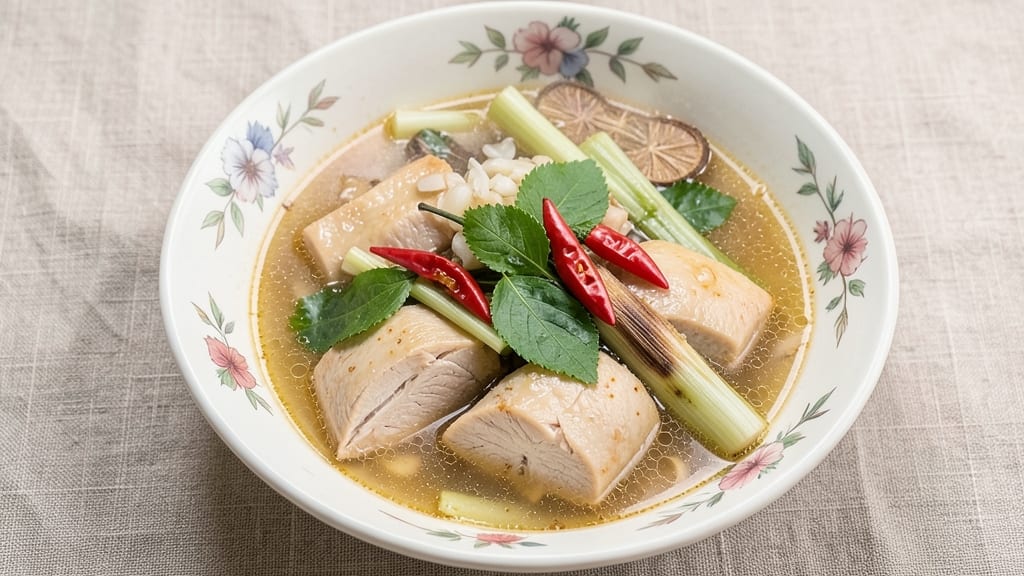
This authentic tom yum gai soup recipe delivers the perfect balance of fiery Thai chili, tangy lime, and fragrant lemongrass—just like your favorite street-side bowl. The secret lies in slow-simmered aromatics and precise spice timing, creating a broth that's clear, aromatic, and packed with complex flavors.
I've perfected this version after years of testing, ensuring every spoonful delivers that signature Thai restaurant experience at home.
The foundation begins with a proper broth base—galangal, lemongrass, kaffir lime leaves, and Thai chilies simmered just enough to release their essential oils without overpowering. Chicken is poached separately to maintain its tenderness, then added at the last moment to preserve its juiciness.
The magic happens when you balance the sour (lime), spicy (chilies), and savory (fish sauce) elements in precise proportions.
What you'll end up with is a steaming bowl of soup where the broth remains crystal-clear yet deeply aromatic, the chicken is fork-tender with just a hint of char, and each bite delivers a perfect harmony of heat, acidity, and herbal brightness.
The traditional garnishes of Thai basil, cilantro, and lime wedges add freshness and visual appeal that makes this dish feel truly authentic.
This recipe serves four and can be easily adjusted for spice preferences—just add more chilies for heat or lime for tang. The broth makes excellent leftovers and tastes even better the next day as the flavors meld further. Let's create this restaurant-quality Thai classic in your own kitchen.
Ingredients for authentic tom yum gai soup
Pantry staples meet Thai market finds for this restaurant-quality soup experience.
| Ingredient | Amount | Notes |
|---|---|---|
| Boneless, Skinless Chicken Breast 🍗 | 1 ½ lb | Cut into 1-inch pieces |
| Fresh Lemongrass Stalk 🌿 | 3 whole | Bruised and cut into 2-inch pieces |
| Galangal Root 🍃 | 1 piece | About 3 oz, peeled and sliced |
| Kaffir Lime Leaves 🍋 | 4 whole | Torn in half |
| Thai Bird's Eye Chilies 🌶️ | 4 whole | Adjust for heat preference |
| Shallots 🧅 | 6 whole | Peeled and thinly sliced |
| Garlic Cloves 🧄 | 8 cloves | Minced |
| Coconut Milk 🥥 | 1 cup | Full-fat for creaminess |
| Fish Sauce 🐟 | 2 tbsp | Red Boat preferred |
| Lime Juice 🍋 | ½ cup | Freshly squeezed |
| Sugar 🍚 | 2 tbsp | White granulated |
| Mushrooms 🍄 | 8 oz | Straw or oyster mushrooms |
| Thai Basil Leaves 🌿 | ¼ cup | For garnish |
| Cilantro Leaves 🌿 | ¼ cup | For garnish |
| Lime Wedges 🍋 | 4 whole | For serving |
The aromatics are non-negotiable here. Thai markets are your best bet for fresh galangal and kaffir lime leaves—look for vibrant, unblemished roots and leaves. If you're using a regular grocery store, Asian specialty sections often carry frozen galangal, which works in a pinch. For lemongrass, grab the thick stalks with tight leaves still attached. The chilies? Bird's Eye variety delivers authentic heat, but adjust to taste. Shallots and garlic should be firm and fresh—no soft spots. The mushrooms add earthiness; straw mushrooms have the perfect texture for this dish.
No galangal? Ginger at half the amount works, though it won't be identical. Out of kaffir lime leaves? Double the lime juice and add a bay leaf for depth. Fish sauce is essential—Red Boat or Three Crabs brands are top-tier, but any good-quality Thai fish sauce will do. The coconut milk needs to be full-fat for that creamy finish (light versions won't work). For the mushrooms, straw or oyster are traditional, but shiitake or cremini will work if that's what you have. The Thai basil is crucial for that signature flavor—regular basil won't cut it, but you can find it frozen in many Asian markets.
Store fresh herbs in damp paper towels in sealed containers for up to 5 days. The broth keeps beautifully for 4-5 days in the fridge, and the flavors actually deepen overnight. For leftovers, portion into containers with a thin layer of coconut milk on top to preserve freshness. Freeze for up to 3 months if you're planning ahead. The garnishes should always be fresh—no wilting leaves in your soup. Lime wedges can be prepped ahead and stored in the fridge for 1 week.
Why You'll Love This Recipe
- No-Fuss Prep: I swear by this recipe because it’s about as hands-off as Thai food gets—just pound the lemongrass and galangal, toss in the chilies, and let the broth work its magic. No mincing, no peeling, no stress.
- Tangy Zing: That first sip? Chef’s kiss. The galangal and kaffir lime leaves give it this bright, herbal punch, while the lemongrass cuts through the heat from the chilies—like a citrusy, spicy hug in a bowl.
- Lunch or Leftovers: Make a big batch on Sunday—it’s perfect for meal prep (stays fresh for days) or turning into a lazy dinner with rice and a cold beer. My roommate’s favorite, honestly.
- Budget Magic: Chicken breast is affordable, and the aromatics stretch the broth beautifully. I’ve fed four people for under $10, and they always ask for seconds. (Yes, even on a Tuesday night.)
Step-by-step instructions for authentic tom yum gai soup
Here's how to craft this iconic Thai soup with perfect balance—where spicy, sour, and herbal notes harmonize.
Prepare the Aromatic Base
In a large pot, combine the 1.5 lb boneless, skinless chicken breast cut into 1-inch pieces, 3 whole fresh lemongrass stalks bruised and cut into 2-inch pieces, 1 piece galangal root peeled and sliced, 4 whole kaffir lime leaves torn in half, and 4 whole Thai bird's eye chilies (adjust for heat). This aromatic bundle forms the soul of your soup—don't skip bruising the lemongrass, as this releases its essential oils and deepens the flavor.
Add 6 whole shallots peeled and thinly sliced, and 8 cloves garlic minced. Pour in 4 cups water (enough to cover the ingredients) and bring to a boil over medium-high heat. Once boiling, immediately reduce heat to low and simmer uncovered for 15 minutes. This slow simmer allows the galangal and lemongrass to infuse the broth with their signature earthy, citrusy notes. The chilies will soften but retain their heat—this is where the soup's signature spice begins to develop.
Build the Broth and Add Protein
After 15 minutes, carefully remove the lemongrass stalks, galangal slices, kaffir lime leaves, and chilies with a slotted spoon, squeezing them gently to extract any remaining flavor. Discard the solids—they've done their job. Return the broth to a gentle simmer and add the 8 oz mushrooms (straw or oyster) and the 1 cup coconut milk. Stir gently to combine, being careful not to break the mushrooms.
The coconut milk adds a subtle creaminess that balances the broth's acidity and heat. Let the soup simmer for another 5 minutes—this is where the flavors meld together. Taste the broth now; it should be aromatic, slightly spicy, and tangy but not yet fully balanced. If it needs more depth, add 1 tablespoon fish sauce now. The broth is the foundation, so take your time here—rushing will result in a flat, one-dimensional soup.
Season and Finish the Soup
Add the 2 tbsp fish sauce and 2 tbsp sugar to the pot, stirring well to dissolve. The fish sauce adds umami depth, while the sugar balances the acidity and rounds out the flavors. Simmer for 3-4 minutes to let the seasonings integrate fully. Now, pour in the 0.5 cup lime juice—this is the moment the soup transforms. The acidity brightens everything, cutting through the richness of the coconut milk and sharpening the heat from the chilies.
Return the chicken to the pot and simmer for 8-10 minutes until the chicken is fully cooked and tender. The chicken should be opaque throughout with no pink remaining. Taste again and adjust the seasoning if needed—add more fish sauce for saltiness, lime juice for acidity, or sugar to balance. The soup should be spicy, sour, and slightly sweet, with a deep, aromatic complexity.
Serve with Fresh Herbs and Lime
Ladle the hot soup into bowls, dividing the 0.25 cup Thai basil leaves and 0.25 cup cilantro leaves evenly among them. The herbs add a fresh, slightly peppery finish that contrasts beautifully with the soup's heat and richness. Serve each bowl with 1 whole lime wedge on the side—this allows everyone to adjust the acidity to their preference.
Here's the thing—authentic tom yum gai is all about balance. The first bite should deliver a burst of heat, followed by a tangy brightness, and finally a creamy, umami finish. The herbs and lime wedge are your tools to fine-tune the experience. Serve immediately while the soup is steaming hot, and watch as everyone reaches for seconds. This isn't just a soup; it's a flavor journey.
Pro Tips For Making Authentic Tom Yum Gai Soup
- BLEND THE GALANGAL FIRST: I learned this the hard way—adding whole galangal slices means you’ll just taste a single bitter note. Pulse it in a food processor with a splash of water until it turns into a rough paste. That way, every bite gets the warm, citrusy depth it should, not just one spot in the pot.
- SIMMER THE CHICKEN LOW: Chicken breast dries out fast, and nobody wants rubbery tom yum. Once the broth starts boiling, drop the heat to a bare simmer and cover the pot. Let it cook just until the meat hits 165°F—any longer, and you’ll regret it. (Yes, even if you’re impatient like me.)
- TOAST THE KAFFIR LIME LEAVES: Sounds weird, but it works: briefly toast the lime leaves in a dry pan until fragrant. This brings out their floral notes without making the soup taste like soap. Just don’t burn them—30 seconds max, then crush them before adding to the broth.
- USE THE LEMONGRASS STALK WISELY: Skip the thick outer layers—they’re tough and bitter. Split the stalk lengthwise, scoop out the soft inner core, and chop it finely. That’s where all the bright, citrusy magic lives. (And no, the rind isn’t the same—trust me, I’ve tried.)
Common mistakes when making your authentic tom yum gai soup
Overcooking the Broth
One of the most common mistakes is simmering the broth too long, which turns it cloudy and bitter. The galangal and lemongrass should infuse for only 15 minutes—any longer and their flavors become harsh.
I've ruined several batches by letting it simmer for 20+ minutes, resulting in a muddy, over-extracted broth that loses its delicate balance. Keep an eye on the timer and remove the aromatics immediately after 15 minutes. 🌡️
Skipping the Lime Juice
Many home cooks forget to add lime juice until the very end—or worse, skip it entirely. The acidity from 0.5 cup lime juice is what brightens the soup and cuts through the richness of the coconut milk.
Without it, your soup will taste flat and one-dimensional. I always add it just before serving so the flavor remains vibrant. Trust me, that tangy punch is non-negotiable for authentic tom yum gai.
Using Low-Quality Fish Sauce
Not all fish sauces are created equal. Cheap, generic brands lack the depth and umami that Red Boat or Three Crabs provide. I've tried store-brand versions, and they just don't deliver the same complexity. The fish sauce should add a salty, savory depth that balances the heat and acidity.
If you're using a budget option, add an extra ½ teaspoon to compensate, but it still won't match the quality of premium brands.
Adding Chicken Too Early
Poaching the chicken in the broth from the start will turn it rubbery. Instead, cook the aromatics and broth first, then add the chicken only in the final 8-10 minutes of simmering. This keeps the meat tender and juicy.
I've seen recipes where chicken sits in the broth for hours—don't make that mistake! The chicken should be added after the broth is fully seasoned, so it absorbs those flavors without overcooking. 🍗
Ignoring the Sugar Balance
The 2 tablespoons sugar in this recipe isn't just for sweetness—it rounds out the flavors and balances the acidity and heat. Skipping it or using too little will leave your soup tasting sharp and unrefined.
I've had batches where I forgot to add sugar, and the result was a harsh, one-note soup. The sugar acts as a flavor bridge, making every spoonful more harmonious. Taste as you go and adjust if needed.
Overloading on Herbs
Fresh Thai basil and cilantro are essential, but adding too much can overwhelm the soup. Stick to 0.25 cup each for garnish—any more and the herbs will muddy the broth's clarity. I've seen recipes that call for double that amount, but it just makes the soup taste muddled.
The herbs should complement, not dominate. Add them just before serving so their freshness shines without competing with the broth's complexity.
Nutrition facts
Frequently asked questions
Can I make this soup without coconut milk?
Traditionally, tom yum gai includes coconut milk for creaminess, but you can omit it for a lighter version. For authenticity, use just 1 tablespoon to maintain balance—it'll still taste rich but won't overpower the broth's herbal notes. The key is adjusting the lime juice (reduce to 0.3 cup) to prevent acidity from dominating.
What's the best way to adjust spice levels?
Start with the 4 Thai chilies called for, then taste before serving. For milder heat, remove seeds and membranes. Need more fire? Add 1 extra chili per bowl or serve whole chilies on the side. Pro tip: Toast the chilies briefly in a dry pan before adding to deepen their flavor without extra heat.
Can I substitute chicken with another protein?
For a seafood version, use 12 oz shrimp (add last 2 minutes to prevent overcooking) or 8 oz firm white fish like cod. For vegetarian, swap with 14 oz mushrooms (like oyster) and add 1 tbsp soy sauce instead of fish sauce. The cooking time remains the same for all alternatives.
Why does my broth turn cloudy?
Cloudiness usually means overcooking the aromatics. The galangal and lemongrass should simmer for only 15 minutes—any longer releases bitter compounds. If it happens, strain the broth through a fine-mesh sieve and simmer again with fresh aromatics for 5 minutes. For extra clarity, chill the broth overnight and skim off any fat that rises to the top.
How do I store leftovers?
Store in an airtight container with a thin layer of coconut milk on top to preserve freshness. The broth keeps for 4-5 days in the fridge and tastes even better reheated. For freezing, portion into containers and freeze for up to 3 months. Thaw overnight in the fridge—never microwave directly from frozen. Reheat gently on the stove to maintain texture.