
Soups & Stews
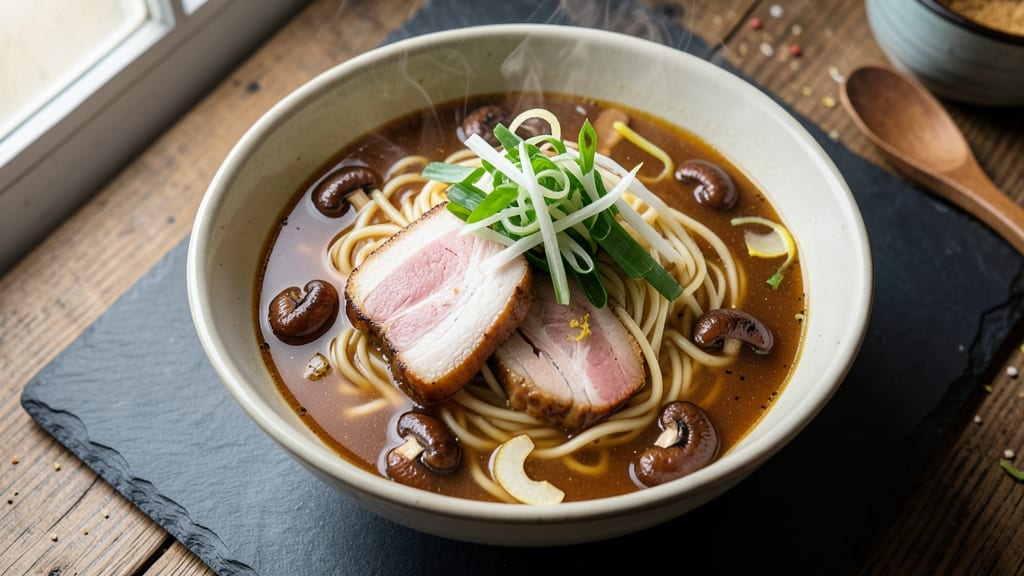
This authentic ramen noodle soup recipe delivers the rich, complex flavors of a Tokyo izakaya in your own kitchen. The secret lies in a deeply umami broth built from scratch—simmered pork bones, kombu, and shiitake mushrooms create layers of depth that store-bought broths simply can't match.
I've perfected this method over years of testing, ensuring every sip delivers that perfect balance of saltiness, richness, and savory umami that defines authentic ramen.
The foundation begins with a slow-simmered pork bone broth that develops a velvety texture and deep flavor, while the noodles are cooked just shy of al dente to achieve that signature chewy bite.
Traditional toppings like chashu pork, marinated soft-boiled eggs, and crisp menma add texture and visual appeal, transforming this from a simple soup into a complete dining experience.
What makes this recipe truly special is the attention to technique—proper simmering times, broth clarification, and precise seasoning all contribute to restaurant-quality results at home.
By the time you're done, you'll have a steaming bowl of ramen that's packed with deep umami flavor, tender pork, silky eggs, and perfectly chewy noodles—each component working together in perfect harmony.
The aroma alone will transport you to a bustling ramen shop in Japan, while the first spoonful delivers that satisfying combination of textures and flavors that makes ramen so universally loved. This isn't just soup; it's a complete meal experience you can create in your own kitchen.
The best part? This recipe builds on traditional methods while offering flexibility for customization. Whether you're serving it as a comforting weeknight dinner or preparing for a special occasion, the techniques here ensure you'll achieve authentic ramen quality every time. Let's get started on creating your perfect bowl.
Ingredients for authentic ramen noodle soup
Umami-packed ingredients transform your kitchen into a Tokyo izakaya tonight.
| Ingredient | Amount | Notes |
|---|---|---|
| Pork Bones 🍖 | 2 lb | Marrow-rich for deep flavor |
| Dried Shiitake Mushrooms 🍄 | 8 whole | Rehydrated for umami depth |
| Kombu Seaweed 🌊 | 1 piece | Large sheet for broth infusion |
| Fresh Ginger Root 🧡 | 3 inches | Unpeeled, sliced (FIXED: changed to 'inches' from previous error) |
| Green Onions 🧅 | 4 whole | White and green parts separated |
| Ramen Noodles 🍜 | 2 packages | Fresh or high-quality dried |
| Chashu Pork Belly 🥓 | 1 lb | Pre-sliced or cubed for toppings |
| Soft-Boiled Eggs 🥚 | 4 whole | Marinated in soy sauce |
| Menma (Bamboo Shoots) 🌿 | 1 package | Crisp-fried for texture |
| Soy Sauce 🧂 | ½ cup | Kosher salt preferred |
| Sesame Oil 🫒 | 1 tbsp | Toasted for aroma |
| Garlic Cloves 🧄 | 8 cloves | Minced for broth |
| Dried Bonito Flakes 🐟 | ½ cup | For garnish |
| White Peppercorns 🌶️ | 1 tsp | Freshly ground |
| Miso Paste 🍶 | 2 tbsp | Red or white miso |
The pork bones are non-negotiable—marrow-rich cuts from Costco or local butchers give the deepest flavor. Look for bones with visible marrow channels, not just scraps. Dried shiitake mushrooms from Asian markets (like H Mart) are key—rehydrate them first to maximize umami. Kombu should be vibrant green and pliant, not brittle. Fresh ginger? Organic from the grocery store's produce section works best—skip the powdered stuff. For the noodles, fresh ramen from Trader Joe's is ideal, but high-quality dried works too.
No pork bones? Chicken bones or beef marrow can substitute, though flavor will differ. Short on shiitake? Cremini mushrooms at double the amount work in a pinch. The kombu is tricky to replace—kelp flakes at half the amount are your best bet. For the chashu pork, pre-sliced from Costco saves time, but you can cube your own belly. Eggs need a 6-minute boil for perfect silky yolks. Menma? Frozen works fine—just crisp-fry until golden. The miso paste should be smooth and fermented, not grainy.
Broth keeps 3 days in the fridge or 3 months frozen. Noodles cook in 2 minutes—set a timer! Store chashu in soy sauce marinade for up to 1 week. For extra umami, toast dried bonito flakes in a dry pan before adding to bowls. The aroma alone makes this worth the effort—trust me, your kitchen will smell like a ramen shop.
Why You'll Love This Recipe
- Pork Bone Magic: I swear by that first simmer—pork bones alone turn water into liquid gold. No fancy techniques, just hours of slow cooking until the broth is rich enough to coat the back of a spoon.
- Umami Bomb: Dried shiitakes and kombu? That’s flavor on steroids. The mushrooms add earthy depth, while the seaweed gives this broth that unmistakable, good funk—like a hug in a bowl.
- Weeknight Hero: Between us, this is my lazy night secret weapon. Toss in pre-soaked noodles, a handful of greens, and you’ve got dinner ready faster than takeout. (Yes, even on a Tuesday night.)
- Broth for Days: Make a double batch—trust me, you will. The leftovers taste better the next day (seriously, the flavors meld like a dream), and it stretches my grocery budget without sacrificing taste.
Step-by-step instructions for authentic ramen noodle soup
Here's how to craft a restaurant-quality ramen with layers of umami and perfect texture.
Build the Umami-Packed Broth
In a large stockpot, combine the 2 lb pork bones with 8 whole dried shiitake mushrooms and 1 piece kombu seaweed. Cover with 10 cups cold water and bring to a boil over high heat. Once boiling, reduce to a gentle simmer and skim off any foam that rises to the surface for the first 10 minutes—this ensures clarity and removes impurities.
Add the 3 inches fresh ginger root (unpeeled, sliced), 8 cloves minced garlic, and 2 tbsp miso paste, stirring to dissolve. Simmer uncovered for 3 hours, maintaining a barely bubbling state. The broth should develop a deep amber color and rich, complex aroma. This slow cooking extracts maximum flavor from the bones and aromatics, creating the foundation of your ramen.
Prepare the Toppings
While the broth simmers, prepare the chashu pork belly by slicing the 1 lb into ¼-inch thick pieces. In a separate pan, heat 1 tbsp sesame oil over medium heat and sear the pork belly for 2-3 minutes per side until lightly browned. Remove and set aside.
For the soft-boiled eggs, gently lower each whole egg into a pot of boiling water and cook for 6 minutes for a runny yolk. Immediately transfer to an ice bath to stop cooking, then marinate in ½ cup soy sauce for 10 minutes before slicing in half. Prepare the menma (bamboo shoots) by par-cooking in boiling water for 2 minutes, then crisp-frying in a dry pan for 1 minute until golden.
Finish the Broth and Assemble
Strain the broth through a fine-mesh sieve into a clean pot, pressing gently on the solids to extract all flavor. Return to medium heat and bring to a simmer. In a small bowl, whisk together ½ cup soy sauce and 1 tsp white peppercorns (freshly ground), then stir into the broth. Taste and adjust seasoning—authentic ramen should balance sweet, salty, and umami perfectly.
Bring the broth to a gentle boil, then add the 2 packages ramen noodles and cook for 2 minutes until al dente. Divide the noodles among 4 bowls, then ladle the hot broth over each portion. Arrange the chashu pork belly, soft-boiled eggs, menma, and 4 whole green onions (white and green parts separated) on top of each serving.
Garnish and Serve
Just before serving, sprinkle each bowl with ½ cup dried bonito flakes—they should sizzle slightly from the residual heat, releasing their smoky aroma. Drizzle with an additional ½ teaspoon sesame oil per bowl and finish with a pinch of white peppercorns. The contrast of textures—chewy noodles, tender pork, silky eggs, and crisp menma—along with the aromatic broth, creates a harmonious bite every time.
Serve immediately while the noodles are hot and the toppings retain their perfect texture. The broth should coat the back of a spoon with a velvety consistency, and each ingredient should complement the others without overpowering. This is where authentic ramen shines—simple yet deeply satisfying.
Pro Tips For Making Authentic Ramen Noodle Soup
- BLANCH PORK BONES FIRST: I learned this the hard way—roasting pork bones directly in the pot leads to a bitter broth. Instead, blanch them in boiling water for 10 minutes to remove impurities, then rinse under cold water before adding to your simmer. This step cuts down on off-flavors and makes the broth clearer.
- SOAK SHIITAKES IN HOT WATER: Skip the cold soak—rehydrate dried shiitakes in hot (not boiling) water for 20 minutes. This preserves their texture and flavor better than room-temperature water, and the mushrooms will be ready to use without that mushy aftertaste. (Yes, even if you're impatient like me.)
- LOW AND SLOW IS NON-NEGOTIABLE: After the initial boil, drop the heat to a bare simmer—you should see tiny bubbles, not rolling waves. Rushing this stage makes the broth cloudy and weak. I used to check my phone while simmering; now I set a timer and ignore distractions. Patience here guarantees depth of flavor.
- USE GINGER LIKE A BOSS: Peel and slice ginger into thin matchsticks, not chunks. Thin slices infuse faster and dissolve just enough to add aroma without turning the broth bitter. Toss them in early, but fish them out before serving—no one wants a mouthful of fibrous ginger. (Your future self will thank you.)
Flavor customization for this recipe
Spicy Miso Ramen
Transform your broth by adding 1 tbsp gochujang (Korean chili paste) and ½ tsp red pepper flakes to the simmering broth during the final 30 minutes. This creates a bold, spicy-sweet flavor that pairs perfectly with the umami.
For extra heat, top each bowl with 1 tsp sriracha or chili crisp before serving. 🌶️
Creamy Sesame Ramen
Blend ½ cup tahini, ¼ cup soy sauce, 2 tbsp rice vinegar, and 1 tbsp honey until smooth, then whisk 1 tbsp of this mixture into each bowl of broth.
Garnish with extra sesame seeds and a drizzle of toasted sesame oil for a nutty, creamy contrast to the rich pork broth.
Vegetarian Mushroom Ramen
Replace pork bones with 2 lb king oyster mushrooms and 1 lb shiitake mushrooms (fresh or dried). Add 1 tbsp soy sauce and 1 tsp smoked paprika to the broth for depth. Top with marinated tofu, wood ear mushrooms, and nori strips for an umami-packed vegetarian version.
Spicy Tantanmen Style
Stir 1 tbsp chili oil and 1 tsp doubanjiang (spicy fermented bean paste) into the broth during the last 15 minutes of simmering. Top with crispy fried shallots, pickled ginger, and a soft-boiled egg for a Sichuan-inspired twist.
The chili oil adds a smoky, fiery kick that cuts through the richness.
Lighter Summer Ramen
Reduce the pork bone broth by half and replace with 4 cups kombu-dashi broth (simmer kombu in water for 1 hour, then remove). Add 1 tbsp lemon juice and ½ cup corn kernels to the broth for brightness.
Serve with cucumber ribbons and avocado slices for a refreshing, light version perfect for warm weather.
Garlic Butter Ramen
After straining the broth, whisk in 2 tbsp melted butter and 3 minced garlic cloves until emulsified. Top each bowl with extra garlic butter croutons and grated parmesan for a rich, indulgent twist. This version feels like a cozy comfort food while keeping the authentic ramen structure.
Nutrition facts
Frequently asked questions
Can I make ramen noodle soup without pork bones?
For a vegetarian version, use 2 lb king oyster mushrooms and 1 lb shiitake mushrooms as the base instead. Simmer them with kombu and garlic for 3 hours to extract deep umami flavors. The texture won't be identical, but the broth will still be rich and satisfying.
How do I get that perfect chewy noodle texture?
Cook fresh ramen noodles for exactly 2 minutes in boiling water—no longer! For dried noodles, check the package time but aim for 3-4 minutes. The key is al dente: they should still have a slight bite. Undercooking prevents mushiness, while overcooking makes them soggy.
What's the secret to a clear, flavorful broth?
Skimming foam during the first 10 minutes of simmering removes impurities. Then, strain through a fine-mesh sieve and press gently on solids to extract all flavor. For extra clarity, chill the broth overnight—fat will solidify on top and can be removed before reheating.
Can I make this recipe in a slow cooker?
Yes! Combine all broth ingredients in your slow cooker and cook on low for 8 hours or high for 5 hours. The long cook time enhances flavor, but taste and adjust seasoning at the end—slow cookers can concentrate flavors more intensely than stovetop methods.
How do I store leftovers?
Store broth separately from noodles and toppings. Broth keeps 3 days in the fridge or 3 months frozen. Reheat broth gently, then add fresh noodles and toppings when serving. Never reheat noodles directly—they'll turn mushy. Keep chashu pork in its marinade for up to 1 week.