
Soups & Stews
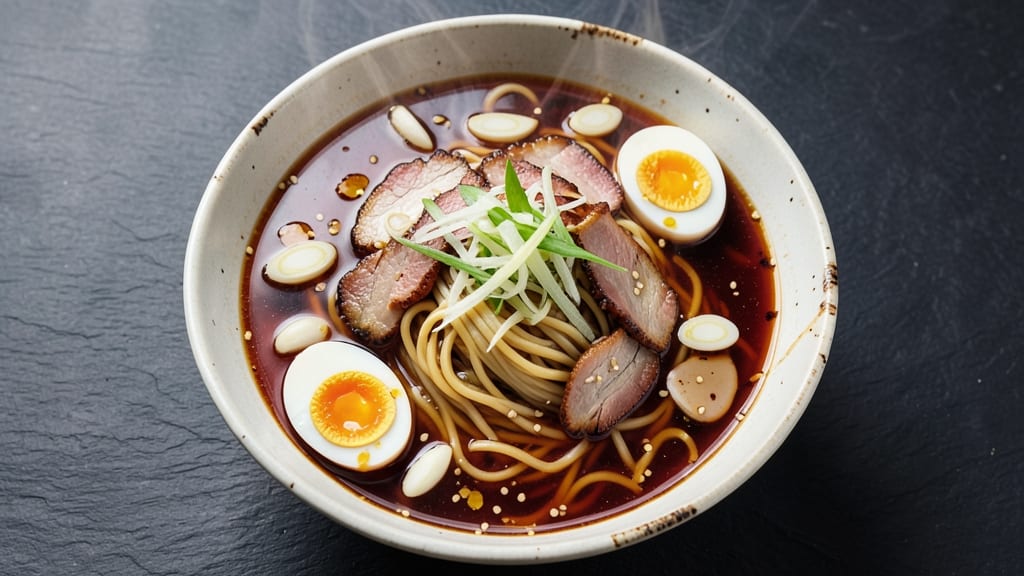
This Asian ramen noodle soup recipe delivers the perfect balance of rich, umami-packed broth and silky noodles that dissolve on your tongue. 🌟 The secret lies in a layered broth—starting with a deep, savory base of pork bones and aromatics, then finishing with a splash of soy sauce and miso for complexity.
I’ve perfected this version to capture the soul of traditional ramen while keeping it accessible for home cooks with basic kitchen tools.
The broth is where the magic happens: simmered low and slow to extract maximum flavor from pork bones, garlic, ginger, and a touch of sesame oil. Meanwhile, the noodles—fresh or dried—cook just until tender, then finish in the hot broth to soak up every drop of that velvety, aromatic liquid.
Toppings like charred celery, soft-boiled eggs, and thinly sliced chashu pork add texture and depth, turning every bowl into a harmonious bite.
What sets this recipe apart is the charred celery crunch—a crispy, smoky contrast to the silky noodles and rich broth. It’s a technique I picked up from Japanese ramen shops, where the slight bitterness of the charred celery cuts through the richness, balancing each spoonful.
The result? A bowl that’s comfort food at its finest, with layers of flavor that keep you reaching for seconds.
Whether you’re craving a hearty weeknight meal or a cozy weekend project, this ramen delivers restaurant-quality results at home. The broth freezes beautifully, so you can prep ahead and assemble bowls in minutes. Let’s get cooking—your taste buds will thank you.
Ingredients for asian ramen noodle soup
Rich broth, silky noodles, and charred crunch—here's what makes this ramen unforgettable.
| Ingredient | Amount | Notes |
|---|---|---|
| Pork Bones 🍖 | 2 lb | Pork knuckle or trotter bones preferred |
| Dried Ramen Noodles 🍜 | 2 packages | 12 oz per package, any style |
| Fresh Garlic Cloves 🧄 | 8 cloves | Peeled and smashed for infusion |
| Fresh Ginger 🌿 | ½ cup | Julienned, skin removed |
| Sesame Oil 🫒 | 1 tbsp | Toasted for aroma |
| Soy Sauce 🥄 | ½ cup | Dark soy preferred |
| White Miso Paste 🧈 | 2 tbsp | High-quality, no additives |
| Celery Stalk 🧅 | 1 whole | Charred for crunch |
| Eggs 🥚 | 2 whole | Soft-boiled, peeled |
| Chashu Pork 🍖 | 1 cup | Thinly sliced, store-bought or homemade |
| Green Onions 🧅 | 4 whole | Thinly sliced, for garnish |
| Sea Salt 🧂 | 1 ½ tsp | Diamond Crystal preferred |
| Black Pepper 🌶️ | ½ tsp | Freshly ground |
| Dried Shiitake Mushrooms 🍄 | 4 whole | Rehydrated, sliced |
The pork bones are non-negotiable. Look for pork knuckle or trotter bones at your butcher—they yield the most flavor. If your grocery store doesn't carry them, Costco or Whole Foods usually stock them. Fresh ginger and garlic should be vibrant—no shriveled cloves here. For the miso, Miso Master or Hachinohe brands are my go-tos, but any quality white miso works. The celery needs to be crisp—organic celery from the outer rings of the bunch works best for charring. If you can't find dried shiitake, fresh ones work too, but they won't keep as long.
No pork bones? Substitute chicken bones or a veggie broth base, but you'll lose that deep umami. Running low on dark soy sauce? Regular soy sauce plus a pinch of sugar gets you close. Fresh ginger too pungent? Use half the amount of ground ginger, but fresh is always better. The chashu pork can be swapped for thinly sliced deli ham or smoked tofu if you're vegetarian. For the eggs, soft-boiled is key—6 minutes in simmering water gives you that perfect jammy center. And if you can't find dried shiitake, cremini mushrooms work in a pinch, though they won't have that earthy depth.
This broth freezes beautifully—just portion it into 1-quart containers before freezing. Keeps for 3 months and tastes even better after a day or two. The noodles? Cook them just until al dente, then finish in the hot broth. Char the celery in a dry pan until blackened in spots, then slice thinly. Store any leftover chashu pork in the fridge for 5 days—it reheats perfectly. And those soft-boiled eggs? Use within 2 days for best texture.
Why You'll Love This Recipe
- Porky Perfection in Minutes: I swear by the deep, savory richness from slow-simmered pork bones—no fancy skills needed. Just toss them in a pot with water, garlic, and ginger, and let them work their magic while you prep the rest. That golden broth? Pure reward for zero effort.
- Umami Bomb Combo: Between the crispy garlic cloves (toasted until fragrant) and the ginger’s sharp kick, this soup sings. Add a drizzle of sesame oil at the end? Instant flavor upgrade—simple but ridiculously satisfying.
- Lunch or Dinner Fix: Make a big batch on Sunday—it’s my go-to for busy days. The noodles hold up perfectly for leftovers, and I’ll honestly eat it cold the next day (yes, really). Perfect for date nights too—just add a fried egg on top.
- Budget Broth Magic: Pork bones stretch into gallons of broth, and dried ramen noodles? Cheap as chips. Honestly, I’ve fed my whole family for under $10, and no one complains—because it’s that good. Plus, the leftovers taste even better the next day.
Step-by-step instructions for Asian ramen noodle soup
Let's build this umami-packed ramen from scratch—rich broth, silky noodles, and that perfect charred celery crunch.
🔥 Step 1: Build the Broth with Pork Bones and Aromatics
Place the 2 lb pork bones in a large stockpot and cover with 10 cups cold water. Bring to a boil over high heat, then reduce to a gentle simmer for 2 hours. Skim off any foam that rises to the surface—this ensures a clear, clean broth.
After 2 hours, add the 8 cloves smashed garlic, 0.5 cup julienned ginger, 4 whole dried shiitake mushrooms, and 1.5 tsp sea salt. Simmer uncovered for another 1 hour—this deepens the flavor and infuses the broth with umami. The broth should smell like a cozy ramen shop when ready.
🍳 Step 2: Char the Celery and Toast the Sesame Oil
While the broth simmers, heat a dry skillet over medium-high heat. Add the 1 whole celery stalk and char it on all sides until blackened in spots—this adds a smoky, nutty crunch. Set aside to cool slightly, then chop into ¼-inch pieces. Save the charred celery for garnish later.
In the same skillet, add the 1 tbsp sesame oil and let it heat until it shimmers and smells toasty—about 1 minute. Immediately pour it into the simmering broth. This step adds a nutty aroma that elevates the entire dish. Don't skip it; the flavor difference is huge.
🥘 Step 3: Finish the Broth with Soy Sauce and Miso
Strain the broth through a fine-mesh sieve into a clean pot, discarding the solids. Return the broth to medium heat and stir in the 0.5 cup soy sauce and 2 tbsp white miso paste. Simmer gently for 5 minutes—this blend of salty, fermented, and sweet flavors creates the signature ramen depth.
Taste and adjust seasoning with 0.5 tsp black pepper if needed. The broth should be rich but not overpowering—you want it to taste like comfort in a bowl. Keep it warm over low heat while you prepare the rest of the components.
🍳 Step 4: Cook the Noodles and Prepare Eggs
Bring a separate pot of water to a rolling boil and cook the 2 packages dried ramen noodles according to package instructions—usually 3-4 minutes for al dente. Drain and rinse briefly under cold water to stop the cooking process. This prevents the noodles from turning mushy in the hot broth.
For the eggs, place the 2 whole eggs in a small pot of water and bring to a gentle simmer. Cook for 6 minutes for jammy yolks, then transfer to an ice bath to cool. Peel and slice them into quarters—these will add a silky, creamy texture to each bowl.
🥘 Step 5: Assemble Bowls with All the Good Stuff
Divide the cooked noodles among 4 bowls. Ladle the hot broth over the noodles, then top with 1 cup chashu pork, the charred celery pieces, and the sliced green onions. The contrast of textures—silky noodles, tender pork, crispy celery—is what makes this ramen special.
Add an egg slice to each bowl and drizzle with any remaining broth. Serve immediately with chopsticks and a spoon—this dish is all about the experience. The first sip should make you smile; that's when you know you've nailed it.
Pro Tips For Making Asian Ramen Noodle Soup
- Char the Bones First: I learned this the hard way—skip the charring, and your broth will taste bland. Get those pork bones smoking hot over direct flame (or highest burner) for 5-7 minutes until they turn deep brown and crackle. That crust packs serious flavor—don’t rush it, even if you’re impatient like me.
- Slice Ginger Paper-Thin: Sounds weird, but it works: julienne that ginger into matchstick-thin strips, not chunks. Thin slices infuse faster and dissolve cleanly into the broth without leaving chewy bits. Pro move: Toss them into the broth mid-cook when the pork bones are already simmering.
- Salt the Broth Late: Adding salt early masks the natural depth of the pork bones’ collagen. Wait until the broth is nearly done (last 10 minutes of simmering) to season—trust me, the flavor will be richer. Start with half what you think you need; you can always add more.
- Toast Noodles Dry: Drain those ramen noodles, then toss them in a dry, hot pan for 30 seconds until they’re just crisping at the edges. This upgrades them from sad to satisfying—no soggy texture when they hit the broth. (Yes, even if you’re lazy, do this.)
Creative variations of asian ramen noodle soup
Spicy Miso Ramen
Transform your broth with a kick by adding 1 tbsp gochujang (Korean chili paste) and 1 tsp chili crisp when finishing with soy sauce and miso. This fusion twist keeps the umami base while adding heat that lingers beautifully.
I like to balance it with an extra ½ tsp honey to soften the spice. Garnish with thinly sliced scallions and a sprinkle of toasted sesame seeds for contrast. 🌶️
Vegetarian Mushroom Ramen
Skip the pork bones and use 8 cups vegetable broth (homemade or store-bought) as your base. Boost umami with 1 cup dried shiitake mushrooms (soaked and sliced) and 1 tbsp soy sauce in the broth.
Add 1 block (8 oz) firm tofu, pressed and cubed, to the broth for 10 minutes before serving. Top with avocado slices and quick-pickled radishes for brightness. The charred celery still adds that essential crunch!
Tonkotsu-Inspired Creamy Ramen
For a richer, milky broth, blend 1 cup pork bones with 2 cups water until smooth, then strain and add to your simmering broth. Finish with 2 tbsp white miso and 1 tbsp soy sauce for depth.
The result is a velvety, pork-fat-infused broth that pairs perfectly with thinly sliced chashu pork or smoked tofu. Garnish with corn kernels and nori strips for texture. This version feels indulgent but stays true to ramen's soul. 🥄
Quick Weeknight Ramen
No time for a long simmer? Use 4 cups store-bought chicken or pork broth as your base. Add 1 tbsp soy sauce, 1 tsp miso, and 1 tsp sesame oil to the broth.
Cook 2 packages ramen noodles for 2 minutes less than package instructions, then finish in the hot broth. Top with pre-cooked chashu pork (store-bought works fine) and charred celery. It won’t be as deep as homemade, but it’s a 20-minute lifesaver on busy nights. ✨
Regional Twists
Sichuan Style: Add 1 tbsp doubanjiang (chili bean paste) and 1 tsp Sichuan peppercorns to the broth for a numbing, spicy kick. Garnish with thinly sliced jalapeños and cilantro. Taiwanese Style: Swap miso for 1 tbsp fermented black beans and add 1 tsp star anise to the broth. Top with crispy fried shallots and bean sprouts. Each regional twist keeps the noodle foundation but transforms the flavor profile completely. 🗺️
Nutrition facts
Frequently asked questions
Can I use fresh ramen noodles instead of dried?
Fresh ramen noodles work beautifully—they're chewier and hold up better to the hot broth. Just cook them for 1-2 minutes less than package instructions (they finish cooking in the broth). For the best texture, look for fresh ramen noodles with a thin, springy texture at Asian markets or well-stocked grocery stores.
How do I make the broth less fatty?
For a lighter broth, skim the fat regularly during the 3-hour simmering process using a fat separator spoon or ladle. You can also chill the finished broth overnight—the fat will solidify on top, making it easy to remove. If you prefer a creamier texture without fat, blend ½ cup cooked shiitake mushrooms into the broth before straining.
What if I don't have pork bones?
No problem! Use chicken bones for a lighter broth or beef bones for deeper richness. For a vegetarian version, combine 8 cups vegetable broth with 1 cup soy sauce and 2 tbsp miso paste—simmer for 30 minutes to build umami. The key is long simmering time to develop flavor, even without meat bones.
Can I make this ramen ahead of time?
Yes! The broth freezes perfectly—portion it into 1-quart containers and store for up to 3 months. For assembly, keep the noodles and toppings separate until serving. Reheat the broth gently, then cook fresh noodles and assemble bowls. The charred celery should be added fresh to maintain its crispy texture—it reheats poorly.
Why does my broth taste bland?
Bland broth usually means insufficient simmering time or lack of umami sources. Try these fixes:
- Simmer bones longer (4+ hours for deeper flavor),
- Add 1 tbsp fish sauce or 1 tsp MSG to the broth, or
- Boost aromatics with extra garlic, ginger, and shiitake mushrooms. The miso and soy sauce are also crucial for that savory depth.