
Soups & Stews
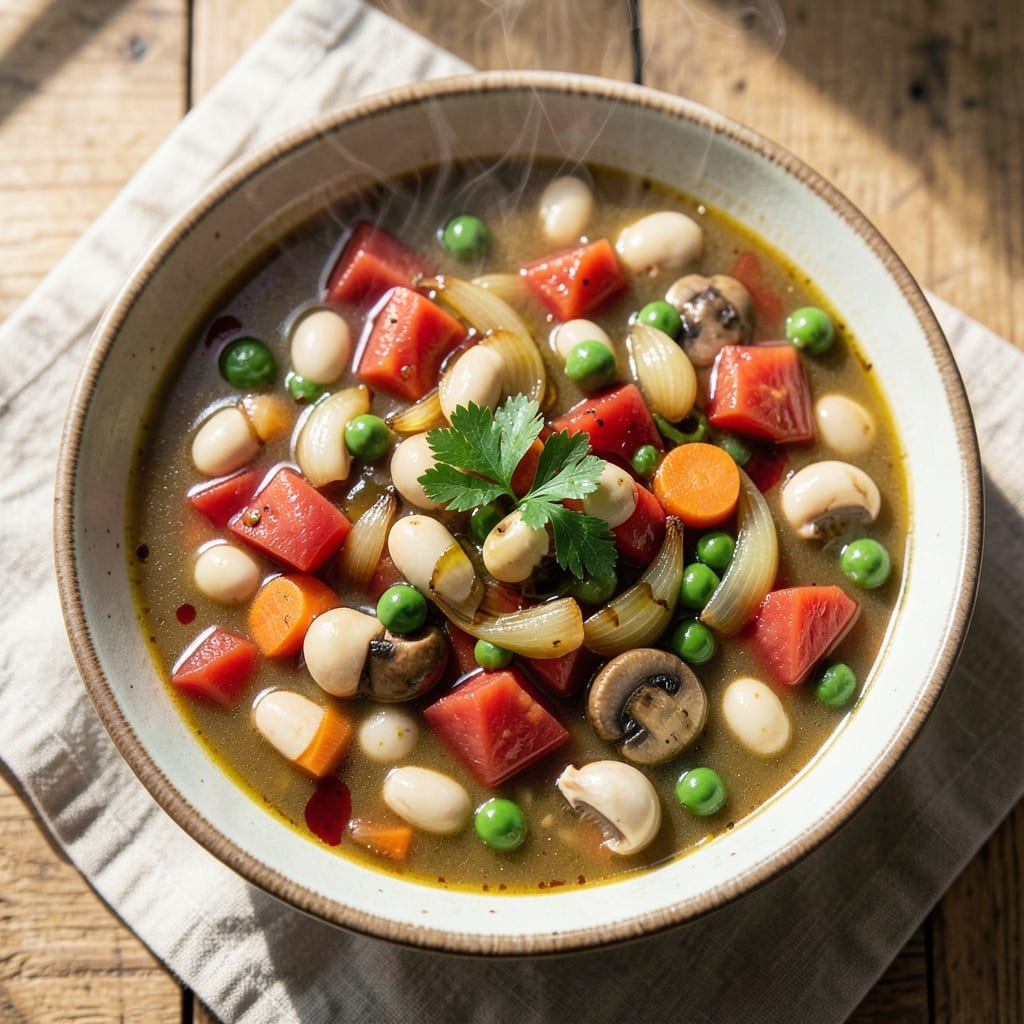
This 5-can vegetable soup recipe transforms pantry staples into a deeply satisfying, umami-rich meal that requires just one pot and 30 minutes of active time. The beauty lies in its simplicity—no fresh produce needed, just five well-chosen cans of vegetables that build layers of flavor when simmered with aromatic herbs and a splash of acidity. I developed this recipe during a particularly busy week when I needed a hearty, nourishing dinner that wouldn’t require last-minute grocery runs or complex techniques.
The secret to balancing flavors lies in the ratio of ingredients: one can of tomatoes for acidity, one can of beans for protein and texture, and three cans of mixed vegetables for depth. Sautéing garlic and onions first builds a flavorful base, while a bouillon cube and herbs elevate the broth to restaurant-quality. The result is a soup that’s rich yet light, hearty yet refreshing—perfect for chilly evenings or lazy weeknights when you crave comfort without fuss.
What sets this recipe apart is its versatility—it’s vegetarian but satisfying enough to please omnivores, and the flavors only deepen as it sits. The soup’s texture is ideal: tender vegetables, creamy beans, and a broth that’s just thick enough to coat a spoon. Garnish with fresh parsley or a drizzle of olive oil for brightness, or serve with crusty bread to soak up every last drop. Leftovers keep well for up to four days, making it a meal-prep favorite.
This is the kind of recipe that proves good food doesn’t require fresh ingredients or hours in the kitchen—just a little thoughtfulness and the right pantry staples. Let’s turn those cans into a meal that feels like a hug in a bowl.
Ingredients for 5 can vegetable soup
Five cans and a handful of pantry staples create this vegetarian umami powerhouse.
| Ingredient | Amount | Notes |
|---|---|---|
| Diced Tomatoes (with Juice) 🍅 | 1 can | San Marzano preferred for sweetness |
| White Beans 🥣 | 1 can | Cannellini or great northern |
| Mixed Vegetables 🥕 | 3 cans | Corn, carrots, green beans mix |
| Vegetable Bouillon Cubes 🧂 | 2 whole | Knorr or similar brand |
| Yellow Onion 🧅 | 1 whole | Medium size, diced |
| Garlic Cloves 🧄 | 3 cloves | Fresh, minced |
| Olive Oil 🫒 | ½ cup | Extra-virgin for richness |
| Dried Thyme 🌿 | 1 tsp | Or 1 tbsp fresh |
| Dried Oregano 🌿 | 1 tsp | Mediterranean blend preferred |
| Bay Leaves 🍃 | 2 whole | Remove before serving |
| Salt 🧂 | 1 tsp | Adjust to taste |
| Black Pepper 🌶️ | ½ tsp | Freshly ground |
| Red Wine Vinegar 🍷 | 1 tbsp | For acidity balance |
| Fresh Parsley 🌿 | ¼ cup | Chopped for garnish |
The vegetable cans are the foundation, so choose brands with minimal additives. Del Monte or Green Giant mixed vegetables work perfectly—they're pre-cut and ready to simmer. For the beans, cannellini or great northern hold their shape best during cooking. The tomatoes? San Marzano if you want that sweet, rich flavor, but any good-quality canned tomatoes will do. Store your cans in a cool, dark place—they last for 1-2 years unopened, but once opened, transfer to airtight containers and refrigerate for up to 5 days.
No San Marzano tomatoes? Crushed tomatoes with basil work in a pinch, though they'll be slightly tangier. Short on thyme? Dried rosemary at half the amount adds a wonderful depth. The bouillon cubes can be swapped for 2 cups vegetable broth if you prefer, though the cubes add that concentrated umami punch. For the mixed vegetables, if you can't find the perfect blend, corn, green beans, and carrots mixed together give similar texture. The red wine vinegar is key for balancing the richness—apple cider vinegar works too if that's what you have on hand.
This soup tastes even better the next day as flavors meld together. Store leftovers in the fridge for up to 4-5 days in an airtight container. For freezing, portion into 2-cup servings and freeze for up to 3 months. The texture holds up beautifully when reheated. Garnish with fresh parsley just before serving for that bright pop of color. The parsley wilts quickly, so add it last—2 tablespoons of chopped parsley is plenty for garnish.
Why You'll Love This Recipe
- No Chopping Nightmare: I swear by this one—just dump the cans, sauté a single onion, and stir. That’s it. Even when I’m exhausted after work, I can have a steaming bowl on the table in 15 minutes. The mixed veggies stay whole enough to look like I tried, but honestly? No one cares.
- Umami Bomb: Between the bouillon cubes and those diced tomatoes, this soup packs a flavor punch without any fancy seasoning. The white beans add this creamy, earthy richness that makes it taste like you simmered for hours—even though you didn’t. Honestly, I’ve compared it to restaurant soups, and it holds its own.
- Crowd-Pleaser Every Time: I make this for potlucks, sick friends, or when my in-laws visit. Kids love the soft veggies, vegetarians adore it, and my meat-loving brother doesn’t even complain. (Yes, even on a Tuesday night.) It’s the one dish that never sparks debate.
- Pantry Goldmine: Between us, this is my budget-friendly secret weapon. Five cans for a big pot? That’s less than $5 and feeds six people. The leftovers taste just as good cold the next day—perfect for lunches or reheating when you’re too tired to cook. I’ve even frozen portions for those “I have no idea what to eat” days.
Step-by-step instructions for pantry vegetable soup
Transform simple pantry staples into a rich, flavorful soup with this straightforward method.
Sauté Aromatics in Olive Oil
Heat the 0.5 cup olive oil in a large pot over medium heat. Add the 1 whole yellow onion and cook for 5 minutes, stirring occasionally, until softened and translucent. The onions should release their natural sweetness and become slightly caramelized at the edges.
Add the 3 cloves garlic cloves and cook for another 30 seconds until fragrant. Here's the thing—don't let the garlic brown or it'll turn bitter. You'll know it's ready when the kitchen fills with that unmistakable garlic aroma. Remove the pot from heat temporarily while you prepare the remaining ingredients.
Build the Flavor Base
Return the pot to medium heat and add the 2 whole vegetable bouillon cubes, breaking them apart with a wooden spoon. Stir for 1 minute until dissolved and the liquid becomes slightly cloudy. This step develops the umami foundation of your soup.
Add the 1 can diced tomatoes (with juice), 1 can white beans (drained and rinsed), 3 cans mixed vegetables (drained), 1 tsp dried thyme, 1 tsp dried oregano, and the 2 whole bay leaves. Stir everything together and bring to a gentle boil. Once boiling, reduce heat to medium-low and let it simmer for 15 minutes. This allows all the flavors to meld together.
Season and Balance the Soup
After 15 minutes of simmering, taste the soup and adjust seasoning if needed. Add the 1 tsp salt and 0.5 tsp black pepper first, then the 1 tbsp red wine vinegar. The vinegar adds brightness and cuts through the richness of the beans and tomatoes. Stir well and simmer for another 5 minutes to let the seasonings integrate completely.
I know it seems like a lot of seasoning, but trust me—the vinegar prevents the soup from tasting flat, and the herbs need time to release their full flavor. The soup should have a balanced taste with sweetness from the tomatoes, saltiness from the beans, and acidity from the vinegar.
Finish and Serve
Remove the 2 whole bay leaves and discard them. Stir in the 0.5 cup olive oil to create a silky texture—this is what gives the soup that restaurant-quality finish. The oil coats the vegetables and beans, making each bite more satisfying.
Ladle the soup into bowls and garnish each serving with 0.25 cup fresh parsley, chopped. The parsley adds freshness and a pop of color that makes the soup look as good as it tastes. Serve immediately while hot, with crusty bread on the side to soak up every last drop of that flavorful broth.
Pro Tips For Making 5 Can Vegetable Soup
- SOFTEN BEANS FIRST: I learned this the hard way—dumping unsoaked white beans straight into your soup means they’ll stay rock-hard no matter how long you simmer. Rinse them first, then cover with fresh water for at least 30 minutes (or overnight if you’re planning ahead). The longer they soak, the creamier your soup will be without extra mashing.
- SAUTE ONION UNTIL GOLDEN: Skip the quick stir and let that onion caramelize for 5-7 minutes in a splash of oil—just until it’s soft and starting to turn golden. This adds depth that bouillon cubes alone can’t match. (Yes, it smells like heaven while it cooks, so resist the urge to rush.)
- CRUSH ONE BEAN CAN: Before adding all the beans, open one can and mash about half of them with a fork right in the pot. This thickens the soup naturally and gives it that restaurant-quality texture without needing flour or cornstarch. (Your future self will notice the difference.)
- TASTE BEFORE BOUILLON: Add your mixed veggies and diced tomatoes first, then simmer for 10 minutes before tossing in the bouillon cubes. This lets you adjust seasoning—maybe it needs more salt, a splash of vinegar, or even a pinch of sugar to balance the acidity—before committing to the bouillon’s flavor. (Trust me, you’ll regret it if you don’t.)
Essential equipment for this dish
Pot Essentials
Start with a 6-quart Dutch oven—it’s my go-to for soups because it holds heat well and distributes it evenly. A stainless steel pot with a tight-fitting lid works too, but avoid nonstick if you plan to simmer long; it can’t handle high heat. For budget-friendly options, a heavy-bottomed enamel pot from Le Creuset or All-Clad is a game-changer and lasts for years. 🔥
Can Opener Must-Haves
Skip the cheap pull-tab openers—they’re flimsy and often jam. Instead, invest in a manual can opener like the OXO Good Grips or JL International models. They’re sturdy, easy to clean, and handle thick cans like beans without bending tabs. For convenience, a electric can opener (like Hamilton Beach) saves time when opening multiple cans, but it’s not as precise for delicate vegetables.
Measuring Tools
Precision matters when balancing flavors. Use a stainless steel measuring cup set (like Farberware) for liquids and a gram-scale (if you’re fancy) for herbs and spices. For dried ingredients, a spice scoop or small spoon ensures consistent measurements—no eyeballing! A laser thermometer (like ThermoWorks) isn’t essential, but it’s a pro move for checking broth temps if you’re adjusting consistency later.
Herb and Spice Storage
Freshness is key for herbs like thyme and oregano. Store dried spices in airtight containers (I love Weck jars) away from light and heat—your pantry’s spice rack is fine as long as it’s cool and dark. For fresh parsley, keep stems submerged in a glass jar with water in the fridge until ready to use. A mortar and pestle comes in handy if you’re grinding whole spices like black pepper for extra depth.
Garnish Tools
Chopping fresh parsley takes seconds with the right tools. A sharp chef’s knife (like Wüsthof) and a cutting board (I prefer Teak or bamboo) make quick work of it. For extra flair, a microplane adds zesty zest from a lemon wedge, or a small whisk helps emulsify the olive oil finish if you’re feeling fancy. A ladle with a strainer (like OXO Good Grips) makes serving garnishes effortless—no soggy herbs here!
Nutrition facts
Frequently asked questions
Can I use any type of vegetable cans for this recipe?
While you can use most canned vegetables, the best results come from a mix of corn, green beans, and carrots—they hold their texture well during simmering. Avoid mushy vegetables like peas or overly watery options like celery. If you can't find mixed vegetables, combine 1 can each of corn, green beans, and carrots for similar results.
Why does the recipe call for so much olive oil?
The 0.5 cup olive oil isn't just for cooking—it's the secret to that silky, restaurant-quality finish! Adding it at the end creates a velvety texture that coats the vegetables and beans beautifully. If you're watching calories, reduce to 2 tablespoons, but the soup will be less rich. Extra-virgin olive oil adds the best flavor.
How can I make this soup spicier?
Add ½ teaspoon red pepper flakes or 1 teaspoon hot sauce when you add the vinegar. For smoky heat, stir in ½ teaspoon smoked paprika with the bouillon cubes. If you love chili, add ½ cup diced canned chili peppers (drained) along with the mixed vegetables. Start with less—you can always add more!
Can I make this soup in an Instant Pot?
Sauté the onions and garlic as directed, then add all ingredients except the olive oil and parsley. Cook on High Pressure for 5 minutes, then quick-release. Finish with the olive oil and parsley. The Instant Pot version cooks faster but may have slightly softer vegetables. For extra richness, add 1 tablespoon butter at the end.
What if I don't have red wine vinegar?
No problem! Substitute with 1 tablespoon apple cider vinegar or lemon juice for brightness. If you're out of vinegar entirely, skip it—the soup will still be flavorful, but the acidity will be slightly less balanced. The herbs and tomatoes provide enough natural acidity to carry the dish.