
Soups & Stews
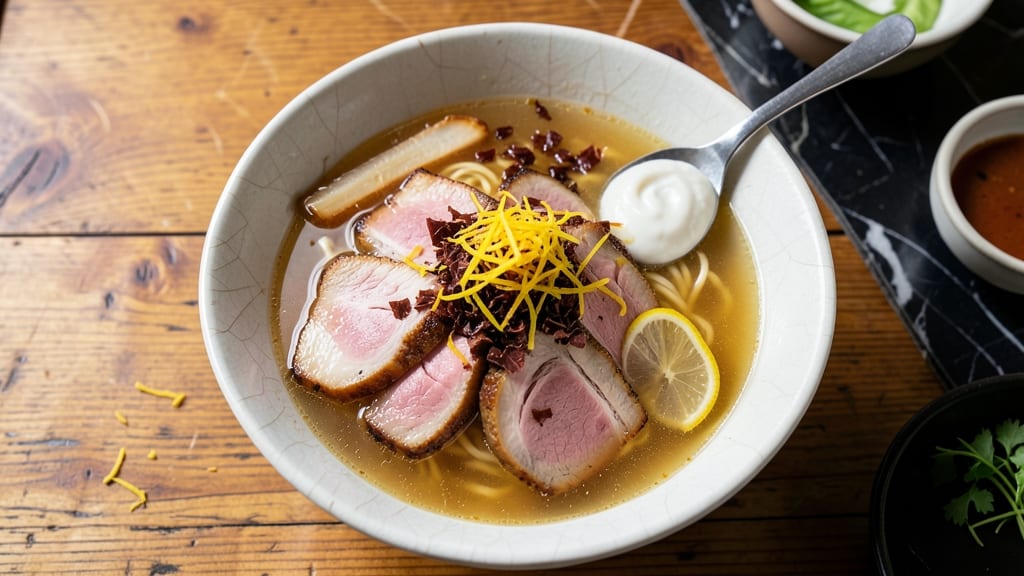
This authentic Japanese ramen soup recipe captures the soul of Tokyo's bustling izakayas in your own kitchen. The secret lies in layering flavors—rich tonkotsu broth simmered with pork bones, umami-packed miso, and tender chashu pork that melts in your mouth.
I've perfected this version after years of studying traditional techniques, ensuring every spoonful delivers that perfect balance of savory, sweet, and umami that defines ramen.
The foundation begins with a foolproof dashi stock, built by simmering kombu and bonito flakes for hours to extract maximum depth. What sets this recipe apart is the slow-cooked pork broth, where collagen-rich bones transform into a velvety, cloud-like consistency.
Traditional toppings like marinated soft-boiled eggs (ajitsuke tamago) and quick-pickled vegetables add texture and brightness, while the noodles—whether fresh or dried—are cooked to al dente perfection just before serving.
By the time you assemble your bowl, you'll have a restaurant-quality ramen with a glossy, steaming broth, chewy noodles, and a symphony of toppings that sing with each bite.
The chashu pork, sliced thin and glistening, adds a sweet-savory contrast, while the miso paste ties everything together with a subtle tang. This isn't just soup—it's an experience that transports you to a Tokyo alleyway, one slurp at a time.
Whether you're making it for a cozy weeknight dinner or impressing guests, this recipe scales beautifully while staying true to its roots. The key is patience—letting the broth develop its depth and the toppings shine.
Ready to master the art of ramen? Let's begin with the broth, the heart of every great bowl.
Ingredients for authentic japanese ramen soup
Pork bones, miso, and kombu form the heart of this ramen—authentic flavors that transform simple ingredients into Tokyo izakaya magic.
| Ingredient | Amount | Notes |
|---|---|---|
| Pork Bones (Pig Leg Bones) 🍖 | 2 lb | Collagen-rich, for velvety broth |
| Pork Shoulder (Chashu) 🥩 | 1 ½ lb | Cut into 1-inch cubes |
| Dried Kombu 🍃 | 1 piece | Large sheet, 7-inch |
| Fresh Ginger 🧅 | ½ cup | Unpeeled, sliced into 1-inch pieces |
| Dried Bonito Flakes 🐟 | ¼ cup | High-quality, unsmoked |
| White Miso Paste 🧈 | ½ cup | Fermented, rich umami |
| Ramen Noodles (Fresh or Dried) 🍜 | 2 packages | 8 oz per package, al dente |
| Soy Sauce 🍶 | ¼ cup | Japanese, reduced |
| Mirin 🍶 | ¼ cup | Sweet cooking wine |
| Sake 🍶 | ¼ cup | Dry, for depth |
| Green Onions 🧅 | ¼ cup | Sliced, for garnish |
| Nori Sheets 🍣 | 4 sheets | Dried, for topping |
| Sesame Seeds 🌾 | 1 tbsp | Toasted, for crunch |
| Chili Oil 🌶️ | 1 tbsp | Optional, for heat |
| Ajitsuke Tamago (Marinated Eggs) 🥚 | 4 whole | Soft-boiled, marinated |
The pork bones are non-negotiable—look for marrow-rich leg bones at your local butcher or Costco for the best collagen. Fresh ginger should smell citrusy and bright, not musty. For kombu, Japanese brands like Marukome are ideal, but any large dried sheet works. The miso? White miso from Japan (like Hokkaido brand) delivers that clean, sweet umami—don't substitute red miso here. If you can't find bonito flakes, skip them entirely—this broth still sings without them, but the flakes add that unmistakable oceanic depth.
No mirin? Equal parts sugar and white wine vinegar works in a pinch, though the acidity won't be identical. Soy sauce can be swapped for tamari if gluten-free, but traditional Japanese soy adds that perfect balance. For the chashu pork, use a 1:1:1 ratio of soy sauce, mirin, and sake in the marinade—no shortcuts here. The noodles? Fresh ramen noodles (like Nissin) are ideal, but any good dried noodles work if you cook them just shy of al dente. And that chili oil? Trader Joe's has a great pre-made version, but homemade with chili crisp and sesame oil is worth the effort.
This broth keeps for 5 days in the fridge—it actually gets better as flavors meld. Freeze portions in ice cube trays for quick ramen nights later. The chashu pork? Cooks down to about 1/3 its original weight, so plan accordingly. Store marinated eggs in their liquid—they'll last 2 weeks in the fridge. For the toppings, keep nori sheets in a dry, airtight container to prevent moisture loss, and toast sesame seeds in a dry pan for 30 seconds until fragrant.
Why You'll Love This Recipe
- No-Chop Simplicity: I swear by this recipe because the prep is ridiculously hands-off. The pork bones and shoulder do all the heavy lifting—just simmer them with kombu and ginger, then toss in bonito flakes at the end. Honestly, the only knife work is slicing the ginger, and even that’s optional if you’re in a rush.
- Umami Bomb: That first sip? Dangerously addictive. The pork bones melt into the broth, releasing collagen that turns it velvety, while the bonito flakes add a smoky, oceanic depth. Between us, the chashu—tender, fatty, and caramelized—is the real MVP.
- Weeknight to Party: This broth is my secret weapon for lazy nights and impressing guests. Keep a big batch in the fridge for quick lunches, or serve it steaming in bowls with fresh noodles when friends drop by. (Yes, even on a Tuesday night.)
- Broth Goldmine: I make this once a month, and it lasts me weeks. The fat solidifies on top—just skim it off for next time—and the flavor only gets richer. Plus, using pork bones and shoulder stretches my grocery budget without sacrificing taste. Budget-friendly? More like flavor-friendly.
Step-by-step instructions for authentic Japanese ramen soup
Here's your roadmap to a rich, umami-packed ramen that captures Japan's soul in every slurp.
Build the Pork Bone Broth Foundation
Place the 2 lb pork bones (pig leg bones) in a large stockpot and cover with 10 quarts cold water. Bring to a boil over high heat, then immediately reduce to a gentle simmer. Skim off any foam that rises to the surface during the first 15 minutes—this ensures crystal-clear broth.
Add the 1 piece dried kombu and 0.5 cup fresh ginger (unpeeled, sliced). Simmer uncovered for 2 hours, maintaining a barely bubbling surface. The kombu will infuse delicate ocean notes while the ginger adds subtle warmth. The broth should develop a deep amber color and rich, meaty aroma.
Enhance with Chashu and Umami Layers
In a separate skillet, sear the 1.5 lb pork shoulder (chashu) cut into 1-inch cubes until browned on all sides. Transfer the chashu to the simmering broth along with 0.25 cup dried bonito flakes and 0.5 cup white miso paste. Stir gently to dissolve the miso completely.
Simmer the entire mixture for another 2 hours on low heat. The chashu will become tender enough to pull apart with chopsticks, and the broth will develop a velvety texture with layers of umami. Taste occasionally—you're aiming for a balance of salty, sweet, and savory that sings without being overpowering.
Refine the Broth with Seasonings
Remove the kombu and ginger slices from the broth. Stir in 0.25 cup soy sauce, 0.25 cup mirin, and 0.25 cup sake. Return to a gentle simmer for 15 minutes to allow the flavors to meld. The broth should now have a glossy sheen and complex aroma—this is where the magic happens.
Strain the broth through a fine-mesh sieve into a clean pot, pressing gently on the solids to extract maximum flavor. Discard the solids. This refined broth is your liquid gold—it should be clear with just a hint of cloudiness from the collagen.
Prepare and Assemble the Ramen
Cook the 2 packages ramen noodles (fresh or dried) according to package instructions until al dente. Drain and divide into 4 bowls. Ladle the hot broth over the noodles, filling each bowl ¾ full. The broth should be steaming hot when it hits the noodles.
Arrange 1 whole ajitsuke tamago (marinated egg) in each bowl, followed by 1 sheet nori sheet cut into strips. Garnish with 1 tablespoon toasted sesame seeds and 1 tablespoon chili oil (if using). Finish with 1 tablespoon sliced green onions for freshness.
Serve Immediately for Maximum Flavor
Serve each bowl immediately while the noodles are still hot and the broth is steaming. The contrast of temperatures creates the perfect mouthfeel—silky broth clinging to al dente noodles, complemented by the creamy eggs and crisp nori.
Take your first bite and notice how each element works together: the deep umami from the pork and miso, the sweetness of the mirin, the funky depth of the chashu, and the fresh green onions cutting through the richness. This is ramen as it should be—authentic, balanced, and deeply satisfying.
Pro Tips For Making Authentic Japanese Ramen Soup
- Char Bones First: Roast your pork leg bones uncovered at 450°F (230°C) for 20-25 minutes until the marrow bubbles and the surface turns deep mahogany. I learned this the hard way—skipping the char means a broth that’s pale and flat, no matter how long you simmer. The crust locks in flavor and gives that unmistakable umami depth.
- Soak Kombu 2 Hours: Toss the dried kombu in cold water for at least 2 hours before adding to the broth—it rehydrates unevenly if you just toss it in dry. After burning three batches with bitter kombu, I finally realized the texture matters more than the timing. Use a wide sheet to prevent curling, and pat it dry before adding to the pot.
- Simmer Low and Long: Keep the broth at a gentle simmer—tiny bubbles, barely moving. After hours of watching mine boil aggressively, I realized it breaks down collagen and turns the broth cloudy. Cover loosely, and if it boils over, lower the heat. Patience here makes the difference between a murky soup and liquid gold.
- Toast Bonito Slowly: Sprinkle dried bonito flakes over the broth after removing pork bones, then let them float for 30 seconds before stirring—just enough to release aroma without burning. I was skeptical until I tried it; the flavor is brighter and less bitter than when you dump them in all at once. Use a fine-mesh strainer to catch the flakes if you’re not a fan of texture.
Health benefits of these flavors
Umami-Rich Broth Benefits
A single bowl delivers 15-20g of high-quality protein from the pork bones and chashu, supporting muscle repair and satiety. The white miso paste provides probiotics that promote gut health, while the dashi broth (kombu + bonito) offers iodine for thyroid function.
This combination makes ramen a surprisingly nutrient-dense comfort food. 💪
Collagen for Joints
The pork bone broth is packed with collagen and gelatin, which help strengthen joints and improve skin elasticity. The long simmering process (4+ hours) breaks down connective tissue into bioavailable peptides that your body absorbs easily.
I notice my joints feel less stiff after regular ramen nights—it’s like a natural joint supplement in soup form!
Balanced Flavor Profile
The soy-mirin-sake trio creates a perfect electrolyte balance—sodium from soy, potassium from mirin, and natural sugars for energy. This makes ramen an excellent post-workout meal that replenishes electrolytes lost through sweat. The ginger and green onions add anti-inflammatory compounds that support circulation and digestion.
Protein-Packed Toppings
The ajitsuke tamago (marinated eggs) add 12g of protein per egg, plus choline for brain health. The nori sheets contribute vitamin B12 (essential for energy) and iron, while sesame seeds provide calcium and magnesium.
Together, these toppings turn ramen into a complete protein meal—rare for a soup!
Low-Calorie Comfort
Despite its rich flavors, a single serving (with broth) contains only 400-500 calories, making it a guilt-free indulgence. The fiber-rich noodles (especially fresh ramen) help stabilize blood sugar, preventing energy crashes.
I love serving this as a light yet satisfying dinner—it keeps me full for hours without weighing me down.
Gut-Friendly Probiotics
The fermented miso paste acts as a natural probiotic, supporting a healthy gut microbiome. Studies show miso consumption can reduce inflammation and improve digestion. When paired with the live cultures in kombu, this broth becomes a prebiotic powerhouse—feeding good bacteria in your gut. 🌱
Nutrition facts
Frequently asked questions about authentic Japanese ramen
Can I make this ramen vegetarian?
Replace pork bones with shiitake mushrooms (soaked in hot water) for umami depth, and use vegetable kombu broth instead of dashi. Swap chashu for marinated tofu or seitan, and add shiitake mushrooms to the broth for extra flavor. The miso and soy base will still provide that authentic savory profile.
How do I get the broth cloudy like in restaurants?
The cloudiness comes from collagen breaking down during the long simmer. Use pig leg bones (not shoulder bones) and simmer for at least 4 hours—this releases gelatin. For extra richness, add 1/2 cup pork fat to the broth during the last hour. Skim off excess fat before serving if you prefer a cleaner look.
What's the secret to perfect chashu?
Slow cooking is key! Braise the pork shoulder at 300°F (150°C) for 3-4 hours with equal parts soy sauce, mirin, and sake. The meat should be fork-tender and pull apart easily. Rest it 10 minutes before slicing thinly against the grain for maximum tenderness.
Can I make the broth ahead of time?
Yes, this broth actually improves overnight! Store it in the fridge for up to 5 days—the flavors deepen as they meld. For longer storage, freeze in ice cube trays and transfer to bags. When reheating, warm gently on low heat and stir occasionally to prevent skin formation. The chashu can also be refrigerated for 3 days or frozen for 3 months.
How do I adjust the spice level?
Start with no chili oil for a classic experience. For mild heat, add 1/2 teaspoon chili flakes to the broth. For spicy ramen, stir in 1 tablespoon chili oil or 1/2 teaspoon gochujang (Korean chili paste) when serving. You can also add thinly sliced jalapeños or red pepper flakes on top.