
Soups & Stews
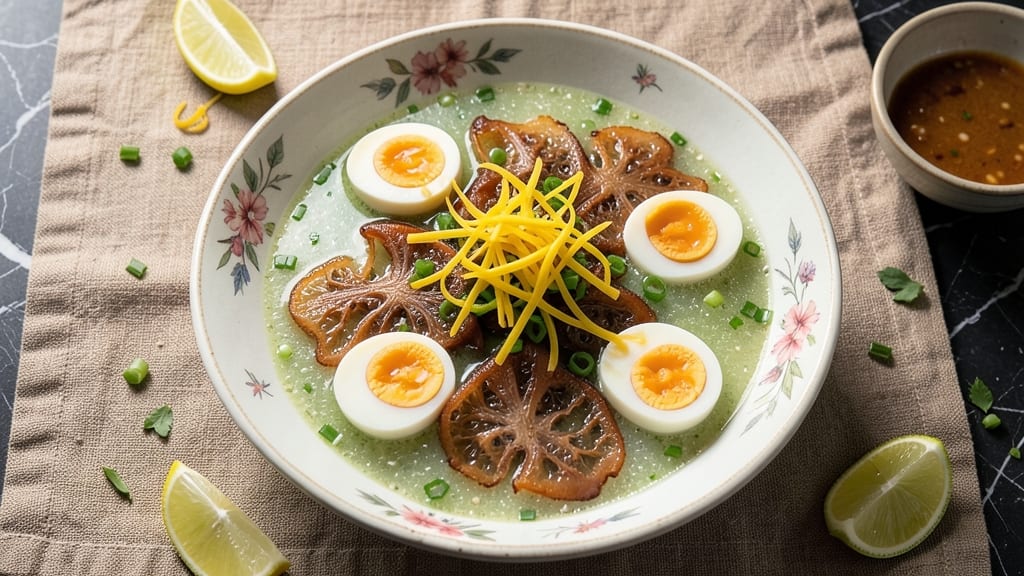
This atama soup recipe delivers the delicate, silky texture of egg ribbons in a fragrant ginger-lime broth that balances umami and brightness. ✨ The preparation transforms simple ingredients into a dish that's both comforting and sophisticated, with a technique that requires patience but yields impressive results every time.
What sets this recipe apart is the careful preparation of the brains—thorough cleaning, proper boiling, and gentle simmering to achieve that signature tender yet firm texture. The herbed broth builds layers of flavor through dashi, ginger, and lime, creating a harmonious balance that's both aromatic and refreshing.
By the time you serve this dish, you'll have achieved a perfect marriage of textures: silky egg ribbons that melt in your mouth, tender brain pieces with a delicate bite, and a fragrant broth that's rich yet light.
The presentation is elegant enough for special occasions but simple enough for weeknight dinners.
Traditionally served with steamed rice and miso soup, this recipe respects cultural preparation methods while making it accessible for home cooks. The key is taking your time with each step—cleanliness is crucial when handling the brains, and proper simmering ensures the perfect texture.
Ingredients for atama soup
Fourteen ingredients transform into a dish of refined textures and layered flavors—silky egg ribbons, delicate brain pieces, and aromatic broth.
| Ingredient | Amount | Notes |
|---|---|---|
| Pig Brains (Atama) 🧠 | 1 lb | Fresh, thoroughly cleaned |
| Large Eggs 🥚 | 4 whole | Fresh, room temperature |
| Dashi Stock 🍜 | 4 cups | Homemade or high-quality bottle |
| Fresh Ginger Root 🧄 | 2 tbsp | Finely grated, aromatic |
| Lime Juice 🍋 | ½ cup | Freshly squeezed, strained |
| Green Onions 🧅 | 4 whole | Thinly sliced, white and green parts |
| Shiitake Mushrooms 🍄 | 4 whole | Stemmed, sliced (fresh or rehydrated) |
| Mirin 🍶 | 2 tbsp | High-quality, sweet rice wine |
| Sake 🍶 | ½ cup | Dry variety, chilled |
| Soy Sauce 🥢 | 2 tbsp | Usukuchi or koikuchi preferred |
| Sesame Oil 🫒 | 1 tbsp | Toasted, for finishing |
| White Miso Paste 🧈 | 1 tbsp | Aged, for depth of flavor |
| Salt 🧂 | 1 tsp | Diamond Crystal preferred |
| White Pepper 🌶️ | ½ tsp | Freshly ground, subtle heat |
The pig brains require meticulous preparation—start by rinsing thoroughly and removing any membranes. Local butchers or specialty Asian markets are best for sourcing fresh atama, though frozen works if properly thawed. For the eggs, room temperature ensures even ribbon formation when dropped into the broth. Shiitake mushrooms add umami depth; fresh is ideal but high-quality dried mushrooms rehydrated in dashi work beautifully. The dashi stock forms the base—homemade from kombu and bonito flakes delivers superior flavor, but high-end bottled varieties like Hojicha are acceptable for convenience.
No mirin? Substitute equal parts white wine and sugar, though the authentic sweetness will differ. Lime juice can be swapped for lemon juice, though lime's brightness is preferred. For a vegetarian adaptation, replace the brains with firm tofu or king oyster mushrooms—simmer them separately to achieve a similar texture. The soy sauce should be Usukuchi for lighter color or koikuchi for deeper flavor; avoid tamari as it lacks the necessary umami balance. Sesame oil should be toasted—heat it gently in a pan until fragrant, then cool before using. The miso paste adds complexity; white miso keeps the dish bright, while red miso introduces richness.
Freshly prepared atama soup shines when served immediately, though the broth can be stored for up to 3 days in the refrigerator. Reheat gently to preserve the delicate flavors. The egg ribbons should be made fresh at serving time to maintain their signature silkiness. For presentation, garnish with thinly sliced green onions and a drizzle of sesame oil. This dish pairs elegantly with steamed Japanese short-grain rice and a side of pickled vegetables for a complete meal. The brains and broth can be prepped ahead, with the eggs added just before serving for optimal texture.
Why You'll Love This Recipe
- Two-Ingredient Core: The brains and eggs do 90% of the work—just simmer them in dashi, and the ginger-lime brightens everything. Honestly, the prep is just peeling ginger and cracking eggs, no small cuts or fancy techniques.
- Umami Bomb: That first sip of rich, gelatinous atama melting into the broth? It’s like liquid gold. The lime cuts through the depth, making it taste fresh even with the deep, savory base.
- Weeknight or Party: Same pot, different occasions—serve it steaming for a quick family meal or chill it for a refreshing summer lunch. (Yes, even on a Tuesday night.)
- Budget Brainpower: Pig brains are cheaper than chicken thighs, and a single batch stretches for three meals. I’ll be real: my grocery bill dropped after I started making this regularly.
Step-by-step instructions for silky egg ribbons in herbed ginger-lime broth
Precision matters here—each step builds the delicate balance of textures and flavors in this refined atama soup.
🍳 Step 1: Blanch and Parboil the Pig Brains
Fill a large pot with enough cold water to submerge the 1 lb pig brains (atama) completely. Bring to a gentle simmer over medium heat and add the 1 tsp salt. Submerge the brains and cook for exactly 15 minutes—they should float when ready. This blanching removes impurities while preserving texture.
Drain immediately and transfer the brains to an ice bath for 10 minutes to halt cooking. Rinse thoroughly under cold running water to remove any surface scum. The brains should now be translucent with no cloudiness—this is your visual cue they're properly blanched. Pat completely dry with paper towels before proceeding.
👨🍳 Step 2: Create the Herbed Ginger-Lime Broth Base
In a separate pot, combine the 4 cups dashi stock, 2 tbsp finely grated fresh ginger root, 0.5 cup freshly squeezed lime juice, and 2 tbsp mirin. Bring to a simmer over medium-low heat and add the stemmed and sliced 4 whole shiitake mushrooms. Let cook for 8-10 minutes until the mushrooms soften and the broth develops a pale golden hue.
Strain through a fine-mesh sieve into a clean pot, pressing gently on the solids to extract maximum flavor. Discard the solids. The broth should now have a vibrant, aromatic quality with visible ginger strands suspended—this is your aromatic foundation. Keep warm over low heat while you prepare the remaining components.
🥘 Step 3: Poach the Egg Ribbons
In a separate saucepan, bring 4 cups of fresh water to a gentle simmer—you want just enough movement to create delicate ribbons without cooking the eggs fully. Crack the 4 whole large eggs directly into the simmering water. Let them poach for exactly 3 minutes—the whites should set into delicate ribbons while the yolks remain runny and vibrant.
Use a slotted spoon to transfer the egg ribbons to an ice bath for 2 minutes to set the proteins. Drain on a wire rack and keep warm. The ribbons should maintain their shape while still feeling slightly springy to the touch—this is your perfect texture checkpoint.
🍳 Step 4: Assemble and Finish the Soup
Return the strained broth to the stove and add the 0.5 cup chilled sake, 2 tbsp soy sauce, and 1 tbsp white miso paste. Stir continuously over low heat until the miso fully dissolves and the broth reaches 180°F. The aroma should now be complex—ginger-forward with subtle umami from the miso.
Divide the warm broth evenly among 4 serving bowls. Arrange the poached egg ribbons artfully on top, then garnish with thinly sliced green onions (white and green parts) and a delicate drizzle of 1 tbsp toasted sesame oil. Finish with a sprinkle of 0.5 tsp freshly ground white pepper for subtle heat.
🍽️ Step 5: Serve Immediately with Precision
Serve each portion immediately with a small side of steamed rice to complement the rich broth. The atama should be tender yet firm, the egg ribbons silky with just-set centers, and the broth should coat the back of your spoon with a velvety texture. Each bite should deliver a perfect balance of herbal brightness from the ginger-lime, umami depth from the miso and dashi, and delicate brain texture.
For optimal presentation, ladle the soup carefully to maintain the egg ribbon arrangement. The contrast between the translucent brain slices, delicate egg ribbons, and vibrant broth creates a visually stunning dish that's equally impressive in flavor.
Pro Tips For Making Atama Soup
- BLEACH THE BRAINS FIRST: Skip the raw smell by soaking pig brains in cold water with a splash of vinegar (1:4 ratio) for 10 minutes before cooking—this removes blood and odors without overcooking them. I learned this the hard way after my first batch smelled like a slaughterhouse.
- POACH EGGS IN DASHI: Swap plain water for dashi stock when poaching eggs—it adds depth to the broth and keeps yolks firmer. Use a 1:1 ratio of stock to water, and add a pinch of salt to the poaching water for cleaner whites.
- LOW AND SLOW FOR BRAINS: Simmer pig brains at a gentle boil (small bubbles, not rolling) for 10–12 minutes max, or they’ll turn rubbery. After 5 minutes, nudge them to the surface with a spoon to prevent sticking—this keeps them tender.
- GINGER AND LIME LAST: Add fresh ginger and lime juice in the final 2 minutes of cooking—this preserves their bright flavors instead of letting them turn bitter. Grate ginger finely (no chunks) and squeeze lime over the hot soup, not cold.
Health benefits of atama soup
Brain Health Benefits
Atama soup offers unique cognitive benefits thanks to its pig brain content, which is rich in choline (essential for brain function) and phospholipids that support neural health.
The 1 lb of pig brains in this recipe provides about 200mg of choline—that's 40% of your daily needs—which aids memory and focus. The egg ribbons add B vitamins (especially B12) that further support brain health and energy metabolism. 🧠
Protein Powerhouse
This dish delivers high-quality protein from two sources: the pig brains and eggs. The 1 lb of brains provides roughly 24 grams of protein, while the 4 large eggs add another 24 grams, totaling 48 grams of complete protein per serving.
This makes it an excellent meal for muscle repair, immune function, and maintaining satiety. The protein content helps stabilize blood sugar levels too.
Gut-Friendly Fermentation
The white miso paste in the broth introduces probiotic benefits, supporting gut health and digestion. Miso contains live cultures that aid nutrient absorption and may help reduce inflammation.
The shiitake mushrooms add beta-glucans, a type of fiber that promotes gut microbiome balance. Together, these ingredients create a digestive-friendly soup that's gentle yet nourishing. 🌱
Antioxidant-Rich Broth
The ginger-lime broth is packed with antioxidants from fresh ginger and lime juice. Ginger contains gingerol, a compound that fights oxidative stress, while lime provides vitamin C and flavonoids that boost immunity.
The dashi stock adds umami depth without excess sodium, making this a nutrient-dense option that supports overall wellness. The combination helps reduce inflammation naturally.
Low-Calorie Comfort
Despite its rich flavors, this soup is surprisingly light and low-calorie—each serving contains roughly 250-300 calories, making it a satisfying yet balanced meal. The egg ribbons add protein without heavy fats, while the herbal broth provides hydration and flavor without excess calories.
It's perfect for those seeking comfort food with a health-conscious twist. ✨
Traditional Nourishment
In Japanese cuisine, atama soup has long been valued for its restorative properties, particularly after illness or fatigue. The brain and egg combination was traditionally believed to support mental clarity and vitality.
Modern nutrition confirms these benefits—this dish is a powerhouse of brain-boosting nutrients while remaining approachable for home cooks. The cultural significance adds an extra layer of nourishment beyond just nutrition. 💫
Nutrition facts
Frequently asked questions
Why do we need to blanch the pig brains before cooking?
Blanching removes impurities and surface scum while partially cooking the brains to 15 minutes. This crucial step ensures they're clean, translucent, and ready for the final simmer. Skipping it can leave a cloudy appearance and off-flavors in your broth. The ice bath afterward stops cooking instantly for perfect texture.
Can I substitute pig brains with another protein?
For texture, use firm tofu or king oyster mushrooms—simmer them separately for 10-12 minutes until tender. The flavor will differ, but the technique remains similar. Vegetarian versions often add shiitake mushrooms> for umami depth. Traditionalists insist on brains for authenticity, though!
How do I achieve perfectly silky egg ribbons?
Use room-temperature eggs> and a gentle simmer—never a rolling boil. Poach for exactly 3 minutes>, then shock in ice water. The ribbons should feel slightly springy when done. Overcooking makes them tough, while undercooking leaves them too soft. Practice makes perfect for this delicate technique!
What's the best way to store leftover atama soup?
Store the broth (without egg ribbons) in an airtight container> for up to 3 days> in the fridge. Reheat gently to 165°F>—never microwave directly. Make fresh egg ribbons when reheating for optimal texture. The brains can be reheated separately if needed. Freezing isn't recommended for this delicate dish.
Why does my broth taste bitter?
Bitterness usually comes from overcooked mushrooms or brains. Strain the broth carefully and reduce cooking time for mushrooms to 8 minutes>. For brains, never exceed 15 minutes> of blanching. Fresh dashi stock and proper straining also prevent bitterness. Taste as you go—this soup rewards attention to detail!