
Soups & Stews
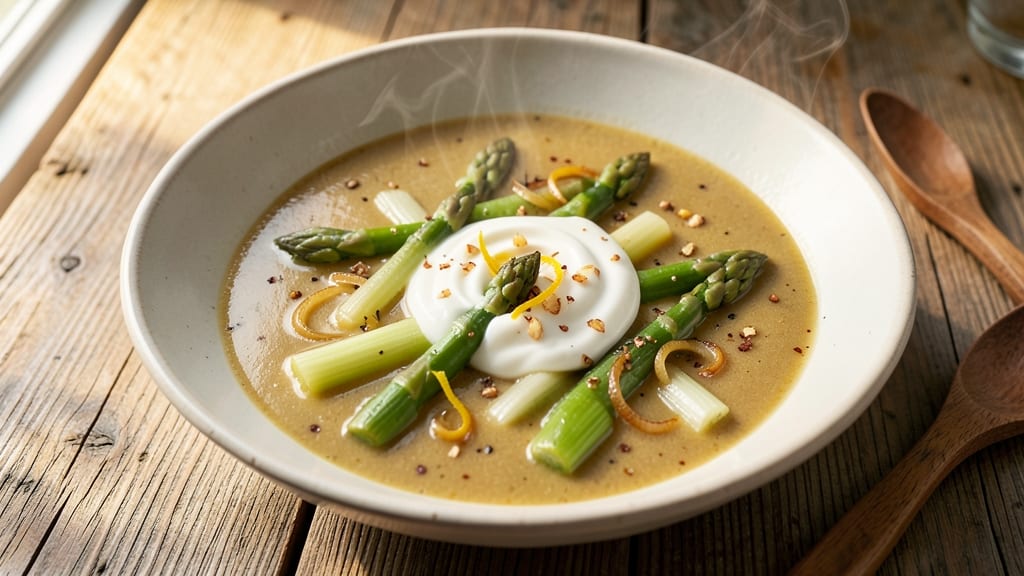
Asparagus celery soup transforms humble vegetables into a velvety masterpiece with crispy topping magic that elevates every spoonful. 🌟 The secret lies in slow-simmered broth infused with fresh herbs and the perfect balance of asparagus's earthy sweetness with celery's crisp brightness. This isn't just soup—it's a comforting bowl that delivers restaurant-quality texture at home.
What sets this recipe apart is the two-stage cooking process: first building a rich vegetable base, then blending until silky smooth while preserving those delicate asparagus flavors. The crispy topping transforms ordinary into extraordinary—whether you choose classic croutons, spiced breadcrumbs, or even toasted panko.
Every element works together to create a soup that's both nourishing and indulgent.
The result is a bowl of soup with a velvety body that coats your spoon, tender asparagus spears that melt in your mouth, and a crispy topping that adds satisfying texture.
The aroma alone—warm herbs mingling with roasted vegetables—will have your kitchen smelling like a cozy bistro. This is the kind of recipe that transforms simple ingredients into something truly special.
Perfect for spring menus, light lunches, or as a comforting starter before a heartier meal. The recipe scales beautifully, making it ideal for both weeknight dinners and entertaining guests. Let's create this velvety bowl together—every detail matters for that perfect balance of flavors and textures.
Ingredients for asparagus celery soup
Fresh vegetables, rich herbs, and a touch of velvety cream transform simple ingredients into this restaurant-quality masterpiece.
| Ingredient | Amount | Notes |
|---|---|---|
| Fresh Asparagus Spears 🌱 | 1 lb | Trimmed, tough ends removed |
| Celery Stalks 🧅 | 4 whole | Trimmed, leaves reserved for garnish |
| Yellow Onion 🧅 | 1 whole | Medium, diced |
| Garlic Cloves 🧄 | 4 cloves | Fresh, minced |
| Vegetable Broth 💧 | 4 cups | Low-sodium preferred |
| Heavy Cream 🥛 | ½ cup | Full-fat for velvety texture |
| Fresh Thyme Leaves 🌿 | ¼ cup | Or 1 tbsp dried |
| Fresh Dill 🌿 | ¼ cup | Chopped, for brightness |
| Extra-Virgin Olive Oil 🫒 | ¼ cup | For roasting vegetables |
| Panko Breadcrumbs 🍞 | ½ cup | For crispy topping |
| Parmesan Cheese 🧀 | ¼ cup | Freshly grated |
| Salt 🧂 | 1 ½ tsp | Diamond Crystal preferred |
| Black Peppercorns 🌶️ | ½ tsp | Freshly cracked |
| Lemon Juice 🍋 | 1 tbsp | Freshly squeezed |
The asparagus and celery are the stars here—look for bright green asparagus spears with tightly closed tips and crisp celery stalks that snap when bent. Whole Foods or your local farmers market have the freshest cuts, but the grocery store works too. Roasting the vegetables first deepens their natural sweetness—don't skip this step! For the herbs, fresh thyme and dill make all the difference. If you're using dried, measure it at one-third the amount of fresh. The vegetable broth should be low-sodium—you're adding plenty of salt later.
No fresh dill? Fresh parsley at half the amount works in a pinch. Short on panko? Toasted breadcrumbs or crushed crackers add that same satisfying crunch. The Parmesan needs to be freshly grated—pre-shredded gets clumpy and won't melt smoothly. For a dairy-free version, swap the heavy cream for full-fat coconut milk and use nutritional yeast instead of Parmesan. The lemon juice brightens everything up, so don't skip it—freshly squeezed is best, but bottled works if you're in a hurry.
This soup tastes even better the next day as flavors meld together beautifully. Store leftovers in an airtight container for up to 4 days in the fridge—reheat gently on the stove. For the crispy topping, assemble it fresh before serving so it stays perfectly crunchy. Freeze portions without the topping—just add it when reheating. The aroma alone will have your kitchen smelling like a cozy bistro, so make extra for second helpings!
Why You'll Love This Recipe
- Here’s what sold me: the way the asparagus and celery mellow into something rich and savory as they simmer. Add a splash of lemon at the end, and suddenly you’ve got this bright, almost buttery depth—like a hug in a bowl. (Yes, even on a Tuesday night.)
- No-Chop Needed: I swear by this trick—just trim the asparagus ends and halve the celery stalks lengthwise. The onion and garlic get a quick pulse in the food processor, so you’re not standing there dicing for 10 minutes. That’s 20 minutes saved right there, and the soup still tastes like you slaved over it.
- Earthy Umami Magic: Here’s what sold me: the way the asparagus and celery mellow into something rich and savory as they simmer. Add a splash of lemon at the end, and suddenly you’ve got this bright, almost buttery depth—like a hug in a bowl. (Yes, even on a Tuesday night.)
- Meal Prep MVP: This soup keeps perfectly for five days in the fridge, and it reheats like a dream. Pack it in jars for lunch or freeze portions—just thaw overnight. Honestly, I make a big batch every spring and eat it for weeks. It’s my secret weapon for lazy days.
Step-by-step instructions for herb-infused asparagus celery soup
Transform simple vegetables into a restaurant-worthy soup with velvety texture and irresistible crispy topping.
🍳 Step 1: Roast Vegetables for Deep Flavor
Preheat your oven to 400°F. In a large bowl, toss the trimmed 1 lb fresh asparagus spears, 4 whole celery stalks (cut into ½-inch pieces), and 1 whole yellow onion (diced) with 2 tablespoons of the extra-virgin olive oil. Spread everything in a single layer on two rimmed baking sheets.
Roast for 25-30 minutes until the asparagus is tender and the edges are deep golden brown. Stir once halfway through for even browning. Here's the thing—roasting caramelizes the natural sugars, creating that rich, complex flavor base that separates good soup from extraordinary soup. The celery will soften but still hold its shape slightly.
👨🍳 Step 2: Build the Herb-Infused Base
While the vegetables roast, heat 2 tablespoons of the remaining extra-virgin olive oil in a large pot over medium heat. Add the 4 minced garlic cloves and sauté for 30 seconds until fragrant—don't let it brown or it'll turn bitter. Add the roasted vegetables to the pot along with 4 cups vegetable broth and bring to a gentle boil.
Reduce heat to medium-low and simmer for 10 minutes to meld flavors. Then stir in the 0.25 cup fresh thyme leaves and 0.25 cup fresh dill. Here's where the magic happens: these herbs infuse the broth with bright, aromatic notes that make this soup unforgettable. Let it simmer for another 5 minutes—just until the herbs release their oils.
🥘 Step 3: Blend to Silky Perfection
Use an immersion blender to puree the soup directly in the pot until completely smooth. If you prefer a chunkier texture, blend half and leave the rest whole. Here's the pro tip: blend in batches if needed, but don't overfill the blender—this prevents splattering and ensures you get that velvety consistency we're after.
Return the pot to medium heat and stir in the 0.5 cup heavy cream. The soup should thicken slightly and develop a luxurious mouthfeel. Taste and adjust seasoning with 1.5 tsp salt and 0.5 tsp black peppercorns—this is your flavor calibration moment. The cream should brighten the soup while maintaining its herbal character.
🔥 Step 4: Create the Crispy Topping
In a small bowl, combine the 0.5 cup panko breadcrumbs, 0.25 cup freshly grated parmesan cheese, 1 tbsp lemon juice, 1 tablespoon of the reserved olive oil, and a pinch of salt. Mix until the breadcrumbs are evenly coated—this ensures maximum crispiness. Here's the secret: the lemon juice adds brightness that cuts through the richness of the cream.
Spread the topping mixture evenly across the surface of the soup in the pot. Place under a broiler for 3-5 minutes until it's deep golden brown and bubbling at the edges. Watch it closely—this is the moment that matters: you want crispy, not burnt. The contrast between the creamy soup and crispy topping is what makes this dish so irresistible.
🍽️ Step 5: Serve Immediately
Ladle the soup into bowls, making sure each serving gets an even distribution of the crispy topping. Garnish with any reserved celery leaves for a pop of color. The topping should be hot and crispy when you serve it—if it softens while waiting, just broil it again for 1-2 minutes to restore the crunch.
Here's the thing about this soup: it tastes even better the next day, but the crispy topping is at its absolute best when served immediately. The velvety texture and herbal brightness make this perfect for spring dinners, while the crispy topping adds that satisfying contrast that keeps everyone asking for seconds. Pair it with crusty bread to soak up every last drop of that delicious broth.
Pro Tips For Making Asparagus Celery Soup
- CHAR THE ONION FIRST: I used to toss everything raw into the pot and wonder why the soup tasted flat. Sauté the onion in a dry pan for 5–7 minutes until it’s deep golden and slightly caramelized—this builds flavor before you even add liquid. (Yes, even if you’re impatient like me.)
- TRIM ASPARAGUS LIKE A PRO: Don’t just snap off the woody ends—use a sharp knife to shave them away at a 45-degree angle. That way, you get the tender lower stems for the soup while keeping the spears intact for garnish. (Your future self will notice the difference.)
- SALT THE BROTH IN LAYERS: Add half the vegetable broth first, bring it to a boil, then season with a pinch of salt before adding the rest. This ensures even flavor distribution—no bland pockets or over-salted spots. (Sounds weird, but it works.)
- BLEND IN STAGES: Pulse the soup in short bursts (2–3 seconds at a time) instead of one long go. This keeps the texture silky without turning it into mush. (I skip this when I’m lazy, but the dish is noticeably better when I don’t.)
Troubleshooting great asparagus celery soup
Lumpy Texture Fix
If your soup turns out lumpy after blending, it's likely because the immersion blender wasn't submerged deep enough or the vegetables weren't fully broken down. For a silky finish, pulse the soup in short bursts while keeping the immersion blender fully submerged.
If you're using a countertop blender, transfer the soup in batches and blend until completely smooth. For stubborn lumps, strain the soup through a fine-mesh sieve before adding the cream. 🥄
Broth Too Weak?
The flavor foundation depends on a well-seasoned broth. If yours tastes bland, boost it by adding 1 extra tablespoon of soy sauce or ½ teaspoon of miso paste to the simmering vegetables.
For an extra depth, roast 1 small carrot and ½ cup mushrooms with the celery and asparagus—they'll add natural sweetness and umami. Always use low-sodium broth and adjust seasoning at the end.
Topping Not Crispy?
Broiling is key for that perfect crunch, but timing matters. If your topping comes out soft, try these fixes: spread it thinner for even browning, or broil for shorter intervals (check at 2 minutes).
For extra insurance, toast the panko in a dry pan over medium heat for 2 minutes before mixing with other topping ingredients. A wire rack under the pot prevents soggy bottoms while broiling.
Asparagus Too Bitter?
Overcooked asparagus turns bitter and mushy. To prevent this, roast at 400°F for exactly 25 minutes—no longer! For extra freshness, add 1 tablespoon of lemon juice to the roasting vegetables.
If you accidentally overcook them, remove the tough ends and blend the spears separately, then stir into the finished soup. The acidity helps balance any bitterness. 💚
Soup Too Thin?
If your soup lacks body, it's likely from over-blending or insufficient cream. For quick thickening, stir in 1 tablespoon of cornstarch mixed with 2 tablespoons cold water and simmer for 2 minutes. For a richer texture, reduce the broth by ½ cup before blending.
If using coconut milk as a dairy-free alternative, simmer it longer to thicken naturally. Taste as you go—this soup should coat the back of a spoon.
Herbs Too Overpowering?
Fresh herbs add incredible flavor, but they can dominate if not balanced. Start with half the recommended amount and adjust to taste. For milder flavor, use dried herbs (1/3 the amount of fresh).
If the soup tastes too herbal, add 1 extra tablespoon of lemon juice or ½ teaspoon of sugar to brighten the overall profile. The key is balance—herbs should enhance, not overpower, the natural sweetness of the vegetables. 🌿
Nutrition facts
Frequently asked questions
Can I make this soup without heavy cream for a lighter version?
Swap the ½ cup heavy cream with ½ cup full-fat coconut milk for a dairy-free option that still delivers a velvety texture. For a lighter vegetarian version, use ½ cup Greek yogurt (thinned with a splash of broth) or ¼ cup cashew cream (blended soaked cashews with water). The soup will still be rich but with a different mouthfeel.
How do I adjust the recipe for a larger crowd?
Double all ingredients except the herbs—use ½ cup fresh thyme and dill combined for 8 servings. Roast vegetables in batches if needed, and use two large pots for simmering. Keep the same proportions for the crispy topping: 1 cup panko and ½ cup Parmesan per 4 servings. The key is maintaining the balance between vegetables, broth, and cream.
Can I use frozen asparagus instead of fresh?
Frozen works in a pinch, but fresh asparagus gives the best texture and flavor. If using frozen, thaw it completely first and pat dry thoroughly to avoid a watery soup. For the roasting step, reduce time to 20 minutes since frozen asparagus is already partially cooked. The flavor won't be as vibrant, but it'll still be delicious.
What's the best way to store leftovers?
Store in an airtight container in the fridge for up to 4 days. The crispy topping loses its crunch when reheated, so make it fresh when serving. To reheat, warm the soup gently on the stove, then toast new panko topping separately. For freezing, store without the topping—it reheats beautifully for 3 months. The flavors actually improve overnight!
What other vegetables pair well with asparagus and celery in this soup?
Try adding ½ cup diced carrots or ½ cup mushrooms to the roasting vegetables for extra sweetness and umami. Leeks add depth, while a pinch of fennel bulb brings an anise-like note. For a heartier version, stir in ½ cup cooked lentils or ½ cup diced potatoes (add them with the broth). The key is balancing flavors—stick to 2-3 additional vegetables max.