
Soups & Stews
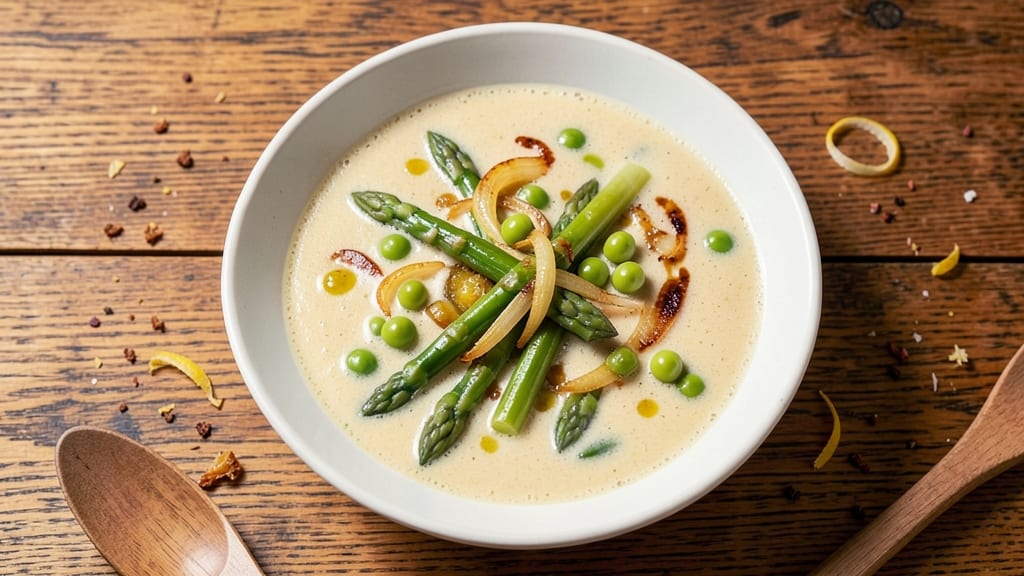
This asparagus and pea soup captures spring in every spoonful—bright, velvety, and bursting with fresh garden flavors. The secret lies in blanching the vegetables first, which preserves their vibrant green color and delicate sweetness while creating a silky texture.
I developed this recipe after years of experimenting with seasonal spring soups, and it's now my go-to for early spring dinners when fresh produce is at its peak.
The beauty of this soup is its simplicity—just a handful of fresh ingredients transformed into a restaurant-quality dish. You'll start with tender asparagus and sweet peas, sautéed onions, and a touch of garlic for depth.
The broth builds slowly, infused with vegetable stock and a splash of cream for richness, but it remains light enough to let the vegetables shine. What makes it special is the immersion blender technique, which creates that signature velvety texture without losing any of the fresh flavors.
By the time you're done, you'll have a soup that's naturally vibrant green, perfectly balanced between sweet and savory, and so smooth it practically melts in your mouth. The aroma alone—fresh peas, asparagus, and a hint of herbs—will make your kitchen smell like spring.
It's the kind of dish that feels indulgent yet light, perfect for a cozy weeknight dinner or a spring brunch gathering.
Garnish with a swirl of cream, a sprinkle of fresh herbs, and maybe a few crispy croutons for texture. This soup is vegetarian-friendly and can easily be adapted for vegan diets by using coconut milk instead of cream. Let's get started on this spring classic!
Ingredients for asparagus and pea soup
Bright green vegetables and creamy richness—just these fresh ingredients transform into spring’s coziest soup.
| Ingredient | Amount | Notes |
|---|---|---|
| Asparagus Spears 🌱 | 1 lb | Trimmed, woody ends removed |
| Fresh Peas 🌿 | 1 ½ cups | Shelling optional for convenience |
| Yellow Onion 🧅 | 1 whole | Medium size, diced finely |
| Garlic Cloves 🧄 | 3 cloves | Peeled, minced for aroma |
| Vegetable Stock 💧 | 4 cups | Homemade or low-sodium |
| Heavy Cream 🥛 | ½ cup | Full-fat for richness |
| Extra-Virgin Olive Oil 🫒 | ¼ cup | For sautéing vegetables |
| Fresh Dill 🌿 | ¼ cup | Chopped, for freshness |
| Salt 🧂 | 1 tsp | Kosher or sea salt |
| Black Pepper 🌶️ | ½ tsp | Freshly ground for heat |
| Lemon Juice 🍋 | 1 tbsp | Freshly squeezed for brightness |
| Fresh Chives 🌱 | 2 tbsp | Chopped, for garnish |
| Crusty Bread 🍞 | 1 cup | Cubed for croutons |
The asparagus and peas are the stars here—farmers market produce makes all the difference. Look for vibrant green asparagus with tight tips and sweet peas still in their pods. If shelling feels tedious, frozen peas work too (thaw first). The onion and garlic should be fresh—yellow onions from the grocery store’s produce section are fine, but red onions add a subtle sweetness. For the vegetable stock, homemade is best, but even the cheapest low-sodium boxed version works in a pinch. The dill? Fresh is non-negotiable—dried just won’t give that bright spring flavor.
No fresh dill? Fresh parsley at double the amount works, but you’ll lose some of that fresh garden taste. Short on cream? Coconut milk gives a lighter texture (though it’ll be vegan), or swap half for Greek yogurt for tanginess. Using frozen peas? Thaw and drain them first—no one likes soup waterlogged with ice. The lemon juice is key for brightness, so don’t skip it. If you’re making this ahead, hold off on adding the lemon until serving—it’ll keep the soup’s vibrant green color. For extra richness, a splash of white wine in the sautéing step adds depth (but it’s optional).
This soup tastes even better the next day—store leftovers in the fridge for up to 4 days, with an extra splash of water or stock if it thickens. For freezing, hold off on adding the cream until reheating (it can separate). Portion into containers with a little extra broth on top to prevent a skin from forming. Garnish with chives and croutons right before serving—toasted bread cubes add the perfect crunch. And if anyone asks, the secret to that perfect green color? Blanching the veggies first—trust me on this.
Why You'll Love This Recipe
- No-Fuss Freshness: I swear by this when spring veggies flood the market—just trim asparagus ends, snap peas, and toss everything raw into the pot. The blender does the rest while you sip your wine (or tea, no judgment).
- Garlic-Kissed Spring Magic: That moment when you taste the soup—sweet peas, grassy asparagus, and garlic so tender it melts into every spoonful? Honestly, it’s the kind of flavor that makes you pause mid-sip and think, "Why don’t I make this more often?"
- Lunch or Dinner: Between us, this soup is my lazy-day hero. Serve it chilled with crusty bread for a light lunch, or warm it up with a drizzle of cream for a cozy dinner. Even my picky husband doesn’t complain—(yes, even on a Tuesday night).
- Budget Meal, Big Payoff: Peas and asparagus stretch this recipe far, and frozen peas work just as well when fresh ones aren’t in season. I make a double batch, freeze half, and boom—next month’s lunch is already sorted. Minimal cost, maximum satisfaction.
Step-by-step instructions for asparagus and pea soup
Let's create a velvety spring soup that captures the essence of fresh garden vegetables.
Prepare the Base Vegetables
Start by trimming the woody ends from the 1 lb asparagus spears—look for the tough, fibrous bottoms and snap them off by bending each spear until it naturally breaks. Cut the spears into 1-inch pieces and set aside. Peel and dice the whole yellow onion into small, even pieces—about ¼-inch cubes. This size ensures even cooking and prevents any large chunks in your finished soup.
Mince the 3 cloves garlic finely—you want them almost paste-like so they dissolve completely into the soup. This subtle garlic flavor will enhance the natural sweetness of the asparagus and peas without overpowering them. Heat ¼ cup extra-virgin olive oil in a large pot over medium heat until shimmering but not smoking. Add the onions and cook for 4-5 minutes, stirring occasionally, until they become translucent and just starting to soften.
Sauté and Blend the Vegetables
Add the minced garlic to the pot and cook for 30 seconds until fragrant—you should smell that fresh, pungent aroma. Immediately add the asparagus pieces and cook for 3-4 minutes, stirring occasionally, until they begin to soften slightly but still retain a bit of their bright green color. This quick cooking preserves their natural sweetness and vibrant color.
Add the 1.5 cups fresh peas (shell them if not pre-shelled) and cook for 2 minutes, stirring gently. The peas will soften just enough to release their flavor but won't lose their shape completely. Pour in the 4 cups vegetable stock and bring the mixture to a gentle boil. Reduce the heat to medium-low and let it simmer for 5 minutes to allow all the flavors to meld together.
Blend Until Silky Smooth
Using an immersion blender, blend the soup directly in the pot until completely smooth. I like to blend in batches if needed—start from the bottom and work your way up to ensure you capture all the flavors. If you prefer not to use an immersion blender, carefully transfer the soup to a countertop blender in batches, blending until silky smooth each time. The soup should have a velvety texture with no visible chunks.
Return the blended soup to the pot and stir in the ½ cup heavy cream, 1 tsp salt, and ½ tsp black pepper. Taste and adjust the seasoning if needed—you might need a bit more salt to balance the natural sweetness of the vegetables. The cream adds a luxurious richness that complements the bright flavors of the spring vegetables. Keep the soup warm over low heat while you prepare the garnishes.
Finish with Fresh Herbs and Lemon
Chop the ¼ cup fresh dill and 2 tbsp fresh chives finely—you want small, even pieces that will distribute evenly throughout the soup. Stir these into the soup along with the 1 tbsp lemon juice. The lemon juice brightens the entire dish, cutting through the richness of the cream and enhancing the natural sweetness of the vegetables. Taste again and adjust the seasoning if needed.
While the soup is warming, toast the 1 cup crusty bread in a dry skillet over medium heat for 3-4 minutes, stirring occasionally, until golden brown and crispy. Cut the toasted bread into small cubes for croutons. Ladle the soup into bowls and top each serving with a generous sprinkle of the toasted bread cubes. The contrast of the crispy croutons against the velvety soup is what makes this dish truly special.
Pro Tips For Making Asparagus And Pea Soup
- Blanch Peas First: Fresh peas turn to mush if you toss them raw into the pot. Give them a quick 30-second blanch in boiling water, then shock in ice water—this stops cooking and keeps them bright green. (Yes, it’s extra work, but your soup won’t look like pea paste.)
- Sear Onion Slowly: I used to rush this step and end up with bitter onions. Instead, cook them on medium-low heat for 8-10 minutes until deeply golden and caramelized—no need to add oil if you’re using enough stock. Patience here makes the soup taste richer without extra fat.
- Trim Asparagus Right: Don’t just snap off the woody ends—use a knife to cut them at a 45-degree angle just below the toughest part. This hides the ugly bits and lets you use the whole spear without sacrificing texture. (Pro move: reserve the trimmed ends for stock later.)
- Simmer, Don’t Boil: Once the stock is added, keep the heat at a bare simmer—any higher and the peas will disintegrate into a sad, watery slurry. A gentle roll of bubbles is all you need to meld flavors without breaking down the veggies. (I know, it’s boring, but trust me.)
Flavor customization for this asparagus and pea soup
Herb Variations
Swap out the dill for 2 tbsp fresh tarragon for a French-inspired twist—it pairs beautifully with peas and adds a subtle anise-like sweetness. Alternatively, try 1 tbsp fresh mint for a Middle Eastern touch, though it’s bolder, so use sparingly.
I’ve also experimented with 1 tsp dried thyme (instead of fresh dill) when fresh herbs aren’t available—it adds earthiness but lacks the bright freshness. 🌿
Spice Adjustments
For a smoky depth, add ½ tsp smoked paprika when sautéing the onions—it enhances the asparagus’s natural sweetness. If you prefer heat, stir in ¼ tsp red pepper flakes at the end for a gentle kick.
For warmth, a pinch of ground nutmeg (just ⅛ tsp) complements the cream beautifully, but don’t overdo it—too much can overpower the delicate flavors. 🌶️
Creamy Alternatives
Replace the ½ cup heavy cream with ½ cup coconut milk for a vegan version—it’s lighter but still luscious. For a tangy twist, mix ¼ cup Greek yogurt with ¼ cup milk to add brightness.
If you’re watching calories, use ½ cup low-fat milk and boost flavor with an extra ½ tsp lemon juice to balance the richness. The texture will be slightly lighter but still velvety. 🥛
Texture Contrasts
Instead of croutons, try toasted pine nuts (½ cup) for a nutty crunch—toss them in a dry pan over medium heat for 2-3 minutes until golden. For a protein boost, add ¼ cup crumbled feta cheese on top, especially if you’re serving this as a starter.
If you love umami, a sprinkle of toasted sesame seeds (1 tsp) adds a surprising but delicious contrast. ✨
Seasonal Swaps
In summer, replace asparagus with ½ lb green beans (trimmed and blanched) for a similar texture. For fall, swap peas for ½ cup roasted butternut squash (cubed and sautéed first) and add a dash of cinnamon.
In winter, use frozen peas (thawed) and add ½ cup roasted carrots for extra heartiness. Each swap keeps the soup’s bright, velvety essence while adapting to the season. 🍂
Nutrition facts
Frequently asked questions
Why does this soup turn such a vibrant green?
The bright green color comes from blanching the asparagus first (if you prefer) and using fresh peas and dill. The lemon juice at the end also helps preserve that fresh, garden-fresh hue. For extra vibrancy, add a pinch of matcha powder (⅛ tsp) when blending—it intensifies the color without altering the flavor.
Can I make this soup without an immersion blender?
Transfer the soup in batches to a countertop blender, blending until completely smooth. Just be careful—hot soup creates steam, so hold the lid tightly (or vent it with a towel). For extra insurance, let the soup cool slightly before blending. The texture will be just as velvety!
How do I prevent the soup from getting too thick?
If your soup thickens after blending, simply stir in 2-3 tbsp warm vegetable stock until you reach your desired consistency. The cream can also cause thickening—if you're concerned, reduce it to ¼ cup and add ¼ cup milk instead. For a lighter texture, skip the cream entirely and use ½ cup coconut milk.
What's the best way to store leftovers?
Store in an airtight container in the fridge for up to 4 days. For freezing, hold off on adding the cream until reheating (it can separate). Portion into containers with a little extra broth on top to prevent a skin from forming. When reheating, stir in a splash of water or stock if needed.
Can I use frozen peas instead of fresh?
Yes! Just thaw and drain them first—no one likes soup waterlogged with ice. For best results, add them after sautéing the asparagus but before adding the stock. Frozen peas work well in this recipe, though fresh peas give a slightly sweeter flavor. If using frozen, you might want to add an extra ½ tsp salt to compensate for their milder taste.