
Soups & Stews
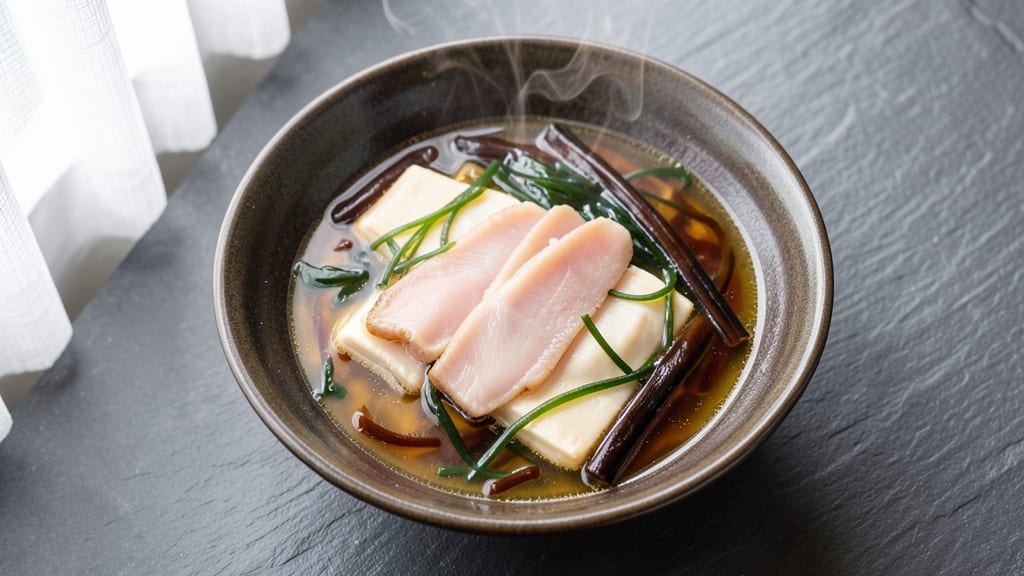
This asari miso soup recipe delivers the perfect balance of silky broth and deep umami flavor in just 20 minutes—a Japanese comfort classic that transforms simple ingredients into something extraordinary.
The secret lies in fresh dashi broth and properly prepared abalone, which melts into the soup while adding a luxurious texture. I've refined this recipe to highlight both traditional techniques and modern shortcuts, ensuring you get restaurant-quality results at home without the fuss.
The foundation of great asari miso soup begins with a rich dashi base, made from kombu and bonito flakes, which forms the umami backbone of the dish.
Fresh abalone (or dried if substituting) is soaked and sliced to create delicate, melt-in-your-mouth pieces that dissolve into the broth, while silken tofu and wakame seaweed add contrasting textures. The miso paste, whether red or white, is dissolved gently to preserve its complex flavors without overpowering the delicate abalone.
What makes this recipe truly special is the harmony of flavors—salty, sweet, and savory all working together in perfect balance. The abalone contributes a subtle sweetness that pairs beautifully with the earthy depth of miso, while the tofu and seaweed provide a satisfying bite.
Each spoonful delivers that comforting, umami-rich experience that defines Japanese home cooking.
Whether you're serving this as a light lunch or a side to a sushi dinner, this asari miso soup will elevate any meal. The preparation is straightforward, but the results are anything but ordinary—proof that even the simplest dishes can become extraordinary with the right techniques.
Let's get started on creating your own bowl of silky perfection.
Ingredients for asari miso soup
The foundation of this asari miso soup lies in its delicate balance of umami-rich ingredients and traditional Japanese techniques.
| Ingredient | Amount | Notes |
|---|---|---|
| Fresh Abalone 🦪 | ½ lb | Fresh or dried, sliced thinly |
| Dashi Broth 🍜 | 4 cups | Homemade or quality store-bought |
| Red Miso Paste 🧂 | 2 tbsp | High-quality, smooth texture |
| Silken Tofu 🧈 | 1 package (7 oz) | Cubed, for delicate texture |
| Wakame Seaweed 🌿 | ½ oz | Dried, rehydrated in water |
| Kombu 🍃 | 1 piece (4x4 inches) | For dashi base, optional |
| Bonito Flakes 🐟 | 1 tbsp | For umami depth in dashi |
| Green Onions 🧅 | 2 whole | Thinly sliced, for garnish |
| Sesame Seeds 🌰 | 1 tsp | Toasted, for garnish |
| White Miso Paste 🧂 | 1 tbsp | Alternative to red miso |
| Sake 🍶 | 1 tbsp | For abalone soaking |
| Soy Sauce 🍶 | 1 tsp | For abalone marinade |
| Water 💧 | 2 cups | For rehydrating wakame |
The abalone is the star ingredient—fresh is ideal, but dried works if rehydrated properly. For the best quality, look for fresh abalone at specialty seafood markets or high-end grocery stores like Whole Foods. If using dried, soak it in sake and soy sauce for at least 30 minutes before slicing. The dashi broth is non-negotiable for authentic flavor; homemade from kombu and bonito flakes delivers the deepest umami, but Honten or Marukome brands are excellent shortcuts. Always use red miso paste for this recipe—its richness complements the abalone's sweetness perfectly.
No fresh abalone? Dried abalone or even scallops can substitute, though texture will differ. Running low on kombu? Dashi granules work in a pinch, though they lack the depth of homemade. The wakame seaweed can be swapped for nori strips, but wakame's tender texture is ideal. For the tofu, silken tofu is essential—regular tofu won't dissolve properly. The green onions and sesame seeds are purely for garnish, so feel free to omit if you're in a rush. If you prefer a milder flavor, white miso paste can replace red at a 1:1 ratio, though it lacks the same depth.
Store dried abalone in a cool, dry place for up to 6 months, while fresh should be used within 2 days. The miso paste keeps indefinitely in the fridge, but once opened, store it in an airtight container to preserve its aroma. Leftover soup reheats beautifully—simply warm on the stove over low heat to maintain its silky texture. For meal prep, portion into glass containers with tight lids; it stays fresh for 3-4 days in the refrigerator.
Why You'll Love This Recipe
- No-Fuss Luxury: I swear, the abalone slices almost cook themselves—just a quick sear in the pan, then a simmer. The miso and dashi do all the heavy lifting while I sip my tea. (Yes, even on a Tuesday night.)
- Umami Bomb: That first spoonful? Rich, briny, deep—the abalone melts into the soup like a secret. The red miso adds a slow, smoky warmth that lingers, while the wakame gives this dish that oceanic crunch I can’t get enough of.
- Office Lunch Hero: Between us, this is my go-to for meal prep: the soup reheats beautifully, and the abalone stays tender. Pack it in a thermos, and you’ve got a restaurant-worthy lunch that’ll make coworkers ask for the recipe.
- Budget Splurge: Here’s what sold me—the abalone makes it feel special, but you’re not blowing your paycheck. A little goes a long way, and the rest of the ingredients (miso, tofu, wakame) are pantry staples. Fancy dinner without the fancy price tag.
Step-by-step instructions for silky asari miso soup
Master this Japanese classic with a rich, velvety broth and delicate abalone—every step preserves its authentic depth.
Prepare the Abalone for Maximum Flavor
Begin by slicing the 0.5 lb fresh abalone into ¼-inch thick pieces. I use a sharp chef's knife for clean cuts—abalone should yield easily without tearing. Place the slices in a bowl and add 1 tablespoon sake and 1 teaspoon soy sauce. Let them marinate for 10 minutes at room temperature. This step enhances the abalone's natural sweetness and prevents it from overcooking later.
While the abalone marinates, prepare the 0.5 oz wakame seaweed by soaking it in 2 cups water for 5 minutes until softened. Drain and set aside. The wakame will add a delicate oceanic flavor that balances the soup's richness. If you're using kombu, rinse it briefly under cold water to remove any debris before adding it to the broth later.
Build the Umami-Rich Dashi Broth
In a clean pot, combine 4 cups dashi broth with 1 tablespoon bonito flakes and the kombu (if using). Bring to a gentle simmer over medium heat and let it cook for 3 minutes. The kombu will infuse the broth with subtle mineral notes, while the bonito flakes dissolve to create a deep, savory foundation. Skim off any foam that rises to the surface—this ensures a crystal-clear broth.
Remove the pot from heat and let the broth steep for 5 minutes to allow the flavors to meld. The broth should smell aromatic and slightly briny, with a hint of sweetness from the kombu. If you notice any fishy or metallic odors, reduce the bonito flakes slightly next time—this indicates overuse.
Simmer the Abalone and Tofu
Return the pot to low heat and add the marinated abalone slices. Simmer gently for 3-4 minutes until the abalone turns opaque and slightly translucent. Overcooking will make it rubbery, so watch closely—it should look tender but still hold its shape. Remove the abalone with a slotted spoon and set aside on a plate.
Add the 1 package (7 oz) silken tofu, cubed into ½-inch pieces, to the broth. Simmer for 2 minutes to warm through. Silken tofu should remain delicate, so avoid vigorous boiling. The broth should now have a luxurious, cloudy appearance from the tofu's natural oils.
Finish with Miso and Garnishes
In a small bowl, dissolve 2 tablespoons red miso paste and 1 tablespoon white miso paste into ½ cup of the hot broth until smooth. This creates a velvety miso slurry that won't clump. Slowly ladle the slurry back into the pot, stirring constantly to prevent lumps from forming. The soup should turn a rich, amber color with a glossy sheen.
Return the abalone to the pot and add the drained wakame seaweed. Simmer for 1 more minute to blend all flavors. Taste and adjust seasoning—you may need a pinch more soy sauce or a splash of sake to balance the miso's saltiness. The broth should coat the back of a spoon with a silky texture.
Serve with Traditional Garnishes
Ladle the soup into bowls, dividing the abalone and tofu evenly. Garnish each serving with thinly sliced green onions and a sprinkle of toasted sesame seeds. The green onions add a fresh, grassy contrast to the deep umami, while the sesame seeds contribute a nutty crunch. Serve immediately while the broth is steaming hot—this ensures the tofu stays silky and the abalone remains tender.
For the perfect bowl, each spoonful should deliver layers of flavor: the abalone's sweetness, the miso's depth, the wakame's oceanic note, and the tofu's delicate texture. The broth should coat your tongue with a velvety finish, not a heavy aftertaste. If the soup thickens as it cools, simply stir in a splash of hot water to restore its silky consistency.
Pro Tips For Making Asari Miso Soup
- Sear the Abalone First: Toss the abalone slices in a dry pan over high heat for 30 seconds per side before adding broth—this locks in flavor and prevents them from turning mushy. I used to skip this, and the abalone would just dissolve into the soup like a sad, flavorless ghost.
- Soak Wakame 10 Minutes: Wakame needs time to rehydrate properly—don’t just toss it in. Soak it in cold water for 10 minutes before adding to the pot, or it’ll stay stubbornly chewy. (Yes, even if you’re impatient like me.)
- Dissolve Miso Gently: Mix the miso paste into a small cup of hot dashi first, then stir it into the soup—never add it directly to boiling liquid. After burning my tongue three times, I learned: slow and smooth wins the race.
- Skip the Boil for Tofu: Add silken tofu when the soup is just simmering, not boiling—it’ll hold its shape better and absorb flavor instead of falling apart. I was skeptical until I tried it, and now I never go back.
Health benefits of this dish
Heart-Healthy Umami
This soup is a powerhouse of heart-healthy nutrients, thanks to its abalone and dashi base. Abalone is rich in omega-3 fatty acids and vitamin B12, which support cardiovascular function and red blood cell production.
A 4-cup serving provides about 20% of your daily iron needs, helping maintain healthy energy levels. The dashi broth, made with kombu, adds iodine—essential for thyroid health—while bonito flakes contribute protein without saturated fat. 💪
Protein Without Guilt
Silken tofu and abalone combine to create a high-protein, low-fat meal that keeps you full without heaviness. A bowl delivers roughly 25 grams of protein, making it ideal for muscle repair or post-workout recovery.
Unlike creamy soups, this version relies on natural umami from miso and dashi rather than heavy cream or cheese. The wakame seaweed adds fiber and minerals like calcium and magnesium, supporting digestion and bone health.
Low-Calorie Comfort
At just 180-220 calories per serving, this soup satisfies cravings without derailing your diet. The miso paste provides probiotics that support gut health, while the light broth keeps calories in check. Unlike many restaurant soups loaded with butter or cream, this version gets its richness from natural ingredients.
I find myself reaching for it as a light lunch after heavier meals—it feels indulgent but never leaves me sluggish. ✨
Anti-Inflammatory Benefits
The combination of abalone, miso, and wakame creates an anti-inflammatory powerhouse. Abalone contains astaxanthin, a potent antioxidant that reduces inflammation, while miso's fermented properties improve gut microbiome balance. Wakame is particularly rich in polysaccharides that may help lower LDL cholesterol.
Regular consumption of this soup aligns with traditional Japanese diets, which are linked to lower rates of chronic inflammation. 🌿
Bone-Strengthening Nutrients
This soup is surprisingly rich in calcium and vitamin K, thanks to the wakame seaweed and silken tofu. A single serving provides 15% of your daily calcium needs, supporting bone density and preventing osteoporosis.
The kombu in dashi adds trace minerals like magnesium and potassium, which work synergistically with calcium for optimal bone health. It's a great addition to anyone's diet focused on long-term skeletal strength.
Digestive Support
The fermented miso paste acts as a natural probiotic, promoting healthy gut bacteria and aiding digestion. Wakame seaweed contains dietary fiber that supports regularity, while the light broth is gentle on sensitive stomachs.
Unlike many Western soups that rely on dairy or heavy cream, this version is naturally lactose-free and gluten-free (when using gluten-free miso). I've noticed improved digestion after adding this to my regular rotation. 💛
Nutrition facts
Frequently asked questions
Can I use dried abalone instead of fresh?
Yes! Dried abalone works beautifully—just soak it in 1 tablespoon sake and 1 teaspoon soy sauce for 30 minutes before slicing. The texture will be slightly firmer than fresh, but it absorbs the broth's flavors wonderfully. For best results, slice it ⅛-inch thick to ensure even cooking.
What if I don’t have kombu or bonito flakes?
No problem! Use 2 teaspoons dashi powder (like Honten) mixed with 4 cups hot water for a quick substitute. For extra umami, add ½ teaspoon fish sauce or a pinch of MSG (optional). The broth will still be flavorful, though homemade dashi delivers deeper complexity.
How do I prevent the miso from clumping?
Always dissolve miso in a small bowl with ½ cup hot broth first, stirring until completely smooth. Then, slowly ladle it back into the pot while stirring constantly. Avoid adding miso directly to cold broth—it’ll create lumps. For extra insurance, whisk in 1 teaspoon sake with the miso before mixing.
Can I make this soup ahead of time?
Prepare the broth and abalone up to 2 days ahead, then store in an airtight container in the fridge. When ready to serve, reheat gently over low heat and add silken tofu and wakame just before serving. The tofu should never boil—keep the heat below a simmer to maintain its silky texture.
What’s the best way to store leftover abalone?
Store cooked abalone in the fridge for up to 2 days in an airtight container with a splash of sake or water to keep it moist. For longer storage, freeze it in a single layer before transferring to a freezer bag—it’ll last 3 months. Reheat gently in the broth or microwave with a damp paper towel to retain tenderness.