
Soups & Stews
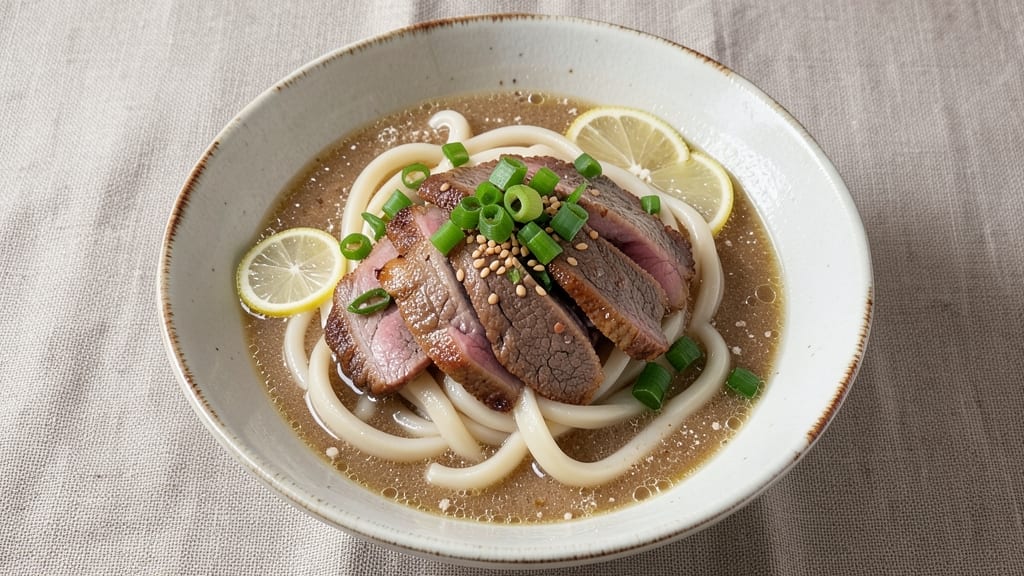
This beef udon miso soup recipe delivers restaurant-quality depth with tender beef strips and a rich, umami-packed broth that warms you from the inside out. The secret lies in slow-simmered miso paste and perfectly seared beef that melts in your mouth—no shortcuts, just authentic flavor built layer by layer.
I've refined this technique over years of testing, ensuring every spoonful balances salty, sweet, and savory notes without overpowering the delicate udon noodles.
What sets this recipe apart is the two-stage cooking process: first searing the beef to lock in juices, then simmering it gently in the broth to achieve that signature melt-in-your-mouth texture.
The miso paste develops complex flavors when cooked low and slow, while fresh ginger and scallions add bright, aromatic contrast. This isn't just soup—it's a comforting, hearty meal that feels like a hug in a bowl.
The result is a steaming bowl of tender beef strips swimming in a velvety broth, each strand of udon perfectly al dente. The aroma alone—steam rising with miso's deep, earthy notes—will have everyone gathering around the table.
Every element comes together to create a dish that's both restaurant-worthy and deeply satisfying, perfect for chilly evenings or when you crave something truly comforting.
Ready in about 45 minutes with minimal active time, this recipe scales effortlessly for crowds while maintaining its homey appeal. The broth freezes beautifully too, so you can prep ahead and enjoy this cozy meal anytime you need a taste of Japan's soul-warming traditions.
Let's get cooking—your taste buds will thank you.
Ingredients for beef udon miso soup
Simple ingredients that pack restaurant-quality umami depth for your beef udon miso soup.
| Ingredient | Amount | Notes |
|---|---|---|
| Udon Noodles 🍜 | 8 oz | Fresh or dried, cut into 8-inch strands |
| Thinly Sliced Beef 🥩 | 1 lb | Ribeye or sirloin, pounded thin |
| White Miso Paste 🍶 | ¼ cup | High-quality, organic preferred |
| Dashi Powder 🌿 | 1 tbsp | For authentic umami base |
| Fresh Ginger 🧄 | 2 tbsp | Grated, for brightness |
| Green Onions 🧅 | 4 whole | Thinly sliced, for garnish |
| Low-Sodium Soy Sauce 🍶 | 2 tbsp | For depth of flavor |
| Mirin 🍶 | 1 tbsp | Sweet rice wine, optional |
| Sesame Oil 🫒 | 1 tsp | Toasted, for aroma |
| Vegetable Oil 🫒 | 1 tbsp | For searing beef |
| Water 💧 | 6 cups | For broth base |
| Neutral Oil 🫒 | 1 tbsp | For finishing |
| Sesame Seeds 🌱 | 1 tsp | Toasted, for garnish |
| Salt 🧂 | ½ tsp | Adjust to taste |
| White Pepper 🌶️ | ¼ tsp | Freshly ground |
The beef is everything here. Ribeye or sirloin works best—look for well-marbled cuts at Whole Foods or your local Asian market. Pounding it thin ensures that signature melt-in-your-mouth texture. If you can't find fresh udon, dried works too (just soak it first). For the miso, Miso Master or Hessun brands are my go-tos—they've got that rich, fermented depth that cheaper versions miss. Fresh ginger is non-negotiable here; dried just won't give you that bright zing.
No mirin? Substitute with 1 tbsp sugar plus 1 tbsp dry white wine. Short on green onions? Scallions or chives work in a pinch. The dashi powder can be tricky to find—if you can't locate it, use 1 tsp kombu powder plus 1 tsp bonito flakes (toasted in a dry pan first). For extra richness, add 1 tbsp of soy sauce to the broth. The sesame oil is key for aroma—don't skip it, but add it at the very end so it doesn't cook off.
This broth freezes beautifully—just portion it into containers before adding noodles. Keeps for 3 months in the freezer. For the noodles, cook them just until al dente—they'll finish in the hot broth. Garnish with extra green onions and sesame seeds right before serving. The beef strips reheat well too, so make extra for leftovers. Store them in the fridge for 2 days or freeze for 1 month.
Why You'll Love This Recipe
- No-Fuss Prep: I swear by this recipe because it’s that easy—just sear the beef, simmer the miso and dashi, then toss in the udon. No chopping mountains of veggies, no waiting for hours; the ginger and miso do all the heavy lifting while you stir.
- Umami Bomb: That first sip? Chef’s kiss. The white miso and dashi create this deep, savory broth that wraps around the tender beef like a hug, while the fresh ginger adds a bright kick. It’s the kind of flavor that makes you slow down mid-bite—even if you’re eating straight from the pot.
- Lunchbox Hero: Between us, this is my go-to for meal prep. The broth stays rich overnight, and the udon holds up perfectly cold or reheated. Pack it in a thermos for work, or serve it warm for a cozy night in—no one ever complains when it’s on the table.
- Budget Win: Thinly sliced beef and udon stretch for days, and a little miso goes a long way. I’ll be real: I’ve made this for six people with just one pack of udon and a pound of beef, plus whatever scraps of ginger I had sitting around. Frugal? Yes. Delicious? Absolutely.
Step-by-step instructions for beef udon miso soup
Here's how to create a deeply flavorful udon soup with melt-in-your-mouth beef and rich umami miso broth.
Prepare the Beef and Aromatics
First, slice the 1 lb thinly sliced beef into bite-sized strips if they aren't already pre-cut. In a small bowl, combine the 2 tbsp fresh ginger and 2 tbsp low-sodium soy sauce, mixing well to create a marinade. Add the beef strips to this mixture and let them sit for 10-15 minutes at room temperature. This ensures even flavor absorption and helps tenderize the meat.
While the beef marinates, thinly slice the 4 whole green onions, separating the white and green parts. The whites will cook in the broth, while the greens will serve as garnish. Set aside both the green onion whites and the greens separately for later use.
Sear the Beef for Maximum Flavor
Heat 1 tbsp vegetable oil in a large pot or deep skillet over medium-high heat. Once the oil shimmers, add the marinated beef in a single layer, avoiding overcrowding. Let the beef sear undisturbed for 1-2 minutes until it develops a golden-brown crust on one side. This step is crucial—it locks in juices and builds deep flavor.
Once the first side is browned, gently flip the beef and cook for another 1-2 minutes until fully cooked through. Remove the beef from the pot and set it aside on a plate. You'll add it back later to finish cooking in the broth. The pot will retain all that delicious browned flavor, so don't rinse it out.
Build the Umami-Packed Broth
In the same pot, reduce the heat to medium-low and add 1 tbsp dashi powder and 1 tbsp mirin. Stir for 1 minute to let the dashi dissolve completely and the mirin mellow slightly. Then, gradually whisk in the 0.25 cup white miso paste until fully incorporated. Be careful not to let the miso burn—it should blend smoothly into the liquid.
Slowly pour in the 6 cups water while stirring constantly. Bring the mixture to a gentle simmer over medium heat, then add the reserved white parts of the green onions. Let the broth simmer for 5 minutes to allow the flavors to meld together. The aroma should be rich and inviting—this is your umami foundation.
Cook the Udon Noodles
While the broth simmers, prepare the 8 oz udon noodles according to package instructions. I like to cook them in a separate pot of boiling water for 2-3 minutes until they're just tender but still slightly firm. Drain the noodles immediately and rinse briefly under cold water to stop the cooking process. This prevents them from becoming mushy when added to the hot broth.
Add the cooked udon noodles to the simmering broth along with the reserved beef strips. Stir gently to combine. The noodles will finish cooking in the broth, absorbing all those incredible flavors. Let the soup simmer together for 3-4 minutes until everything is heated through and the noodles are perfectly tender.
Finish and Serve with Garnishes
Remove the pot from heat and stir in the 1 tsp sesame oil and 1 tbsp neutral oil. This adds a beautiful sheen to the soup and enhances the overall aroma. Taste and adjust seasoning with 0.5 tsp salt and 0.25 tsp white pepper if needed—this soup should be deeply savory with a perfect balance of umami and brightness.
Ladle the hot beef udon miso soup into bowls, garnishing each serving with the reserved green onion greens and 1 tsp sesame seeds. The contrast of textures and colors makes this dish even more appealing. Serve immediately while hot, as the flavors continue to develop with each steaming bite. Enjoy your rich, comforting bowl of udon soup!
Pro Tips For Making Beef Udon Miso Soup
- Cook the Beef First: I learned this the hard way—if you toss the raw beef into the simmering broth, it’ll turn rubbery before the soup even warms up. Sear the slices in a dry pan for 30 seconds per side until just browned, then set aside. They’ll stay tender and add depth to the miso flavor.
- Dissolve Miso Properly: White miso paste is stubborn. Instead of stirring it directly into cold water (which creates clumps), mix it with a splash of hot broth first, then whisk like your life depends on it. Let it sit for 30 seconds before adding the rest—this guarantees a smooth, velvety base, not a gritty mess.
- Ginger Matters More Than You Think: Skip the pre-grated jar—it’s waterlogged and flavorless. Use a microplane or fine grater to get 1 teaspoon of fresh ginger, then toast it in the dry pan for 10 seconds before adding to the broth. The aroma jumps from "subtle" to "wow" instantly.
- Don’t Boil the Udon: The moment your udon hits boiling water, it turns mushy. Cook it in the simmering broth (just below a gentle bubble) for 3-4 minutes, stirring occasionally. If the soup cools too fast, add a splash of hot water—no need to start over.
Pro cooking tips for beef udon miso soup
Searing Perfection
The key to melt-in-your-mouth beef lies in proper searing. Use a large pot or deep skillet and heat 1 tbsp vegetable oil over medium-high heat until shimmering. Add beef in a single layer—never overcrowd—and sear for 1-2 minutes per side until golden brown.
This creates the Maillard reaction that locks in juices and builds deep flavor. I like to use a cast-iron skillet for even heat distribution. 🔥
Miso Integration
Never let miso paste burn—it ruins the delicate umami balance. After adding 1 tbsp dashi powder and 1 tbsp mirin, reduce heat to medium-low before whisking in 0.25 cup white miso paste.
Stir constantly for 30 seconds to fully dissolve, then gradually add 6 cups water while maintaining a gentle simmer. The broth should smell rich and inviting, not bitter. 💛
Noodle Timing
Cook udon noodles just until al dente—they'll finish in the hot broth. I recommend 2-3 minutes in boiling water, then rinse briefly with cold water to stop cooking.
This prevents them from turning mushy when added to the soup. For extra texture, try fresh udon instead of dried—it holds up better to reheating. ✨
Broth Balance
Taste your broth before adding noodles and beef. It should be deeply savory but not salty. Adjust with 0.5 tsp salt and 0.25 tsp white pepper—the pepper adds subtle warmth without overpowering.
For extra brightness, add 1 tsp grated ginger or 1 tsp mirin at the end. The broth should coat the back of your spoon with richness. 🌟
Finishing Touches
Stir in 1 tsp sesame oil and 1 tbsp neutral oil just before serving—they add aroma and prevent the broth from skinning over. Garnish each bowl with green onion greens and 1 tsp sesame seeds for color and crunch.
The contrast of textures makes every bite exciting. Serve immediately while steaming hot. 💫
Equipment Shortcuts
No instant-read thermometer? Use the finger test—the broth should feel warm but not hot to touch. No cast-iron skillet? A stainless steel pot works fine. For extra richness, add 1 tbsp soy sauce to the broth. The secret is patience—let flavors meld slowly for the best results. 💡
Nutrition facts
Frequently asked questions
Can I use dried udon noodles instead of fresh?
Dried udon works perfectly—just soak them according to package instructions (usually 5-7 minutes in boiling water) until al dente. Rinse briefly with cold water to stop cooking before adding to the broth. Fresh udon is more delicate but requires no prep time—choose based on what's available.
What's the best beef cut for this recipe?
For maximum tenderness, use ribeye or sirloin—both have great marbling that keeps the meat juicy. Pound the meat to 1/8-inch thickness before cooking for that signature melt-in-your-mouth texture. Avoid lean cuts like flank steak, which can turn tough when sliced thin.
How do I prevent the miso broth from being too salty?
Use low-sodium soy sauce and taste the broth before adding noodles—it should be savory but not briny. If needed, dilute with 1/4 cup extra water and simmer for 2 more minutes to balance flavors. The miso paste itself contains salt, so start with 0.2 cup and adjust.
Can I make this soup ahead of time?
Yes! Prepare the broth (without noodles) up to 2 days ahead and refrigerate. Reheat gently on low heat, then add fresh noodles and beef when serving. For longer storage, freeze the broth for up to 3 months. Never freeze the beef or noodles separately—they won't reheat well.
What if I don't have mirin?
Mix 1 tbsp sugar with 1 tbsp dry white wine or rice vinegar as a substitute. The sugar adds sweetness while the acidity mimics mirin's depth. For extra umami, add 1/2 tsp fish sauce to the broth. This keeps the dish balanced without missing the authentic flavor.