
Soups & Stews
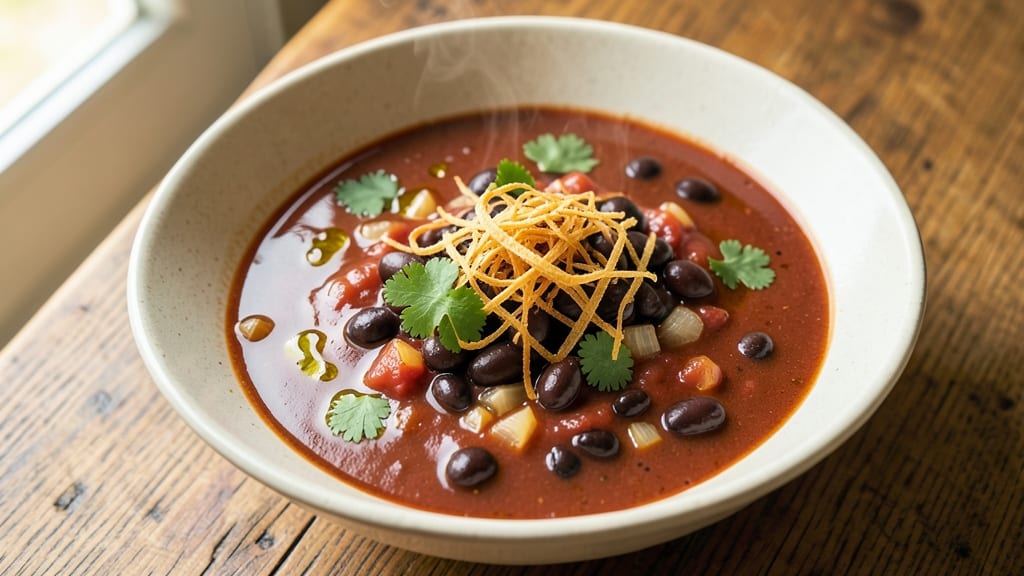
This traditional black bean soup recipe with canned beans delivers the deep, spiced richness of homemade without sacrificing convenience. The foundation—a slow-simmered tomato base infused with cumin, garlic, and bay leaf—transforms simple canned beans into a hearty, flavor-packed dish that tastes like it’s been simmering for hours.
I’ve perfected this version to balance authenticity with modern efficiency, using pantry staples and just 30 minutes of active time.
The secret lies in the spice blend and simmering technique. Sautéing aromatics like onion and garlic until fragrant builds a flavor base that deepens as the soup reduces, while cumin and smoked paprika add that signature earthy warmth.
Unlike many shortcut recipes, this version doesn’t skimp on texture—you’ll blend just enough of the soup for a velvety finish while keeping chunks of beans and tomatoes for heartiness. It’s the kind of soup that improves overnight as flavors meld.
What you’ll end up with is a bowl of soup that’s restaurant-quality yet simple enough for weeknight dinners. The broth is rich and aromatic, the beans tender but still holding their shape, and the tomato base adds a tangy depth that cuts through the earthy spices.
Serve it with crusty bread to soak up every last drop, or top with avocado and lime for a bright, fresh contrast. This is comfort food at its finest—warm, satisfying, and full of traditional flavor.
One of the best parts? This recipe scales effortlessly for a crowd or meal prep. Double the batch and freeze portions for quick lunches, or adjust the spice level to suit your taste.
The beauty of using canned beans is that you can achieve professional results without the hours of soaking or cooking dried beans. Let’s get started on a soup that feels like a hug in a bowl.
Ingredients for traditional black bean soup recipe with canned beans
Pantry staples and canned beans create this hearty, restaurant-quality soup in no time.
| Ingredient | Amount | Notes |
|---|---|---|
| Canned Black Beans 🥭 | 4 cans | Rinsed, no salt added |
| Onion 🧅 | 1 ½ whole | Yellow or white, diced |
| Garlic Cloves 🧄 | 6 cloves | Minced, aromatic |
| Tomato Sauce 🍅 | 2 cups | Canned, no salt added |
| Vegetable Broth 💧 | 6 cups | Low-sodium preferred |
| Ground Cumin 🌿 | 1 ½ tbsp | Toasted for depth |
| Smoked Paprika 🌶️ | 1 tbsp | For smoky warmth |
| Bay Leaves 🍃 | 2 whole | Dried, aromatic |
| Salt 🧂 | 1 ½ tsp | Fine sea salt |
| Black Pepper 🌶️ | ½ tsp | Freshly ground |
| Olive Oil 🫒 | ¼ cup | Extra-virgin preferred |
| Lime Juice 🍋 | 2 tbsp | Freshly squeezed |
| Cilantro 🌿 | ¼ cup | Chopped, optional |
The canned black beans are your shortcut—rinsed thoroughly to remove excess sodium, which keeps the flavor balanced. I always grab Bush’s Best or Black Magic for their creamy texture. For the broth, low-sodium vegetable broth is a must—it lets the spices shine. Toast your cumin and paprika in the olive oil for 30 seconds before adding aromatics—this simple step adds layers of flavor that you won’t get otherwise. The bay leaves are non-negotiable for that classic depth, but if you’re in a pinch, 1 tsp dried thyme works in a pinch.
No smoked paprika? Regular paprika plus 1/2 tsp liquid smoke gets you close. Short on tomato sauce? Diced tomatoes in juice work, but you’ll need to simmer longer to thicken. Want extra richness? Stir in 1/2 cup coconut milk at the end. The lime juice is a bright finish—fresh is best, but bottled works if you’re in a hurry. Cilantro’s optional but adds a fresh pop—skip it if you’re not a fan, though.
This soup tastes even better the next day as flavors meld. Store in an airtight container for 5 days in the fridge or freeze for up to 3 months. I portion mine into containers so lunches are sorted for the week. The beans get softer with time, and the broth deepens in flavor. If freezing, leave room at the top since it expands. Reheat gently on the stove or in the microwave—stirring occasionally prevents clumping.
Why You'll Love This Recipe
- No-Panics Needed: Honestly, this soup is the kind that lets you actually do laundry while it cooks. Just toss the onions in oil, let them soften, then add everything else and walk away. The canned beans mean no soaking, no peeling, no stress—just pure, unfussy flavor.
- Smoky, Spiced Bliss: That toasted cumin and smoked paprika? They turn this soup into something dangerously addictive. The garlic and bay leaves add depth, while the lime juice at the end brightens it up like a little citrus hug for your taste buds. Every spoonful is rich but not heavy.
- Freezer’s Best Friend: I make this soup on Sundays and freeze half for later. It reheats in minutes, tastes even better the second time around, and saves me from takeout when I’m exhausted. Plus, it’s the kind of meal that’s great for game nights, potlucks, or when you’ve got guests dropping by unexpectedly.
- Budget’s Secret Weapon: Four cans of beans, a few spices, and pantry staples? This recipe is a game-changer for my wallet. It feeds four people for less than $10, and the leftovers? Perfect for lunches or freezing. No excuses to skip meals when this is on hand.
Step-by-step instructions for traditional black bean soup
Here's the straightforward method for a rich, spiced black bean soup that builds flavor layer by layer.
Sauté Aromatics in Olive Oil
Heat the ¼ cup olive oil in a large pot over medium heat. Add the 1½ diced onion and cook for 5-6 minutes until softened and translucent. This is where the foundation of your soup begins—don't rush this step.
Add the 6 minced garlic cloves and continue cooking for 1 minute until fragrant. You'll smell the garlic release its sweet aroma—this signals it's ready for the spices. Stir constantly to prevent burning, as garlic can turn bitter quickly.
Toast Spices and Add Tomato Sauce
Reduce heat to medium-low and add the 1½ tablespoons ground cumin and 1 tablespoon smoked paprika. Stir for 30 seconds until the spices are toasted and the pot smells earthy and aromatic. This step deepens their flavor and removes any raw taste.
Pour in the 2 cups tomato sauce and stir to combine with the spices. Let it simmer for 2 minutes until slightly thickened. The sauce should coat the back of a spoon—this ensures your soup will have a rich, velvety texture rather than being watery.
Simmer with Broth and Beans
Add the 6 cups vegetable broth, 1½ teaspoons salt, and ½ teaspoon black pepper to the pot. Stir well to dissolve the salt completely. Bring the mixture to a gentle boil, then reduce heat to low and add the 4 cans rinsed black beans and 2 bay leaves. The bay leaves will infuse subtle herbal notes as they simmer.
Let the soup simmer uncovered for 20-25 minutes, stirring occasionally. You'll notice the flavors melding together—this is when the magic happens. The beans should be heated through and the liquid should reduce slightly, creating a thicker consistency.
Finish with Lime and Cilantro
Remove the 2 bay leaves and stir in the 2 tablespoons lime juice. The acidity brightens all the flavors and cuts through the richness of the beans. Taste and adjust the seasoning if needed—you might want to add a pinch more salt or a splash of lime juice for balance.
Finally, stir in the ¼ cup chopped cilantro just before serving. This adds freshness and a pop of color that makes the soup visually appealing. The cilantro should be evenly distributed throughout the soup for every spoonful to benefit from its bright flavor.
Pro Tips For Making Traditional Black Bean Soup Recipe With Canned Beans
- Toast Those Spices: That 30-second toast for the 1.5 tbsp ground cumin and 1 tbsp smoked paprika isn’t just a formality—it’s where the real depth happens. I used to skip it, and the soup always tasted flat. Keep the heat low, stir constantly, and let those spices bloom until the pot smells like a spice market.
- Don’t Rush the Onions: The 1.5 whole onion needs those full 5-6 minutes of sweating until translucent. I learned this the hard way—rushing it leaves raw onion bits that turn mushy instead of sweet. Medium heat is key; high heat burns them before they soften.
- Salt the Broth Early: Dissolve the 1.5 tsp salt into the 6 cups vegetable broth before adding the beans. I used to add it later, and the beans would always taste underseasoned. Salt the broth first—it distributes evenly and makes the whole soup sing.
- Simmer Uncovered Always: That 20-25 minute simmer needs to happen uncovered, no exceptions. I tried covering it once and ended up with a watery, diluted mess. The evaporation thickens the soup naturally—let it work its magic.
Common mistakes when making your traditional black bean soup recipe with canned beans
Skipping the Rinsing Step
This is a common mistake that throws off the flavor balance. Always rinse your canned black beans thoroughly under cold water to remove excess sodium—especially if they’re not labeled "no salt added."
The canned beans I use, like Bush’s Best, often have added salt, and skipping this step can make your soup taste overly salty. I’ve learned this the hard way after tasting a batch that was too salty because I forgot to rinse! 💧
Undercooking the Aromatics
Onions and garlic are the flavor foundation of this soup, so don’t rush them. Cooking the 1½ diced onions for just 3-4 minutes instead of the full 5-6 minutes leaves them raw-tasting and watery.
The onions should be soft and translucent, and the garlic should smell sweet and aromatic—not bitter or burnt. I’ve had to salvage soups by simmering them longer to develop the flavors, but it’s better to take the time upfront.
Forgetting to Toast the Spices
Adding 1½ tablespoons ground cumin and 1 tablespoon smoked paprika directly to the pot without toasting them first means you’ll miss out on their full flavor potential. Toasting them in the oil for just 30 seconds until fragrant removes their raw taste and deepens their earthy notes.
I’ve tasted soups where the spices tasted bitter or flat because they weren’t toasted—trust me, it makes a difference!
Overlooking the Simmer Time
Pulling the soup off the heat after 15 minutes instead of the full 20-25 minutes means the flavors won’t meld properly. The beans need time to soften, and the broth needs to reduce slightly for a richer consistency.
I’ve had to let soups simmer longer later, but it’s better to let them develop flavors naturally. Patience here is key—it’s worth the wait for that perfect balance of texture and taste.
Not Removing the Bay Leaves
Forgetting to remove the 2 bay leaves before serving can make your soup taste bitter or overly herbal. Bay leaves infuse the soup beautifully during cooking, but they’re not meant to be eaten.
I’ve accidentally left them in once and had to fish them out with a spoon—it’s a quick fix, but it’s easier to remove them early. Just strain them out after simmering, and you’re good to go!
Nutrition facts
Frequently asked questions
Why should I rinse my canned black beans?
Rinsing canned black beans thoroughly removes excess sodium, especially if they're not labeled "no salt added." Skipping this step can make your soup taste overly salty. It’s a quick rinse under cold water that makes a big flavor difference!
How do I prevent my soup from tasting bitter?
Bitterness often comes from overcooking garlic or not toasting spices properly. Cook 6 minced garlic cloves for just 1 minute after onions, and always toast 1½ tablespoons ground cumin and 1 tablespoon smoked paprika for 30 seconds before adding liquids. This removes raw flavors and deepens their aroma.
Can I make this soup without bay leaves?
Yes! If you don’t have 2 bay leaves, substitute with 1 teaspoon dried thyme or ½ teaspoon dried oregano. While bay leaves add subtle herbal notes, these herbs will still infuse the soup with aromatic depth. The flavor will just have a slightly different profile.
What’s the best way to serve this black bean soup?
This soup pairs perfectly with crusty bread or tortilla chips for dipping. For extra freshness, top with ¼ cup chopped cilantro and a squeeze of 2 tablespoons lime juice. If you want creaminess, stir in ½ cup coconut milk before serving. The acidity and texture contrast elevate the dish!
Why does my soup taste thin after simmering?
Thin soup often means the liquid didn’t reduce enough. Let it simmer uncovered for the full 20-25 minutes and stir occasionally. If it’s still too thin, simmer longer or reduce it on the stovetop after removing from heat. The goal is a slightly thickened consistency that coats the back of a spoon. Patience is key!