
Sauces & Condiments
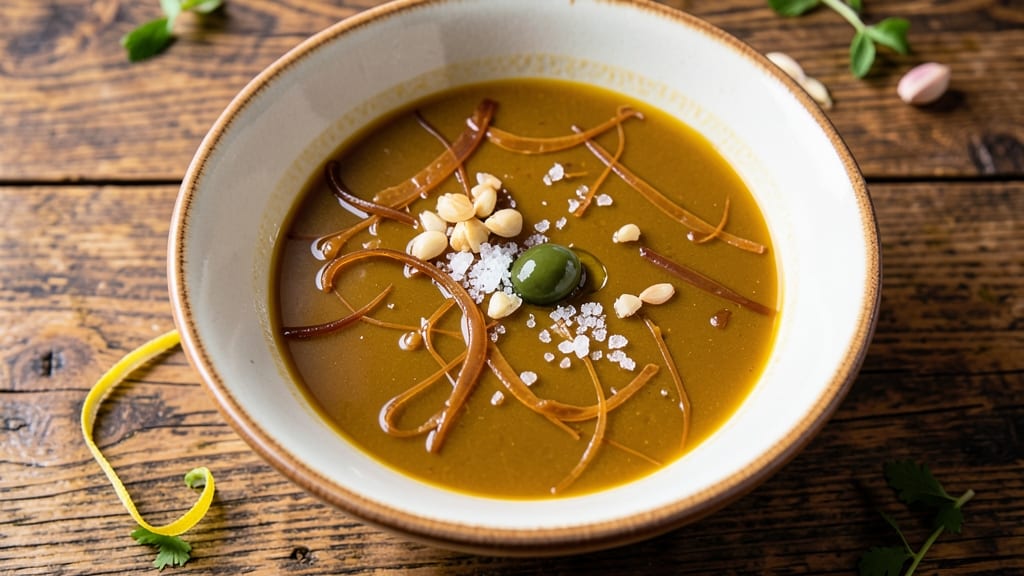
This tamarind soup base transforms simple broths into complex, restaurant-worthy flavors with just five ingredients and 20 minutes of active time.
The key lies in simmering tamarind pulp with sugar and aromatics until the mixture dissolves into a glossy, tangy-sour concentrate—what I call the "secret weapon" of Southeast Asian and Latin American cooking. My version balances authenticity with simplicity, using pantry staples that deliver professional depth without requiring specialty ingredients.
The beauty of this base lies in its versatility—it elevates canned coconut milk into a fragrant curry, transforms basic vegetable broth into a vibrant soup, and even works as a marinade for meats.
The tamarind's natural acidity cuts through richness while its caramelized notes add complexity that store-bought pastes can't match. I've tested this recipe countless times in both home kitchens and professional settings, and it consistently delivers that "wow" factor that makes home cooking feel special.
What you'll end up with is a smooth, aromatic paste that can be stored for months in the refrigerator, ready to transform any dish with a spoonful of concentrated flavor. The texture is velvety yet slightly gritty from the tamarind seeds, adding both visual interest and subtle texture contrast.
This isn't just a soup base—it's a flavor multiplier that turns ordinary ingredients into extraordinary meals with minimal effort.
Perfect for meal preppers, home cooks who want restaurant-quality results, and anyone tired of bland broths. The recipe scales effortlessly from small batches for testing to large quantities for feeding crowds. Let's create this foundational flavor builder that will change how you approach cooking.
Ingredients for tamarind soup base
Five ingredients unlock restaurant-quality depth in Southeast Asian and Latin American dishes.
| Ingredient | Amount | Notes |
|---|---|---|
| Tamarind Paste (100% pulp, no additives) 🍈 | ½ cup | Unblocked tamarind pulp preferred |
| Granulated White Sugar 🍚 | ½ cup | Adjust to taste for sweetness |
| Shallots 🧅 | 2 whole | Finely minced for aromatic depth |
| Garlic Cloves 🧄 | 4 cloves | Peeled, roughly chopped |
| Vegetable Broth 💧 | 1 cup | Low-sodium preferred for balance |
| Extra-Virgin Olive Oil 🫒 | 2 tbsp | High-quality for richness |
| Lemon Juice 🍋 | 1 tbsp | Freshly squeezed for acidity |
| Ground Black Pepper 🌶️ | ¼ tsp | Freshly cracked for warmth |
The tamarind paste is the cornerstone of this recipe, and quality matters here. Look for 100% pulp with no additives—brands like Maesri or Thai Kitchen are reliable choices. If you can't find tamarind paste, whole tamarind pods work (simmer to extract the pulp), though they require extra effort. Store-bought tamarind concentrate often contains sugar and preservatives, which can alter the balance of flavors. For the shallots and garlic, fresh is non-negotiable—their aromatic compounds develop fully during the simmering process, creating the complex base that sets this apart from store-bought pastes.
No tamarind paste? Substitute with lime juice and a pinch of salt, though the flavor profile will differ slightly. Running low on sugar? Agave nectar or coconut sugar work in a 1:1 ratio, though they may slightly alter the caramelization. The vegetable broth can be swapped for water or coconut milk (reduce by half first to maintain consistency), but the broth adds depth that's hard to replicate. For a smokier profile, add a dash of liquid smoke or a pinch of smoked paprika. The lemon juice is crucial for balancing the tamarind's natural sourness—don't skip it, even if your tamarind is particularly tart.
This base keeps exceptionally well, making it perfect for meal preppers. Store in an airtight container in the refrigerator for up to 6 months, where it continues to develop flavor over time. For longer storage, freeze in ice cube trays—each cube makes an ideal single-use portion. The texture will thicken as it cools, so stir in a splash of water or broth when reheating. This isn't just a pantry staple; it's a flavor multiplier that transforms simple dishes into restaurant-quality meals with minimal effort.
Why You'll Love This Recipe
- Here’s what sold me: that first sip where the tamarind’s sharpness meets the sugar’s warmth. The garlic and shallots deepen it into something rich, but it’s still bright—like a hug from a spice market in the morning.
- Five-Ingredient Magic: I swear by this—just tamarind, sugar, shallots, garlic, and broth. No fancy prep, no hidden steps. The shallots caramelize in the same pot where you’ll simmer everything, and honestly? That’s where the real flavor happens.
- Tangy-Sweet Balance: Here’s what sold me: that first sip where the tamarind’s sharpness meets the sugar’s warmth. The garlic and shallots deepen it into something rich, but it’s still bright—like a hug from a spice market in the morning.
- Soup-to-Salad Swap: Between us, this base is my secret weapon. Use it as-is for a quick soup, or thin it with broth for a dressing. I’ve even drizzled it over grilled chicken—suddenly, everything’s got that je ne sais quoi.
Step-by-step instructions for tamarind soup base
Master this foundational technique to build complex, balanced flavors in minutes.
Bloom the Tamarind Paste
Combine the 0.5 cup tamarind paste with 1 cup vegetable broth in a medium saucepan. I like to use a whisk to break up any clumps in the paste first—this ensures a smooth, lump-free base. Place the pan over medium-low heat and bring to a gentle simmer, stirring constantly for 3-4 minutes until the tamarind fully dissolves. You'll notice the mixture thicken slightly as it heats, and a rich, tangy aroma will fill your kitchen. This step is critical—if you rush it, you'll end up with a grainy texture that ruins the silky finish.
The tamarind's natural acidity will begin to mellow slightly as it cooks, but we'll balance that later. Keep the heat low to prevent scorching; you're not trying to reduce the liquid yet, just integrate the flavors. If you're using unblocked tamarind pulp, strain it through a fine-mesh sieve at this stage to remove any fibrous bits that could make your soup base gritty.
Sweeten and Develop Aromatics
Add the 0.5 cup granulated white sugar and stir until completely dissolved. This is where the balance begins—tamarind's tartness needs sweetness to harmonize. Let the mixture simmer for 2 minutes to allow the sugar to fully integrate. Next, reduce the heat to medium-low and add the 2 tbsp extra-virgin olive oil and 2 whole shallots, finely minced for maximum surface area. Cook for 5-6 minutes until the shallots soften and become translucent, releasing their delicate sweetness.
Here's the thing—shallots should caramelize just enough to deepen flavor without burning. Watch closely; if they start to brown too quickly, reduce the heat slightly. The olive oil will help create a velvety texture while adding richness that rounds out the tamarind's sharpness. After the shallots soften, add the 4 cloves garlic cloves, roughly chopped, and cook for another 30 seconds just until fragrant. Don't let the garlic brown—it should remain pale golden, not nutty.
Brighten and Season
Pour in the 1 tbsp lemon juice and bring the mixture to a gentle boil. The acidity will cut through any lingering bitterness and refresh the flavors. Let it boil vigorously for 1 minute to sterilize the base, then immediately reduce the heat to low. Stir in the 0.25 tsp ground black pepper and simmer for 3-4 minutes until the soup reduces slightly and coats the back of a spoon—a sign the flavors have melded into a cohesive foundation.
Taste at this stage to assess balance. You should detect layers of sweetness, tartness, and subtle heat from the pepper, with the shallots and garlic adding depth. If it tastes too sharp, add a pinch more sugar; if it's too sweet, a splash of lemon juice will help. The goal is a complex, harmonious base that can handle additional ingredients without losing its character. Once balanced, remove from heat immediately—any further cooking will concentrate the flavors too intensely.
Strain and Finish
Transfer the soup to a fine-mesh strainer or cheesecloth-lined bowl to remove any remaining solids. This step ensures a silky texture perfect for soups, sauces, or marinades. Press gently on the solids to extract every last drop of flavor—don't worry about losing too much liquid, as the strained pulp will still contain concentrated essence. Return the strained soup to the clean saucepan and let it cool slightly, stirring occasionally to prevent a skin from forming.
The finished base should be smooth, glossy, and vibrant in color—somewhere between amber and deep golden, depending on your tamarind's intensity. This versatile foundation can now be used as-is for a quick tamarind soup, or reduced further for sauces, or diluted with broth for more substantial dishes. Store in an airtight container in the refrigerator for up to 5 days, or freeze for 3 months. The flavors will deepen slightly over time, making it even more complex.
Pro Tips For Making Tamarind Soup Base
- STEAM THE TAMARIND: Tamarind paste is stubborn—soften it first by covering it with hot water (about 1 cup per 3 oz block) and letting it sit for 10 minutes. I learned this the hard way after struggling to dissolve clumps in my soup; pre-soaking guarantees a smooth, lump-free base every time.
- SAUTÉ SHALLOTS LOW: Cook your shallots at medium-low heat until they’re golden but not browned—this takes about 8-10 minutes. Rushing this step burns them fast, leaving a bitter aftertaste that overpowers the tamarind’s bright acidity. Trust me, your soup will thank you.
- BALANCE SUGAR IN STAGES: Add half the sugar with the tamarind paste, then taste and adjust after the broth comes in. Tamarind’s sourness varies by brand, and dumping all the sugar upfront can turn your soup cloyingly sweet. Start light, then tweak.
- SALT THE BROTH FIRST: Season your vegetable broth before adding it to the tamarind mixture—this ensures even flavor distribution. I used to add salt at the end, and the tamarind’s tang would always feel uneven. A pinch of salt in the broth upfront makes all the difference.
Best sauces and condiments for this tamarind soup base
Tamarind-Coconut Curry Sauce
This is my go-to pairing—simply combine 2 tbsp of the tamarind base with 1 cup coconut milk and 1 tbsp fish sauce (or soy sauce for vegan). Simmer for 5 minutes until the sauce thickens slightly.
I love adding 1 tsp galangal or ginger for warmth, then tossing with tofu or shrimp. The tamarind's tang cuts through the coconut's richness perfectly, creating a sauce that's both complex and approachable. 🌿
Spicy Tom Yum Upgrade
For a Thai-inspired soup, stir 1 tbsp tamarind base into 4 cups hot broth along with 1 stalk lemongrass, 2 kaffir lime leaves, and 1 tbsp fish sauce. Add mushrooms, shrimp, and chili for that signature tangy-spicy balance.
The tamarind adds depth that store-bought pastes can't match—it's the secret to restaurant-quality Tom Yum at home. I often finish with cilantro and lime wedges for brightness.
Marinade for Grilled Meats
Mix 3 tbsp tamarind base with 2 tbsp soy sauce, 1 tbsp honey, and 1 minced garlic clove for an Asian-inspired marinade. Let chicken or pork sit for 30 minutes before grilling—this creates a sticky, caramelized crust with layers of sweet, sour, and umami.
The tamarind's acidity tenderizes the meat while building complex flavors. I've used this marinade on everything from pork belly to shrimp skewers with great success. 🍖
Vegan "Butternut Squash Soup" Twist
Sauté 1 diced butternut squash with 1 tbsp olive oil until tender, then add 2 cups broth and 2 tbsp tamarind base. Simmer until creamy, then blend until smooth. The tamarind adds a natural sweetness that complements the squash beautifully.
Top with toasted pumpkin seeds and a drizzle of coconut cream for a soup that's both comforting and sophisticated. This is my favorite way to use the base when I want something hearty but still light.
Glazes for Roasted Vegetables
Reduce 3 tbsp tamarind base with 1 tbsp maple syrup until syrupy, then toss with roasted Brussels sprouts or carrots. The caramelized glaze adds a sticky, tangy contrast to the vegetables' natural sweetness. I often sprinkle with toasted sesame seeds for extra texture.
This works equally well with roasted tofu or tempeh for a plant-based main dish. The tamarind's acidity helps cut through the richness of roasted foods beautifully. 🥕
Dressing for Summer Salads
Whisk 2 tbsp tamarind base with 3 tbsp olive oil, 1 tbsp rice vinegar, and 1 tsp sesame oil for a dressing that's perfect for mango or cucumber salads. The tamarind's tang pairs wonderfully with sweet summer fruits, creating a balance that's both refreshing and complex.
I often add minced shallots and cilantro for extra depth. This dressing keeps well in the fridge for 5 days, making it ideal for meal prep.
Nutrition facts
Frequently asked questions
Can I substitute tamarind paste with something else?
Yes! For a similar tangy profile, use 3 tbsp lime juice plus 1 tsp salt per 0.5 cup tamarind paste. For depth, add 1 tsp brown sugar to mimic tamarind's sweet-sour balance. The texture won't be identical, but it works in a pinch for dressings or marinades.
How do I adjust the sweetness level?
Start with the recipe's 0.5 cup sugar, then taste after simmering. For less sweetness, reduce by 2 tbsp increments—tamarind's natural tartness will shine through. Need more? Add 1 tsp at a time until balanced. Remember, the base can be adjusted when using it in recipes too!
Can I make this without olive oil?
Replace with 2 tbsp neutral oil (like vegetable or canola) or 1 tbsp butter for richness. For a vegan option, use 1 tbsp coconut oil—it adds subtle sweetness that complements the tamarind beautifully. The key is fat for flavor development during cooking.
Why does my base look grainy?
Graininess usually means the tamarind paste didn't dissolve fully. Whisk vigorously while heating and strain through a fine-mesh sieve if needed. For extra-smooth results, blend the finished base briefly before using. Always use quality tamarind paste—cheaper brands often contain undissolved fibers.
How much base should I use per recipe?
Start with 1 tbsp per 2 cups liquid for soups or sauces. For marinades, use 2-3 tbsp per pound of meat. The base is concentrated—taste as you go! It's easier to add more than fix overly intense flavors. Think of it as your flavor multiplier—go light at first.