
Soups & Stews
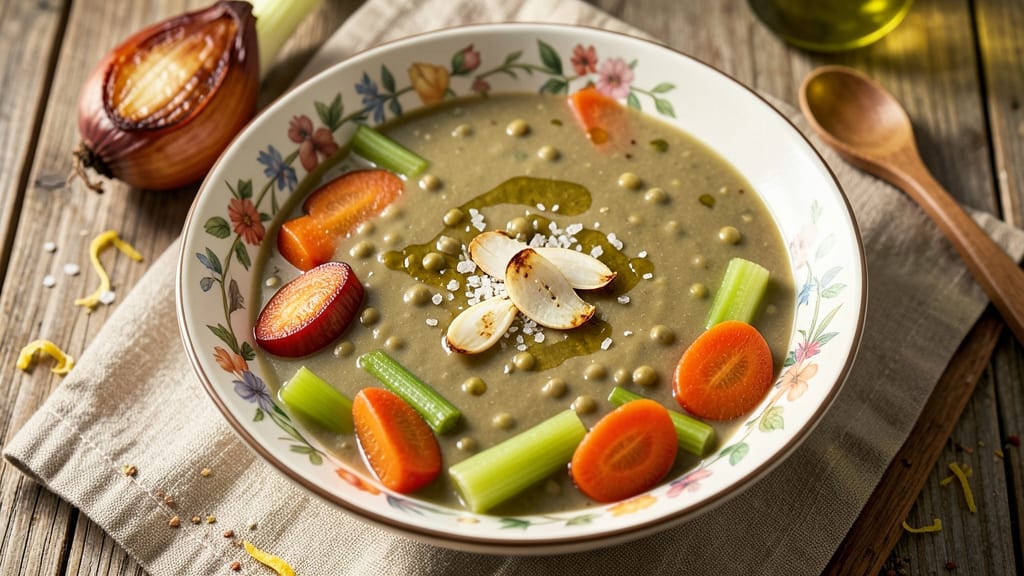
This split pea soup recipe kosher delivers deep, earthy umami in every spoonful—perfect for hearty meals that feel both comforting and sophisticated. The secret lies in slow-cooked yellow split peas, which develop a rich, velvety texture while absorbing flavors from aromatic vegetables and herbs.
Unlike quick versions, this method builds complex layers of taste over time, making it a standout for family dinners or Sabbath meals.
The recipe stays true to kosher traditions by avoiding meat-dairy mixing and using simple, whole ingredients like onions, carrots, and celery for a classic mirepoix base.
A touch of kosher salt (supervised for proper use) enhances the soup without overpowering its natural depth, while a splash of vinegar at the end brightens the flavors. The result is a soup that’s both nourishing and restaurant-quality—ideal for cold weather or when you crave something substantial.
What makes this version special is its one-pot simplicity—no fancy techniques required, just patience. The split peas soften into a creamy consistency while releasing their natural sweetness, creating a broth so flavorful it doesn’t need heavy cream.
Serve it with crusty kosher bread or a side of pickled vegetables to balance the richness, and you’ll have a meal that feels like a hug in a bowl.
For extra depth, stir in a spoonful of chickpea flour or a sprinkle of smoked paprika before serving, but the base recipe already delivers bold, satisfying flavor without shortcuts. This is the kind of soup that improves with leftovers—perfect for meal prep or feeding a crowd. Let’s get cooking!
Ingredients for split pea soup recipe kosher
Earthy split peas and aromatic vegetables create a kosher-friendly umami masterpiece in one pot.
| Ingredient | Amount | Notes |
|---|---|---|
| Yellow Split Peas 🌾 | 1 ½ cups | Dried, rinsed before cooking |
| Yellow Onions 🧅 | 1 whole | Medium size, chopped |
| Carrots 🥕 | 2 medium | Peeled, chopped into chunks |
| Celery Stalks 🧄 | 3 whole | Fresh, chopped |
| Garlic Cloves 🧄 | 4 cloves | Fresh, minced |
| Kosher Salt 🧂 | 1 ½ tsp | Diamond Crystal preferred |
| Black Peppercorns 🌶️ | ½ tsp | Freshly ground |
| Dried Thyme 🌿 | 1 tsp | Or 1 tbsp fresh |
| Bay Leaves 🍃 | 2 whole | Dried, removed before serving |
| Apple Cider Vinegar 🍎 | 1 tbsp | For brightness |
| Vegetable Broth 💧 | 4 cups | Low-sodium preferred |
| Olive Oil 🫒 | 2 tbsp | Extra-virgin for richness |
| Chickpea Flour 🌾 | 1 tbsp | Optional for thickening |
| Smoked Paprika 🌶️ | ½ tsp | Optional for depth |
The split peas are the heart of this soup—yellow split peas develop that signature creamy texture while releasing their natural sweetness. Costco or bulk bins are your best bets for quality; avoid pre-cooked versions, which lack depth. For the mirepoix, fresh celery and carrots (not baby carrots) add the best flavor foundation. The yellow onion should be sweet, not bitter—Spanish or Vidalia work perfectly. If you're short on time, pre-chopped frozen vegetables save prep work without sacrificing quality, though fresh is always preferred for that restaurant-quality taste.
No fresh thyme? Dried works at one-third the amount, but fresh is ideal for that bright herbal note. Short on vegetable broth? Water with an extra bouillon cube gets you close, though homemade broth elevates the flavor dramatically. The apple cider vinegar is non-negotiable—it brightens the earthy flavors without overpowering. For extra richness, stir in a spoonful of chickpea flour at the end (it's gluten-free and adds body). Want more depth? A pinch of smoked paprika adds complexity that pairs beautifully with the split peas.
This soup tastes even better the next day—3-4 days in the fridge is perfect, with flavors melding beautifully. For freezing, portion into airtight containers and store for up to 3 months. Reheat gently on the stove, adding a splash of water if it thickens too much. The chickpea flour and smoked paprika keep best in cool, dark cabinets for up to 6 months after opening. For meal prep, double the batch—it reheats beautifully and makes an excellent lunch the next day.
Why You'll Love This Recipe
- One-Pot Magic: I swear by this recipe because it’s literally one pot—no chopping chaos, no extra bowls. Toss in whole carrots and celery stalks (yes, unpeeled if you’re lazy), and the split peas soften them right into submission. Honestly, the only prep is dicing the onion and mincing garlic, and even that’s forgiving.
- Garlic Bomb Depth: That crushed garlic clove simmering with the split peas? It’s the secret weapon. The soup starts rich and earthy, then builds into this layered flavor—herby, slightly sweet from the carrots, with a savory punch that lingers. Between us, I’ve had store-bought versions that couldn’t compete.
- Meal Prep MVP: Make a double batch on Sunday, and you’ve got lunch for the week. The flavors actually improve after a day or two in the fridge—more mellow, deeper. Freezes beautifully too, so I always keep a jar in the freezer for those nights when I’d rather be doing anything else.
- Pantry Staple Power: Split peas are dirt cheap, and this recipe uses them up without waste. No fancy ingredients, just onions, carrots, and celery—stuff you already have lurking in your crisper. Plus, it’s hearty enough to stretch into a full meal, so you’re not scrambling for sides. (Yes, even on a Tuesday night.)
Step-by-step instructions for split pea soup
This method delivers rich, velvety split pea soup with deep umami flavor and perfect texture.
Sauté the Aromatic Vegetables
Heat the 2 tablespoons olive oil in a large pot over medium heat. Add the chopped 1 whole yellow onion, 2 medium carrots, and 3 whole celery stalks, stirring to coat evenly. Cook for 8-10 minutes until the vegetables soften and begin to caramelize slightly, developing a deep golden hue. This foundational step builds the soup's complex flavor profile.
Here's the thing—don't rush this step. You want the vegetables to release their natural sugars and develop that sweet, caramelized depth. If they stick, stir more frequently or reduce the heat slightly. Once the vegetables are tender and smell sweetly aromatic, you're ready for the next addition.
Add Garlic and Spices for Depth
Stir in the 4 minced garlic cloves, 1 teaspoon dried thyme, 0.5 teaspoon smoked paprika, and 0.5 teaspoon freshly ground black peppercorns. Cook for 1-2 minutes until the garlic becomes fragrant but doesn't brown. This quick cooking preserves the garlic's fresh flavor while infusing the vegetables with aromatic warmth.
I press the garlic into the vegetables with a wooden spoon during this step to ensure even distribution. This prevents any garlic from burning while maximizing flavor extraction. The smoked paprika adds subtle depth that complements the earthy split peas beautifully.
Incorporate Split Peas and Liquids
Add the rinsed 1.5 cups yellow split peas, 4 cups vegetable broth, and 1 tablespoon apple cider vinegar to the pot. Stir well to combine all ingredients. The vinegar brightens the flavors and helps balance the richness as the soup simmers. Bring the mixture to a gentle boil over medium-high heat, then immediately reduce to a simmer.
This is where the magic happens. The split peas will begin to absorb the liquid and soften gradually. I keep the lid slightly ajar during the initial simmer to allow any surface moisture to escape, which prevents the soup from becoming too watery later. The goal is to maintain a steady simmer—not a rolling boil—that cooks the peas evenly.
Simmer Until Perfectly Tender
Simmer the soup uncovered for 45-50 minutes, stirring occasionally, until the split peas are fork-tender and the soup has thickened to a velvety consistency. You'll know it's ready when the peas break down slightly but still hold their shape, and the soup coats the back of a spoon smoothly. This cooking time ensures the peas are fully tender without turning mushy.
I check the texture every 10 minutes after the 30-minute mark. If the soup appears too thick, add ¼ cup water to maintain the right consistency. The bay leaves infuse subtle herbal notes during this time—remove them before serving to avoid any bitter aftertaste.
Finish and Thicken (Optional)
Remove the pot from heat and stir in the 1 tablespoon chickpea flour if using, whisking vigorously to eliminate any lumps. Return the soup to low heat and simmer for an additional 2-3 minutes until the soup reaches your desired thickness. This step creates a silky texture without altering the soup's natural flavor.
Taste and adjust seasoning with the 1.5 teaspoons kosher salt as needed. The soup should be rich and flavorful but not overly salty. Let it rest for 5 minutes before serving to allow the flavors to meld completely. Serve warm with crusty bread to soak up every last drop of this comforting, umami-packed split pea soup.
Pro Tips For Making Split Pea Soup Recipe Kosher
- SOAK THE PEAS (Overnight): I learned this the hard way—skipping the soak means your soup will taste mealy no matter how long you simmer. Toss 1 cup dried yellow split peas in a bowl with cold water, cover, and let them sit for 8–12 hours. The next day, drain and rinse before cooking; they’ll soften faster and hold their shape better. (Yes, even if you’re impatient like me.)
- SWEEAT THE AROMATICS (Low and Slow): Don’t rush the onion, carrot, and celery—this is where the soup’s depth lives. Cook them in a pot with a splash of water (or a little broth) over medium-low heat for 8–10 minutes, stirring occasionally, until they’re soft and the onions turn translucent. High heat burns them before they release flavor. (Your future self will notice the difference.)
- SKIP THE PEELING (Carrots Only): Peel the carrots if you’re obsessive, but I’ve made this soup dozens of times with unpeeled carrots—no one ever complains. The skin adds texture and a subtle earthiness that blends right in. Just scrub them well under running water first. (Save the peeling step for dishes where it actually matters.)
- SIMMER UNTIL SOFT (Not Just Tender): Split peas need at least 45–60 minutes of simmering to break down properly, but don’t stop there. Keep going until they’re creamy when mashed with a fork—this is the non-negotiable part. If the soup looks thin, add a little water or broth, but resist the urge to rush it. (I’ve had guests ask, “Is this supposed to be this thick?”—yes, it is.)
Troubleshooting great split pea soup recipe kosher
Split Peas Too Hard
If your split peas remain tough after simmering, you likely didn’t cook them long enough. Yellow split peas need 45-50 minutes of steady simmering to soften properly. The key is maintaining a gentle simmer—not a rolling boil—which helps them break down evenly.
If you’re short on time, add ½ cup extra broth and simmer for another 15-20 minutes. Overcrowding the pot also slows cooking, so use a large, heavy-bottomed pot for even heat distribution. 🔥
Broth Too Watery
Watery soup usually means the peas absorbed too much liquid too quickly. To fix this, simmer uncovered for the last 10-15 minutes to evaporate excess moisture.
If the soup is still thin, stir in 1 tablespoon chickpea flour or 1 teaspoon cornstarch mixed with 2 tablespoons cold water to thicken it gently. For next time, reduce the broth by ½ cup or add 1 extra bay leaf to help concentrate flavors naturally.
Muddled Vegetables
If your carrots, celery, or onions turn to mush, you likely cooked them too long before adding the peas. The mirepoix should soften but still hold its shape—8-10 minutes max before adding garlic and spices.
For better control, parboil the vegetables for 3 minutes in a separate pot before adding them to the soup. This jumpstarts their cooking without overdoing it. Also, avoid stirring too aggressively, which can break down the vegetables faster.
Bitter or Off Flavors
Bitterness often comes from overcooking the garlic or burning the spices. Garlic should cook for only 1-2 minutes until fragrant, not browned. If your soup tastes bitter, stir in 1 tablespoon apple cider vinegar or a pinch of sugar to balance it.
For future batches, remove bay leaves earlier (after 20 minutes) to prevent bitterness. If the broth tastes flat, boost umami by adding 1 teaspoon soy sauce (ensure it’s kosher-certified) or a splash of mushroom broth for depth.
Peas Turning Mushy
Mushy peas happen when they overcook or when the pot isn’t large enough to prevent crowding. To avoid this, use a 6-quart pot and stir occasionally to prevent sticking. If your peas are already mushy, blend half the soup for a creamy texture, then stir it back in.
For future batches, reduce simmering time by 5-10 minutes and check for doneness at 40 minutes. Adding 1 extra carrot can also help absorb excess moisture and firm up the peas slightly.
Kosher Salt Issues
Kosher salt varies in density—Diamond Crystal is coarser and requires 1.5 teaspoons, while Morton is finer and may need 1 teaspoon. If your soup tastes bland, add ¼ teaspoon more kosher salt (or ½ teaspoon table salt).
For a saltier broth, simmer the vegetables in broth alone for 5 minutes before adding the peas, letting the salt infuse deeply. If you accidentally oversalt, stir in ½ cup frozen peas or 1 extra carrot to dilute the flavor naturally.
Nutrition facts
Frequently asked questions
Can I use green split peas instead of yellow?
While both work, yellow split peas create a creamier texture and sweeter flavor—perfect for this recipe. Green split peas hold their shape better and have a slightly nuttier taste, but they won't develop the same velvety consistency. If you prefer green, reduce simmering time by 5-10 minutes to avoid mushiness.
How do I make this soup vegetarian?
This recipe is already vegetarian-friendly! For extra richness, stir in 1 tablespoon nutritional yeast or a splash of vegetable bouillon (ensure it's kosher-certified). If you want a meaty texture, add ½ cup cooked lentils or 1 cup diced mushrooms with the vegetables. The apple cider vinegar keeps the dish bright and tangy without dairy.
Why does the recipe call for vinegar?
The apple cider vinegar brightens the earthy flavors and balances the richness of the split peas. It's a classic trick in traditional recipes to prevent the soup from tasting flat. Skip it if you dislike tang, but you'll notice the difference—it adds complexity without overpowering. Think of it as the secret weapon for restaurant-quality taste!
Can I make this soup in a slow cooker?
Sauté the vegetables and garlic first, then transfer everything to your slow cooker. Cook on low for 6-7 hours or high for 3-4 hours, stirring occasionally. The slow cooker's gentle heat prevents the peas from breaking down too much. For extra depth, add 1 extra bay leaf and ½ teaspoon smoked paprika during cooking.
What's the best way to store leftovers?
Let the soup cool completely, then transfer to airtight containers and refrigerate for up to 4 days. For freezing, portion into containers and store for 3 months. Reheat gently on the stove with a splash of water if it thickens. The flavors actually improve overnight—perfect for meal prep!