
Soups & Stews
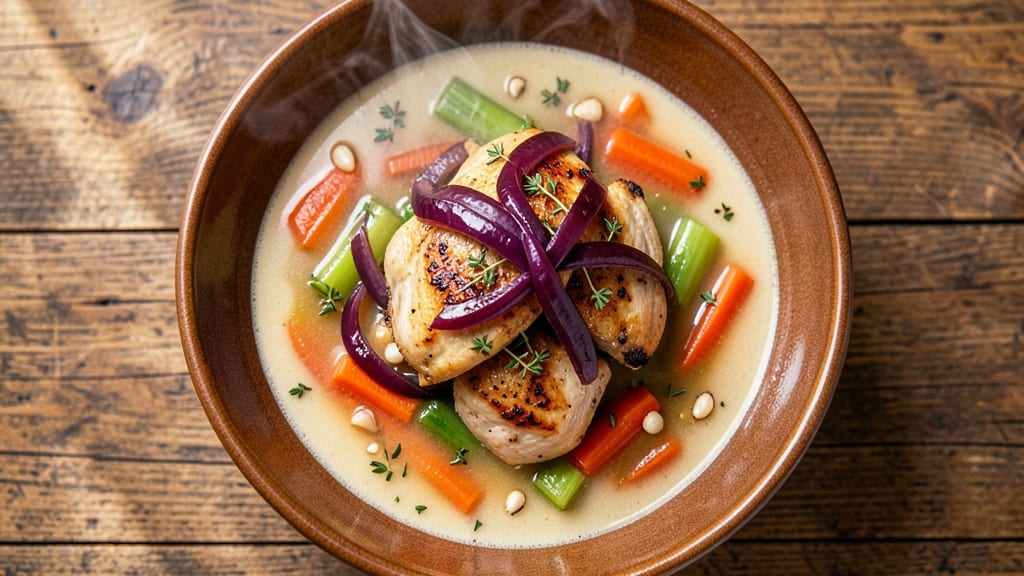
This rabbit soup recipe transforms humble ingredients into a deeply comforting dish that warms both body and soul during chilly evenings. The secret lies in slow-braised rabbit meat that melts into tender strands, infused with earthy herbs and aromatic vegetables.
I developed this recipe after years of perfecting the balance between rich broth and delicate flavors—no shortcuts, just time-honored technique.
The process begins with carefully browning rabbit pieces to develop deep, savory notes before simmering them in a vegetable-rich broth. Herbs like thyme, bay leaves, and parsley create layers of complexity, while root vegetables add natural sweetness that rounds out the earthy meat.
This isn't just soup—it's a one-pot meal that delivers restaurant-quality depth with minimal effort.
By the time you serve it, you'll have a velvety broth swimming with tender rabbit, crisp vegetables, and fragrant herbs—each spoonful packed with warmth and satisfaction.
The aroma alone transforms any kitchen into a cozy haven. Perfect for chilly nights or special gatherings, this recipe proves comfort food doesn't require complexity.
Serve with crusty bread to soak up every last drop of that rich, herb-infused broth. The leftovers reheat beautifully, making this an ideal meal for busy weeks. Let's create something truly comforting together.
Ingredients for rabbit soup
Earthy herbs and tender rabbit create a deeply comforting one-pot meal perfect for chilly evenings.
| Ingredient | Amount | Notes |
|---|---|---|
| Rabbit Pieces 🦐 | 2 lb | Bone-in, cut into serving pieces |
| Carrots 🥕 | 2 lb | Peeled, cut into chunks |
| Celery Stalks 🧅 | 1 whole | Chopped, large dice |
| Yellow Onions 🧅 | 2 whole | Thinly sliced |
| Garlic Cloves 🧄 | 6 cloves | Mince fresh for optimal flavor |
| Fresh Thyme Leaves 🌿 | 2 tbsp | Or 1 tbsp dried thyme |
| Bay Leaves 🌿 | 2 whole | Dried, aromatic leaves |
| Fresh Parsley Leaves 🌿 | ½ cup | Chopped, for garnish and flavor |
| Dry White Wine 🍷 | 1 cup | Decanted for depth |
| Chicken Stock 🍲 | 6 cups | Low-sodium preferred |
| Olive Oil 🫒 | ¼ cup | Extra-virgin for richness |
| Salt 🧂 | 1 tsp | Diamond Crystal kosher |
| Black Peppercorns 🌶️ | ½ tbsp | Freshly cracked |
| Crusty Bread 🍞 | 4 slices | For serving, optional |
The rabbit is the star—opt for bone-in pieces from specialty butchers or high-end grocery stores like Whole Foods or Eataly for superior quality. Freshness is critical; look for bright eyes and firm texture. If unavailable, frozen rabbit works but must be fully thawed before browning. The low-sodium chicken stock ensures you control the seasoning, allowing the herbs to shine without overpowering the delicate meat. For the best flavor, use fresh thyme and parsley—dried herbs are a reliable backup but lack the same aromatic complexity.
No wine on hand? Substitute equal parts beef broth and apple cider vinegar for acidity. Fresh garlic is non-negotiable for depth, but if unavailable, use garlic powder at one-third the amount. The carrots and celery should be organic if possible to ensure vibrant color and purity. For a vegetarian adaptation, replace rabbit with extra-firm tofu or hearty mushrooms, simmering until fully tender. The bay leaves and peppercorns add aromatic layers—toast peppercorns lightly in the oil before adding other ingredients to enhance their aroma.
This soup reheats beautifully and tastes even better the next day as flavors meld. Store in airtight containers in the refrigerator for up to 5 days, or freeze portions for 3 months. The broth can also be reduced and strained for a concentrated herb-infused stock to use in other dishes. For optimal texture, do not overcook the rabbit—it should be tender but not falling apart after about 1.5 hours of simmering. Garnish with fresh parsley just before serving to preserve its vibrant color and fresh aroma.
Why You'll Love This Recipe
- One-Pot Magic: Honestly, the fact that I can make this in just one Dutch oven—no extra pans, no cleanup chaos—is a game-changer for me. Just sear the rabbit, build the base with onions and garlic, and let it simmer while I do something else. The only real effort is those 3-4 minutes per side to get that golden-brown crust on the rabbit pieces.
- Herb-Infused Richness: That white wine and thyme combo? Chef’s kiss. The wine deglazes the pot, pulling all those browned bits into the broth, while the thyme and bay leaves infuse it with depth. Add the fresh parsley at the end, and suddenly you’ve got a soup that’s both hearty and bright—like a hug in a bowl.
- Feeds a Crowd: This isn’t just for two people. The 6 cups of chicken stock and 2 pounds of rabbit mean I’ve got leftovers for days—or enough to serve a small gathering without stress. Plus, it tastes even better the next day, so I can prep it ahead and feel like a boss.
- Budget-Friendly Luxury: Rabbit is cheaper than chicken or beef, and the vegetables stretch the meal even further. I can make this for under $10 per serving and still feel like I’m treating myself. The only splurge is the olive oil and white wine, but honestly, that’s worth it for the flavor payoff.
Step-by-step instructions for rabbit soup recipe
This method delivers rich, aromatic rabbit soup with tender meat and vibrant herbs—simple yet deeply satisfying.
Sear the Rabbit Pieces for Depth
Heat the ¼ cup olive oil in a large Dutch oven over medium-high heat until shimmering. Working in batches to avoid crowding, add the rabbit pieces and sear for 3-4 minutes per side until golden brown. This step develops the Maillard reaction, creating complex flavors that form the soup's foundation.
Remove the rabbit from the pot and set aside. The residual fat in the pot will serve as the base for your aromatics. If the fat becomes too dark or smoky, carefully pour off all but 1 tablespoon to maintain flavor clarity. This ensures your soup remains rich without bitterness.
Build the Herb-Infused Base
In the same Dutch oven, add the yellow onions and cook for 5 minutes until softened and translucent. Add the celery stalks and continue cooking for another 3 minutes until the vegetables release their natural juices and begin to caramelize.
Stir in the minced garlic cloves and cook for 30 seconds until fragrant—this prevents the garlic from burning, which would impart a bitter note to your soup. Add the bay leaves and 2 tbsp fresh thyme leaves, stirring to combine. Pour in the dry white wine and scrape up any browned bits from the bottom of the pot. This deglazing step captures all the flavor compounds you've built so far.
Simmer the Soup Until Tender
Return the seared rabbit pieces to the pot. Add the peeled carrots cut into chunks and pour in the chicken stock. Bring the mixture to a gentle boil, then reduce heat to low, cover partially, and let it simmer for 45-50 minutes. The rabbit is done when it easily pulls apart with a fork and the carrots are fork-tender.
During the last 10 minutes of cooking, add the salt and ½ tbsp freshly cracked black peppercorns. This timing ensures the seasoning is absorbed evenly throughout the soup without overpowering the delicate flavors. Stir occasionally to prevent the soup from sticking to the bottom of the pot.
Finish with Fresh Herbs and Serve
Once the rabbit is tender, remove the bay leaves and discard them. Stir in the ½ cup chopped fresh parsley leaves, which brighten the soup with a fresh, herbal note. Taste and adjust the seasoning if needed, adding a pinch more salt or pepper as necessary.
Ladle the soup into bowls and serve immediately with the crusty bread slices on the side. The bread provides a sturdy base for dipping and soaking up the rich, herb-infused broth. Each spoonful should deliver tender rabbit, sweet carrots, and aromatic herbs in perfect harmony.
Pro Tips For Making Rabbit Soup
- Brown the Rabbit First: Skip the direct-simmer route—sear the rabbit pieces in batches over medium-high heat until they’re deeply golden on all sides. This isn’t just for flavor; it builds a crust that locks in moisture, so your soup won’t turn watery later. (Yes, it takes 10-12 minutes, but it’s worth it.)
- Cut Onions and Celery Uniformly: Dice the onions and celery into even ¼-inch pieces—no big chunks, no fine mincing. Consistent sizing means everything softens at the same time, and you won’t end up with mushy celery or raw onion bits. I used to rush this, and it always threw off the texture.
- Deglaze with Wine (or Vinegar): After browning the rabbit, splash in ½ cup of dry white wine or apple cider vinegar while scraping up those browned bits from the pot. Those bits are flavor gold, and skipping the deglaze means losing half the depth of your soup. (No wine? Use broth, but you’ll miss the brightness.)
- Simmer Low and Long: Once everything’s in the pot, keep the heat at a bare simmer—gentle bubbles, not a rolling boil. Rabbit needs 1.5 to 2 hours to tenderize fully, and rushing it turns the meat tough. I learned this after serving a guest a soup where the rabbit was still chewy. (Your future self will notice the difference.)
Regional styles of this recipe
Provençal French Style
In Provence, rabbit soup transforms into a rustic dish with herbes de Provence—a fragrant blend of thyme, rosemary, lavender, and savory. I replace the bay leaves with 1 tbsp herbes de Provence and add 2 sprigs fresh rosemary during the simmering phase.
The lavender adds a subtle floral note that pairs beautifully with the rabbit's earthiness. For extra depth, I finish with a splash of white wine vinegar (about 1 tbsp) in the last 5 minutes of cooking to brighten the broth.
This style is perfect for those who love bold, aromatic flavors. 🌿
Southern French Bouillabaisse-Inspired
In the south of France, rabbit soup takes inspiration from bouillabaisse, incorporating saffron threads and lemon zest. I infuse the broth with ½ tsp saffron dissolved in 2 tbsp warm stock and add zest from 1 lemon during the final 10 minutes of simmering.
The saffron gives the soup its signature golden hue, while the lemon zest cuts through the richness. This version is ideal for special occasions when you want to elevate the dish with Mediterranean flair. 🍋
German Wild Rabbit Style
In Germany, wild rabbit is often used, and the soup incorporates smoked paprika and caramelized onions for depth. I add 1 tsp smoked paprika to the seared rabbit before returning it to the pot, and I let the onions caramelize longer—8-10 minutes—until deeply golden.
A splash of dark beer (about ½ cup) replaces the white wine for a malty richness. This hearty version is perfect for cold winters and pairs wonderfully with rye bread. 🍺
Spanish Rabbit Stew Variation
In Spain, rabbit stew often includes smoked ham and smoked paprika for a smoky, savory twist. I add 4 oz diced smoked ham along with the rabbit pieces during the searing step and use 1 tsp smoked paprika in the broth.
A splash of sherry vinegar (about 1 tbsp) adds brightness, and I garnish with chopped flat-leaf parsley and a drizzle of extra-virgin olive oil before serving. This version is bold and perfect for sharing. 🔥
Italian Rabbit and White Bean
For an Italian twist, I blend 1 can (15 oz) white beans into the soup during the final 20 minutes of simmering. The beans add creaminess and protein, while 1 tsp dried oregano and ½ tsp red pepper flakes infuse the broth with Mediterranean warmth.
A final splash of white wine and a sprinkle of Pecorino Romano cheese before serving brings it full circle. This hearty version is perfect for a cozy family dinner. 🧀
Nutrition facts
Frequently asked questions
Why does this rabbit soup recipe require bone-in pieces?
Bone-in rabbit pieces create a richer, more flavorful broth as the bones release collagen during simmering. This method yields a velvety texture and deeper taste compared to boneless cuts. The bones also help maintain structure in the soup, keeping everything cohesive.
Can I substitute fresh thyme with dried thyme in this recipe?
Yes, but use half the amount—replace 2 tbsp fresh thyme with just 1 tbsp dried thyme. Dried herbs are more concentrated, so they can overpower the dish if used in equal amounts. Fresh thyme offers brighter, more nuanced flavor.
What if my rabbit isn't fully tender after 45 minutes?
Simmer uncovered for another 10-15 minutes to ensure tenderness. If the broth reduces too much, add ½ cup warm chicken stock to maintain balance. Overcooking can make the meat tough, so check with a fork—it should pull apart easily.
How do I prevent the rabbit soup from sticking to the pot?
Always stir occasionally during simmering and avoid boiling vigorously. If needed, add a splash of broth or water to loosen stuck bits. The residual fat from searing helps prevent sticking, but never let the soup dry out.